
Dogs thrive on mental stimulation as much as physical exercise. A bored dog is often a destructive one—chewing shoes, barking excessively, or digging up the yard. To prevent this, pet owners increasingly turn to food-dispensing toys like puzzle toys and treat balls. While both are designed to engage a dog’s natural foraging instincts, they differ significantly in how they challenge the mind. Understanding these differences helps you choose the right tool to keep your pup not just occupied—but genuinely mentally sharper.
The key distinction lies in cognitive demand. Puzzle toys require problem-solving, memory recall, and strategic thinking. Treat balls, while engaging, rely more on instinctive rolling and nudging. Over time, the type of mental workout your dog receives can influence focus, impulse control, and even emotional resilience. This article breaks down the science, compares real-world effectiveness, and provides actionable guidance for maximizing your dog’s brain health.
Cognitive Benefits of Mental Stimulation in Dogs
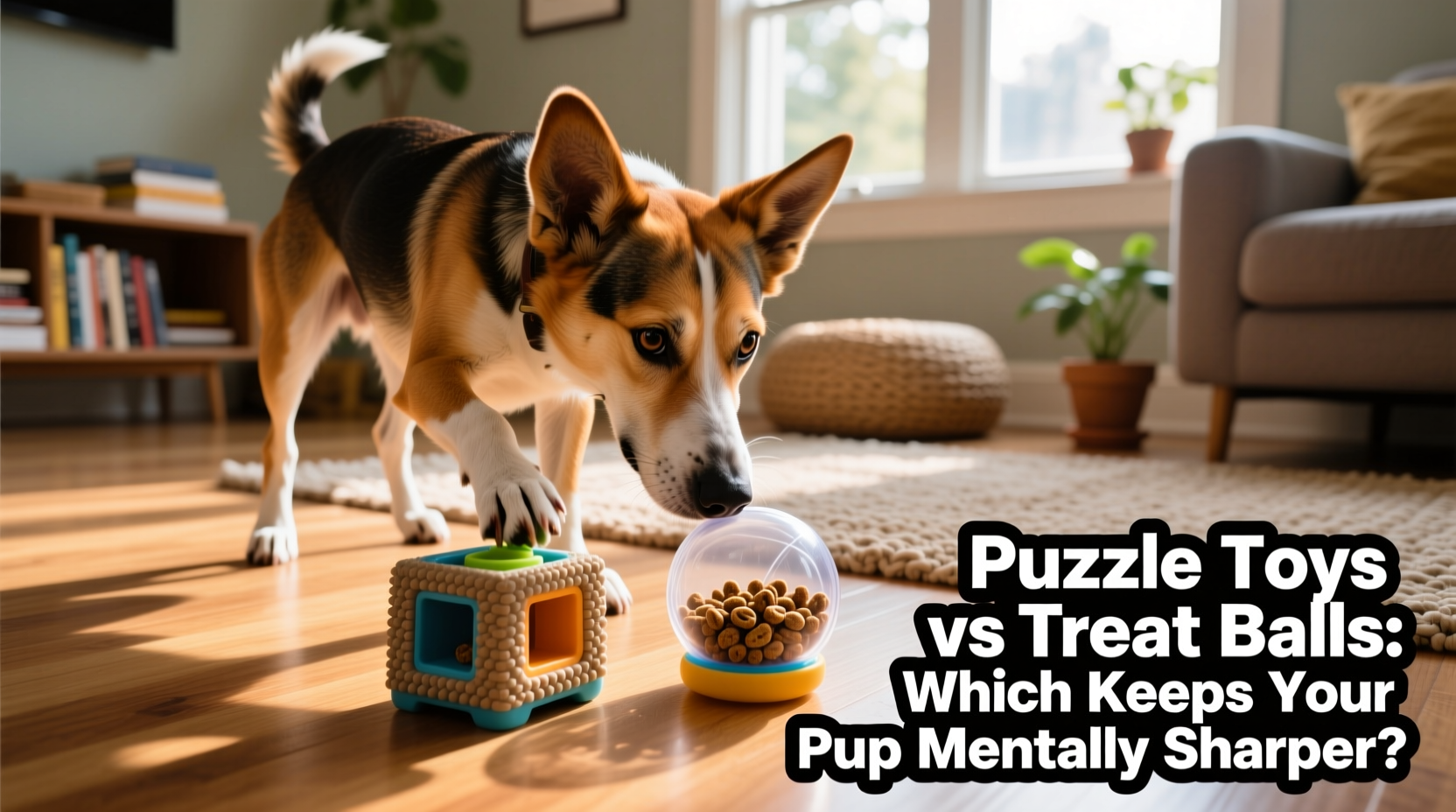
Mental exercise isn’t just about keeping dogs busy—it directly impacts brain function. Studies show that consistent cognitive engagement increases neuroplasticity, improves learning capacity, and delays age-related cognitive decline in dogs. Just as humans benefit from crossword puzzles or learning new skills, dogs benefit from tasks that require them to think, adapt, and remember.
A 2020 study published in *Applied Animal Behaviour Science* found that dogs given regular access to complex puzzle toys showed improved attention spans and reduced anxiety compared to those using simple treat-dispensing devices. The researchers concluded that “cognitive enrichment through progressive challenges leads to measurable gains in executive function.”
Executive function in dogs includes skills like decision-making, self-control, and task persistence. These abilities translate into better behavior at home, improved responsiveness to training, and greater adaptability in new environments. When choosing between a puzzle toy and a treat ball, consider not just immediate entertainment but long-term brain development.
How Puzzle Toys Challenge the Canine Mind
Puzzle toys are engineered to evolve with your dog’s intelligence. Most are tiered by difficulty level, starting with basic sliding panels and progressing to multi-step mechanisms requiring sequential actions. For example, a Level 3 puzzle might require a dog to first lift a flap, then slide a drawer, and finally flip a lid to access a treat.
This layered problem-solving activates multiple areas of the brain:
- Frontal cortex: Involved in planning and decision-making.
- Hippocampus: Crucial for memory formation and spatial navigation.
- Basal ganglia: Regulates habitual behaviors and reward-based learning.
Because puzzle toys often require trial and error, dogs learn from failure—a critical component of cognitive growth. They begin to anticipate outcomes, refine strategies, and develop patience. Over weeks of use, many owners report their dogs becoming more focused during training sessions and less reactive to distractions.
Tip: Rotate puzzle toys weekly to prevent habituation. Introducing novelty keeps the brain actively engaged.Treat Balls: Simplicity and Physical Engagement
Treat balls—like the classic Kong Wobbler or Buster Cube—are simpler in design. They dispense kibble or treats when rolled, bounced, or nudged. Their motion is unpredictable, which appeals to a dog’s prey drive. The erratic bounce mimics fleeing prey, triggering instinctual chasing and pawing behaviors.
While enjoyable, treat balls primarily engage the motor cortex and sensory systems rather than higher cognition. There’s little need for planning or adaptation. Once a dog learns that “rolling = food,” the novelty wears off quickly. Many dogs master treat balls within minutes and then lose interest unless the challenge is increased.
However, treat balls have clear advantages:
- Excellent for high-energy dogs needing physical release.
- Ideal for portion-controlled feeding during weight management.
- Easy to clean and durable for outdoor use.
- Great introduction tool for dogs new to food toys.
They work best as part of a broader enrichment strategy—not as standalone cognitive tools.
Comparative Analysis: Puzzle Toys vs. Treat Balls
| Feature | Puzzle Toys | Treat Balls |
|---|---|---|
| Cognitive Demand | High – requires problem-solving, memory, strategy | Low to moderate – relies on instinct and repetition |
| Learning Curve | Gradual progression across difficulty levels | Quick mastery; minimal skill development |
| Lifespan of Engagement | Months to years with rotation and upgrades | Days to weeks before boredom sets in |
| Best For | Mental sharpness, focus, senior dogs, anxious pets | Physical activity, meal pacing, puppies, beginners |
| Adaptability | Multiple configurations and upgrade paths | Limited customization; fixed mechanics |
| Cleanability | Varies—some have crevices that trap food | Generally easy to disassemble and rinse |
“Puzzle toys offer what treat balls often lack: sustained cognitive resistance. Like lifting weights for the brain, they build mental endurance over time.” — Dr. Lena Torres, Veterinary Ethologist and Canine Cognition Researcher
Real-World Impact: A Mini Case Study
Consider Max, a four-year-old Border Collie adopted from a shelter. Initially, Max exhibited signs of anxiety—pacing, excessive licking, and reactivity to noises. His owner introduced a treat ball to slow down his rapid eating, which helped slightly. But after two weeks, Max was ignoring it entirely.
At the suggestion of a trainer, the owner switched to a series of progressive puzzle toys: starting with a simple flip-lid box, then moving to a sliding-block tray, and eventually a three-stage logic puzzle. Within six weeks, Max’s confidence grew noticeably. He began solving new puzzles within minutes and would sit patiently when stuck, waiting for subtle cues instead of panicking.
His owner reported that walks became easier—Max stayed focused despite distractions. Training sessions improved dramatically, with faster command retention. Bloodwork and behavioral assessments conducted by a veterinary behaviorist noted reduced cortisol levels and increased dopamine response during problem-solving tasks.
This case illustrates that while treat balls address surface-level needs (eating speed, brief distraction), only structured cognitive challenges produce deep, lasting changes in brain function and emotional regulation.
Step-by-Step Guide to Maximizing Mental Sharpness
To ensure your dog gets the most out of enrichment toys, follow this evidence-based timeline:
- Week 1–2: Assess baseline behavior
Observe how your dog interacts with food. Is he a gulper? Distractible? Easily frustrated? Note any signs of anxiety or hyperactivity. - Week 3: Introduce a treat ball
Use it during meals to encourage slower eating and light physical movement. Monitor engagement duration—does your dog play for 5 minutes or 20? - Week 4: Add a beginner puzzle toy
Choose a single-action device (e.g., a removable lid). Fill it with high-value treats. Allow supervised exploration. Praise attempts, not just success. - Week 5–6: Increase complexity gradually
Introduce a two-step puzzle. If your dog solves it too quickly, skip ahead. Avoid frustration by adjusting difficulty based on effort, not time. - Week 7 onward: Rotate and combine
Alternate between puzzle types weekly. Occasionally place a treat ball inside a puzzle compartment to merge physical and mental effort.
Action Checklist: Optimizing Your Dog’s Cognitive Routine
Use this checklist weekly to maintain peak mental fitness:
- ✅ Offer at least one puzzle session per day (5–15 minutes)
- ✅ Rotate between 3–4 different puzzle types monthly
- ✅ Use high-value rewards (peanut butter, cheese, freeze-dried liver) for new challenges
- ✅ Clean all toys thoroughly every 3–4 days to prevent bacterial buildup
- ✅ Track progress: note how fast your dog solves each puzzle over time
- ✅ Pair puzzle time with calm-down routines (e.g., post-walk or pre-bedtime)
- ✅ Replace worn or unsolvable puzzles—frustration undermines confidence
Frequently Asked Questions
Can I use puzzle toys for senior dogs?
Absolutely. In fact, older dogs benefit greatly from mental stimulation to slow cognitive decline. Start with low-difficulty puzzles and use softer treats to accommodate dental issues. Daily puzzle sessions can reduce symptoms of Canine Cognitive Dysfunction (CCD), such as confusion or nighttime wandering.
My dog gives up easily on puzzles. What should I do?
Break the task into smaller steps. For example, if the puzzle has a sliding panel, start by leaving it partially open so the treat is visible. Reward any interaction—nudging, pawing, sniffing. Gradually increase the challenge as confidence builds. Patience and positive reinforcement are key.
Are treat balls bad for dogs?
No, but they shouldn’t be the only form of enrichment. Used exclusively, they provide diminishing returns. Think of treat balls as cardiovascular exercise for the body, while puzzle toys are strength training for the brain. Both have value, but balance is essential for holistic development.
Conclusion: Building a Smarter, Happier Dog
When it comes to sharpening your dog’s mind, not all food toys are created equal. Treat balls serve a purpose—they promote movement, regulate eating pace, and entertain in the short term. But for genuine cognitive enhancement, puzzle toys are unmatched. They demand reasoning, foster resilience, and grow alongside your dog’s intelligence.
The goal isn’t just to keep your pup busy. It’s to build a sharper, more adaptable companion—one who thinks before reacting, persists through challenges, and remains emotionally balanced. By integrating progressive puzzle play into your daily routine, you invest in long-term brain health, just as you would with diet or vet care.
💬 Ready to level up your dog’s mental game? Start with a beginner puzzle toy today and observe the transformation. Share your experience in the comments—your insights could help another dog become smarter and happier.








