Dogs thrive on mental stimulation as much as physical exercise. Without it, even the most active breeds can develop anxiety, destructive behaviors, or excessive barking. Two popular tools for engaging a dog’s mind are puzzle toys and treat-dispensing balls. While both reward dogs with food, they differ significantly in design, cognitive demand, and long-term effectiveness. Understanding these differences helps pet owners choose the right enrichment tool—and maximize their dog’s mental well-being.
How Mental Stimulation Benefits Dogs
Mental stimulation is not just about keeping a dog busy; it's essential for emotional balance and behavioral health. When dogs solve problems or work for food, they activate neural pathways similar to humans solving puzzles. This activity reduces cortisol levels—the stress hormone—and increases dopamine, the “reward” neurotransmitter.
Studies show that dogs engaged in regular cognitive challenges exhibit:
- Reduced separation anxiety
- Fewer compulsive behaviors (e.g., tail chasing)
- Better focus during training sessions
- Improved confidence in new environments
Dr. Karen Overall, a veterinary behaviorist, emphasizes:
“Enrichment isn’t optional—it’s a critical component of canine welfare. Just like we wouldn’t expect a child to sit still all day, we can’t expect dogs to be passive recipients of care.” — Dr. Karen Overall, Veterinary Behavioral Medicine Specialist
The key lies in matching the challenge to the dog’s intelligence, breed tendencies, and experience level. That’s where the distinction between puzzle toys and treat balls becomes vital.
Understanding Treat Balls: Simplicity and Motion-Based Rewards
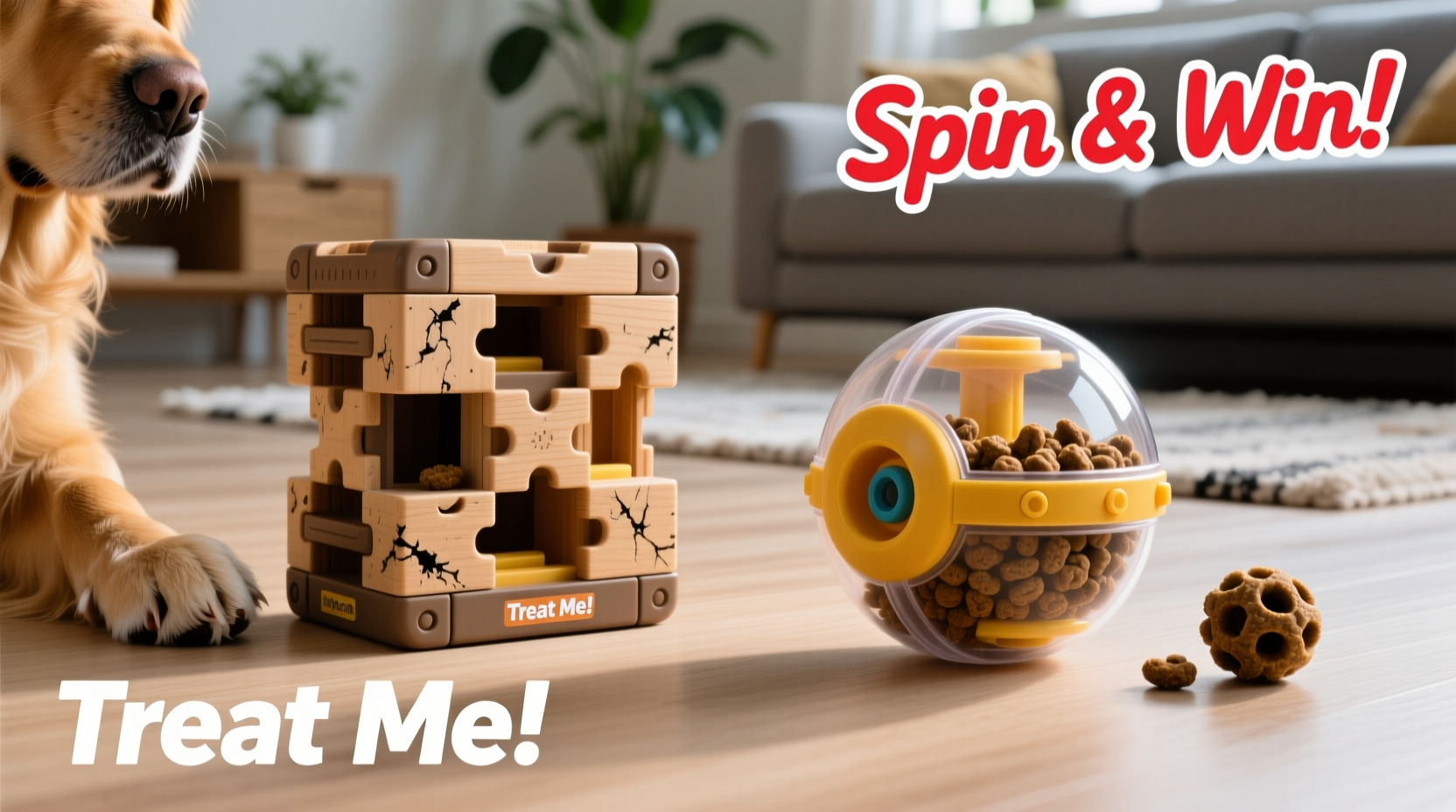
Treat balls—like the classic Kong Wobbler or PetSafe Busy Buddy Bounce—operate on motion-based mechanics. As the dog pushes, rolls, or bats the ball, treats fall out through openings. The release is semi-predictable: more movement equals more food, but there’s little need for strategy.
These toys work best for:
- Dogs new to food puzzles
- High-energy breeds needing physical exertion
- Puppies learning cause-and-effect relationships
However, their simplicity has drawbacks. Most dogs master treat balls within days. Once the novelty wears off, the toy becomes a predictable dispenser rather than a challenge. For intelligent breeds like Border Collies or Poodles, this means minimal sustained mental engagement.
Tip: To extend the life of a treat ball’s challenge, use sticky treats like peanut butter (xylitol-free) or frozen yogurt to slow dispensing.Limits of Treat Ball Engagement
Because treat balls rely on brute force over brainpower, they often fail to provide lasting cognitive stimulation. A 2020 study published in *Applied Animal Behaviour Science* found that dogs spent an average of 12 minutes actively interacting with treat balls before losing interest—compared to over 25 minutes with multi-step puzzle toys.
Additionally, treat balls encourage repetitive behaviors. Dogs may develop a fixation on nudging the toy without exploring alternative strategies, limiting problem-solving growth.
Exploring Dog Puzzle Toys: Layered Challenges and Cognitive Growth
Dog puzzle toys range from simple sliding drawers to complex multi-stage mazes requiring sequence learning, memory, and fine motor skills. Brands like Outward Hound, Nina Ottosson, and Trixie offer tiered difficulty levels, allowing dogs to progress from beginner to expert.
These toys typically involve:
- Lifting flaps or sliding panels
- Rotating discs to uncover hidden compartments
- Memory games where dogs track treat locations
- Combination locks requiring paw-eye coordination
Unlike treat balls, puzzle toys demand sustained attention and adaptive thinking. A dog must assess the mechanism, test hypotheses, and remember what works. This process mirrors real-world problem solving and builds executive function.
Long-Term Mental Stimulation: Why Puzzles Win
Puzzle toys maintain engagement longer because they evolve with the dog. Owners can increase difficulty, hide treats in harder-to-reach areas, or introduce time constraints (e.g., “Find all treats in 5 minutes”). This scalability ensures continued challenge.
In contrast, treat balls offer a fixed level of complexity. There’s no progression—only repetition.
“Our shelter introduced puzzle toys for high-anxiety dogs. Within two weeks, we saw measurable reductions in pacing and vocalization. The mental fatigue from problem-solving was more effective than extra walks.” — Sarah Lin, Canine Enrichment Coordinator at Pacific Paws Rescue
Comparative Analysis: Puzzle Toys vs. Treat Balls
| Feature | Treat Balls | Puzzle Toys |
|---|---|---|
| Cognitive Demand | Low to moderate | Moderate to high |
| Learning Curve | Minutes to hours | Days to weeks |
| Duration of Engagement | 5–15 minutes per session | 15–40+ minutes per session |
| Skill Development | Motor skills, persistence | Problem-solving, memory, focus |
| Adaptability | Fixed mechanism | Adjustable difficulty |
| Best For | Beginners, high-energy dogs | Intelligent breeds, anxious dogs, advanced learners |
This table illustrates why puzzle toys generally provide deeper and longer-lasting mental stimulation. While treat balls serve as excellent entry points, they plateau quickly. Puzzle toys grow with the dog, offering sustained enrichment.
Real-World Example: Max the Border Collie
Max, a 3-year-old Border Collie, lived with an active family who took him on daily hikes. Despite the physical exercise, Max chewed shoes, dug in the yard, and barked at passing cars. His owner suspected boredom but didn’t realize the extent of his unmet cognitive needs.
After consulting a canine behaviorist, Max was introduced to a Level 1 Nina Ottosson puzzle. At first, he pawed randomly. With encouragement and visible rewards, he learned to slide blocks within three days. Over the next month, he progressed to Level 3 puzzles involving layered drawers and rotating lids.
Within six weeks, Max’s destructive behaviors decreased by 80%. His owner reported he now spends 30–45 minutes each morning focused on his puzzle before settling into calm rest. The change wasn’t due to more walks—but better mental work.
This case highlights a crucial insight: physical tiredness doesn’t replace mental fatigue. A dog can be physically exhausted yet mentally restless. True calm comes from cognitive fulfillment.
Step-by-Step Guide to Choosing and Using Mental Enrichment Tools
Selecting the right toy depends on your dog’s temperament, experience, and goals. Follow this timeline to build effective mental stimulation habits:
- Assess Your Dog’s Level (Day 1): Observe how your dog interacts with food. Does he nose open containers? Use paws to manipulate objects? These signs indicate readiness for puzzles.
- Start Simple (Days 2–7): Introduce a treat ball or basic puzzle (e.g., flip compartments). Let your dog succeed quickly to build confidence.
- Increase Difficulty Gradually (Weeks 2–4): Move to multi-step puzzles. Only advance when your dog solves the current toy consistently.
- Rotate Toys Weekly (Ongoing): Prevent habituation by cycling through 3–5 different puzzles. Store unused ones out of sight to renew interest.
- Monitor Engagement (Monthly): Track time spent on toys. If sessions drop below 10 minutes, consider upgrading difficulty or trying a new design.
Checklist: Maximizing Mental Stimulation Effectiveness
Use this checklist to ensure you’re getting the most out of your dog’s enrichment routine:
- ✅ Match toy difficulty to your dog’s skill—not breed stereotypes
- ✅ Use high-value treats (e.g., freeze-dried liver) for challenging puzzles
- ✅ Limit puzzle sessions to 15–45 minutes to avoid burnout
- ✅ Clean toys weekly to prevent bacterial buildup in crevices
- ✅ Combine puzzle time with quiet spaces—avoid using them during chaotic moments
- ✅ Rotate at least three toys to maintain novelty
- ✅ Track progress: note which strategies your dog learns and how fast
Frequently Asked Questions
Can I leave my dog with a puzzle toy unsupervised?
It depends on the toy and your dog. Simple puzzles made of durable rubber are generally safe for short unsupervised periods. Avoid complex wooden puzzles or those with small parts if your dog tends to chew destructively. Always introduce new toys under supervision first.
Are treat balls useless for smart dogs?
Not entirely. While they don’t offer deep cognitive challenges, treat balls are useful for redirecting energy. For example, filling one with kibble during breakfast turns mealtime into light activity. They’re best used as supplements—not replacements—for true puzzle work.
How do I know if a puzzle is too hard?
If your dog walks away within two minutes, whines, or resorts to chewing the toy, it may be too difficult. Reset by showing the solution once or simplifying the setup. Frustration shuts down learning; success builds motivation.
Conclusion: Prioritize Growth Over Convenience
Treat balls have their place—they’re affordable, easy to use, and great for introducing food-based play. But when it comes to long-term mental stimulation, dog puzzle toys are superior. They challenge intelligence, adapt to skill growth, and foster patience and focus.
The goal isn’t just to keep a dog busy, but to help them think, learn, and feel accomplished. Just as humans benefit from crossword puzzles or strategy games, dogs flourish when given meaningful problems to solve. Investing in quality puzzle toys isn’t indulgence—it’s responsible pet care.
💬 Ready to upgrade your dog’s mental workout? Start with a Level 1 puzzle today and observe the difference in their focus and calmness. Share your experience in the comments—what puzzle designs work best for your pup?








