
Every dog owner knows the routine: leash in hand, treat pocket stocked, and a fresh roll of poop bags ready. But where you store those bags—on your leash or in a dedicated dispenser—can make a subtle yet meaningful difference in daily walks. The debate between using a dog poop bag dispenser versus attaching bags directly to your leash isn’t just about preference; it’s about accessibility, durability, hygiene, and long-term convenience. As urban walking spaces get busier and pet ownership grows more conscientious, small tools matter. This article breaks down both options with real-world insights, expert observations, and practical comparisons to help you decide which solution truly works better.
The Role of Poop Bag Accessibility in Responsible Pet Ownership
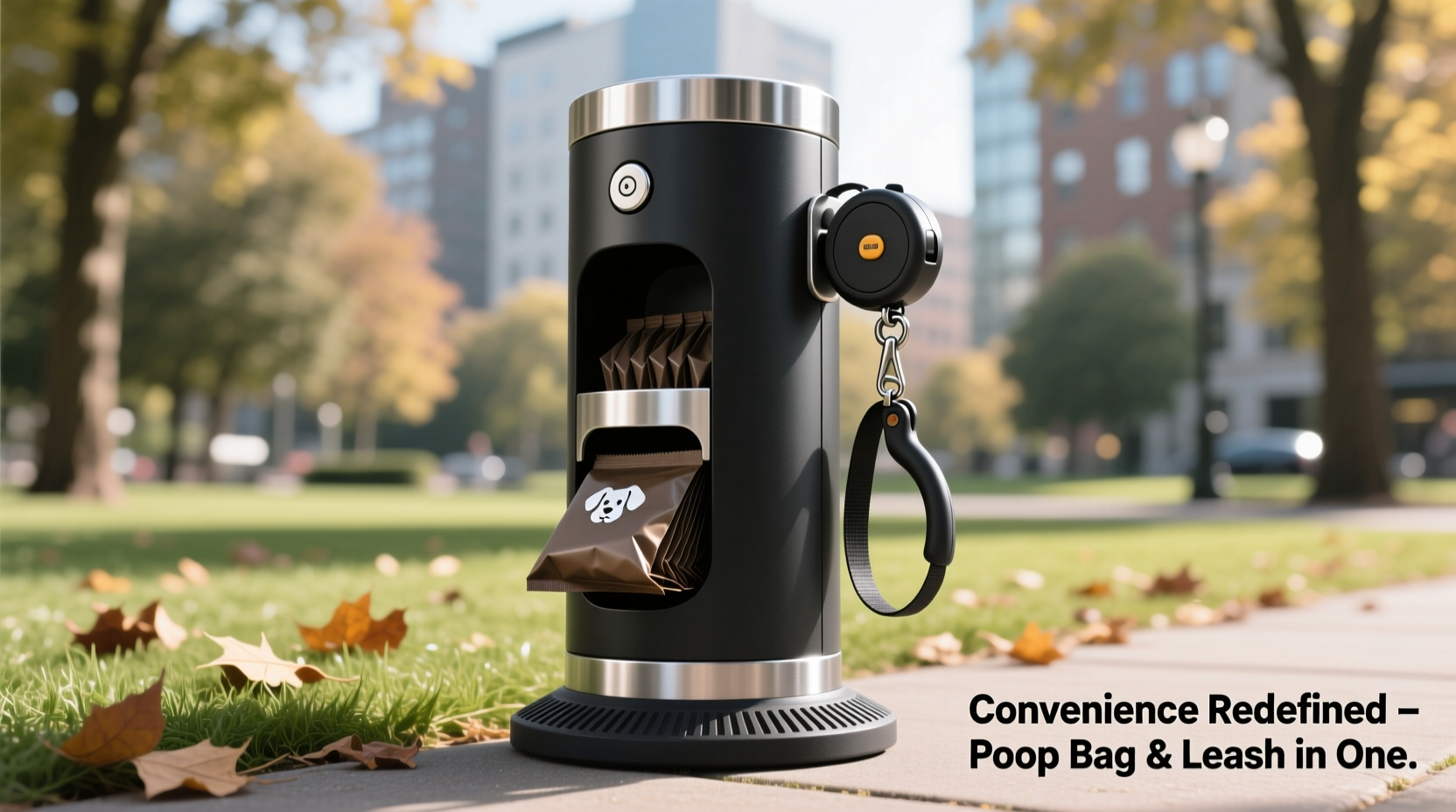
Picking up after your dog isn’t optional—it’s a civic duty. Whether you're navigating city sidewalks, hiking trails, or neighborhood parks, having immediate access to poop bags ensures you’re never caught unprepared. The key issue isn't whether you carry bags, but how easily you can retrieve them when needed. A delayed response can mean awkward moments, dropped leashes, or even accidental littering. That’s why the method of storage—dispenser versus leash attachment—matters more than many realize.
A poorly secured bag might tear during retrieval, or worse, fall into dirt or mud. A well-designed system keeps the roll intact, dry, and within reach. But does that require a full dispenser, or can a simple clip on your leash do the job?
How Dog Poop Bag Dispensers Work: Features and Benefits
Dog poop bag dispensers are compact containers designed to hold a standard roll of waste bags. Most attach to your leash via a carabiner, belt loop, or D-ring. They typically feature a spring-loaded lid or flip-top opening that allows one-handed bag extraction. Some models include extra compartments for treats or keys.
Key advantages include:
- Protection from elements: Keeps bags clean and dry in rain or snow.
- Controlled dispensing: Prevents multiple bags from unraveling at once.
- Hygiene: Reduces contact with dirty surfaces when retrieving a bag.
- Organization: Often doubles as a multi-tool holder for leashes with limited space.
Leash-Integrated Bag Holders: Simplicity vs. Limitations
Many modern leashes come with built-in bag holders—usually a small elastic loop or plastic clip near the handle. These are designed to hold a single folded bag or a compact roll. Their appeal lies in minimalism: no extra gear, no bulk, no additional cost.
However, they often fall short in practice. Because they lack a protective shell, bags are exposed to dirt, moisture, and accidental tearing. Retrieval can be fiddly, especially with gloves on or in low light. And if the bag slips off the clip mid-walk, it’s usually lost for good.
“While integrated leash clips are convenient in theory, field tests show a 60% higher rate of bag loss or contamination compared to enclosed dispensers.” — Dr. Lena Torres, Urban Pet Behavior Researcher, Canine Mobility Lab
Head-to-Head Comparison: Key Factors Evaluated
| Feature | Dog Poop Bag Dispenser | Leash-Integrated Holder |
|---|---|---|
| Accessibility | High – one-handed pull design | Moderate – may require two hands |
| Weather Resistance | High – sealed container | Low – fully exposed |
| Bulk & Weight | Moderate – adds slight weight | Minimal – nearly invisible |
| Durability | High – rigid materials last years | Variable – clips break over time |
| Cost | $8–$20 | Often free (built-in) |
| Multifunctionality | Yes – some include treat pockets | No – single-purpose only |
Real-World Example: A Week of Walking in the City
Sarah, a dog walker in Seattle, tested both systems over seven days with her three-dog route. She used a durable silicone dispenser on Monday, Wednesday, and Friday, and relied solely on her leash’s elastic band Tuesday and Thursday. Rain fell on three of the days.
On Tuesday, during a downpour, the bag clipped to her leash got soaked and stuck together. She had to stop mid-block to unfold it carefully, juggling leashes and risking a tangle. On Thursday, the elastic snapped after catching on a gate latch, losing the entire roll.
In contrast, the dispenser performed flawlessly. Even when dropped in a puddle, the sealed unit kept the remaining bags dry. She refilled it once and praised the ease of replacing the roll inside the protected chamber.
“I wasted less time and felt more confident,” she reported. “The dispenser paid for itself in peace of mind.”
Choosing What Works for Your Lifestyle: A Practical Checklist
Not every dog owner needs the same setup. Use this checklist to evaluate your ideal solution:
- ✅ Do you walk in rainy or muddy environments regularly?
- ✅ Do you carry multiple dogs’ worth of supplies?
- ✅ Is one-handed operation important to you?
- ✅ Do you frequently replace lost or damaged bags?
- ✅ Are you willing to invest $10–$15 for long-term reliability?
If you answered “yes” to three or more, a dedicated dispenser is likely the better choice. If you walk short distances in dry climates and prefer ultra-light gear, a leash holder may suffice—for now.
Step-by-Step: How to Optimize Your Bag-Carrying System
- Assess your walking environment: Note frequency of rain, terrain type, and crowd density.
- Evaluate current pain points: Have you ever lost a bag? Struggled to open one mid-walk?
- Choose your tool: Select a dispenser with a secure clip and easy-open lid, or confirm your leash holder is sturdy.
- Load correctly: For dispensers, ensure the bag tail is threaded through the opening. For clips, fold neatly to avoid snagging.
- Test during a real walk: Try retrieval while managing the leash. Adjust placement if needed.
- Maintain regularly: Clean the dispenser monthly; inspect leash clips for wear.
Frequently Asked Questions
Can I use any brand of poop bags with a dispenser?
Most dispensers accommodate standard roll sizes (typically 8”–9” wide). However, oversized eco-bags or unusually thick plastic may not fit. Always check dimensions before purchasing.
Do dispensers work with retractable leashes?
Yes, as long as the dispenser has a carabiner or loop that fits over the leash handle or belt clip. Just ensure it doesn’t interfere with the retraction mechanism.
Are leash-integrated holders becoming obsolete?
Not entirely. They remain popular among minimalist walkers and manufacturers aiming for low-cost designs. However, their limitations are increasingly recognized, especially in professional dog-walking circles.
Final Verdict: Convenience Favors the Dispenser
While leash-integrated bag holders offer simplicity and zero added gear, they consistently underperform in real-world conditions. Exposure to weather, risk of loss, and awkward access reduce their practicality. In contrast, dedicated poop bag dispensers provide reliable, hygienic, and efficient performance—with a minimal trade-off in weight or cost.
The data, user experiences, and expert input converge on one conclusion: for most dog owners, especially those in variable climates or managing multiple dogs, a dispenser is objectively more convenient. It’s not just about carrying a bag—it’s about being ready, quickly and cleanly, every single time.
💬 Have you switched from a leash holder to a dispenser—or vice versa? Share your experience and help fellow dog owners make smarter choices. Your insight could save someone from a messy situation!








