
Dog owners often observe one dog gently licking another’s face and wonder: Is this a sign of affection? A dominance move? Or could it signal something more concerning? The truth is, facial licking among dogs is a complex behavior rooted in biology, social structure, and communication. While it may seem simple, interpreting this action requires understanding canine psychology, developmental instincts, and context. This article breaks down the science and significance behind why dogs lick each other’s faces, what it communicates, and how to respond appropriately as a pet owner.
The Evolutionary Roots of Licking Behavior
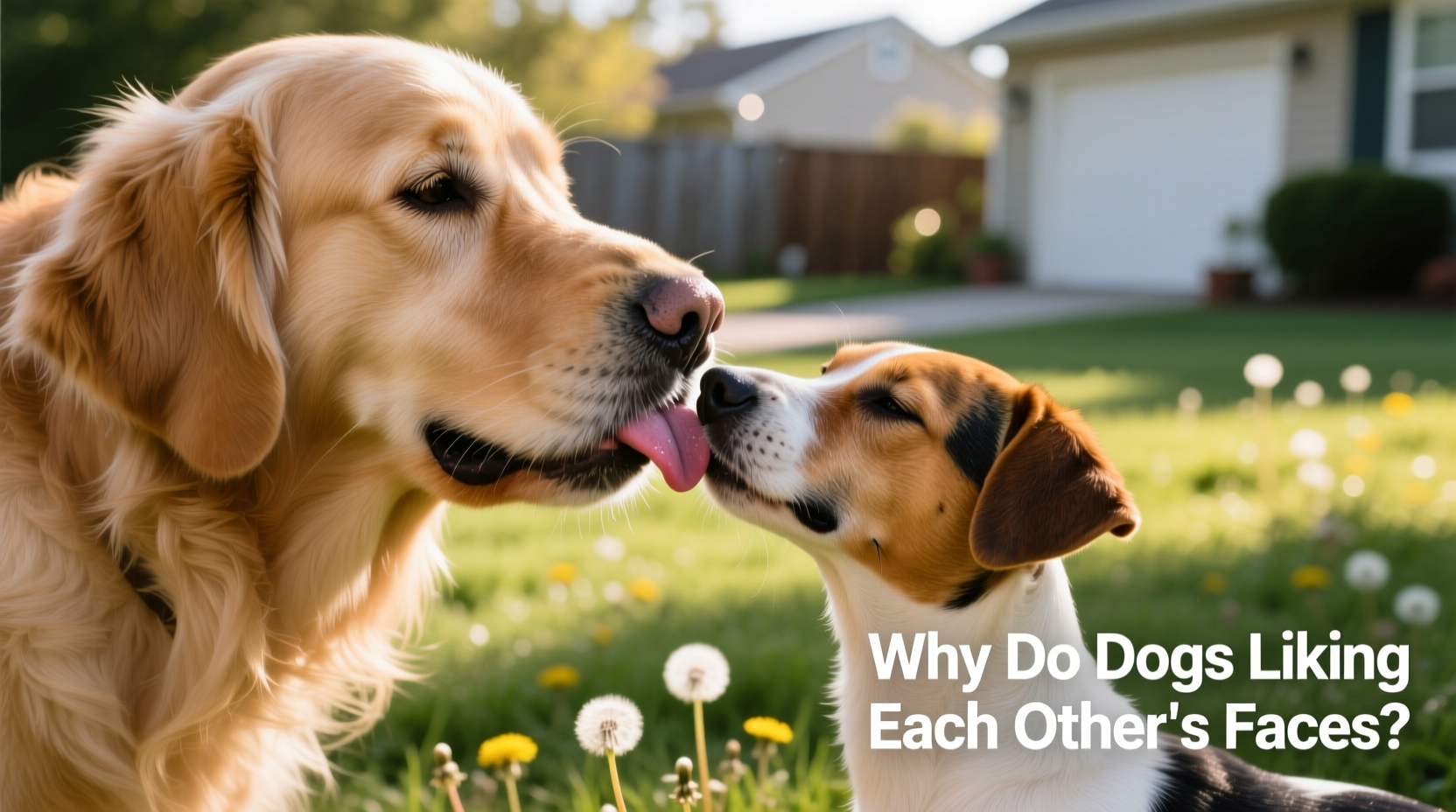
In the wild, canines—including wolves and wild dogs—use licking as a foundational social tool from birth. Puppies instinctively lick their mother’s mouth after feeding to stimulate regurgitation, a survival mechanism ensuring continued nourishment. This early interaction establishes licking as a form of respectful submission and bonding.
As dogs mature, this behavior evolves but retains its core function: communication. Adult dogs may lick another dog’s face to show deference, reduce tension, or solicit attention. It’s rarely an aggressive act; instead, it’s typically a pacifying gesture meant to maintain group harmony. Ethologists refer to such actions as “calming signals,” a term popularized by Norwegian dog trainer Turid Rugaas, who documented over 30 subtle behaviors dogs use to prevent conflict.
“Licking is one of the earliest forms of communication a dog learns. It starts with survival and matures into a sophisticated social language.” — Dr. Patricia McConnell, Animal Behaviorist
Social and Emotional Reasons for Face Licking
Among domestic dogs, face licking serves multiple interpersonal purposes. The meaning depends heavily on body language, environment, and the relationship between the animals involved.
- Submission and Respect: A lower-ranking dog may lick the face of a more dominant one to acknowledge hierarchy and avoid confrontation. Signs include lowered body posture, averted gaze, and soft eyes.
- Bonding and Affection: Dogs that live together often lick each other’s faces as a sign of closeness, similar to grooming in primates. This is common between littermates or long-term companions.
- Attention-Seeking: Some dogs learn that licking prompts a response—whether it’s play, food, or interaction—and use it strategically.
- Stress Reduction: In tense situations, a dog may lick another’s face to calm both itself and the other dog. This is often seen during introductions or in multi-dog households with shifting dynamics.
Health and Medical Considerations
While most face licking is benign, excessive or obsessive licking can point to underlying issues. Dogs may focus on a specific companion if they detect changes in scent, which can be linked to medical conditions.
For example, a dog might persistently lick another’s face if it senses infection, dental disease, or skin irritation. Canines have up to 300 million olfactory receptors (compared to about 6 million in humans), making them highly sensitive to biochemical changes. A sudden increase in licking behavior should prompt a veterinary check-up for both dogs.
| Behavior Pattern | Possible Meaning | Action to Take |
|---|---|---|
| Occasional, gentle licking | Normal social bonding | Monitor, no intervention needed |
| Frequent, focused licking on one spot | Potential wound, infection, or irritation | Inspect area, consult vet |
| Obsessive licking with agitation | Anxiety, compulsive disorder | Behavioral evaluation recommended |
| Licking followed by avoidance | Discomfort or rejection by recipient | Supervise interactions |
When Licking Becomes a Problem: Boundaries and Intervention
Not all dogs enjoy being licked, especially on the face. Just as humans have personal space preferences, so do dogs. A dog that repeatedly turns away, snaps, or growls after being licked is setting a boundary. Ignoring these signals can escalate tension and lead to aggression.
Owners should intervene when:
- The recipient shows clear signs of discomfort (lip licking, yawning, turning head).
- Licking becomes forceful or relentless.
- One dog consistently bullies another under the guise of “affection.”
“We rescued two dogs—a shy senior and an energetic young terrier. At first, the younger one constantly licked the older dog’s face. We thought it was sweet, but soon noticed the older dog was avoiding him. After consulting a trainer, we learned it was harassment, not affection. Redirecting the behavior improved their relationship dramatically.” — Sarah M., Dog Owner and Volunteer at City Paws Rescue
Step-by-Step Guide to Managing Excessive Licking
- Observe the interaction closely: Note frequency, duration, and reactions from both dogs.
- Identify triggers: Does licking happen during greetings, feeding times, or when guests arrive?
- Interrupt gently: Use a neutral command like “Let’s go” to redirect the licker to a toy or activity.
- Reinforce alternative behaviors: Reward the dog for sitting calmly near the other instead of licking.
- Consult a professional: If the behavior persists or escalates, seek help from a certified canine behaviorist.
Do’s and Don’ts of Responding to Dog-to-Dog Licking
| Do | Don’t |
|---|---|
| Allow natural social interactions when both dogs are relaxed | Punish a dog for licking without understanding the context |
| Teach basic obedience cues to manage impulses | Assume all licking is friendly or harmless |
| Use distraction techniques if one dog is overwhelmed | Force dogs to interact if either shows stress |
| Monitor for changes in frequency or intensity | Ignore signs of discomfort or aggression |
Frequently Asked Questions
Is it normal for my dog to lick my other dog’s face every time they meet?
Yes, if both dogs appear relaxed and the behavior is brief. Frequent greeting licks are common and usually signify recognition and social cohesion. However, if the recipient consistently avoids or reacts negatively, it may be worth managing the interaction more closely.
Can face licking spread diseases between dogs?
While casual licking is low risk, dogs can transmit bacteria, viruses, or parasites through saliva—especially if there are open wounds or oral infections. Rabies, periodontal disease, and certain respiratory illnesses can be transferred. Keep vaccinations current and practice good oral hygiene for all pets.
Should I stop my dog from licking other dogs’ faces?
Not automatically. Licking is a natural part of canine communication. Only intervene if it’s unwanted, obsessive, or causing distress. Teaching your dog impulse control through training gives you better tools than outright suppression.
Conclusion: Understanding Builds Better Relationships
Dog licking dog face behavior is far more than a quirky habit—it’s a window into the intricate world of canine social dynamics. By learning to read the context, body language, and emotional undercurrents, owners can foster healthier, more harmonious relationships between their pets. Whether it’s a puppy’s plea for food or an adult dog’s gesture of peace, each lick carries meaning. Respecting those meanings leads to more confident, balanced dogs and more informed, compassionate care.
💬 Have you noticed unique licking patterns between your dogs? Share your experiences or questions in the comments—your insights could help fellow dog lovers understand their pets better.








