For dog owners, daily walks are more than just exercise—they're bonding time, mental stimulation, and essential routine. But when your dog pulls relentlessly on the leash, the experience can turn from enjoyable to exhausting. The debate over whether a harness or collar is safer for a pulling dog isn't just about preference; it's about long-term health, behavior, and welfare. Understanding the biomechanical and behavioral impact of each option helps pet owners make informed decisions that protect their dogs’ physical well-being while encouraging better walking habits.
The Risks of Pulling on a Collar
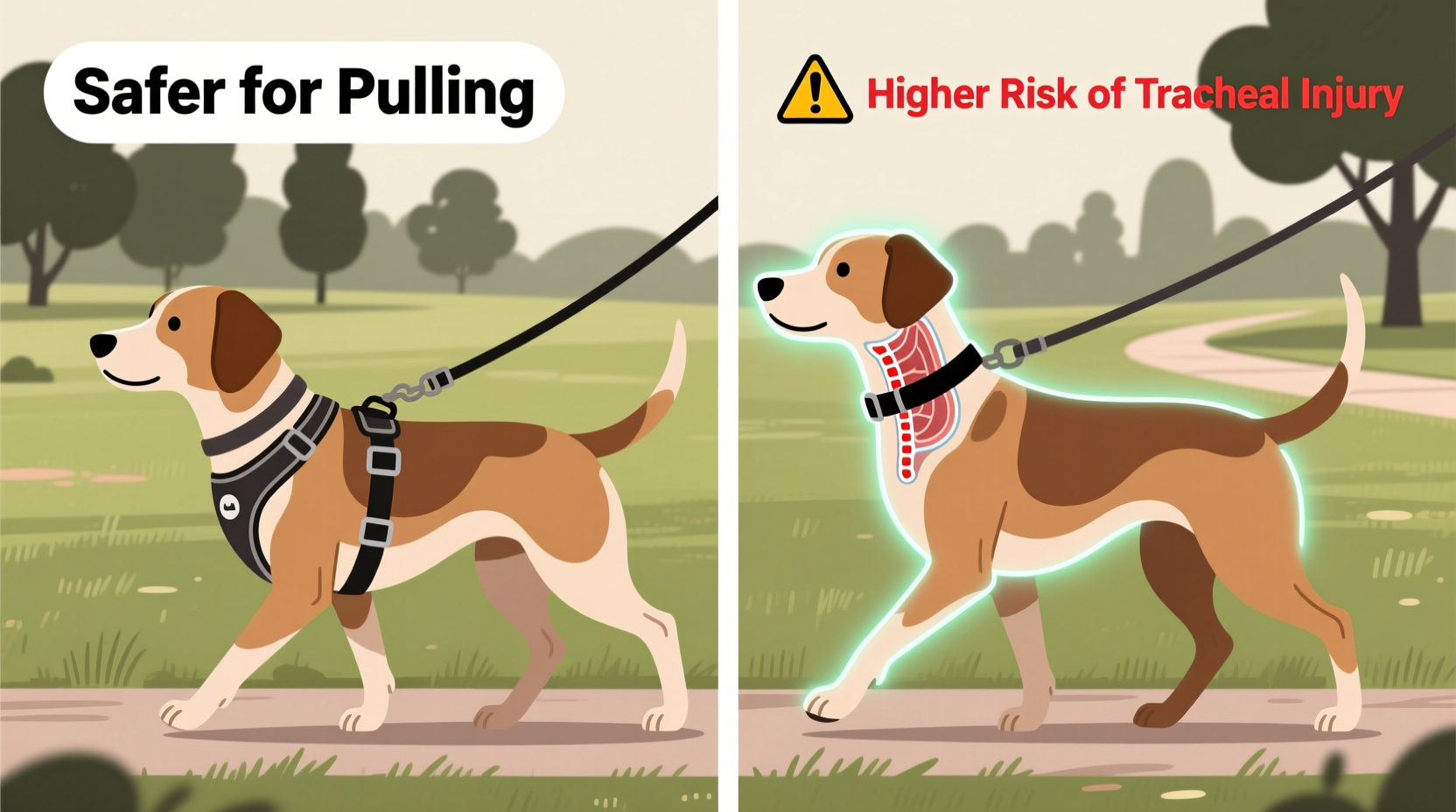
Traditional collars—especially flat buckle collars—are commonly used for ID tags and everyday wear. However, when combined with forceful pulling, they can pose significant risks. A dog that lunges forward creates tension across the neck, where vital structures like the trachea, thyroid glands, esophagus, and cervical spine are located. Repeated strain can lead to chronic issues.
One study published in the *Journal of Small Animal Practice* found that pressure from tight collars can cause tracheal collapse, especially in small breeds like Pomeranians and Yorkshire Terriers. Even larger dogs aren’t immune. Sudden jerks during walks—such as when a dog spots a squirrel—can result in acute injury, including bruising of the windpipe or damage to the delicate tissues around the larynx.
“Dogs that pull consistently on collars are at risk for both immediate and cumulative trauma. The neck is not designed to bear full-body force.” — Dr. Karen Bennett, Veterinary Behaviorist
Additionally, collars can contribute to behavioral feedback loops. When a dog pulls and the collar tightens, discomfort may increase reactivity—leading to more pulling, barking, or lunging. This cycle reinforces negative associations with walking and can worsen leash aggression over time.
Tip: Never use a standard collar for training or managing strong pullers. Even short walks can accumulate stress on sensitive neck anatomy.How Harnesses Distribute Force More Safely
Harnesses are designed to spread pressure across a broader area of the body—typically the chest and shoulders—reducing concentrated stress on any single point. For dogs that pull, this redistribution is critical. Front-clip harnesses, in particular, redirect forward motion by gently turning the dog’s body when tension occurs, making it harder to gain momentum.
There are three main types of dog harnesses relevant to pulling behavior:
- Back-clip harnesses: Leash attaches between the shoulder blades. These offer better control than collars but don’t actively discourage pulling.
- Front-clip harnesses: Leash connects at the chest. These create gentle steering effects when the dog pulls, guiding them back toward the handler.
- Dual-clip harnesses: Feature attachment points on both front and back, allowing flexibility depending on training goals.
Front-clip models have been shown in behavioral studies to reduce pulling force by up to 50% compared to collars. They work by leveraging physics: when the dog moves forward, the leash pulls from the front, causing the dog to pivot sideways. This natural resistance teaches the dog that pulling doesn’t get them where they want to go.
Biomechanical Advantages of Harness Use
Unlike humans, dogs do not have collarbones, meaning their entire forelimb structure is connected directly to the axial skeleton via muscles and connective tissue. When force is applied to the neck via a collar, it transmits through soft tissues into the spine and shoulders. In contrast, a well-fitted harness engages stronger musculature in the chest and pectoral regions, which are better equipped to handle load.
This is particularly important for brachycephalic breeds (like Bulldogs and Pugs), who are prone to respiratory distress. Restricting airflow through neck pressure can exacerbate breathing difficulties, making harnesses not just preferable—but medically advisable.
Comparative Analysis: Harness vs Collar for Pulling Dogs
| Feature | Collar | Harness |
|---|---|---|
| Pressure Distribution | Concentrated on neck | Distributed across chest/shoulders |
| Risk of Tracheal Injury | High, especially with force | Low to negligible |
| Effectiveness in Reducing Pulling | Poor – encourages forward motion | Good to excellent (especially front-clip) |
| Suitability for Puppies | Risky due to developing spine | Recommended for training |
| Ease of Escape | Low – secure fit | Varies – depends on design and fit |
| Breed-Specific Concerns | Not recommended for flat-faced or small breeds | Safer for all breeds, especially vulnerable ones |
While no tool replaces proper training, the right equipment sets the stage for success. A harness does not “allow” pulling—it changes the consequence of pulling, making it less effective and gradually teaching self-restraint.
Real-World Example: Transforming a Reactive Puller
Consider Max, a two-year-old Australian Shepherd adopted from a shelter. Max was enthusiastic but strong-willed, often dragging his owner down the street at speeds exceeding four miles per hour. After just six weeks of daily walks using a standard collar, Max began coughing after exertion. A vet visit revealed mild tracheal irritation and early signs of cervical strain.
His owner switched to a front-clip harness and enrolled in a positive-reinforcement leash training program. Within three weeks, Max’s pulling decreased by 70%. The harness didn’t eliminate the behavior overnight, but it created consistent feedback: every time he surged ahead, he turned slightly to the side, disrupting his momentum. Paired with treats for walking beside his owner, Max learned that calm pacing led to rewards.
After two months, Max walked politely on a loose leash in low-distraction environments. His coughing stopped entirely. His owner reported feeling safer and more confident during walks. This case illustrates how equipment and training work synergistically—equipment manages the physical risk, while training reshapes behavior.
Choosing the Right Harness: A Step-by-Step Guide
Selecting a safe, effective harness involves more than picking the most popular model. Fit, function, and breed-specific needs must align. Follow this sequence to ensure optimal results:
- Assess Your Dog’s Pulling Behavior: Is the pulling occasional or constant? Does it occur only around distractions? Understanding triggers helps determine whether you need a basic harness or a specialized training model.
- Measure Accurately: Use a soft tape measure around the deepest part of the chest (behind the front legs) and the neck. Many harnesses require both measurements.
- Choose Clip Position: For active pullers, start with a front-clip harness. If your dog walks reasonably well but needs extra security, a back-clip may suffice.
- Check Adjustability: Look for multiple adjustment points. A harness should be snug but allow two fingers beneath straps. Loose harnesses can chafe or allow escape.
- Test for Range of Motion: Once fitted, let your dog move naturally. Raise their front legs, trot in place, and observe for rubbing or restriction. The harness shouldn’t ride up into the armpits.
- Introduce Gradually: Allow your dog to wear the harness indoors for short periods before walking. Pair it with treats to build positive association.
- Monitor During Walks: Watch for signs of discomfort, such as excessive scratching, limping, or reluctance to walk. Adjust fit or try a different model if needed.
Common Mistakes to Avoid
Even well-intentioned owners make errors when transitioning from collars to harnesses. Awareness of these pitfalls improves outcomes:
- Misfitting the harness: Too loose leads to slipping; too tight causes chafing and restricted breathing.
- Using a poorly designed harness: Some Y-shaped harnesses cut into the armpits, leading to nerve damage over time.
- Expecting instant results: A harness aids training but doesn’t replace it. Consistent reinforcement is still required.
- Leaving the harness on all day: Extended wear can cause skin irritation. Remove after walks and inspect for redness or sores.
- Ignoring veterinary advice: Dogs with pre-existing conditions like hip dysplasia or spinal injuries may need specific support. Consult your vet before choosing gear.
Frequently Asked Questions
Can a harness hurt my dog if it’s not fitted properly?
Absolutely. An ill-fitting harness can cause chafing, restrict movement, or even lead to nerve damage, especially under the armpits. Always double-check fit and adjust as your dog grows or changes weight.
Should I still use a collar if my dog wears a harness?
Yes—for identification. Most experts recommend keeping a lightweight collar with ID tags on the dog at all times, even when using a harness for walks. Just ensure the collar is loose enough to avoid pressure when the harness is worn.
Are there dogs that shouldn’t use a harness?
Rarely. Nearly all dogs benefit from harnesses when pulling. However, dogs with certain medical conditions—such as recent abdominal surgery or severe heart disease—may require special accommodations. Always consult your veterinarian if unsure.
Expert Recommendations and Final Considerations
Veterinary professionals and certified dog trainers overwhelmingly recommend harnesses over collars for dogs that pull. The American College of Veterinary Surgeons advises against placing sustained pressure on a dog’s neck, noting that even brief episodes of choking can lead to long-term neurological complications.
“The safest way to walk a dog that pulls is with a well-fitted front-clip harness combined with reward-based training. It protects the dog’s body and builds cooperation.” — Dr. Lena Torres, Canine Rehabilitation Specialist
It’s also worth noting that safety extends beyond physical protection. A dog that feels comfortable and unharmed during walks is more likely to remain calm, attentive, and emotionally balanced. This contributes to better socialization, reduced anxiety, and a stronger human-animal bond.
That said, no single product is a magic solution. A harness is a management tool, not a substitute for training. Pairing the right equipment with consistent, positive reinforcement yields the best long-term results. Start with short, focused walks in low-distraction areas. Reward your dog frequently for staying close. Gradually increase difficulty as skills improve.
Conclusion: Prioritize Safety, Comfort, and Long-Term Health
When it comes to walking a dog that pulls, the choice between a harness and a collar isn’t merely about control—it’s about responsibility. Every tug on a collar transmits force through delicate anatomical structures, risking harm that may not appear until years later. A properly selected and fitted harness significantly reduces this risk, offering a humane, science-backed alternative.
Owners who make the switch often report not only improved walking behavior but also greater confidence in their ability to manage their dogs safely. Whether you’re dealing with a spirited puppy or a strong adult dog, prioritizing neck safety is one of the most impactful choices you can make.
💬 Have you made the switch from collar to harness? Share your experience, challenges, and tips in the comments below—your insights could help another dog owner make a safer choice today.








