
For owners of strong, energetic dogs—especially breeds like Huskies, Malamutes, Boxers, or Pit Bulls—the daily walk can feel less like leisure and more like a tug-of-war. These powerful breeds often pull instinctively, driven by curiosity, excitement, or breed-specific traits. But every tug on the leash isn’t just a battle of wills; it’s a potential risk to your dog’s health. The debate between using a collar versus a harness isn’t about preference alone—it’s about long-term safety, comfort, and behavioral outcomes. Veterinarians, animal behaviorists, and veterinary rehabilitation specialists increasingly agree: for pulling breeds, the choice is clear.
Why Pulling Matters: The Hidden Risks of Collar Use
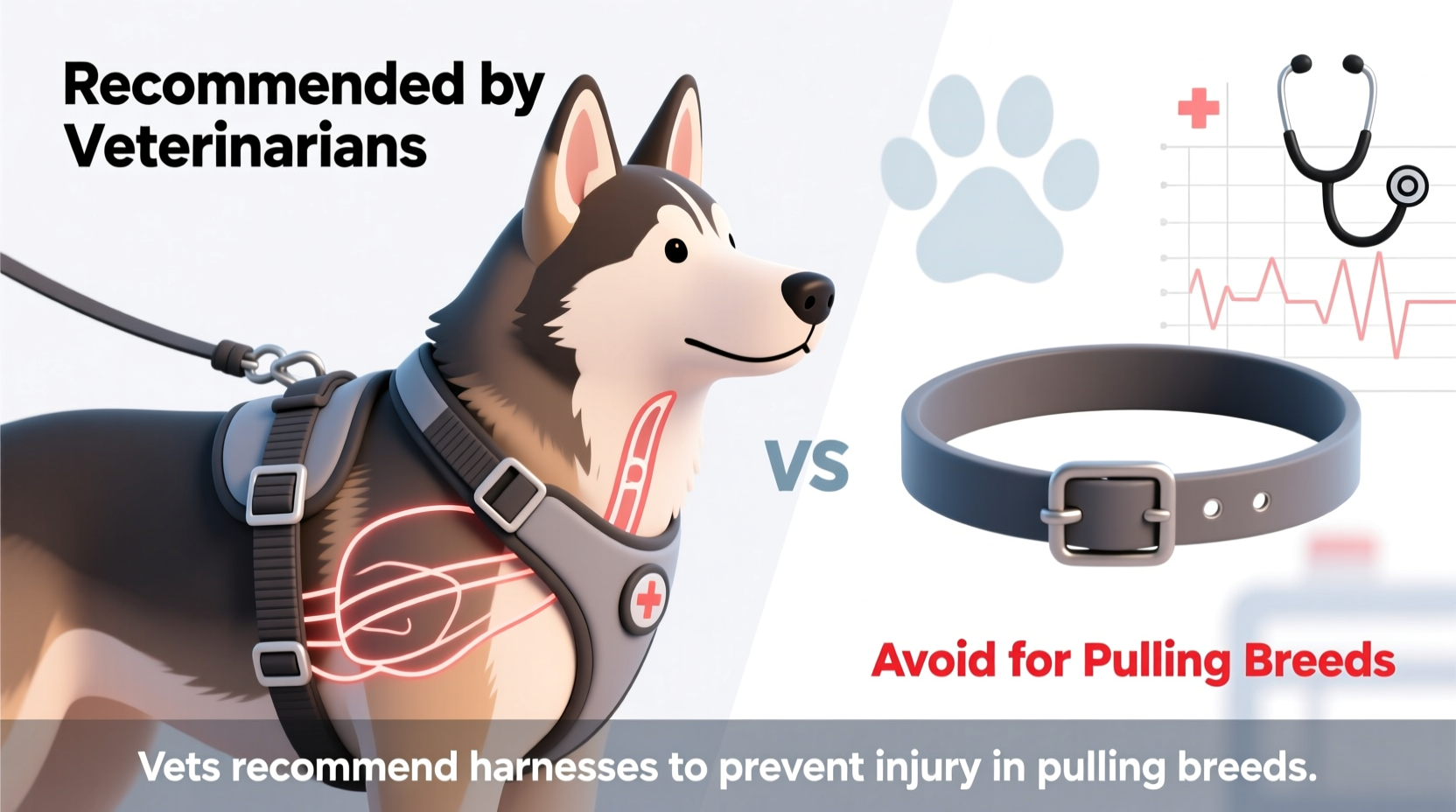
Dogs that pull on collars place immense pressure on their necks, affecting the trachea, thyroid glands, cervical spine, and even ocular pressure. A sudden lunge during a walk can generate forces equivalent to several times the dog’s body weight concentrated on a narrow band around the throat. For breeds predisposed to respiratory issues—like Bulldogs—or those with deep chests and ligament concerns—like Great Danes—this pressure can lead to chronic damage.
Dr. Sarah Krich, DVM, a veterinary surgeon specializing in canine orthopedics, explains:
“Repeated strain from collar pulling can cause microtrauma to the cervical vertebrae and increase the risk of conditions like intervertebral disc disease. In brachycephalic breeds, even moderate pressure can compromise breathing.”
The concern extends beyond physical injury. Chronic discomfort from neck pressure may contribute to leash reactivity. Dogs who associate walks with pain or restriction can become anxious or aggressive, creating a cycle that reinforces pulling behavior.
Tip: If your dog coughs, gags, or pulls harder when corrected on-leash, they may be experiencing discomfort from neck pressure—time to reassess your gear.Harness vs Collar: A Comparative Breakdown
Understanding the mechanics of each option helps clarify why professionals lean toward harnesses for high-pull breeds.
| Feature | Traditional Neck Collar | Front-Clip Harness | Back-Clip Harness |
|---|---|---|---|
| Pressure Distribution | Concentrated on neck and throat | Distributed across chest and shoulders | Across back and shoulders (can encourage pulling if not trained) |
| Safety for Trachea | Poor – high risk of injury | Excellent – avoids neck entirely | Good – no direct neck pressure |
| Control Level | Moderate – limited directional control | High – discourages pulling via gentle redirection | Moderate – may allow or reinforce pulling without training |
| Breed Suitability | Best for well-trained, non-pulling dogs | Ideal for strong, excitable, or pulling-prone breeds | Suitable for moderate walkers with proper training |
| Veterinary Recommendation | Not recommended for pullers | Strongly recommended | Cautiously recommended with training |
The data shows a consistent trend: front-clip harnesses reduce strain on sensitive anatomy while improving handler control. Unlike collars, which act as levers against the neck, harnesses distribute force across musculoskeletal structures better equipped to handle stress.
What Vets Actually Recommend—and Why
A 2023 survey of over 300 veterinarians conducted by the American Animal Hospital Association (AAHA) found that 89% recommend harnesses over collars for dogs that pull. Among board-certified veterinary behaviorists, that number rises to 96%. Their reasoning combines medical evidence with practical outcomes.
“We see too many cases of collapsed tracheas, laryngeal paralysis, and cervical injuries linked to chronic collar use,” says Dr. Elena Torres, DVM, DACVB. “When a dog pulls, a collar turns a simple walk into a repeated trauma event. A properly fitted front-clip harness redirects the dog’s momentum, making pulling self-limiting.”
The mechanism is simple: when a dog wearing a front-clip harness pulls forward, the leash attachment at the chest gently turns the dog sideways, encouraging them to pivot back toward the handler. This passive correction reduces reliance on verbal scolding or physical yanking, fostering a calmer walking experience.
Veterinarians also emphasize that recommendations are not one-size-fits-all. Small breeds with delicate necks (e.g., Chihuahuas, Pomeranians) benefit from harnesses even without pulling. Large, powerful breeds (e.g., Rottweilers, Mastiffs) need harnesses not just for their own safety but for public safety and legal liability.
“Even a well-behaved giant breed can become a danger if startled. A harness gives you more control in emergencies.” — Dr. Mark Lin, Emergency Veterinary Medicine Specialist
Choosing the Right Harness: A Step-by-Step Guide
Not all harnesses are created equal. Poor fit or design can cause chafing, restricted movement, or even escape attempts. Follow this vet-approved process to select and introduce a harness correctly.
- Measure Your Dog Accurately
Select a harness based on girth (behind the front legs), neck size, and weight. Refer to manufacturer sizing charts—never guess. - Choose Front-Clip Design
Opt for a harness with the leash ring positioned on the chest, not the back. Examples include the PetSafe Easy Walk and 2 Hounds Freedom Harness. - Ensure Proper Fit
The harness should be snug but allow two fingers beneath any strap. Straps should lie flat without twisting. Avoid models that press into armpits or restrict shoulder motion. - Introduce Gradually
Let your dog wear the harness indoors for short periods with treats and praise. Pair it with positive experiences—meals, play, affection. - Practice Off-Leash First
Allow your dog to move freely with the harness on before attaching a leash. Watch for signs of discomfort or altered gait. - Transition Slowly on Walks
Alternate between collar and harness for the first week. Use the harness for shorter, low-distraction walks initially. - Monitor Long-Term Use
Check for wear, fraying, or skin irritation weekly. Clean according to manufacturer instructions to prevent odor and bacterial buildup.
Real-World Example: Transforming a Puller
Meet Max, a 2-year-old Siberian Husky adopted by the Rivera family. Energetic and intelligent, Max turned neighborhood walks into exhausting struggles. Within six months, he developed a persistent dry cough. A visit to the vet revealed mild tracheal irritation and early signs of cartilage weakening.
Dr. Amira Patel, their veterinarian, recommended an immediate switch to a front-clip harness and enrollment in a positive-reinforcement walking class. The family started with indoor harness acclimation, rewarding Max for calm behavior. They used treats to redirect attention during walks, pairing the harness with high-value rewards.
Within four weeks, Max’s pulling decreased by over 70%. His cough resolved completely after eight weeks. Today, he walks politely beside his owners, responding to cues and enjoying structured exploration. “We didn’t realize we were hurting him,” said Maria Rivera. “The harness wasn’t just a tool—it was a health intervention.”
Common Myths Debunked
Despite growing consensus, misconceptions persist. Here’s what science and veterinary experts say:
- Myth: Harnesses encourage bad behavior.
Reality: No peer-reviewed study supports this. Well-fitted harnesses paired with training improve behavior. Misbehavior stems from lack of training—not equipment. - Myth: Only small dogs need harnesses.
Reality: Size doesn’t negate risk. Large dogs generate more force, increasing injury potential when pulling on collars. - Myth: All harnesses are the same.
Reality: Back-clip harnesses can function like collars if the dog leans into them. Front-clip designs are specifically engineered to discourage pulling. - Myth: Collars are necessary for ID tags.
Reality: ID tags can be attached to harnesses. Microchipping remains the most reliable identification method.
Checklist: Switching from Collar to Harness the Right Way
Use this checklist to ensure a smooth, safe transition:
- ☑ Consult your vet if your dog has pre-existing neck, back, or respiratory issues
- ☑ Measure your dog’s girth and neck before purchasing
- ☑ Choose a front-clip, no-pull harness with adjustable straps
- ☑ Introduce the harness indoors with positive reinforcement
- ☑ Allow free movement before attaching a leash
- ☑ Begin with short, distraction-free walks
- ☑ Monitor for rubbing, chafing, or changes in gait
- ☑ Combine harness use with reward-based training for loose-leash walking
- ☑ Keep collar for identification only, if desired
- ☑ Schedule follow-up check-ins with your trainer or vet
Frequently Asked Questions
Can I still use a collar with a harness?
Yes—for identification purposes only. Many owners keep a lightweight collar with ID tags while using a harness for walks. Just ensure both are properly fitted and don’t rub against each other.
Are harnesses safe for puppies?
Absolutely. Puppies of pulling-prone breeds should start with harnesses early. It prevents the formation of harmful habits and protects developing joints and tracheas. Begin training as soon as they’re vaccinated and cleared for outdoor exposure.
Do vets recommend specific harness brands?
Veterinarians don’t endorse brands outright, but commonly recommend designs proven in clinical studies. The PetSafe Easy Walk, 2 Hounds Freedom Harness, and Rabbitgoo No-Pull Harness are frequently cited for effectiveness and comfort. Always prioritize fit and adjustability over brand popularity.
Conclusion: Prioritizing Health Over Habit
The choice between a dog harness and collar for pulling breeds isn’t merely about convenience—it’s a decision rooted in animal welfare. Decades of veterinary research, clinical observation, and biomechanical analysis converge on one conclusion: harnesses, particularly front-clip designs, are safer, more humane, and more effective for dogs that pull.
Your dog doesn’t pull out of defiance. They pull because they’re excited, under-stimulated, or responding to instinct. Meeting that behavior with tools that protect their body while guiding their actions reflects responsible ownership. When your vet recommends a harness, they’re not just suggesting a product—they’re advocating for your dog’s long-term quality of life.
💬 Have you made the switch from collar to harness? Share your experience, challenges, and successes in the comments—your story could help another owner make a healthier choice today.








