
Every year, millions of pets go missing. For dog owners, the panic of a lost pet is overwhelming. While no solution guarantees a 100% recovery rate, two tools stand out in helping dogs return home: traditional ID tags and modern GPS trackers. Both have strengths and limitations, but understanding how they work—and when each is most effective—can make the difference between a joyful reunion and a heartbreaking loss.
ID tags are simple, reliable, and universally recognized. GPS trackers offer real-time location data and advanced features like geofencing and movement alerts. But which one actually gets lost dogs home faster? The answer isn’t straightforward—it depends on context, environment, technology use, and even community awareness.
How ID Tags Work and Why They Still Matter
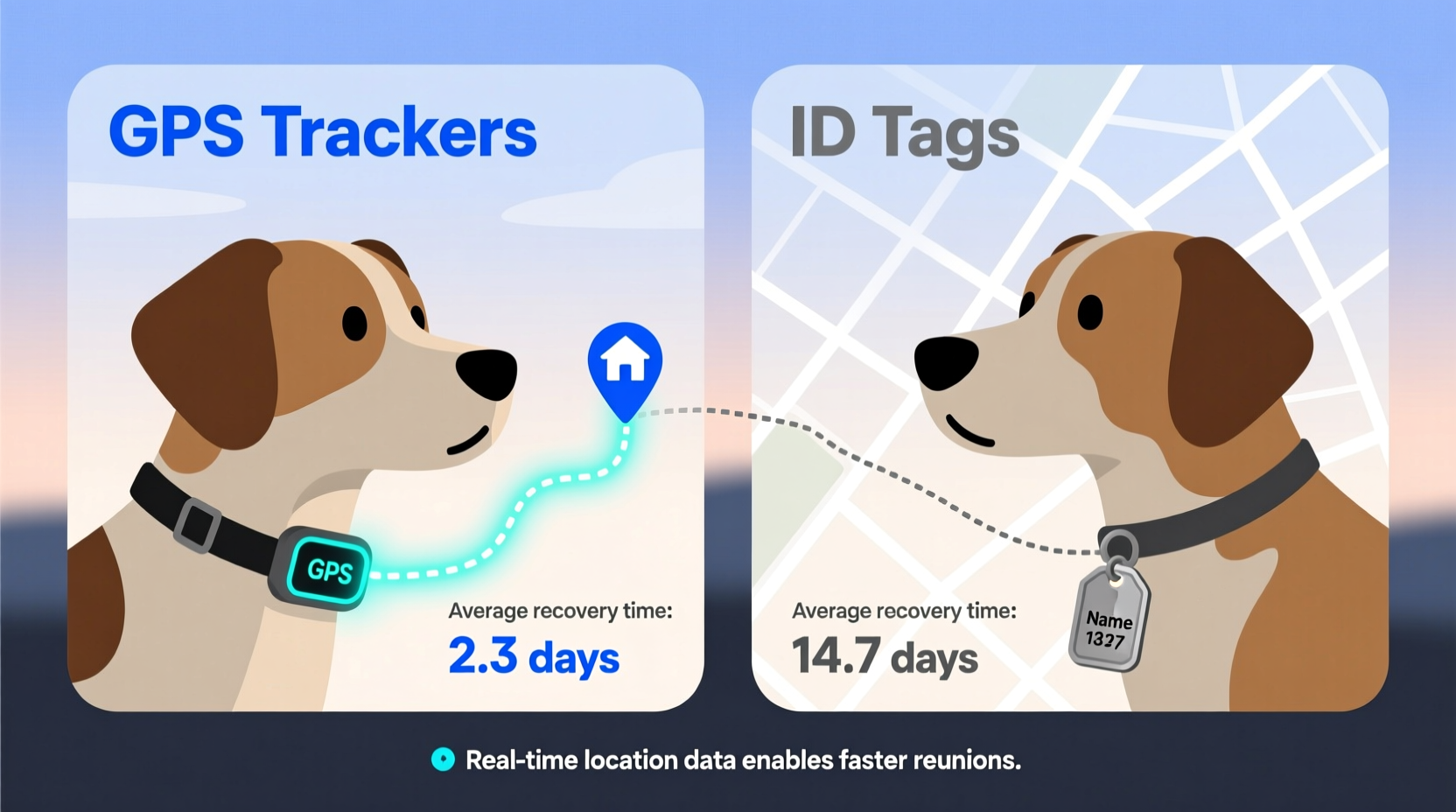
ID tags are small metal or plastic tags attached to a dog’s collar with engraved information such as the dog’s name, owner’s phone number, and sometimes an address. When someone finds a lost dog, they can call the number directly. No batteries, no apps, no connectivity required—just basic human interaction.
The simplicity of ID tags is their greatest strength. A neighbor walking their own dog who spots a wandering pup can read the tag and call within minutes. In suburban neighborhoods or rural areas where people know each other, this method often leads to immediate reunions.
According to the American Veterinary Medical Association (AVMA), dogs wearing visible ID tags are significantly more likely to be returned quickly than those without. One study found that over 50% of lost dogs were returned by neighbors who either knew the family or called the number on the tag—no shelters involved.
Tip: Always include at least one phone number on your dog’s ID tag—even if you also use a microchip. Speed matters, and calling is faster than scanning.Limits of ID Tags
Despite their effectiveness, ID tags have drawbacks. They can fall off if the collar breaks or slips loose. Engraved text may wear down over time, making numbers illegible. Some people hesitate to call a stranger late at night, especially if the dog appears aggressive. And in urban environments, passersby may assume someone else will handle it—a phenomenon known as the \"bystander effect.\"
Additionally, not all good Samaritans think to check for a tag. A dog running loose might be scooped up by animal control before anyone inspects its collar.
How Dog GPS Trackers Provide Real-Time Location Data
Dog GPS trackers are electronic devices—usually clipped onto a collar or integrated into a smart collar—that use satellite signals and cellular networks to transmit a dog’s location in real time. Using a smartphone app, owners can see exactly where their pet is, receive alerts if they leave a designated safe zone (geofencing), and even monitor activity levels.
These devices shine in situations where a dog has traveled far from home. If a dog escapes during a hike or chases a squirrel into dense woods, a GPS tracker can guide the owner straight to them. Unlike ID tags, GPS trackers don’t rely on someone finding and contacting the owner—they provide proactive intelligence.
Modern models like Fi, Whistle, and Tractive offer features such as live tracking, low-battery alerts, and integration with smart home systems. Some even work globally via LTE-M or NB-IoT networks, allowing pet parents to track their dogs across cities or states.
“GPS trackers have revolutionized pet recovery, especially in rural or remote areas where visual identification fails.” — Dr. Lena Torres, DVM and Director of Urban Animal Rescue Research
Limitations of GPS Trackers
While powerful, GPS trackers aren’t foolproof. They require charging—typically every few days to a week—so a dead battery renders them useless. Signal strength can drop in basements, thick forests, or underground tunnels. Subscription fees (often $10–$15/month) add ongoing costs. And crucially, unless the owner is actively monitoring the app or receives an alert, they might not realize the dog is missing until hours later.
Also, GPS trackers depend on the owner having a smartphone and data connection. In emergencies, technical glitches or poor reception can delay access to critical location data.
Comparing Recovery Speed: Real-World Scenarios
To determine which tool gets dogs home faster, consider different scenarios:
| Scenario | ID Tag Effectiveness | GPS Tracker Effectiveness |
|---|---|---|
| Dog escapes in residential neighborhood | High – neighbor sees tag and calls immediately | Moderate – owner must notice alert or check app |
| Dog runs into forest during walk | Low – unlikely anyone finds dog quickly | High – live tracking guides owner to exact location |
| Dog stolen or taken by stranger | None – tag provides no tracking | High – real-time location can aid police recovery |
| Dog loses collar entirely | None – no tag available | None – device detached from dog |
| Dog found by animal control | Moderate – scanned for microchip after intake | High – if active, allows instant owner contact |
In close-range, community-based recoveries, ID tags often win due to immediacy. But in long-distance or high-risk escapes, GPS trackers dramatically reduce search time and increase recovery odds.
Mini Case Study: Bella the Border Collie
Bella, a 3-year-old border collie from Colorado, slipped her collar during a camping trip and vanished into the woods. Her owner, Mark, had both an ID tag and a Tractive GPS tracker on her harness. Within minutes, the app alerted him that Bella had left the geofenced campsite.
Using live tracking, Mark followed her movements through rugged terrain. After 40 minutes, he located her near a creek, tired but unharmed. “Without the GPS,” he said, “I’d have been searching blindly. The tag wouldn’t have helped because no one was out there to see it.”
In contrast, when Lucy, a poodle in Austin, wandered out of her yard during a storm, a neighbor spotted her shivering under a porch, read her ID tag, and called her owner within 15 minutes. Lucy was back home before her owner even realized she was missing.
Both cases ended well—but for very different reasons.
Best Practices: Combining Both Tools for Maximum Protection
Relying on just one method creates risk. The most effective strategy combines multiple layers of protection. Veterinarians and animal rescue experts consistently recommend a three-tiered approach:
- Microchip – Permanent internal ID, scanned by shelters and clinics.
- ID Tag – Immediate external contact info for fast return.
- GPS Tracker – Active tracking for real-time recovery.
This layered system ensures redundancy. If the collar comes off, the microchip remains. If the GPS dies, the tag may still save the day. And if the tag is unreadable, the chip provides backup.
Checklist: Protect Your Dog from Getting Lost
- ✅ Attach a durable ID tag with current phone number
- ✅ Microchip your dog and register the number with the provider
- ✅ Update your contact info with the microchip company annually
- ✅ Use a secure collar or harness designed to prevent slipping
- ✅ Invest in a GPS tracker with live tracking and geofencing
- ✅ Charge the GPS device weekly and test the app monthly
- ✅ Train your dog to respond to recall commands
- ✅ Share recent photos of your dog digitally for quick distribution if lost
When Each Solution Shines: A Timeline of Typical Recovery Paths
Understanding the timeline of a lost dog incident reveals why speed and method matter:
- 0–30 Minutes: Most recoveries happen now. If a neighbor sees the dog and calls the number on the tag, reunion occurs within minutes.
- 30 Minutes–4 Hours: Owner notices the dog is missing. If using GPS, they activate tracking and begin search. This window is critical for GPS success.
- 4–24 Hours: Dog may be picked up by animal control. Shelters scan for microchips. Tags help avoid shelter intake altogether.
- 24+ Hours: Widespread search begins. Flyers, social media, and GPS history become essential. GPS data can show movement patterns and last known locations.
Data from the National Council on Pet Population Study shows that 93% of dogs who were found and returned did so within the first 12 hours. Of those, nearly 60% were returned via ID tags or direct neighbor contact. GPS-tracked dogs that went beyond neighborhood boundaries had higher recovery rates after 12 hours than those without trackers.
Frequently Asked Questions
Can a GPS tracker replace an ID tag?
No. GPS trackers require power, connectivity, and user action. An ID tag enables instant communication from anyone who finds your dog. They serve different purposes and should both be used.
What happens if my dog’s GPS tracker battery dies?
The device becomes inactive until recharged. That’s why consistent charging and low-battery alerts are crucial. Some trackers have extended standby modes, but none function indefinitely without power.
Are GPS trackers worth the monthly fee?
For many owners, yes—especially those living near highways, forests, or with escape-prone breeds. The peace of mind and rapid recovery potential often justify the cost. However, budget-conscious owners should prioritize ID tags and microchips first, then consider GPS as an added layer.
Conclusion: Use Both to Maximize Your Dog’s Chances
There’s no single best tool for recovering a lost dog. ID tags excel in speed and simplicity when a helpful person is nearby. GPS trackers provide precision and proactive search capabilities when dogs travel far or enter dangerous areas. Relying on only one method leaves gaps that could delay or prevent a reunion.
The fastest way to get a lost dog home is to combine visibility, permanence, and technology. A well-maintained ID tag ensures immediate contact. A microchip offers permanent identification. And a charged GPS tracker gives you the power to act fast with accurate location data.
🚀 Your dog’s safety starts today. Check their collar, update your contact info, charge that tracker, and never skip the ID tag. Share this article to help other pet owners protect their furry family members too.








