
Bringing home a new puppy is an exciting milestone, but it comes with serious responsibility—especially when it comes to creating a safe, structured environment for learning. Two of the most commonly used tools in early puppy development are dog crates and playpens. While both serve as containment solutions, they differ significantly in design, purpose, and impact on behavior. Choosing between a dog crate and a playpen isn’t just about space or convenience; it’s about laying the foundation for a well-adjusted, confident dog. Understanding their distinct roles can help you decide which option—or combination—will create the safest and most effective training environment.
The Role of Containment in Puppy Development
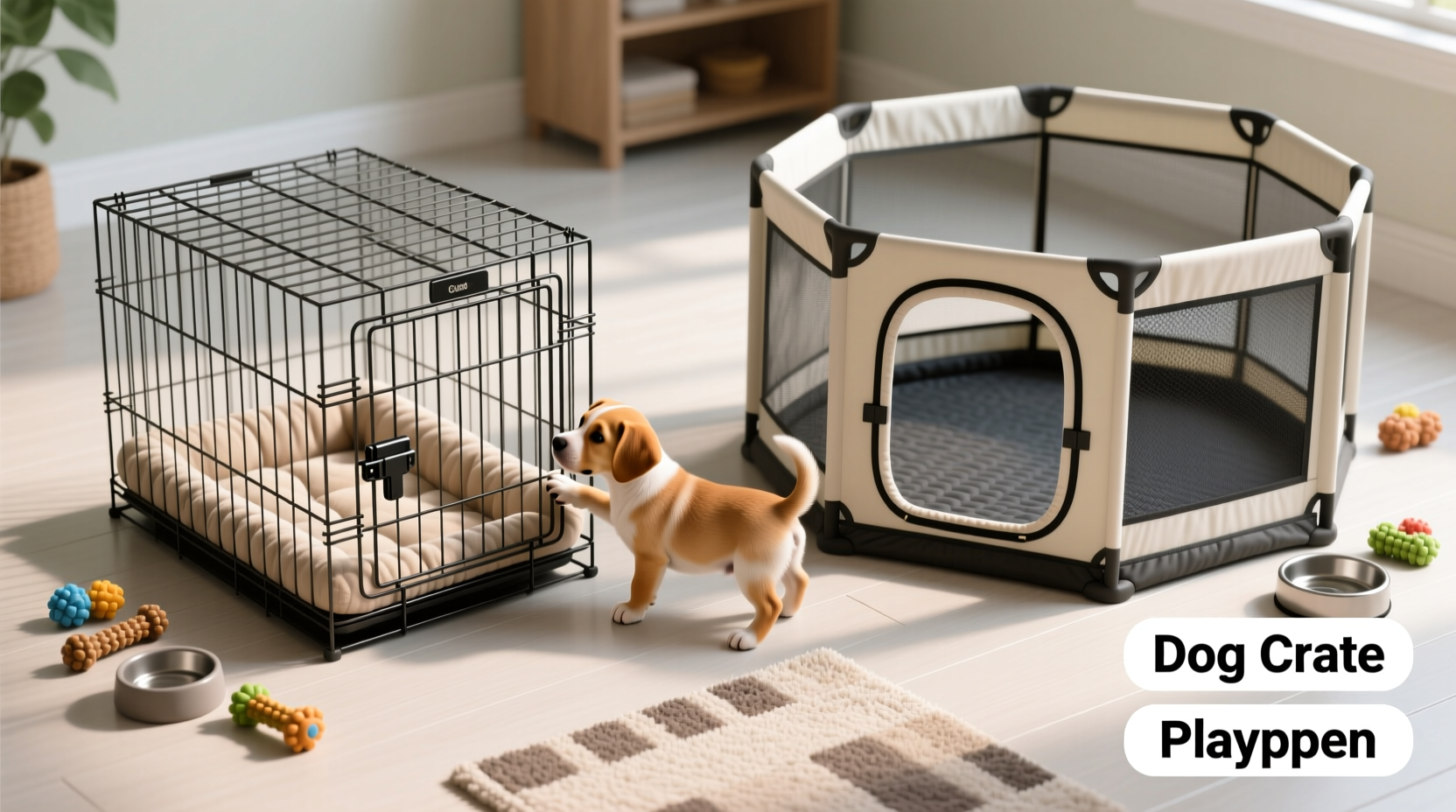
Puppies are naturally curious, energetic, and prone to chewing, digging, and exploring—often at the expense of your shoes, baseboards, or electrical cords. Without proper supervision, these behaviors can lead to injury or destructive habits that become difficult to correct later. That’s where controlled containment comes in.
Containment isn’t about punishment—it’s about management. A secure space prevents accidents, supports housebreaking, reduces anxiety, and gives puppies a designated “den” where they feel safe. Both crates and playpens offer this benefit, but they do so in different ways.
Dog crates mimic a den-like atmosphere, appealing to a dog’s instinctual desire for a small, enclosed shelter. Playpens, on the other hand, provide more open space and freedom of movement while still limiting access to unsafe areas. The key difference lies in psychological impact and behavioral conditioning.
Tip: Never use containment as long-term isolation. Puppies need social interaction, exercise, and mental stimulation every few hours.Comparing Safety: Crate vs Playpen
Safety should be the top priority when selecting a containment system. Let’s break down how each option performs across critical safety factors.
| Feature | Dog Crate | Playpen |
|---|---|---|
| Chewing Hazard Risk | Low – typically made of durable metal or hard plastic | Moderate to High – fabric sides may be chewed; wire panels can be gnawed |
| Escape Potential | Low – secure latch systems prevent escapes | Moderate – some puppies learn to push panels apart or climb over |
| Stability | High – rigid structure resists tipping | Variable – lightweight models may tip if puppy jumps or leans |
| Access to Hazards | Controlled – only items inside are what you place there | Riskier – larger area may include cords, furniture legs, or dropped objects |
| Breathing & Visibility | Limited airflow in plastic crates; good visibility in wire | Excellent airflow and 360° visibility |
From a structural standpoint, crates—especially heavy-duty wire or molded plastic varieties—are generally safer in preventing escape and minimizing chewing risks. Their compact size allows owners to control exactly what’s inside: a bed, water bowl, and maybe one indestructible toy. This level of control reduces exposure to household dangers.
Playpens offer more room, which sounds beneficial, but that extra space can backfire without careful monitoring. A puppy left alone in a large playpen might chew a frayed edge of fabric, ingest stuffing, or knock over a lamp placed too close. While visibility and ventilation are better, the trade-off is reduced security unless the setup is meticulously managed.
“Puppies thrive on boundaries. A confined, predictable space helps them feel secure and accelerates learning.” — Dr. Laura Simmons, Veterinary Behaviorist
Training Effectiveness: Building Good Habits Early
When it comes to training, not all containment tools are created equal. Crates have a proven track record in supporting two essential aspects of puppy development: housebreaking and bite inhibition.
Crate training leverages a dog’s natural instinct not to soil their sleeping area. By keeping the crate appropriately sized—just big enough to stand, turn around, and lie down—you encourage bladder and bowel control. Most puppies will avoid eliminating where they rest, making crates highly effective for establishing a potty schedule.
In contrast, playpens often allow enough space for a puppy to designate one corner as a bathroom zone, especially if left unattended for long periods. Once this habit forms, it becomes harder to break, undermining house training progress.
Crate training also supports emotional regulation. The den-like enclosure provides comfort during naps and downtime, helping puppies learn to self-soothe. This is particularly valuable during the critical socialization window (8–16 weeks), when overstimulation can lead to fear-based behaviors.
Playpens are better suited for supervised activity periods. They give puppies room to move, play with toys, and practice motor skills. However, because they lack the psychological boundary of a crate, they don’t reinforce the same level of impulse control.
Step-by-Step: Using a Crate for Effective Training
- Choose the right size: Measure your puppy from nose to tail base and add 4 inches. The crate should not allow space for separate sleeping and elimination zones.
- Introduce gradually: Leave the crate door open with treats and toys inside. Let your puppy explore voluntarily.
- Create positive associations: Feed meals in the crate, use calming praise, and avoid using it as punishment.
- Start short sessions: Begin with 5–10 minute closures while you’re nearby, then gradually extend duration.
- Integrate into daily routine: Use the crate during naps, meal prep, or brief absences to build independence.
When a Playpen Makes Sense: Strategic Use Cases
While crates excel in structure and safety, playpens have legitimate uses—especially when used correctly. The key is understanding their role as a supplement, not a replacement, for crate training.
A playpen shines in situations requiring more mobility. For example, if you’re working from home and want your puppy nearby but safely contained while you type, a playpen offers room to stretch, play with puzzle toys, and rest without confinement pressure. It’s also useful in larger homes where you want to block off an entire section of a room without closing doors.
Families with multiple pets may find playpens helpful for managing interactions. You can set up a playpen within a shared space to allow visual contact while preventing rough play or resource guarding.
However, successful playpen use demands discipline. Follow these guidelines to maintain safety and training integrity:
- Keep the area free of hazards: no loose cords, toxic plants, or chewable materials.
- Limit unsupervised time—never leave a puppy in a playpen for more than 1–2 hours depending on age.
- Use only during active hours; switch to a crate for naps and overnight.
- Anchor the panels securely to prevent tipping, especially with strong or excitable breeds.
Mini Case Study: Max, the Overstimulated Labrador Retriever
Max, a 10-week-old yellow Lab, was adopted by a young couple living in a studio apartment. Eager to give him space, they initially set up a large mesh playpen in the center of the room. Within days, Max began having accidents in one corner, barking at passersby through the window, and chewing the fabric edges.
After consulting a trainer, they switched to a wire crate placed in the same room but positioned away from high-traffic views. They used the playpen only when both were home and could supervise. Within a week, Max stopped eliminating in his space, slept through naps, and became calmer overall. The crate provided the boundaries he needed, while the playpen offered daytime enrichment under supervision.
This case illustrates a balanced approach: using the crate for structure and safety, and the playpen selectively for activity and exploration.
Expert Recommendations and Best Practices
Veterinary behaviorists and professional trainers overwhelmingly recommend crate training as the cornerstone of responsible puppy care. According to the American Kennel Club, “A properly introduced crate is a sanctuary, not a prison,” and serves as a lifelong tool for travel, vet visits, and stress reduction.
That said, flexibility matters. Some puppies—particularly those from chaotic backgrounds or with anxiety—may need a transitional period before accepting a crate. In such cases, starting with a smaller playpen (4-panel setup) can ease the shift toward confinement. Gradually reduce the playpen size and introduce crate time in parallel until the puppy accepts the crate willingly.
Another best practice is combining both tools strategically:
- Use the crate for sleep, alone time, and travel.
- Use the playpen for daytime play, toy rotation, and social exposure.
- Never leave valuable or hazardous items within reach in either setup.
“Crate training, when done positively, is one of the greatest gifts you can give a puppy. It builds confidence, prevents problems, and creates a lifetime of安全感.” — Sarah Chen, Certified Professional Dog Trainer
FAQ
Can I use a playpen instead of a crate for house training?
It’s not recommended. Playpens usually offer too much space, allowing puppies to eliminate away from their resting area. This undermines the natural instinct to keep a den clean, slowing house training progress.
Is it cruel to crate a puppy for several hours a day?
No—when done appropriately. Puppies under 12 weeks shouldn’t be crated more than 2–3 hours at a time (plus overnight). Older puppies can handle longer durations. Always balance crate time with walks, play, and socialization.
What if my puppy hates the crate?
Most resistance stems from rushed introduction or negative associations. Go back to basics: leave the door open, toss treats inside, feed meals there, and never force entry. Patience and consistency usually resolve reluctance within a week or two.
Final Checklist: Choosing the Right Setup
- Assess your puppy’s age, breed, and temperament.
- Select a properly sized crate (wire or plastic) as your primary containment tool.
- Set up a secure playpen for supervised activity only.
- Remove all hazards from both environments.
- Introduce the crate gradually with positive reinforcement.
- Establish a routine: crate for naps/overnight, playpen for daytime engagement.
- Monitor behavior and adjust as your puppy grows.
Conclusion
When it comes to creating a safer environment for puppy training, the evidence favors the dog crate as the superior choice for structure, safety, and long-term behavioral health. Its ability to support housebreaking, reduce anxiety, and prevent destructive habits makes it an indispensable tool. Playpens have value—but primarily as a secondary option for supervised freedom, not foundational training.
The goal isn’t to restrict your puppy, but to guide them toward confidence and self-control. With thoughtful implementation, a crate becomes more than a cage—it becomes a trusted refuge. Combine it with smart playpen use, consistent routines, and plenty of affection, and you’ll lay the groundwork for a well-mannered, emotionally resilient companion.
🚀 Ready to build a safer, smarter training space? Start with a properly introduced crate today—and watch your puppy thrive with clearer boundaries and greater peace of mind.








