Pet fashion isn’t just a trend—it’s a booming industry. From tiny turtlenecks for Chihuahuas to festive sweaters for cats, store-bought pet clothing fills online marketplaces and boutique shelves. But as prices rise and styles become increasingly disposable, many pet owners are turning to do-it-yourself (DIY) solutions. The real question isn’t just about style or cuteness—it’s practicality. When it comes to dog and cat clothes, is buying ready-made really worth the cost and hassle, or can crafting your own at home save both money and stress?
This article breaks down the true costs, time investment, durability, and emotional payoff of both options. Whether you're dressing your pet for warmth, medical needs, or Instagram fame, understanding the trade-offs helps you make smarter, more sustainable choices.
The Real Cost of Store-Bought Pet Clothes
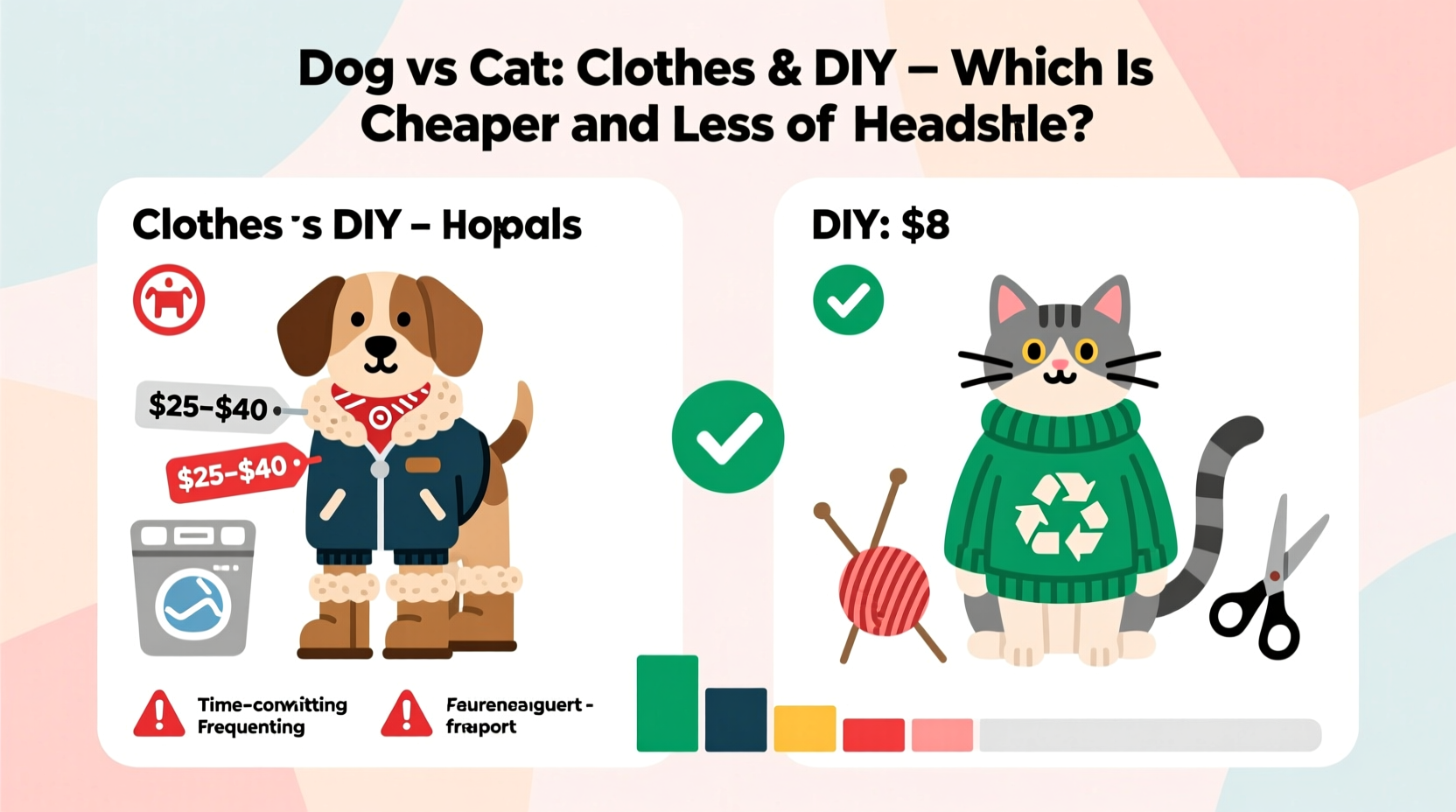
At first glance, pet clothing might seem like a minor expense. A simple sweater for a small dog ranges from $15 to $30, while designer jackets can exceed $100. But when you consider that pets grow, shed, chew, or simply refuse to wear certain items, these costs add up quickly. Multiply that by seasonal changes—winter coats, rain jackets, Halloween costumes—and annual spending can easily reach $200 or more per pet.
Additionally, off-the-rack clothes often don’t fit perfectly. Breeds with unique proportions—like dachshunds or Scottish Folds—struggle with standard sizing, leading to returns, exchanges, or wasted purchases. Poor fit doesn’t just look awkward; it can restrict movement or cause chafing, making the purchase not only costly but potentially uncomfortable for your pet.
Tip: Measure your pet accurately before buying any clothing—length from neck to tail base, chest girth, and neck size—to avoid mismatched fits and unnecessary returns.DIY Pet Clothing: Upcycling vs. Starting from Scratch
DIY pet clothing typically falls into two categories: upcycling old human garments and sewing new ones from fabric. Upcycling is the most budget-friendly method—converting an old sweater, T-shirt, or sock into a pet outfit requires minimal tools and almost no material cost if you’re using what’s already in your closet.
Sewing from scratch offers more precision and design control but demands time, basic sewing skills, and fabric purchases. Cotton, fleece, and knit fabrics suitable for pets range from $5 to $12 per yard. Factor in thread, buttons, or closures, and a single handmade garment might cost $8–$15 in materials—still significantly less than many retail equivalents.
But cost isn’t the only variable. Time is a major factor. A simple upcycled T-shirt dress for a cat might take 20 minutes. A lined winter coat with hoods and Velcro straps could take several hours across multiple sessions, especially for beginners.
“Many pet owners underestimate how much trial and error goes into fitting a handmade garment. One size never fits all—even within the same breed.” — Dr. Lena Torres, Veterinary Behaviorist
Comparative Breakdown: Cost, Time, and Long-Term Value
| Factor | Store-Bought Clothes | DIY Clothes |
|---|---|---|
| Average Material Cost per Item | $15–$80 | $3–$15 (upcycled: ~$0) |
| Time Investment | 5–10 minutes (ordering/shipping) | 20 min – 5 hours per item |
| Fitting Accuracy | Variable; depends on brand/size chart | Adjustable; customizable per pet |
| Durability | Mixed; some use low-grade stitching | High if reinforced properly |
| Emotional Satisfaction | Low to moderate | High (personalization, creativity) |
| Ease of Washing | Usually machine washable | Depends on materials used |
The table reveals a clear pattern: DIY wins on cost and customization, while store-bought wins on speed and convenience. However, long-term value shifts the balance. Handmade clothes can be repaired, resized, or repurposed. A favorite sweater can gain patches, longer sleeves, or reflective strips over time—something impossible with mass-produced items.
Step-by-Step Guide to Making Your First DIY Pet Outfit
If you’re curious about trying DIY, start simple. Here’s how to convert an old adult T-shirt into a cozy cat or small dog shirt in under 30 minutes:
- Gather supplies: Old T-shirt (cotton works best), scissors, ruler or measuring tape, fabric chalk or washable marker, pins.
- Measure your pet: Chest circumference, back length (neck to base of tail), and neck opening.
- Lay the shirt flat: Use the body of the T-shirt as the main fabric piece. The neckline will become the pet’s neck opening.
- Mark cutting lines: Along the side seams, cut downward from armpit to hem, removing the lower portion. You’ll keep the upper half.
- Create leg holes: On the front and back panels, cut small slits near the bottom edge—these are for front legs. For rear legs, extend the side cuts slightly and round the bottom corners.
- Test fit: Gently place the shirt on your pet. Adjust hole sizes or length if needed.
- Optional finish: Hem edges with a sewing machine or fabric glue to prevent fraying.
Real Example: Sarah’s Winter Coat Experiment
Sarah, a pet owner from Portland, Oregon, owns a senior greyhound named Luna who struggles with cold weather due to low body fat. Last winter, Sarah bought three different thermal coats online, totaling $185. Each had issues: one rubbed under the arms, another slipped sideways, and the third lost its zipper after two months.
Frustrated, she found a YouTube tutorial for a fleece-lined dog coat using recycled sweatshirts. She spent $7 on heavy-duty thread and two evenings perfecting the first coat. The final product had adjustable chest straps, a high neck, and a leash hole. Not only did Luna tolerate it better—she seemed warmer and more relaxed. Sarah made two more versions and donated one to a local rescue.
“It took time upfront,” Sarah said, “but now I can make a new coat in under three hours, and I know exactly how it fits. Plus, it feels good knowing I’m reducing waste.”
Checklist: Is DIY Right for You?
- ✅ Do you have basic sewing skills or willingness to learn?
- ✅ Do you own old clothes or fabric scraps you can repurpose?
- ✅ Does your pet have unique sizing or sensitivity to tags/seams?
- ✅ Are you looking to reduce recurring pet expenses?
- ✅ Do you enjoy hands-on projects or personalized pet care?
If you answered yes to three or more, DIY could be a smart, satisfying path. If speed and consistency matter most—especially for travel or gifts—store-bought may still be the better choice.
Frequently Asked Questions
Can I wash DIY pet clothes as easily as store-bought ones?
Yes, if you use machine-washable fabrics like cotton, fleece, or polyester knits. Avoid glues or embellishments that can degrade in water. Always air-dry delicate pieces to preserve shape.
What if my pet hates wearing clothes?
Introduce garments slowly, regardless of origin. Let your pet sniff and explore the item first. Offer treats during dressing. Avoid restrictive designs. Some pets never adapt—respect their comfort over aesthetics.
Are there safety concerns with DIY clothing?
Yes. Avoid loose strings, small buttons, or weak seams that could be chewed off and swallowed. Ensure freedom of movement and unrestricted breathing. Never leave a dressed pet unattended outdoors or near heat sources.
Final Verdict: Balancing Cost, Effort, and Peace of Mind
When comparing dog and cat clothes versus DIY, the answer isn’t absolute. Store-bought clothing wins in immediacy and polished design, but at a higher financial and environmental cost. DIY demands time and skill but offers unmatched customization, long-term savings, and emotional reward.
The least stressful approach? A hybrid model. Use DIY for everyday wear, seasonal basics, and medical recovery suits. Reserve store-bought items for special occasions or when time is limited. This balance reduces spending, minimizes frustration, and keeps your pet comfortable and safe.
💬 Have you tried making pet clothes at home? Share your successes, challenges, or favorite tutorials in the comments—your experience could inspire another pet lover to pick up a needle and thread!








