
Choosing the right carrier for your dog isn’t just about convenience or style—it’s about your pet’s comfort, safety, and emotional well-being. With so many options available, two popular choices stand out: dog carrier purses and soft-sided carriers. While they may look similar at first glance, their design, functionality, and impact on your dog’s experience can differ significantly. Understanding these differences—and how your dog responds to each—can make all the difference in creating a stress-free travel experience.
Understanding the Key Differences
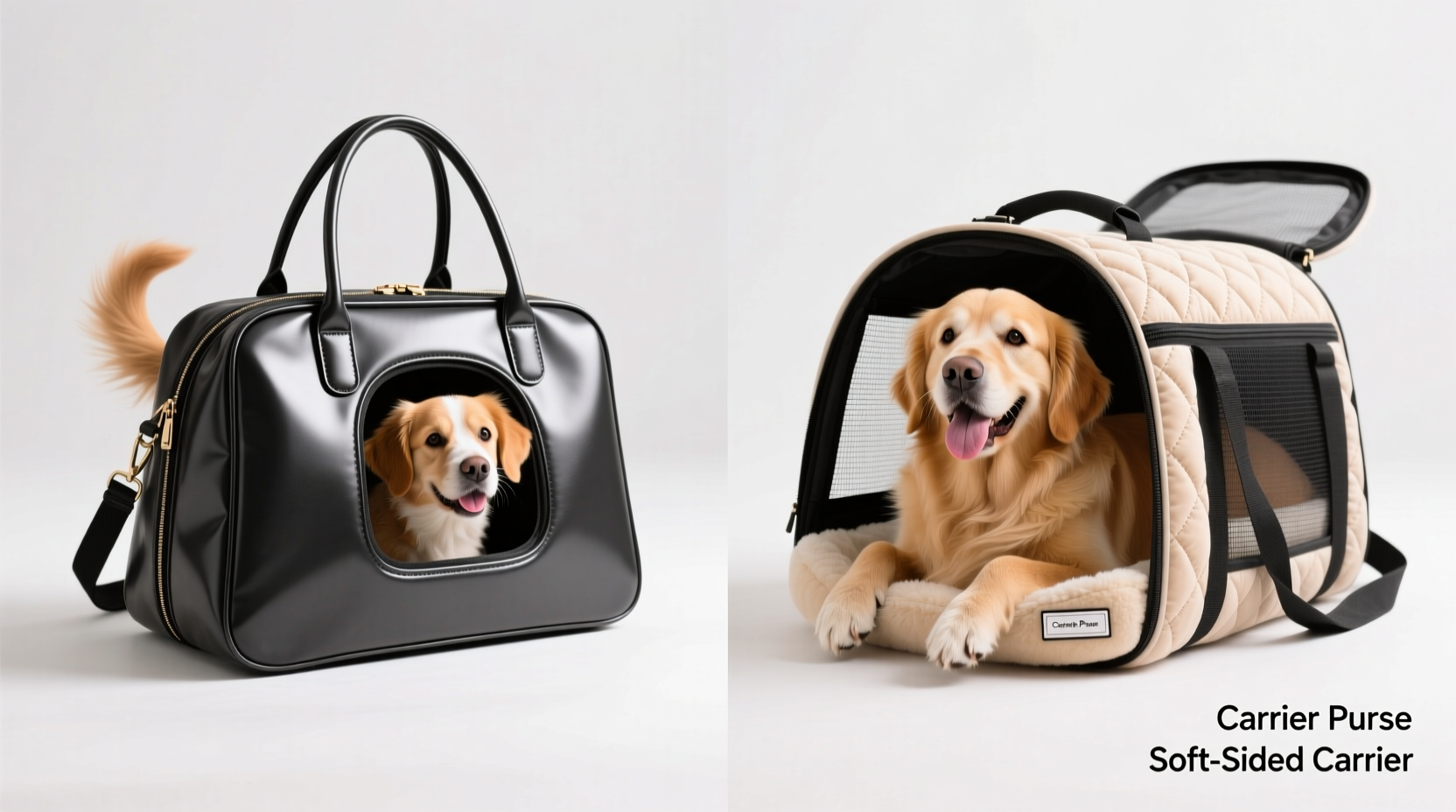
Before evaluating preference, it’s essential to distinguish between the two types of carriers.
Dog carrier purses are typically compact, fashion-forward designs that resemble handbags. They often feature a single access point (usually from the top), limited ventilation, and minimal structural support. These are marketed toward small breeds like Chihuahuas, Pomeranians, or toy poodles and are commonly used for quick trips or urban outings.
Soft-sided carriers, on the other hand, are engineered with pet comfort and safety in mind. They usually have multiple access points (side zippers, front doors), reinforced frames, mesh ventilation panels on multiple sides, and sometimes even seatbelt attachments for car travel. Though they may lack the \"fashion\" appeal of purses, they prioritize function and long-term usability.
Tip: Always check if your carrier meets airline specifications if you plan to fly with your dog—many airlines reject purse-style carriers due to inadequate airflow.What Do Dogs Actually Prefer? Behavioral Insights
Dogs don’t vote with words, but they communicate through body language, vocalizations, and behavior. When placed in different carriers, their reactions reveal what they truly prefer.
Studies in canine behavior suggest that dogs favor environments where they feel secure, can see their surroundings, and maintain some control over their space. A 2021 study published in *Applied Animal Behaviour Science* found that dogs exhibited lower cortisol levels (a stress hormone) when transported in carriers with side access and panoramic visibility compared to top-loading designs.
In practical terms, this means most dogs feel less trapped and anxious when they can step in from the side and observe their environment through breathable mesh windows. Carrier purses, which often restrict visibility and require lifting the dog overhead, can trigger anxiety or resistance—especially in shy or sensitive animals.
“Dogs rely heavily on visual cues for reassurance. A carrier that allows them to see where they’re going reduces perceived threat and promotes calmness.” — Dr. Lena Torres, Veterinary Ethologist
Comparison: Dog Carrier Purse vs Soft-Sided Carrier
| Feature | Dog Carrier Purse | Soft-Sided Carrier |
|---|---|---|
| Access Type | Top-loading only | Front/side zippered door + top opening |
| Ventilation | Limited (often only one mesh panel) | 360° mesh panels with airflow design |
| Structural Support | Minimal; collapses easily | Rigid frame or molded base |
| Visibility | Poor; restricted view | Excellent; panoramic sightlines |
| Safety in Motion | Low; no seatbelt compatibility | High; tether loops and seatbelt straps |
| Dog Comfort Level | Often stressful, especially during entry/exit | Generally positive with proper acclimation |
| Airline Approval | Rarely accepted | Most meet IATA standards |
Real-World Example: Bella the Rescue Poodle
Bella, a 9-pound miniature poodle rescued from a neglectful situation, initially panicked whenever her owner tried to place her in a black leather carrier purse. She would tremble, whine, and attempt to back away. The top-entry design required lifting her off the ground suddenly, and the dark interior with limited light amplified her fear.
Her owner switched to a soft-sided carrier with a front zipper door and added a familiar blanket inside. Over three weeks, using gradual desensitization (placing treats inside, closing the door briefly, short stationary sessions), Bella began entering willingly. On a recent flight, she remained calm throughout takeoff and landing—something previously unthinkable.
This case illustrates how design impacts emotional response. It wasn’t just the carrier itself, but how it aligned with Bella’s need for control, visibility, and gentle handling.
How to Help Your Dog Adjust—Regardless of Carrier Type
Even the best-designed carrier won’t work if your dog associates it with stress. Acclimation is key. Follow this timeline to build positive associations:
- Week 1: Leave the carrier open in a common area. Place treats, toys, or a favorite blanket inside. Let your dog explore freely.
- Week 2: Encourage short entries. Use high-value treats to lure your dog in. Close the door for 10–15 seconds, then release and reward.
- Week 3: Simulate transport. Carry the carrier a few feet while your dog is inside. Gradually increase distance and duration.
- Week 4: Take short trips—around the block or to a quiet park. Avoid vet visits during this phase to prevent negative pairing.
Frequently Asked Questions
Can small dogs really tell the difference between carrier types?
Yes. Even tiny breeds exhibit clear behavioral preferences. Dogs notice differences in lighting, airflow, stability, and how they’re handled during entry. These sensory inputs shape their emotional response.
Are dog carrier purses ever appropriate?
They can be suitable for very brief, low-stress use—such as carrying a confident dog into a pet-friendly café—provided the dog enters willingly and has adequate air. However, they should never be used for car rides, flights, or extended periods.
How do I know if my dog feels safe in their carrier?
A relaxed dog will lie down, pant minimally, and respond calmly to external sounds. Signs of distress include trembling, excessive panting, vocalizing, pawing at the door, or refusing to enter. Observe closely during initial uses.
Action Checklist Before Choosing a Carrier
- ✅ Measure your dog’s height, length, and weight to ensure proper fit.
- ✅ Confirm the carrier allows your dog to stand, turn, and lie down comfortably.
- ✅ Test ventilation—your hand should feel consistent airflow inside.
- ✅ Look for a carrier with a removable, washable floor pad.
- ✅ Check for safety features: sturdy zippers, secure handles, and seatbelt anchors.
- ✅ Prioritize side or front access over top-loading designs.
- ✅ Introduce the carrier gradually—don’t rush the first use.
Final Thoughts: Prioritizing Your Dog’s Experience
The question isn’t just “Which carrier works?” but “Which one does your dog actually prefer?” More often than not, the answer leans strongly toward soft-sided carriers. Their thoughtful design supports canine psychology—providing security without confinement, visibility without exposure, and ease of movement without instability.
Dog carrier purses may win on aesthetics, but they often fall short on welfare. If you value your dog’s comfort and long-term well-being, investing in a high-quality soft-sided carrier is a decision your pet will appreciate every time you travel together.
💬 Have you noticed a difference in your dog’s behavior between carriers? Share your experience in the comments—your insights could help another pet parent make a more compassionate choice.








