Every dog owner knows the struggle: mealtime turns into a messy affair with splattered water, dropped kibble, and smeared wet food scattered across the floor. While both dog bibs and feeding mats aim to reduce this mess, they serve different purposes and deliver varying levels of cleanliness. Choosing between them isn’t just about preference—it’s about understanding how each tool works, when it’s most effective, and how they can complement each other in a practical feeding routine.
This article breaks down the real-world performance of dog bibs versus feeding mats, backed by usage patterns, expert insights, and actual pet owner experiences. By the end, you’ll know exactly which option—or combination—will keep your floors cleaner and your feeding routine more efficient.
How Dog Bibs Work—and When They Shine
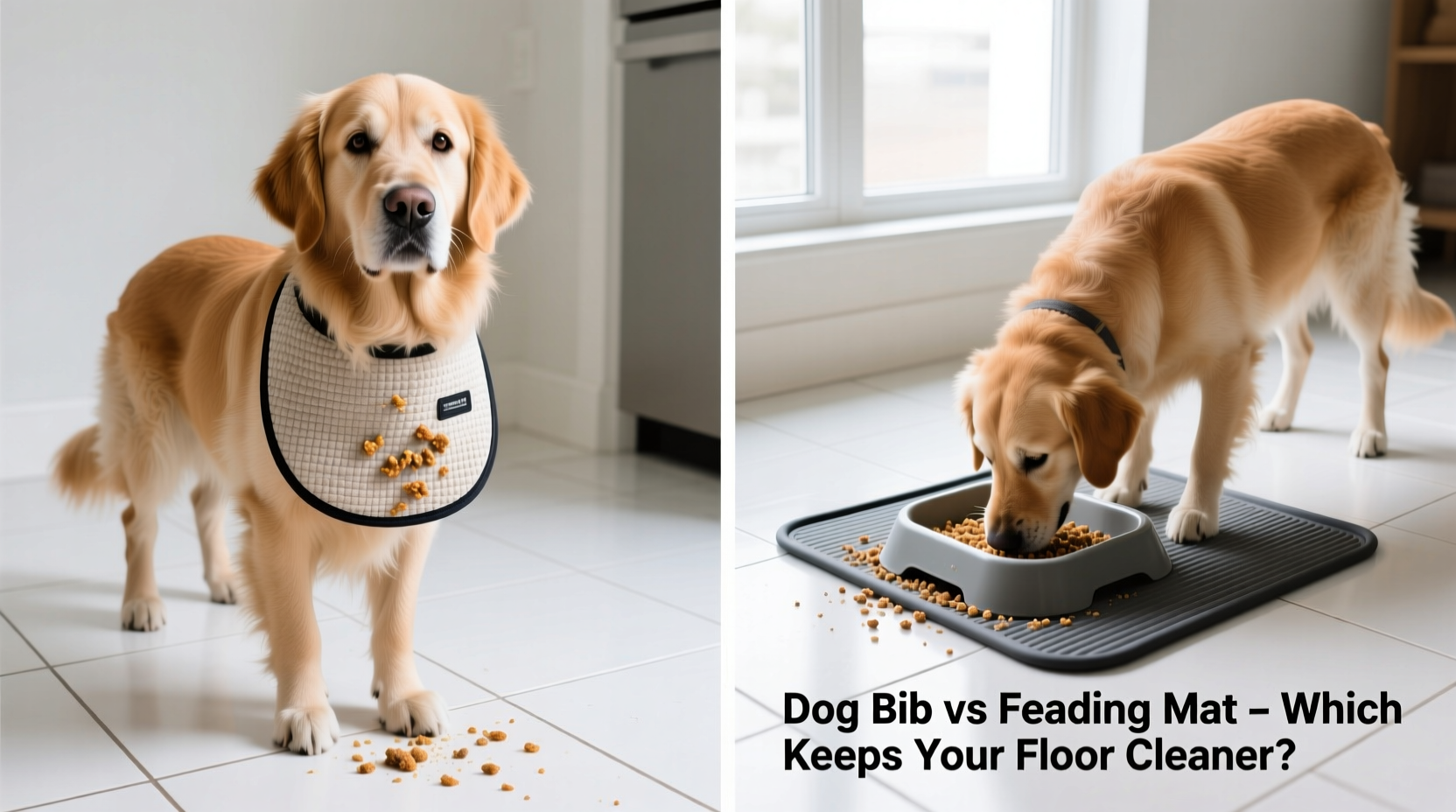
Dog bibs are wearable accessories, typically made from waterproof or absorbent materials like neoprene, silicone, or microfiber. They fasten around the dog’s neck, covering the chest and upper front legs, acting as a barrier between food and fur. Their primary goal is to catch drips, smears, and stray bits of food before they hit the floor.
Bibs are especially useful for dogs that:
- Eat wet or messy food (e.g., stew, pâté, or gravy-soaked kibble)
- Have long hair or beards that trap moisture and food particles
- Tend to lick their bowls aggressively, flinging liquid outward
A well-fitted bib can significantly reduce drool trails and chin drips. However, it doesn’t prevent food from being knocked out of the bowl or spilled during enthusiastic eating.
Tip: Choose a bib with adjustable straps and a wide coverage area to ensure it catches spills from multiple angles.The Role of Feeding Mats: Containing the Fallout
Feeding mats sit directly under your dog’s food and water bowls. They come in various materials—silicone, rubber, fabric, or even multi-layered designs with raised edges. Their purpose is to catch what inevitably falls: stray kibble, splashed water, and scraped-up food remnants.
Unlike bibs, feeding mats don’t prevent mess at the source but instead manage it after it happens. High-quality mats often feature:
- Non-slip bottoms to prevent sliding
- Lipped edges to contain liquids
- Easy-to-clean surfaces (many are dishwasher-safe)
They’re particularly effective for dogs that paw at their bowls, push them around, or eat so vigorously that food flies out. In multi-dog households or homes with hard flooring, a feeding mat acts as a first line of defense against widespread mess.
“While bibs protect the dog, mats protect the environment. For true cleanliness, both have a role.” — Dr. Laura Simmons, DVM, Canine Behavior and Hygiene Specialist
Dog Bib vs Feeding Mat: A Direct Comparison
| Feature | Dog Bib | Feeding Mat |
|---|---|---|
| Primary Function | Catches food and drool on the dog’s body | Catches spills and debris on the floor |
| Best For | Dogs with long fur, messy eaters, wet food diets | All dogs, especially active or clumsy eaters |
| Mess Prevention Level | Moderate (targets direct drips) | High (covers spill zone) |
| Hygiene Benefit | Prevents bacterial buildup in fur | Protects flooring from stains and bacteria |
| Wash Frequency | After every 1–2 uses | Weekly or as needed |
| Dog Acceptance | Varies; some resist wearing | Generally neutral—no interaction required |
Real-World Example: Two Dogs, Two Solutions
Sarah, a pet owner in Portland, has two dogs: a 3-year-old Shih Tzu named Milo and a 5-year-old Beagle named Luna. Milo eats soft food and drools constantly, leaving brown streaks down his chest. Luna, though neat with her kibble, knocks over her water bowl daily.
Sarah tried using only a bib on Milo. It reduced the mess on his fur, but water still splashed onto the hardwood floor. She then added a silicone feeding mat under both bowls. The result? Milo stayed cleaner, and the floor remained dry. Luna’s water spills were fully contained, and cleanup took seconds.
“I thought I had to choose one or the other,” Sarah said. “But using both made the biggest difference. The bib handles the personal mess, and the mat handles the environmental one.”
When One Isn’t Enough: Combining Bib and Mat for Maximum Cleanliness
The most effective approach isn’t choosing between a bib and a feeding mat—it’s using them together. Here’s why:
- Bibs stop mess at the origin—on the dog’s body—preventing fur from becoming a breeding ground for bacteria.
- Mats act as a safety net for anything that escapes the bib or bowl, including kicked-out kibble or displaced water.
- Together, they create a dual-layer defense system that addresses both personal hygiene and environmental cleanliness.
This combination is especially valuable for puppies learning to eat neatly, senior dogs with weakened swallowing control, or breeds prone to excessive drooling like Saint Bernards or Bloodhounds.
Step-by-Step: Building a Clean Feeding Routine
- Choose the right bib: Measure your dog’s neck and chest. Opt for waterproof material with Velcro or snap closures.
- Select an appropriate feeding mat: Pick one slightly larger than the space your bowls occupy, with raised edges if liquid containment is key.
- Position bowls securely: Use non-slip bases or suction feet to minimize movement during meals.
- Put on the bib before feeding: Ensure it covers the chest without restricting movement or breathing.
- Place bowls on the mat: Center them to maximize spill coverage.
- Monitor the first few uses: Adjust bib fit and mat placement based on observed mess patterns.
- Wash regularly: Clean the bib after each use if used with wet food; wash the mat weekly or immediately after major spills.
Frequently Asked Questions
Can I use a dog bib and feeding mat together safely?
Absolutely. There’s no conflict between the two. The bib protects your dog, while the mat protects your floor. Used together, they enhance overall cleanliness without compromising comfort or safety.
Do feeding mats work for dogs that move their bowls around?
Yes, especially if the mat has a non-slip backing or lip design. Some heavy-duty mats even include cutouts or anchors to secure bowls in place, reducing displacement during meals.
Are dog bibs uncomfortable for dogs?
Most dogs adapt quickly, especially if introduced gradually. Start with short wear times and reward calm behavior. Avoid overly tight fits or bulky materials that may cause overheating.
Final Verdict: Which One Actually Keeps the Floor Clean?
If the goal is solely to keep the floor clean, the **feeding mat wins decisively**. It physically intercepts fallen food and spilled water, creating a contained cleanup zone. A bib, while excellent for protecting your dog’s coat and reducing post-meal grooming, does little to stop messes that land beyond the dog’s immediate body.
However, focusing only on the floor overlooks hygiene on the dog itself. Drool-soaked fur can lead to skin irritation, odor, and bacterial growth. In this regard, the bib plays a crucial preventive role.
The truth is, neither tool is universally superior. Each excels in its domain. For owners serious about cleanliness—both for their pets and their homes—the smart solution is integration, not selection.
💬 Ready to upgrade your dog’s feeding setup? Try combining a waterproof bib with a lipped silicone feeding mat and see the difference in just one meal. Share your results or tips in the comments below!








