
Bandanas have become a staple in pet fashion—offering both style and function. Whether it’s a bold print for a weekend outing or a cooling fabric during summer walks, pet owners love dressing up their furry companions. But when shopping for bandanas, a common question arises: Is there a real difference between dog bandanas and cat bandanas? And more importantly, can your pet wear one meant for the other species?
The short answer is: sometimes yes, but with important caveats. While both types of bandanas serve similar purposes—decoration, sun protection, odor control, or temperature regulation—their design, fit, and safety considerations vary based on the animal’s anatomy, behavior, and temperament.
Anatomy & Behavior: Why Species Matters
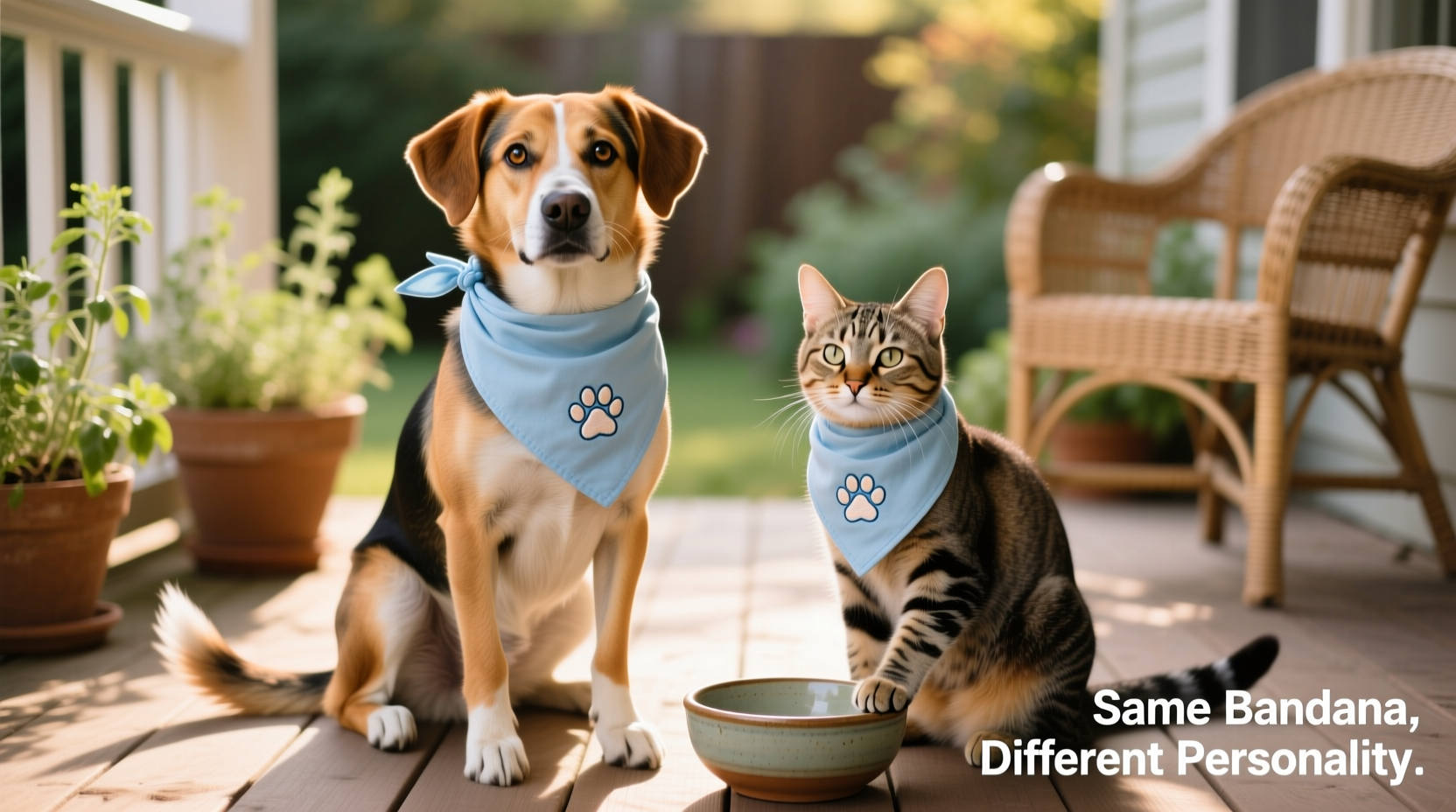
Dogs and cats differ significantly in physical structure and behavioral tendencies, which directly influences how accessories like bandanas should be designed and used.
Dogs typically have broader necks, larger heads, and more varied body sizes—from Chihuahuas to Great Danes. They’re also more likely to engage in active outdoor behaviors such as running, pulling on leashes, or playing roughly. This means dog bandanas often need to be sturdier, larger, and more securely fastened.
Cats, on the other hand, are generally smaller, more agile, and extremely sensitive to anything around their necks. Many cats dislike restrictive sensations and may paw at or remove unfamiliar items quickly. A poorly fitted bandana can cause stress or even become a choking hazard if it slips loose.
“Cats are far more sensitive to tactile discomfort than dogs. Even slight pressure or irritation around the neck can lead to anxiety or self-injury.” — Dr. Lena Torres, Feline Behavior Specialist
Design Differences Between Dog and Cat Bandanas
While some bandanas are marketed as “universal” or “for all pets,” subtle but critical differences exist:
| Feature | Dog Bandanas | Cat Bandanas |
|---|---|---|
| Size Range | Small to XXL; often adjustable or tied loosely | Narrow range; usually small or one-size-fits-most |
| Fabric Weight | Heavier cotton, polyester blends, or performance fabrics | Lightweight cotton, soft knits, breathable mesh |
| Fastening Method | Tied behind the neck, snap closures, or loop-over-head styles | Snap buttons, Velcro, or elastic loops (less reliance on tying) |
| Neck Coverage | Broad triangle or rectangular shape covering shoulders | Smaller, narrower cut to avoid obstructing movement |
| Safety Focus | Durability and visibility | Quick-release features, minimal loose fabric |
Can Your Pet Wear the Other’s Bandana?
The interchangeability of dog and cat bandanas depends on three key factors: size, material, and temperament.
- Small Dogs & Cat Bandanas: A toy breed like a Pomeranian or Yorkie might comfortably wear a well-designed cat bandana, especially if it has snap closures and a snug fit.
- Larger Cats & Dog Bandanas: Some larger domestic cats (e.g., Maine Coons) may fit into extra-small dog bandanas, but only if the fabric isn’t too heavy and the tie isn’t bulky.
- Behavioral Tolerance: Even if the size fits, cats may reject anything that feels unnatural. Dogs tend to be more adaptable, but anxious or reactive dogs may also react negatively.
In general, using a dog bandana on a cat is riskier due to excess fabric and looser knots. A cat could easily get the bandana caught on furniture or attempt to remove it by chewing—posing a serious entanglement or ingestion risk.
Mini Case Study: Bella the Curious Kitten
Sarah adopted a 6-month-old kitten named Bella and wanted to match her dog’s holiday-themed outfit. She tied a small triangular dog bandana around Bella’s neck using a standard knot. Within minutes, Bella backed into a bookshelf, the bandana caught on a shelf edge, and she panicked, thrashing until the fabric tore. Though unharmed, Bella became fearful of any collar-like accessories afterward.
After consulting her vet, Sarah switched to a snap-on cat bandana made of lightweight cotton. It stayed secure without dangling fabric and didn’t trigger Bella’s stress response. The lesson: even if the size seems right, the design must suit the animal’s instincts.
How to Choose the Right Bandana: A Practical Checklist
Whether you're shopping for a dog, cat, or considering cross-species use, follow this checklist to ensure safety and comfort:
- Measure the neck: Use a soft tape measure to get an accurate circumference. Allow room for two fingers between the bandana and pet’s neck.
- Check the closure type: Snap buttons or quick-release clips are safer for cats. Tied bandanas work for dogs only if securely knotted and monitored.
- Evaluate fabric weight: Lightweight, breathable materials are best for cats and brachycephalic dogs (like Bulldogs).
- Avoid long tails or fringes: Loose ends can snag or tempt chewing.
- Test for mobility: Ensure the pet can eat, drink, groom, and move freely with the bandana on.
- Supervise initially: Never leave a pet unattended with a new accessory.
- Wash before first use: Removes dyes, residues, and potential irritants.
When Interchangeability Works (and When It Doesn’t)
There are rare cases where a dog and cat bandana can be used interchangeably:
- For very short durations: Photo shoots, brief outings, or supervised events.
- With modified tying techniques: Folding a dog bandana smaller or using a double knot for tighter security on a small dog.
- Using universal-fit designs: Some brands offer minimalist, low-profile bandanas specifically labeled as safe for both species.
However, never allow interchangeability if:
- The pet shows signs of anxiety or discomfort.
- The bandana requires constant adjustment.
- You plan to leave the pet alone while wearing it.
- The fabric is thick, stiff, or chemically treated.
Frequently Asked Questions
Can I put a dog bandana on my cat if I tie it tightly?
No. Tying a dog bandana tightly risks restricting breathing or causing skin irritation. Cats need freedom of movement and minimal pressure. Instead, choose a properly sized cat-specific bandana with a secure but gentle closure.
Are there bandanas made for both dogs and cats?
Yes. Several brands now produce “multi-pet” bandanas in neutral sizes with snap buttons or stretchable loops. These are typically made from soft, non-abrasive fabrics and avoid long tails. Always verify sizing and read reviews before purchasing.
How long can my pet wear a bandana?
Limit continuous wear to 2–4 hours, especially outdoors or in warm environments. Remove it at night, during unsupervised time, or if your pet starts scratching excessively. Regular breaks prevent overheating and skin issues.
Final Thoughts: Prioritize Safety Over Style
While the idea of matching outfits for your dog and cat is charming, the priority must always be safety and comfort. Dog and cat bandanas are not fully interchangeable due to anatomical, behavioral, and design differences. Using the wrong type—even temporarily—can lead to stress, injury, or escape attempts.
The best approach is to select species-appropriate accessories that reflect your pet’s individual needs. If you want coordinated looks, opt for matching patterns rather than shared products. Many brands offer themed collections across dog and cat lines, so you can still achieve visual harmony without compromising well-being.
💬 Have you tried using a dog bandana on your cat—or vice versa? Share your experience and help other pet parents make informed choices. Your story could prevent a safety issue for someone else’s furry friend.








