
For owners of small dog breeds—such as Chihuahuas, Pomeranians, or Yorkshire Terriers—portability is often a necessity. Whether navigating crowded city sidewalks, using public transit, or enjoying outdoor adventures, carrying your pet safely and comfortably becomes essential. Two popular options dominate the market: dog backpack carriers and sling wraps. While both promise convenience, their impact on a dog’s physical well-being, emotional comfort, and overall safety can differ significantly. Understanding these differences is critical to making an informed decision that prioritizes your pet’s health.
Safety isn’t just about preventing falls; it involves proper weight distribution, spinal alignment, breathing space, and psychological security. A poorly chosen carrier may lead to anxiety, musculoskeletal strain, or even respiratory compromise in brachycephalic (short-nosed) breeds. This article provides a detailed comparison between dog backpack carriers and sling wraps, examining structural design, veterinarian insights, real-world usage, and practical guidelines to help you determine which option offers superior safety for your small breed companion.
Anatomy of Safety: What Makes a Carrier Safe?
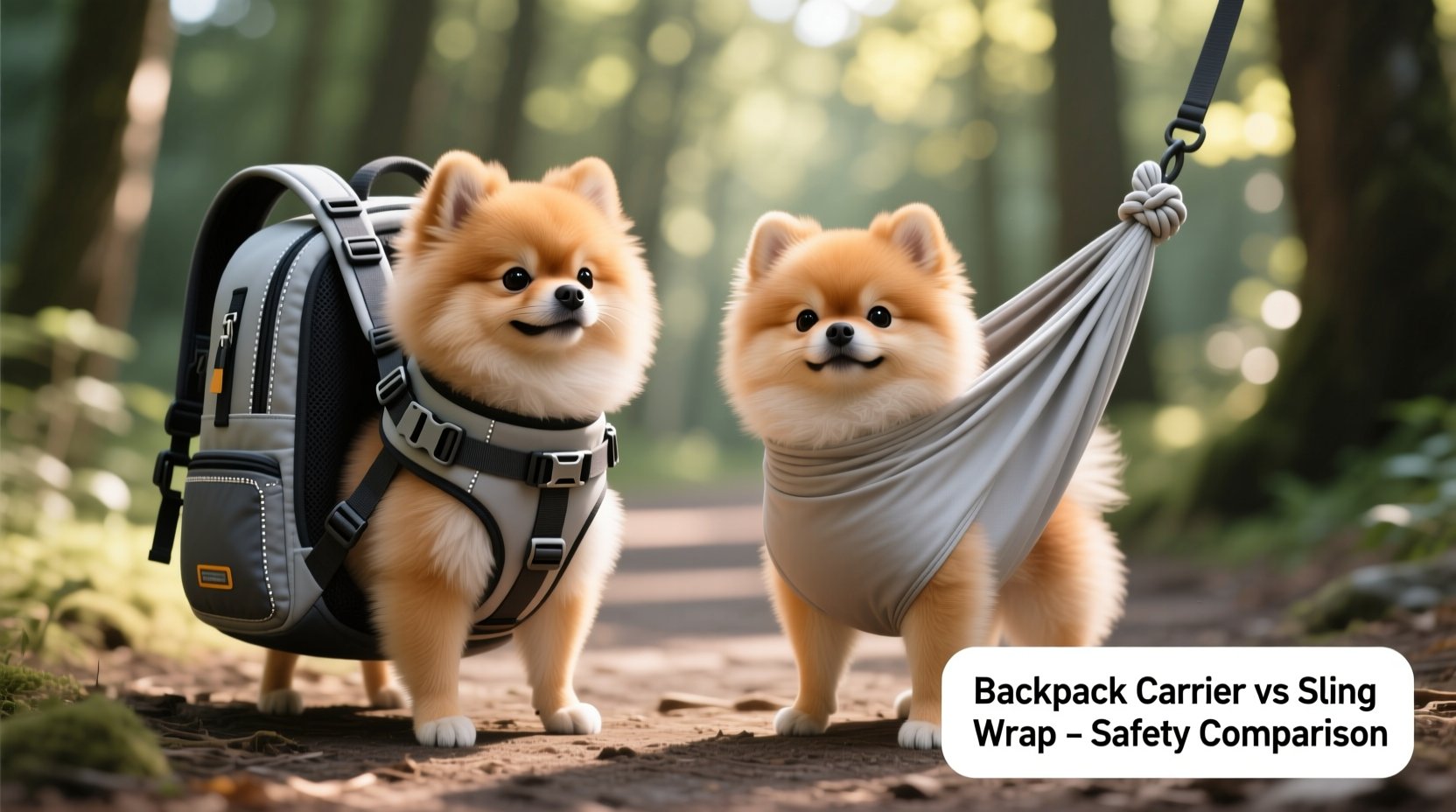
Safety in dog carriers extends beyond secure zippers and sturdy materials. It hinges on how well the design supports the dog’s natural posture, allows unrestricted movement, and minimizes stress. Small dogs are particularly vulnerable due to their size and higher surface-area-to-body-mass ratio, making them more susceptible to temperature changes and physical strain.
A safe carrier should:
- Maintain the dog’s spine in a neutral, horizontal position
- Allow full visibility and airflow
- Provide adequate padding without restricting movement
- Distribute weight evenly across the dog’s body
- Include escape-proof closures and reinforced stitching
- Support quick access in emergencies
Backpack carriers and sling wraps approach these criteria differently. The former typically features rigid structure and dual shoulder straps, while the latter relies on soft fabric wrapped around the torso. These fundamental design distinctions influence everything from balance to behavioral response.
Backpack Carriers: Structure, Support, and Stability
Dog backpack carriers resemble hiking or travel packs, with two compartments (one on each side) connected by a central frame. Many models allow one side to be used while the other stores gear, offering versatility for active owners. Their primary advantages include enhanced ventilation, structural rigidity, and better weight distribution across the wearer’s back and shoulders.
From a biomechanical standpoint, backpacks promote more upright posture for both human and dog. The dog sits or lies within a padded, enclosed chamber with mesh panels on multiple sides, ensuring consistent airflow. Most high-quality backpacks feature internal safety tethers that clip to the dog’s harness, reducing sudden movements that could destabilize balance.
“Dogs carried in structured backpacks experience less motion-induced anxiety because their environment feels predictable and contained.” — Dr. Lena Patel, Veterinary Behavior Specialist
Additionally, backpacks generally offer superior crash protection in the event of a fall. The rigid shell absorbs impact, shielding the dog from direct trauma. Some models even meet IATA (International Air Transport Association) standards for airline-approved pet travel, underscoring their durability and safety compliance.
Tip: Always use the internal safety leash inside a backpack carrier—even at home—to prevent lunging during sudden noises or distractions.Sling Wraps: Comfort vs. Risk in Close Contact
Sling wraps, often made of stretchable neoprene or soft cotton blends, cradle the dog against the owner’s chest or side. They’re lightweight, discreet, and ideal for quick errands or bonding moments. However, their minimalist design introduces several safety concerns.
Because slings lack rigid support, the dog’s spine may curve unnaturally, especially if the fabric sags under weight over time. Limited airflow is another issue—many slings cover large portions of the dog’s body, increasing the risk of overheating, particularly in warm climates or during prolonged use.
Moreover, sling wraps rely heavily on the user’s posture. If the wearer leans forward or twists abruptly, the dog can shift dangerously, potentially slipping out or experiencing pressure on the trachea. Unlike backpacks, most slings do not include secondary tether points, leaving no backup if the main closure fails.
Behaviorally, some dogs feel secure in slings due to proximity to their owner’s heartbeat and warmth. But others exhibit signs of distress—panting, trembling, or attempts to escape—indicating that the confined sensation overrides emotional comfort.
Real Example: A Cautionary Scenario
Marissa, a Boston resident, regularly used a mesh sling wrap to carry her 7-pound Cavalier King Charles Spaniel, Milo, during subway commutes. One morning, as she reached for a handrail, the sling’s Velcro strap loosened slightly. Milo wriggled free and fell onto the platform below. Though he suffered only minor bruising, the incident prompted Marissa to switch to a dual-compartment backpack with a safety tether. “I didn’t realize how much trust I was placing in a single fastener,” she said. “Now I know better.”
Comparative Analysis: Key Safety Factors
| Feature | Backpack Carrier | Sling Wrap |
|---|---|---|
| Spinal Support | High – maintains horizontal alignment | Low to moderate – prone to curvature |
| Ventilation | Excellent – multi-panel mesh | Fair to poor – fabric coverage limits airflow |
| Weight Distribution | Evenly distributed across wearer’s back | Concentrated on one shoulder or chest |
| Escape Prevention | Zipper + internal tether system | Relies on single closure (Velcro/zipper) |
| Impact Protection | High – semi-rigid shell absorbs shock | Minimal – soft fabric offers little cushioning |
| Visibility | 360-degree view through mesh | Limited – often faces inward |
| Ease of Access | Moderate – requires unzipping | High – open design allows quick reach |
The data shows that backpack carriers consistently outperform sling wraps in structural safety metrics. While slings score higher in immediate accessibility, this advantage diminishes when weighed against risks related to containment failure and thermal regulation.
Expert Recommendations and Usage Guidelines
Veterinarians and canine physiotherapists emphasize that long-term use of any carrier should align with the dog’s anatomy and temperament. Dr. Alan Torres, a certified canine rehabilitation practitioner, advises: “Small dogs aren’t designed to be carried for extended periods. When you must carry them, prioritize devices that mimic natural lying positions and avoid compressing the ribcage.”
“The safest carrier is one that allows the dog to stand, sit, and lie down naturally without contortion.” — Dr. Alan Torres, DVM, CCRT
He recommends limiting continuous carry time to 20–30 minutes, regardless of carrier type, and monitoring for signs of fatigue or discomfort such as excessive licking, panting, or vocalization.
Step-by-Step: Choosing and Using a Safe Carrier
- Assess Your Dog’s Needs: Consider breed-specific traits—e.g., brachycephalic dogs need maximum airflow.
- Measure Correctly: Ensure the carrier interior allows your dog to turn around and lie flat.
- Test Weight Limits: Never exceed the manufacturer’s recommended load; include clothing and accessories in total weight.
- Practice Indoors First: Let your dog acclimate to the carrier with treats and short sessions.
- Use a Harness Tether: Attach a short leash from the dog’s harness to the carrier’s anchor point.
- Monitor During Use: Check every 10 minutes for signs of stress or overheating.
- Avoid High-Risk Situations: Don’t use slings near stairs, escalators, or moving vehicles.
Checklist: Is Your Carrier Safe?
- ✅ Does it support a natural, horizontal spine position?
- ✅ Is there sufficient mesh for ventilation on at least two sides?
- ✅ Can your dog stand, sit, and lie down comfortably?
- ✅ Does it include a secondary tether point for the harness?
- ✅ Are all zippers and fasteners securely reinforced?
- ✅ Is the material easy to clean and resistant to moisture buildup?
- ✅ Have you tested it in low-risk environments before relying on it?
Frequently Asked Questions
Can I use a sling wrap safely for short trips?
Yes, provided the dog is calm, the environment is controlled, and the sling fits snugly with no gaps. Avoid using slings for dogs under 4 pounds or those with respiratory conditions. Always keep hands close during transport and never leave the dog unattended in the sling.
Are backpack carriers suitable for older or arthritic dogs?
Backpack carriers are often ideal for senior dogs due to their supportive base and reduced jostling. Look for models with extra padding and low entry height to minimize strain when getting in and out. Consult your vet if your dog has spinal issues like IVDD (Intervertebral Disc Disease), as certain movements may exacerbate symptoms.
How do I clean and maintain my dog carrier?
Most backpack carriers have removable, machine-washable liners. Wipe down hard surfaces with pet-safe disinfectant. Sling wraps are typically hand-wash only due to elastic components. Allow full air drying to prevent mold. Inspect stitching and zippers monthly for wear.
Conclusion: Prioritizing Long-Term Safety Over Convenience
When comparing dog backpack carriers and sling wraps for small breeds, the evidence clearly favors backpacks for overall safety. Their superior structural integrity, ventilation, and containment mechanisms make them a more responsible choice—especially for daily use, travel, or unpredictable environments. Sling wraps may offer intimacy and ease, but they come with inherent risks that shouldn’t be overlooked.
Your dog depends on you to make choices that protect their physical and emotional well-being. Investing in a high-quality backpack carrier isn’t just about convenience—it’s a commitment to responsible pet ownership. Evaluate your lifestyle, your dog’s health, and the environments you navigate together. Then choose the option that ensures every journey is as safe as it is enjoyable.
💬 Have experience with dog carriers? Share your story or advice in the comments—your insight could help another pet parent make a safer choice today.








