
For owners of senior small-breed dogs—such as Chihuahuas, Pomeranians, or Shih Tzus—mobility challenges often increase with age. Arthritis, joint pain, and reduced stamina can make walking difficult. As a result, many pet parents turn to supportive gear like dog backpack carriers and slings to keep their companions safe and comfortable during outings. But when it comes to choosing between these two options, one critical question arises: which is safer for older, fragile dogs?
The answer isn’t always straightforward. While both tools offer portability and support, they differ significantly in design, weight distribution, stability, and suitability for aging bodies. Making the wrong choice could lead to discomfort, strain, or even injury. This guide examines the key differences, evaluates safety concerns, and provides evidence-based recommendations to help you make an informed decision.
Understanding the Needs of Senior Small-Breed Dogs
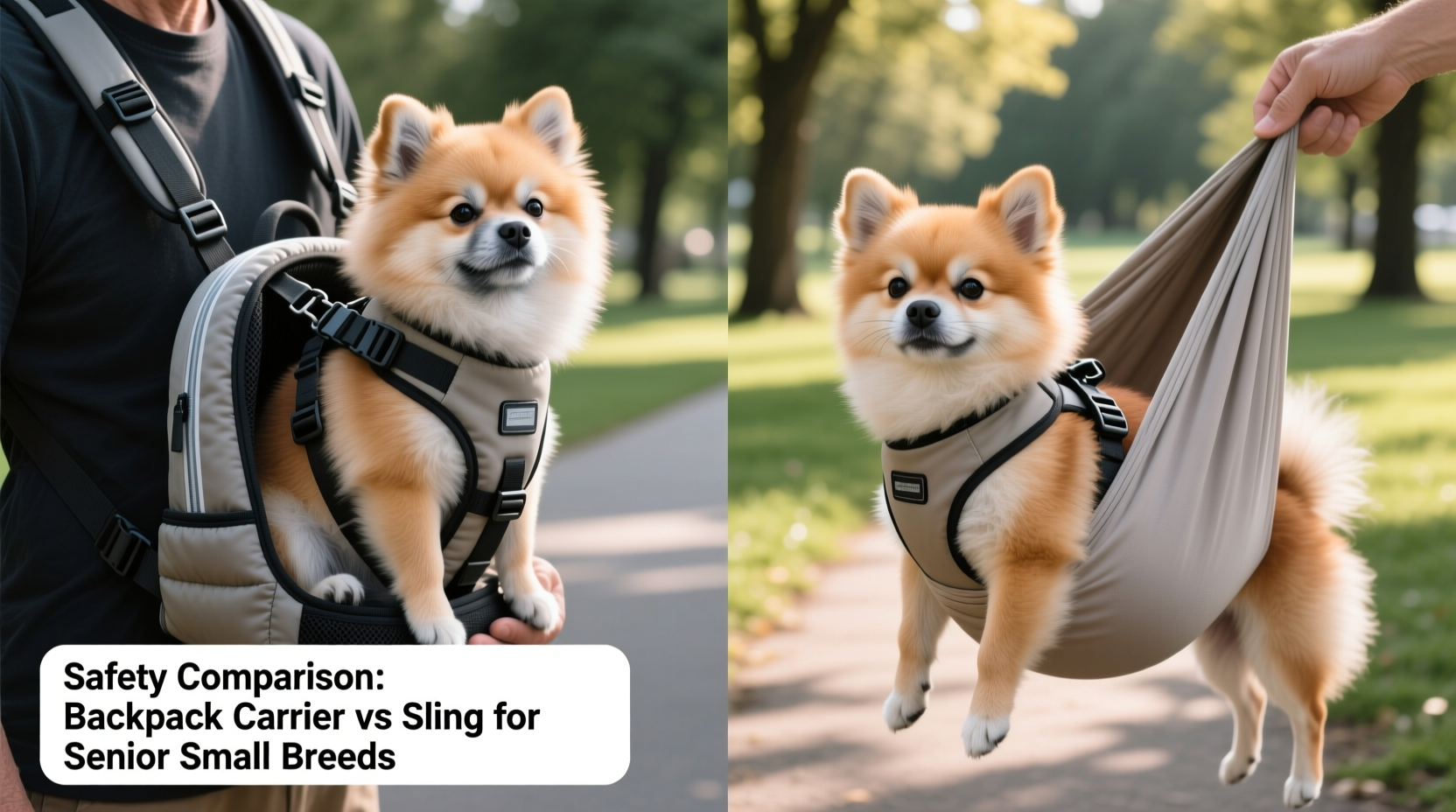
Safety begins with understanding your dog’s physical condition. Senior small breeds are prone to specific health issues that impact how they should be carried:
- Spinal sensitivity: Breeds like Dachshunds or older Yorkies may have intervertebral disc disease (IVDD), where sudden movements or improper support can worsen symptoms.
- Joint degeneration: Arthritis commonly affects hips, knees, and shoulders, making lifting or twisting painful.
- Reduced muscle tone: Weaker core muscles mean less ability to stabilize themselves during movement.
- Cardiopulmonary limitations: Some older dogs have heart or lung conditions that require upright positioning to breathe comfortably.
Given these vulnerabilities, any carrying method must prioritize spinal alignment, minimize jostling, and avoid pressure on sensitive areas. A device that works well for a healthy adult toy poodle might not be suitable for a 14-year-old Maltese with chronic back pain.
Tip: Always consult your veterinarian before introducing new mobility aids, especially if your dog has a diagnosed spinal or joint condition.Dog Backpack Carriers: Design and Safety Analysis
Dog backpack carriers are worn like hiking packs, with mesh-sided compartments on either side of the wearer. They allow dogs to sit or stand while being transported, offering visibility and airflow.
Advantages for Senior Dogs
- Better weight distribution: Dual-side models balance the load across the wearer’s back and hips, reducing strain compared to one-sided carrying.
- Ergonomic support: High-quality backpacks include padded panels, adjustable straps, and lumbar support, improving comfort for both human and dog.
- Controlled environment: Zippers, safety tethers, and secure closures prevent accidental escapes.
- Natural posture: When properly fitted, dogs can maintain a neutral spine position without being compressed.
Safety Concerns
- Motion transfer: Walking, climbing stairs, or shifting weight can cause swaying, which may disorient or stress older dogs.
- Overheating risk: Mesh panels help, but limited airflow in direct sun or warm climates can still pose dangers.
- Improper fit: If the harness tether inside is too short or tight, it can pull on the dog’s chest or restrict movement.
- Weight limits: Most backpacks are designed for dogs under 20–25 lbs, but exceeding recommended capacity increases fall risk.
“Backpack carriers can be safe for seniors if used correctly—but only if the dog is securely tethered and the owner maintains smooth, steady motion.” — Dr. Laura Chen, DVM, Canine Rehabilitation Specialist
Dog Slings: Comfort vs. Stability Trade-offs
Dog slings are fabric supports—often resembling scarves or pouches—that cradle the dog against the owner’s body. They’re lightweight, portable, and easy to deploy quickly.
Benefits for Elderly Pets
- Close contact: Provides warmth and reassurance, ideal for anxious or frail dogs.
- Minimal setup: No buckles or adjustments needed; simply place the dog inside.
- Full-body support: Well-designed slings distribute weight along the torso, supporting the hindquarters and spine simultaneously.
- Low entry/exit height: Easier for arthritic dogs who struggle with jumping or stepping up.
Potential Risks
- Uneven weight distribution: Most slings rest over one shoulder, placing all load on one side of the wearer’s body, increasing fall risk.
- Limited security: Without clips or tethers, sudden movements can cause slipping or dropping.
- Compression hazards: Poorly padded or overly tight slings may press on the abdomen or chest, impairing breathing or circulation.
- No fall protection: If the user stumbles, there’s no structural barrier to shield the dog.
Slings are often marketed as “gentle” solutions, but this perception doesn’t always align with actual safety. For dogs with neurological instability or poor coordination, a loose sling may do more harm than good.
Comparative Safety: Backpack vs Sling – Key Differences
| Feature | Backpack Carrier | Sling |
|---|---|---|
| Spinal Support | High – allows upright, neutral posture | Variable – depends on sling angle and padding |
| Stability During Motion | Moderate to high – balanced load reduces sway | Low – single-shoulder design causes imbalance |
| Ventilation | Excellent – mesh walls promote airflow | Fair – fabric may trap heat against body |
| Escape Risk | Low – zippers and internal tethers prevent exit | Moderate to high – open designs increase drop risk |
| User Ergonomics | Good – distributes weight evenly | Poor – strains one shoulder and spine |
| Suitability for Long Use | High – designed for extended wear | Low – discomfort builds quickly for user and pet |
This comparison shows that backpack carriers generally offer superior structural safety, particularly for longer walks or crowded environments. However, slings may be preferable in controlled settings—like short trips from car to vet office—where close monitoring is possible.
Real-World Scenario: Choosing for a 12-Year-Old Pekingese
Consider Bella, a 12-year-old Pekingese with mild hip dysplasia and early-stage IVDD. Her owner, Maria, wanted a way to carry her up subway stairs and through busy streets without causing pain or anxiety.
Maria initially tried a soft-sided sling she purchased online. While Bella seemed calm at first, Maria noticed her wheezing after five minutes and struggling to shift position. During a trip, Bella slipped slightly when Maria turned abruptly, triggering a yelp and temporary lameness.
After consulting her vet, Maria switched to a dual-compartment backpack carrier with a safety leash inside. She trained Bella gradually with short indoor sessions, using treats and praise. Within two weeks, Bella tolerated 15-minute outings comfortably. The backpack allowed better airflow, prevented slippage, and let Bella sit upright—reducing pressure on her spine.
The change improved both their experiences: Maria felt more confident, and Bella showed fewer signs of distress. This case illustrates how matching equipment to medical needs leads to better outcomes.
Step-by-Step Guide: Selecting the Safest Option for Your Senior Dog
- Assess your dog’s health: Get a full evaluation from your vet, focusing on spine, joints, and heart/lung function.
- Measure your dog: Record weight, length (nose to tail base), and girth (around chest behind front legs).
- Determine usage context: Will you use it for travel, vet visits, hikes, or urban commuting?
- Test both types safely: Rent or borrow models to trial at home before buying.
- Check safety features: Look for internal harness clips, breathable materials, reinforced stitching, and ergonomic design.
- Train gradually: Introduce the carrier in short sessions with positive reinforcement.
- Monitor continuously: Watch for signs of stress, overheating, or discomfort during use.
Expert-Recommended Checklist Before Purchase
- ✅ Veterinarian approval based on current health status
- ✅ Weight capacity exceeds your dog’s actual weight by at least 5 lbs
- ✅ Internal safety tether to attach to harness (never rely on collar)
- ✅ Adjustable, padded shoulder and waist straps (for backpacks)
- ✅ Machine-washable or easily cleanable fabric
- ✅ Ventilated sides or top for temperature regulation
- ✅ Smooth interior with no seams or hardware that could dig into skin
- ✅ Reflective accents for low-light visibility
Frequently Asked Questions
Can I use a dog sling for a dog with arthritis?
Yes, but only if the sling provides full support under the chest and hind end without squeezing the joints. Avoid models that require the dog to tuck legs tightly. Test briefly and watch for signs of discomfort, such as whining or reluctance to be placed inside.
Are backpack carriers safe for dogs with heart disease?
They can be, provided the dog is positioned upright and not compressed. An elevated posture helps reduce respiratory effort. However, avoid prolonged use and monitor closely for panting, coughing, or fatigue. Always follow your vet’s advice regarding activity levels.
How long should I carry my senior dog at a time?
Limit continuous carrying to 10–15 minutes for most older dogs. Take breaks every 10 minutes to allow them to stretch, relieve themselves, and cool down. Extended confinement—even in a comfortable carrier—can lead to stiffness, anxiety, or bladder issues.
Final Recommendations
When comparing dog backpack carriers and slings for senior small breeds, the evidence leans toward backpacks as the safer, more sustainable option—provided they are used correctly. Their balanced design, enhanced ventilation, and built-in safety mechanisms make them better suited for dogs with age-related health concerns.
Slings, while convenient, pose greater risks due to uneven weight distribution and lower containment security. They may serve as short-term solutions for very brief transitions but are not ideal for regular or prolonged use in vulnerable dogs.
Ultimately, safety hinges not just on the product, but on how it’s used. Proper fitting, gradual acclimation, and attentive supervision matter more than brand or price. Prioritize medical guidance over marketing claims, and never assume convenience equals care.
“The safest carrier is the one that respects the dog’s physiology, minimizes stress, and prevents secondary injury.” — Dr. Rajiv Mehta, Veterinary Orthopedic Specialist
Take Action Today for a Safer Tomorrow
Your senior dog has spent years bringing joy to your life. Now, it’s your turn to ensure their golden years are as comfortable and secure as possible. Reevaluate your current carrying method using the insights above. Schedule a vet check-up if you haven’t recently. And if you're still using a basic sling out of habit, consider upgrading to a safer, vet-recommended backpack carrier designed for aging pets.
💬 Have experience with dog backpacks or slings for older pets? Share your story in the comments below—your insight could help another caregiver make a life-changing decision.








