Dog owners facing their pet’s anxiety during thunderstorms, fireworks, vet visits, or separation often turn to two popular solutions: anxiety vests and calming treats. Both promise relief, but they operate on entirely different principles and timelines. Understanding which method acts faster—and under what circumstances—can make a critical difference in your dog’s comfort and safety. This article dives into the science, real-world use cases, and practical considerations behind each option, helping you make an informed decision when seconds count.
How Dog Anxiety Works: The Physiology Behind the Stress
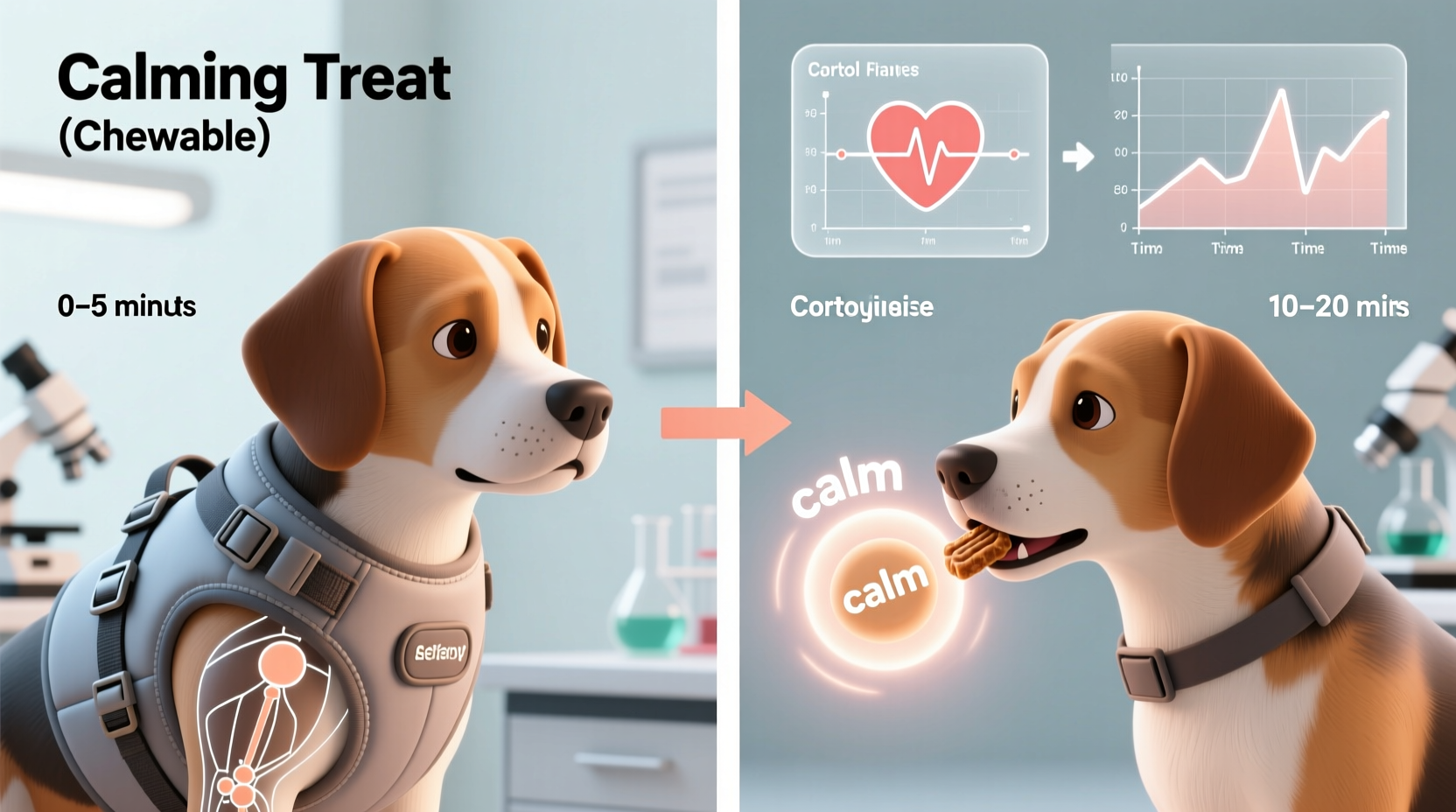
Dogs experience anxiety much like humans do, triggered by perceived threats or unfamiliar stimuli. When a dog senses danger—even if it's just the sound of a vacuum cleaner—the amygdala activates the sympathetic nervous system, releasing stress hormones like cortisol and adrenaline. This \"fight-or-flight\" response leads to rapid breathing, increased heart rate, trembling, pacing, or even destructive behavior.
The goal of any anxiety intervention is to interrupt this cycle. Calming tools either work by altering brain chemistry (like supplements) or by providing physical feedback that signals safety (like pressure garments). The speed at which these methods take effect depends largely on their mechanism of action.
“Physical interventions like anxiety wraps can provide near-immediate sensory feedback, while oral supplements require metabolic processing before showing results.” — Dr. Laura Bennett, DVM, Veterinary Behavior Specialist
Anxiety Vests: Immediate Pressure, Instant Feedback
Anxiety vests, also known as calming wraps or Thundershirts, apply gentle, constant pressure around a dog’s torso. This mimics the effect of swaddling an infant or deep-touch pressure therapy used in human autism care. The theory is that consistent tactile input helps regulate the nervous system, reducing hyperarousal and promoting a sense of security.
Unlike medications or supplements, anxiety vests don’t rely on digestion or absorption. They begin working the moment they’re properly fitted and secured—often within 1–3 minutes. Many pet owners report visible signs of relaxation, such as lowered heart rate, reduced panting, and decreased pacing, shortly after application.
Tip: Ensure the vest fits snugly but allows room for two fingers between the fabric and your dog’s body. Too loose, and it won’t work; too tight, and it may increase distress.Pros and Cons of Anxiety Vests
| Aspect | Advantages | Limitations |
|---|---|---|
| Onset Time | Immediate (within minutes) | None |
| Durability | Reusable, long-term investment | Limited wear time (typically 4–6 hours) |
| Safety | No side effects or drug interactions | May not fit all body types (e.g., barrel-chested breeds) |
| Versatility | Effective for noise phobias, travel, vet visits | Less effective for chronic anxiety without behavioral training |
Calming Treats: Slower Onset, Longer-Lasting Effects
Calming treats contain natural ingredients designed to support neurological balance. Common components include:
- L-theanine: An amino acid found in green tea that promotes relaxation without drowsiness.
- Melatonin: A hormone regulating sleep-wake cycles, often used for night-time anxiety.
- Chamomile and valerian root: Herbal sedatives with mild tranquilizing properties.
- Colostrum calming complex: Contains neuro-supportive peptides like apo-lactoferrin.
These ingredients must be digested, absorbed through the gastrointestinal tract, and delivered to the brain via the bloodstream. As a result, most calming treats take **30 to 60 minutes** to produce noticeable effects. Peak impact usually occurs around 1.5 to 2 hours post-consumption, making them better suited for anticipated stressors rather than sudden episodes.
While slower to act, calming treats often provide longer-lasting relief—some formulations remain effective for up to 6–8 hours. This makes them ideal for extended events like air travel, boarding, or multi-hour storms.
Factors Affecting Calming Treat Absorption Speed
- Dog’s metabolism: Smaller dogs may feel effects sooner than larger ones.
- Stomach contents: Treats taken on an empty stomach absorb faster but may cause nausea.
- Formulation type: Soft chews may digest quicker than hard tablets.
- Active ingredient concentration: Higher potency doesn't always mean faster action—it increases duration more than onset speed.
Comparative Timeline: When Each Method Kicks In
To illustrate the difference in response times, consider a scenario where a dog begins showing signs of anxiety due to an approaching thunderstorm.
| Time After Intervention | Anxiety Vest Effect | Calming Treat Effect |
|---|---|---|
| 0–5 minutes | Initial calming cues; reduced panting observed | No noticeable change |
| 10–15 minutes | Dog lies down, breathing normalizes | Early signs of relaxation begin (less pacing) |
| 30 minutes | Full effect achieved; dog appears calm | Noticeable reduction in anxiety behaviors |
| 60 minutes | Effect remains stable | Peak calming effect reached |
| 2+ hours | May need removal to prevent overheating or skin irritation | Continued relief; some products still active |
This timeline clearly shows that **anxiety vests act faster**, offering almost immediate sensory grounding, while calming treats follow a pharmacokinetic curve similar to oral medication.
Real-World Case Study: Managing Fireworks Night Anxiety
Max, a 4-year-old Border Collie, has a severe fear of fireworks. His owner, Sarah, tried both a Thundershirt and a melatonin-based calming chew during last year’s July 4 celebrations.
She administered the treat at 7:00 PM, knowing fireworks typically started around 9:00 PM. By 8:30 PM, Max was slightly less alert but still restless. When the first firework exploded at 9:05 PM, he bolted to his crate, trembling.
Sarah quickly applied the anxiety vest. Within five minutes, Max stopped panting heavily. By ten minutes, he had curled up and rested his head on his paws. The combination worked—but only because the vest provided the immediate stabilization the treat could not.
This case illustrates a growing trend among veterinarians: using both methods together for optimal results. The treat helps modulate baseline anxiety, while the vest handles acute spikes.
Expert Recommendations: Combining Methods for Maximum Impact
According to veterinary behaviorists, relying on a single tool limits effectiveness. Instead, a layered approach yields better outcomes.
“For situational anxiety, I recommend starting with a calming treat 60 minutes beforehand and pairing it with a well-fitted anxiety wrap. It addresses both physiological and psychological pathways.” — Dr. Karen Nguyen, Board-Certified Veterinary Behaviorist
This dual strategy leverages the delayed but sustained action of supplements with the instant feedback of pressure therapy. It’s especially useful for predictable high-stress events like New Year’s Eve, parades, or vet appointments.
When to Choose One Over the Other
Tip: Use anxiety vests for sudden, unpredictable stressors. Reserve calming treats for planned events or daily anxiety management.- Choose an anxiety vest when: The trigger is sudden (e.g., loud noise, stranger entering home), you need fast results, or your dog cannot safely ingest oral products.
- Choose calming treats when: You know the stressor in advance, your dog has generalized anxiety, or you're managing long-duration events like car trips.
- Use both when: The situation is intense and prolonged—such as storm season or air travel.
Step-by-Step Guide: Responding to Acute Anxiety Episodes
Follow this protocol when your dog suddenly becomes anxious:
- Assess the trigger: Is it temporary (noise) or ongoing (separation)?
- Ensure safety: Move your dog to a quiet room away from the stimulus if possible. <3> Apply the anxiety vest immediately: Secure it properly and monitor for signs of improvement.
- Evaluate timing: If the event will continue beyond 30 minutes and wasn’t anticipated, give a calming treat now (unless contraindicated).
- Provide environmental support: Play white noise, close curtains, offer a favorite toy or blanket.
- Monitor closely: Check for overheating from the vest after 4 hours; remove if needed.
- Debrief afterward: Note what worked and adjust your plan for next time.
Frequently Asked Questions
Can I use calming treats every day?
Yes, many calming treats are formulated for daily use, especially those containing L-theanine or colostrum. However, always follow dosage guidelines and consult your vet, particularly if your dog is on other medications.
Do anxiety vests work for all dogs?
No. While many dogs respond well, some show no improvement or even increased agitation. Brachycephalic breeds (like Bulldogs) may overheat easily, and very small or large dogs might not have suitable sizing options. Always supervise initial use.
Are there risks with combining a vest and treats?
Generally, no. The two methods are complementary and non-invasive. However, avoid over-sedation by not stacking multiple supplements. Stick to one trusted calming product unless directed otherwise by a vet.
Checklist: Choosing the Right Solution for Your Dog
- ☑ Identify your dog’s primary anxiety triggers (noise, separation, strangers, etc.)
- ☑ Determine predictability of stressors (planned vs. sudden)
- ☑ Measure your dog for proper vest fit
- ☑ Review calming treat ingredients for allergens or drug interactions
- ☑ Test both methods separately in low-stress settings first
- ☑ Consult your veterinarian before starting any new supplement
- ☑ Keep a log of what works and when
Conclusion: Speed Matters, But So Does Strategy
When it comes to speed, the anxiety vest wins hands-down. It provides immediate sensory feedback that can stabilize a panicked dog in minutes. Calming treats, while effective, require time to metabolize and are better suited for preparation than emergency response.
However, the best outcomes come not from choosing one over the other, but from understanding how each fits into a broader anxiety management plan. Fast-acting tools handle crises; longer-acting solutions manage underlying tension. Together, they form a comprehensive defense against canine distress.
🚀 Start today: Try a short trial of a calming vest during a noisy household activity. Observe your dog’s response. Then, pair it with a vet-approved treat ahead of your next outing. Track results—and take control of your dog’s emotional well-being, one calm moment at a time.








