
Dog owners increasingly turn to technology to ease their pets’ stress when left alone. Among the most popular tools are pet cameras equipped with treat dispensers—devices that allow remote monitoring, two-way communication, and automated or on-demand treat release. But do these gadgets truly help reduce dog anxiety, or are they just another high-tech toy with limited real-world impact? The answer depends on how they're used, the individual dog’s temperament, and the underlying causes of their distress.
Separation anxiety affects up to 20% of dogs, manifesting in behaviors like excessive barking, destructive chewing, pacing, or house soiling. While not a standalone cure, pet cameras with treat dispensers can play a supportive role in managing mild to moderate symptoms—especially when integrated into a broader behavioral strategy.
How Pet Cameras with Treat Dispensers Work
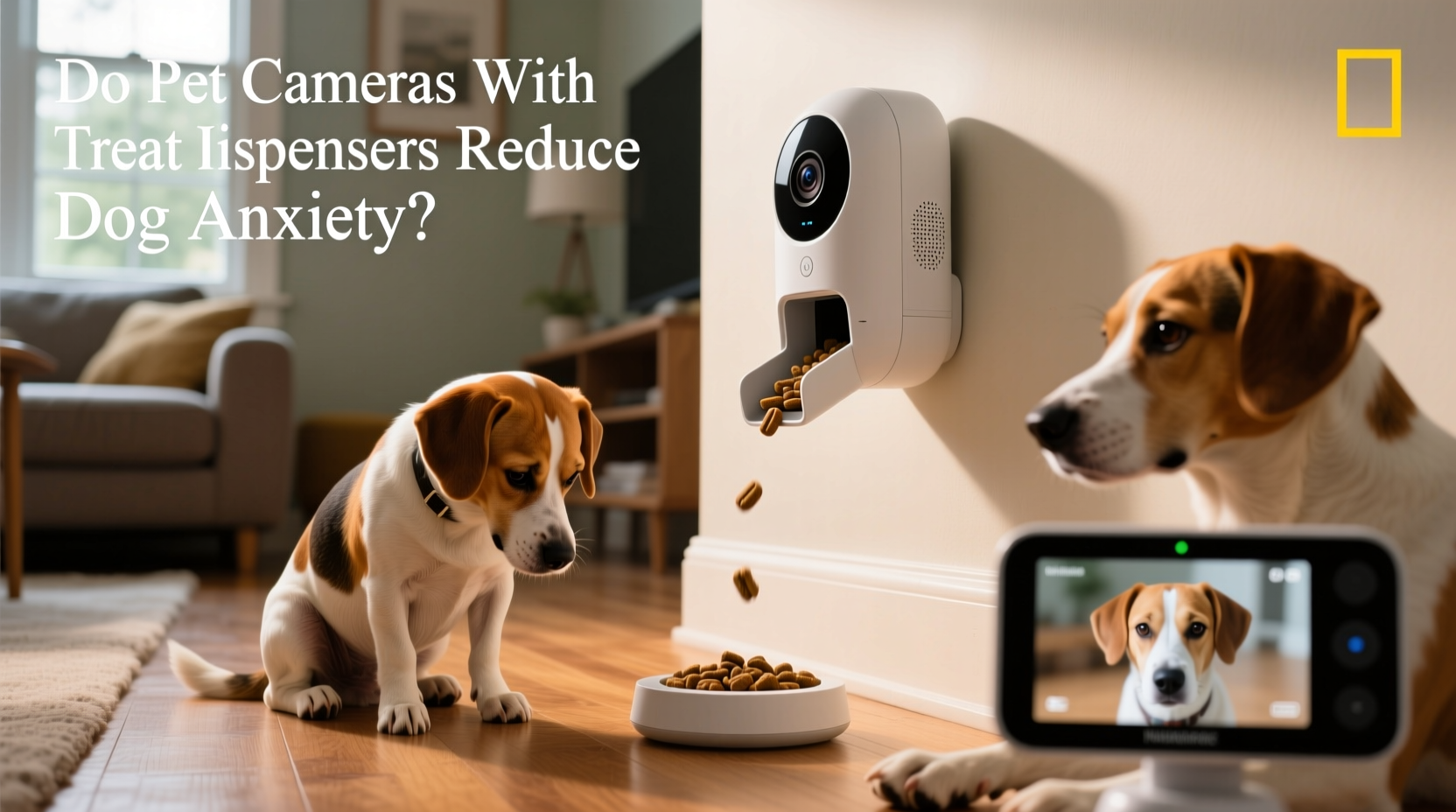
These devices combine three core functions:
- Live video streaming: High-definition cameras with night vision let owners check in on their dogs remotely via smartphone apps.
- Two-way audio: Built-in microphones and speakers enable owners to speak to their pets, offering verbal reassurance.
- Treat dispensing: A mechanical hopper releases kibble or small treats when triggered manually or on a schedule.
The idea is simple: seeing and hearing a familiar voice, paired with a positive reward, may distract the dog from stressors and reinforce calm behavior. However, effectiveness hinges on more than just functionality—it requires thoughtful implementation.
Tip: Use the treat dispenser sparingly—only during calm moments—to avoid reinforcing anxious behavior.Scientific and Behavioral Perspectives
While peer-reviewed studies specifically on treat-dispensing cameras remain limited, animal behaviorists agree that environmental enrichment and positive reinforcement are key components of anxiety management. Dr. Karen Overall, a renowned veterinary behaviorist, emphasizes:
“Dogs don’t understand time the way we do. They live in the moment. Any intervention that provides predictability and positive association can be beneficial—if applied correctly.” — Dr. Karen Overall, DACVB
The principle behind treat dispensers aligns with operant conditioning: rewarding desired behavior increases its frequency. If a dog remains calm while home alone and receives a treat (and verbal praise) via camera, it learns that calmness leads to rewards. Over time, this can shift emotional responses from fear to anticipation.
However, if a dog is already panicking—pacing, whining, or attempting escape—dispensing a treat may do little to interrupt the anxiety cycle. In such cases, the dog is too aroused to process rewards, rendering the treat ineffective or even counterproductive if misused.
Real-World Effectiveness: A Mini Case Study
Consider Max, a 3-year-old Border Collie adopted from a shelter. Max exhibited classic separation anxiety: he chewed door frames and barked incessantly within minutes of his owner leaving. His owner installed a pet camera with a treat dispenser and began using it strategically.
Initially, Max reacted to the sound of the device with curiosity but quickly returned to anxious pacing. The owner adjusted tactics: instead of dispensing treats immediately upon departure, she waited until the app showed Max had settled for at least 30 seconds. She then dispensed a treat and praised him through the speaker.
Over four weeks, Max’s calm periods increased. By week six, he regularly waited near the camera after his owner left, anticipating a treat. While not fully cured, Max’s destructive behavior decreased by over 70%. His success was due not just to the device, but to consistent training, gradual desensitization to departures, and the strategic use of the camera as a reinforcement tool.
This case illustrates a critical point: the camera isn’t a magic solution, but a tool that works best when combined with structured behavioral modification.
When Treat Dispensers Help—and When They Don’t
Not all dogs respond the same way. Below is a comparison of scenarios where treat-dispensing cameras are likely to be effective versus situations where they may fall short.
| Scenario | Likely Effective? | Why |
|---|---|---|
| Dog shows mild restlessness or boredom | Yes | Treats provide mental stimulation and redirect focus. |
| Dog has moderate separation anxiety but responds to voice cues | Yes, with training | Reinforces calm behavior when paired with consistent routines. |
| Dog suffers from severe panic attacks or noise phobias | No | Too distressed to engage; may need medication or professional rehab. |
| Used only occasionally or randomly | Limited benefit | Inconsistent reinforcement undermines learning. |
| Combined with gradual departure training | Highly effective | Supports long-term behavioral change. |
The data suggests that context and consistency matter more than the device itself.
Best Practices for Maximizing Impact
To get the most out of a pet camera with a treat dispenser, follow this step-by-step guide:
- Assess your dog’s anxiety level. Is it mild boredom, situational stress, or full-blown panic? Honest evaluation determines whether tech support is appropriate.
- Introduce the device gradually. Let your dog interact with the camera and treat dispenser while you’re home. Allow them to hear the mechanism and receive treats without pressure.
- Use treats as reinforcement, not distraction. Only dispense when your dog is calm—not during barking or pacing. This teaches that quiet behavior brings rewards.
- Pair treats with verbal praise. Say “Good boy!” or “Settle down” in a calm tone through the speaker. This strengthens the bond and reinforces commands.
- Establish a predictable routine. Release treats at consistent times (e.g., 15 and 30 minutes after departure) so your dog learns to expect positive events.
- Monitor progress weekly. Track changes in barking duration, destruction, or body language. Adjust timing or frequency based on results.
- Combine with other strategies. Use puzzle toys, background music, or calming diffusers alongside the camera for a multi-sensory approach.
Common Mistakes That Undermine Success
Even well-intentioned owners make errors that reduce the device’s effectiveness:
- Using treats during anxious episodes: Rewarding a dog while it’s barking or pacing inadvertently reinforces the unwanted behavior.
- Over-relying on the camera: Treating the device as a substitute for training or exercise leads to dependency without progress.
- Poor treat selection: Large or messy treats can jam the dispenser or cause overfeeding. Stick to small, dry kibble-sized pieces.
- Neglecting setup: Placing the camera out of the dog’s sightline or in a noisy area reduces engagement.
- Ignoring root causes: Anxiety often stems from lack of exercise, under-stimulation, or past trauma. Tech won’t fix these alone.
Avoiding these pitfalls increases the likelihood of meaningful improvement.
Expert Checklist: Is a Treat-Dispensing Camera Right for Your Dog?
Before investing in a device, review this checklist:
- ✅ Does your dog respond to your voice when alone?
- If yes, two-way audio can be effective. If not, they may be too stressed to register input.
- ✅ Can your dog remain calm for brief periods?
- Even 30 seconds of stillness is a foundation to build on. If they never settle, consult a behaviorist first.
- ✅ Are you prepared to use it consistently?
- Random use yields random results. Commit to a 4–6 week trial with daily monitoring.
- ✅ Have you ruled out medical issues?
- Urination, excessive licking, or sudden anxiety can indicate pain or illness. Vet check first.
- ✅ Do you have realistic expectations?
- It’s a support tool, not a cure. Improvement takes time and effort.
Frequently Asked Questions
Can a treat dispenser make my dog’s anxiety worse?
Yes, if used incorrectly. Dispensing treats while your dog is barking or destroying furniture teaches them that anxious behavior leads to rewards. Always wait for calm moments before releasing a treat. If your dog doesn’t calm down at all, the device may not be suitable without additional interventions.
Are there better alternatives to treat dispensers?
For highly anxious dogs, alternatives like interactive puzzle feeders (e.g., Kong Wobbler), automatic ball launchers, or background noise machines (playing classical music or dog-specific playlists) may offer more sustained engagement. Some owners also use Adaptil diffusers or anxiety wraps in combination with cameras.
How often should I use the treat dispenser?
Start with 1–2 times per session (e.g., after 10 and 20 minutes of alone time). Gradually reduce frequency as your dog becomes more independent. The goal is to phase out reliance, not create dependency on treats.
Conclusion: A Tool, Not a Solution
Pet cameras with treat dispensers can reduce dog anxiety—but only when used thoughtfully and as part of a comprehensive plan. They work best for dogs with mild to moderate stress who already have some capacity for self-soothing. For severely anxious dogs, they may offer temporary distraction but won’t address deeper emotional needs.
Their true value lies in connection. Hearing a familiar voice, seeing a beloved face on a screen, and receiving a surprise treat can remind a lonely dog that they’re not forgotten. When paired with patience, consistency, and proper training, these devices become more than gadgets—they become bridges of reassurance across empty hours.
🚀 Ready to try a treat-dispensing camera? Start with a clear goal, track your dog’s response, and share your experience. Your journey could help other pet parents find peace—for both themselves and their dogs.








