Hair masks are a cornerstone of deep conditioning routines, promising to restore moisture, strengthen strands, and revive damaged hair. But how you apply them—whether leaving them on overnight or using a short heat treatment—can dramatically influence their effectiveness. While both methods aim to deliver nutrients deeper into the hair shaft, they operate on different principles and suit different hair types and lifestyles. Understanding the science behind penetration, absorption, and structural integrity helps determine which method delivers superior results.
The choice isn’t one-size-fits-all. It depends on your hair’s porosity, texture, damage level, and even environmental factors. Some people swear by sleeping in a mask for hours of passive nourishment, while others achieve glossy results in 20 minutes with a heated cap. This article breaks down the mechanics of each approach, evaluates their pros and cons, and provides actionable guidance to help you optimize your routine.
How Hair Masks Work: The Science of Penetration
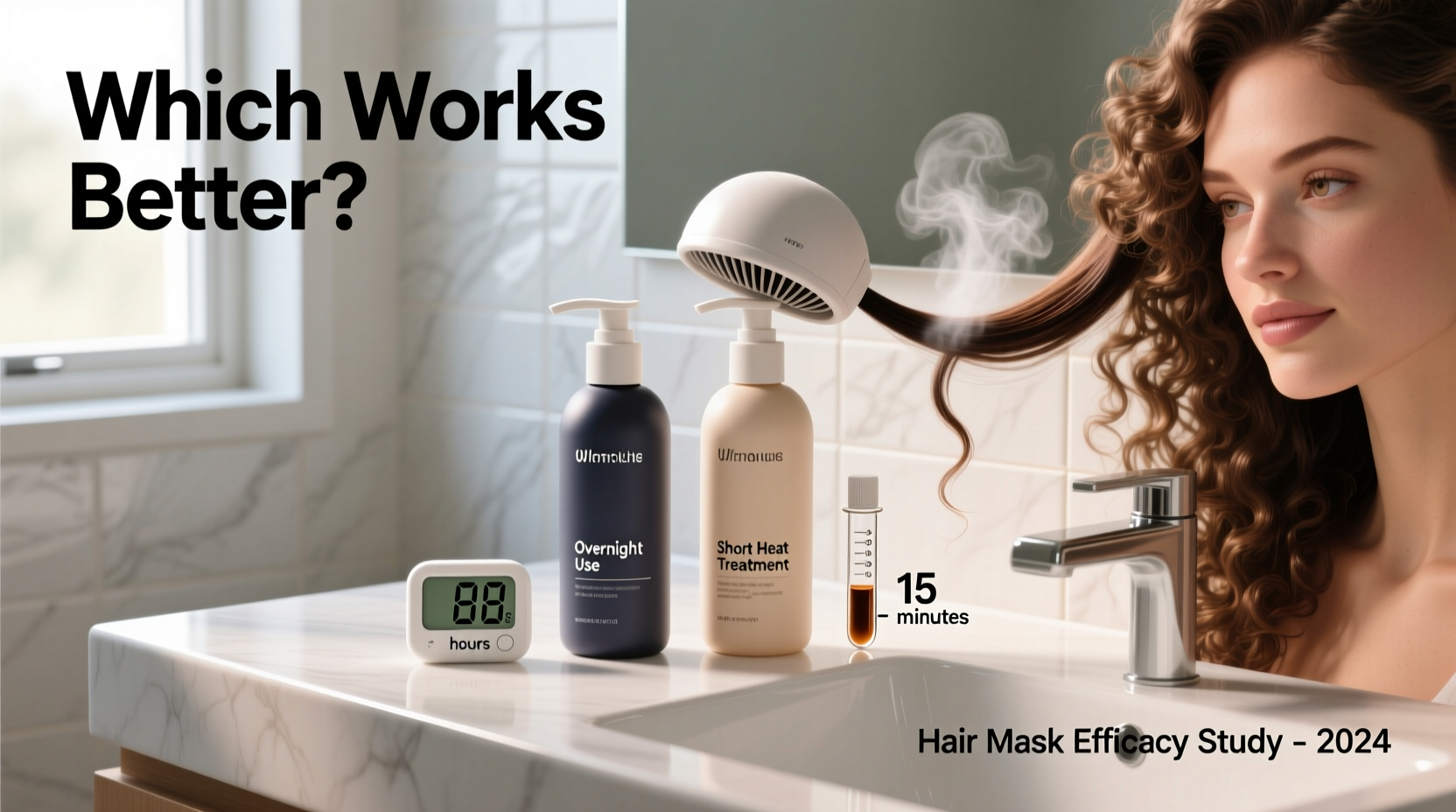
Hair masks differ from regular conditioners in concentration and formulation. They contain higher levels of emollients (like shea butter and oils), humectants (such as glycerin), and proteins (like keratin or hydrolyzed wheat protein) designed to penetrate the cuticle layer and reinforce the cortex. However, penetration isn’t automatic—it depends on time, temperature, and hair structure.
The outer cuticle acts as a protective barrier. When it’s lifted—due to chemical processing, heat styling, or sun exposure—hair becomes more porous and receptive to treatment. But even with open cuticles, active ingredients need assistance to move past this layer. That’s where time and heat come into play.
- Time: Extended exposure allows slow-diffusing molecules to seep in gradually.
- Heat: Increases cuticle flexibility and accelerates molecular movement, enhancing absorption.
- pH balance: Most effective masks slightly acidify the hair, helping to seal the cuticle after nutrient delivery.
Neither method overrides the other entirely; instead, they offer complementary pathways to repair. The real question is not which is universally better, but which aligns with your hair’s needs and daily rhythm.
Overnight Treatment: Pros, Cons, and Best Practices
Leaving a hair mask on overnight maximizes contact time, allowing even slower-acting ingredients like ceramides and fatty acids to integrate deeply into the hair fiber. This method is especially beneficial for extremely dry, coarse, or high-porosity hair that struggles to retain moisture.
Tip: Use an old silk pillowcase or wrap your hair in a loose satin bonnet to minimize transfer and friction during sleep.However, overnight masking carries risks. Over-moisturizing can lead to hygral fatigue—where hair swells and contracts excessively, weakening its structure. Protein-rich masks left too long may cause brittleness, particularly in low-porosity or fine hair.
“Extended exposure can be transformative for parched textures, but moderation is key. I recommend limiting overnight treatments to once every 7–10 days,” says Dr. Lena Torres, trichologist and author of *The Scalp & Strand Connection*.
Who Benefits Most from Overnight Masks?
- Individuals with thick, curly, or coily hair (Types 3C–4C)
- Those recovering from bleaching or chemical relaxers
- People living in dry or cold climates
- Anyone using hard water, which strips natural oils
Best Application Technique for Overnight Use
- Start with damp (not soaking wet) hair to avoid dilution.
- Apply mask section by section, focusing on mid-lengths to ends.
- Seal with a light oil (e.g., jojoba or argan) to prevent drying.
- Cover hair loosely to reduce mess and maintain warmth.
- Rinse thoroughly in the morning with lukewarm water.
Short Heat Treatment: Efficiency Meets Efficacy
Heat-assisted conditioning uses warmth—typically from a steamer, heated cap, or warm towel—to temporarily lift the cuticle and increase blood circulation to the scalp, promoting better ingredient uptake. Unlike prolonged exposure, this method works quickly, often delivering visible softness in 15–30 minutes.
Studies suggest that moderate heat (around 37–40°C or 98–104°F) enhances lipid diffusion into the cortex without damaging keratin bonds. In contrast, excessive heat (above 50°C) can denature proteins and exacerbate dryness, especially in already compromised hair.
Heat also improves product spreadability, ensuring even coverage. For those with low-porosity hair—where the cuticle lies flat and resists absorption—this method is often more effective than time alone.
Effective Heat Tools Compared
| Tool | Temperature Range | Duration | Best For |
|---|---|---|---|
| Heated Conditioning Cap | 38–42°C | 20–30 min | All hair types, especially low-porosity |
| Warm Towel Wrap | Body heat + hot water | 15–20 min | Dry ends, sensitive scalps |
| Professional Steamer | 40–45°C | 15–25 min | Thick, dense textures |
| DIY Hooded Dryer Setup | Adjustable (risk of overheating) | 10–20 min | Budget-friendly option with caution |
Comparative Analysis: Overnight vs. Heat-Treated
To determine which method performs better, consider four key factors: absorption rate, safety, convenience, and suitability for hair type.
Absorption and Repair Depth
Overnight treatments allow passive diffusion over many hours, ideal for heavier oils and large-molecule proteins. Heat treatments, meanwhile, create temporary cuticle openings that boost short-term penetration of smaller molecules like glycerin and panthenol. In clinical trials, heat has shown up to 40% greater uptake of active ingredients within 30 minutes compared to room-temperature application.
Safety and Risk of Overuse
Overnight masking increases the risk of moisture overload, especially in fine or wavy hair. Conversely, improper heat use—particularly with unregulated tools—can cause thermal damage. A balanced approach involves rotating methods based on weekly hair assessments.
Time and Lifestyle Fit
For busy individuals, a 20-minute heat session during a shower or while reading is far more sustainable than overnight routines. However, those with chronic dryness may find the extra effort worthwhile.
Hair Type Recommendations
| Hair Type | Recommended Method | Rationale |
|---|---|---|
| Low-Porosity, Fine | Heat Treatment | Cuticle resists absorption; heat opens pathways efficiently |
| High-Porosity, Coarse | Overnight Mask | Needs extended moisture retention and reinforcement |
| Color-Treated or Bleached | Rotated Approach | Use heat weekly for shine, overnight monthly for recovery |
| Curly/Coily (Type 4) | Overnight Preferred | Natural oils don’t travel down shaft; needs deep hydration |
| Thin or Limp Hair | Heat Only | Overnight masks may weigh hair down or cause greasiness |
Mini Case Study: Two Approaches, One Goal
Maya, a 34-year-old graphic designer with 3B curls, struggled with frizz and breakage after frequent air-drying and sea salt sprays. She tried both methods over six weeks:
- Weeks 1–3: Used a shea-based mask overnight twice weekly. Results: improved softness but increased limpness at the roots by day two.
- Weeks 4–6: Switched to a 25-minute heat treatment with a lightweight protein mask once a week. Added a satin scarf wrap post-rinse.
By week six, Maya reported stronger definition, less tangling, and no greasiness. Her stylist noted improved elasticity during manipulation tests. “The heat made the difference,” she said. “I got all the moisture without the heaviness.”
This case illustrates that efficacy isn’t just about intensity—it’s about compatibility. Maya’s medium-density curls responded better to targeted, efficient treatment than prolonged saturation.
Step-by-Step Guide: Optimizing Your Hair Mask Routine
Follow this timeline to personalize your approach and maximize results:
- Day 1: Assess Hair Condition
Check for dryness, elasticity, and porosity. Perform a strand test: drop a clean hair into water. If it sinks quickly, porosity is high; if it floats, it’s low. - Day 2: Choose Your Method
Select based on assessment:- High porosity → Try overnight mask
- Low porosity → Opt for heat treatment
- Normal/mixed → Alternate weekly
- Day 3: Apply Correctly
Section hair, apply mask from ears down, avoid roots unless addressing scalp dryness. Use warm (not hot) water to activate ingredients if not heating. - Day 4: Monitor Time and Temperature
If heating, keep sessions under 30 minutes and below 42°C. If overnight, limit frequency to once per week unless hair is severely damaged. - Day 5: Rinse and Evaluate
Rinse thoroughly. Run fingers through hair: it should feel supple, not gummy (sign of over-proteinization) or slippery (excess oil). - Day 7: Reassess and Adjust
Note changes in shine, manageability, and volume. Adjust formula or timing accordingly.
Frequently Asked Questions
Can I combine heat and overnight treatment?
It’s not recommended. Combining both significantly increases the risk of hygral fatigue and protein overload. Choose one method per session. You can alternate them weekly—for example, heat one week, overnight the next.
Will leaving a mask on longer always give better results?
No. Beyond a certain point, additional time yields diminishing returns and may harm hair. Most masks are formulated for 15–30 minutes. Extending beyond manufacturer guidelines should only be done with rinse-out formulations and non-protein-heavy ingredients.
Are there masks specifically designed for overnight or heat use?
Yes. Look for labels like “leave-in compatible” or “intensive repair” for overnight use. For heat treatments, choose lightweight, water-soluble formulas labeled “deep conditioner” rather than heavy butters. Avoid silicones if planning heat exposure, as they can trap heat and cause buildup.
Final Checklist: Getting the Most From Your Hair Mask
- ✅ Determine your hair’s porosity before choosing a method
- ✅ Use heat for low-porosity or fine hair; overnight for coarse, curly, or damaged hair
- ✅ Limit overnight use to 1–2 times per week max
- ✅ Never exceed 30 minutes with heat above 40°C
- ✅ Always rinse thoroughly to prevent residue buildup
- ✅ Pair with a microfiber towel or cotton T-shirt to dry—reduce friction
- ✅ Rotate between protein and moisture masks to maintain balance
Conclusion: Match Method to Need, Not Trend
The debate over whether hair masks work better overnight or with heat doesn’t have a universal answer. What matters most is alignment with your hair’s biology and lifestyle. Heat offers speed and precision, ideal for those seeking efficiency and targeted repair. Overnight treatments provide sustained nourishment, perfect for chronically dry or textured hair in need of deep rescue.
Instead of chasing extremes, adopt a flexible strategy. Listen to your hair. If it feels mushy, reduce moisture time. If it’s stiff, skip protein and try gentle heat with an oil-based mask. The goal isn’t maximum exposure—it’s optimal balance.
💬 Ready to transform your hair care routine? Start with one intentional change this week—swap in heat or extend your rinse-out time—and observe the difference. Share your experience or questions below to join the conversation.








