
Pet ownership brings joy, companionship, and sometimes, persistent odors. Whether it's a dog that’s just come in from the rain, a litter box that needs cleaning, or the lingering scent of fur and dander, pet-related smells can embed themselves in carpets, furniture, and even walls. Many pet owners turn to air purifiers hoping for relief—but do these devices actually remove odors, or are they simply masking the problem with artificial fragrances? The answer depends on the technology inside the unit, how it's used, and what type of odor you're dealing with.
Unlike scented candles or plug-in air fresheners that merely cover up smells, high-quality air purifiers are engineered to capture and destroy airborne pollutants at a molecular level. When properly selected and maintained, they can significantly reduce—and in many cases eliminate—pet odors rather than just disguising them.
How Pet Odors Form and Spread
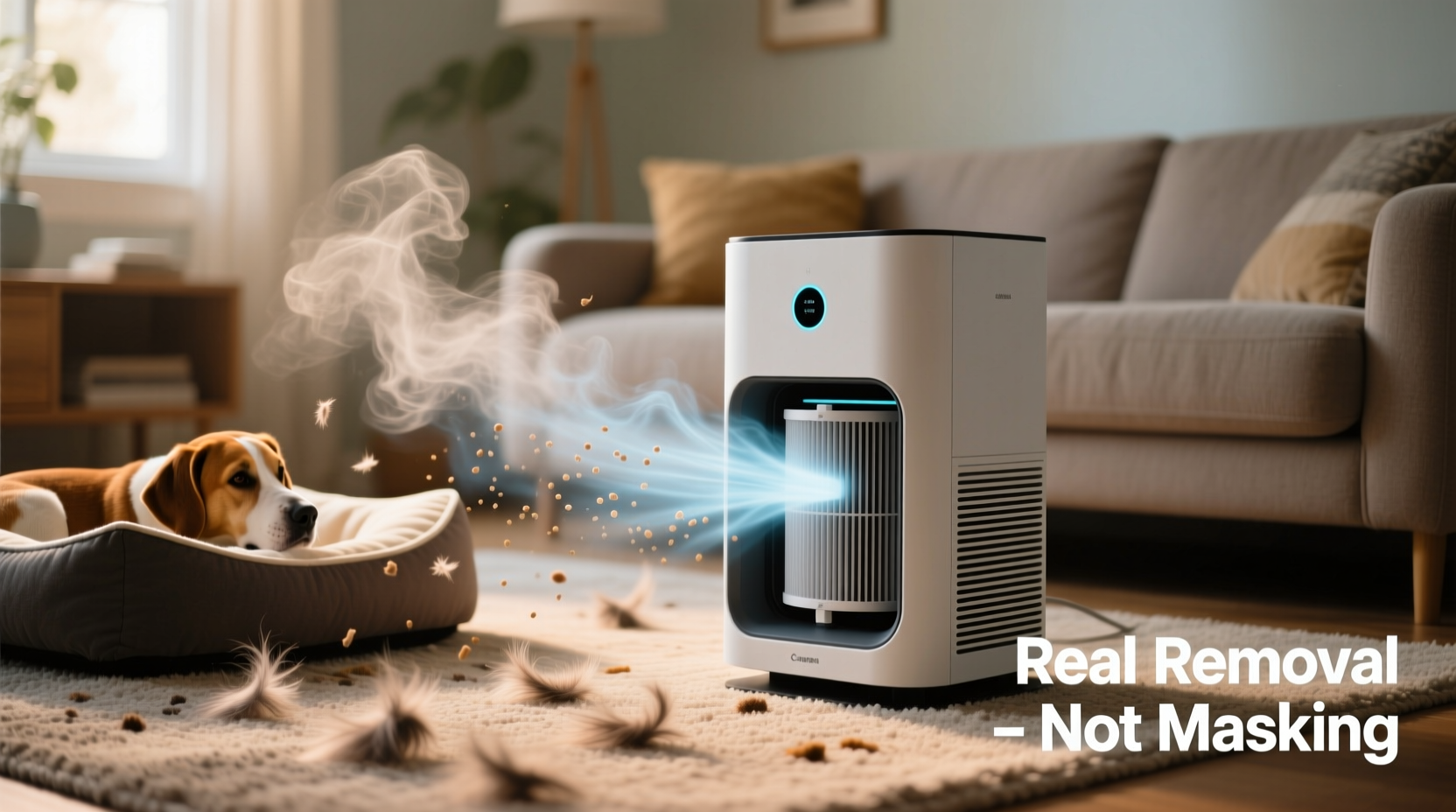
Pet odors aren’t just about \"wet dog\" or \"litter box\" smells. They stem from biological compounds released into the air through urine, feces, saliva, skin oils, and shed dander. These microscopic particles become airborne or settle on surfaces, where they can be re-released into the air when disturbed. Volatile organic compounds (VOCs) from pet waste, especially ammonia from urine, are particularly pungent and stubborn.
Odor molecules attach to dust, fabric fibers, and other airborne particulates, making them difficult to remove with standard cleaning alone. This is why vacuuming or wiping surfaces may not fully solve the issue—the source remains airborne or embedded in porous materials like upholstery or drapes.
Tip: Regular grooming and frequent cleaning of pet bedding and litter boxes reduce the load of odor-causing particles before they spread.The Science Behind Air Purifiers and Odor Removal
Air purifiers use various filtration technologies to clean indoor air. Not all are equally effective against odors. Understanding the differences is key to choosing one that truly eliminates smells instead of just masking them.
Mechanical Filtration: Capturing Particles That Carry Smell
High-Efficiency Particulate Air (HEPA) filters are designed to trap 99.97% of particles as small as 0.3 microns. While HEPA filters don't absorb gases or VOCs directly, they play a crucial role by capturing pet dander, hair, and dust that carry odor molecules. By removing these carriers, HEPA filters indirectly reduce the presence of smells in the air.
Activated Carbon Filters: Neutralizing Gases and VOCs
This is where real odor elimination happens. Activated carbon is a highly porous material with a massive surface area that adsorbs (not absorbs) gaseous pollutants. It works like a magnet for VOCs, including ammonia, sulfur compounds, and organic acids found in pet urine and feces.
The effectiveness of carbon filters depends on their weight and density. A thin mesh layer won’t do much, but a deep-bed carbon filter containing several pounds of activated charcoal can neutralize strong pet odors over time. Units with thicker carbon beds require less frequent replacement and offer longer-term performance.
“Air purifiers equipped with true HEPA and substantial activated carbon filters go beyond masking—they chemically bind and remove odor molecules from circulation.” — Dr. Linda Harper, Indoor Air Quality Researcher, University of Colorado
UV-C Light and Photocatalytic Oxidation (PCO)
Some advanced models include UV-C light or PCO technology, which breaks down organic pollutants at a molecular level. UV-C disrupts the DNA of bacteria and mold spores, while PCO uses a catalyst (often titanium dioxide) activated by UV light to oxidize VOCs into harmless byproducts like water vapor and carbon dioxide.
While promising, PCO systems vary widely in efficacy. Poorly designed units may produce trace amounts of ozone—a lung irritant—so it’s essential to choose ozone-free certified models if considering this technology.
Do Some Air Purifiers Just Mask the Smell?
Yes—many so-called “air purifiers” are little more than fans with fragrance dispensers. These units release perfumes or essential oils to overpower bad smells, offering only temporary relief. Worse, they can worsen indoor air quality by adding synthetic chemicals to the environment.
Be cautious of marketing terms like “fresh air,” “ozone burst,” or “ionized scent.” Ozone generators, often disguised as purifiers, emit ozone gas to react with odor molecules. While this can reduce some smells, ozone is harmful to humans and pets, especially those with respiratory conditions. The EPA and Consumer Reports strongly advise against using ozone-generating devices in occupied spaces.
| Technology | Removes Odor? | Masks Odor? | Safety Notes |
|---|---|---|---|
| True HEPA + Carbon Filter | Yes | No | Safe; no emissions |
| Ionizers (without carbon) | Limited | Partially | May produce ozone |
| Ozone Generators | Temporarily alters odor | Yes | Unsafe for regular use |
| Fragrance Dispensers | No | Yes | Can trigger allergies |
| UV-C with Catalyst | Yes (targeted) | No | Choose ozone-free models |
Real-World Effectiveness: A Mini Case Study
Sarah M., a pet owner in Portland, Oregon, adopted two rescue dogs known for shedding heavily and occasionally having accidents during house-training. Despite daily cleaning, her living room carried a persistent musky odor that bothered guests. She purchased a mid-range air purifier with a basic carbon strip and HEPA filter. After two weeks, she noticed no improvement.
Upon researching, Sarah upgraded to a model with a 5-pound activated carbon bed and true HEPA filtration. Within 48 hours, the air felt fresher. By day seven, the lingering odor had disappeared. She attributes success not only to the machine but also to consistent use, placing it in the main living area where the dogs spent most of their time, and replacing filters as recommended.
Her experience underscores a critical point: not all air purifiers are created equal. Performance hinges on filter quality, room size compatibility, and proper placement.
Tip: Place your air purifier near the primary odor source (e.g., pet sleeping area or litter box), but ensure unobstructed airflow on all sides.Choosing the Right Air Purifier for Pet Odors: A Step-by-Step Guide
Selecting an effective air purifier involves more than reading product claims. Follow this practical process to make an informed decision.
- Assess Your Space: Measure the square footage of the room where the purifier will operate. Choose a unit rated for that size—or slightly larger—for optimal air turnover.
- Check Filter Specifications: Look for “activated carbon” with a minimum of 3–5 pounds of carbon content. Avoid units that list “carbon-infused mesh” as the sole solution.
- Verify HEPA Certification: Ensure it’s labeled “True HEPA” or “HEPA H13/H14,” not “HEPA-type” or “HEPA-like,” which are inferior imitations.
- Review CADR Ratings: The Clean Air Delivery Rate indicates how quickly a unit cleans the air. For pet odors, prioritize higher smoke and dust CADR scores, which correlate with fine particle and odor removal.
- Consider Noise Levels: If using in a bedroom or quiet space, check decibel ratings. Some powerful units run loudly on high settings.
- Factor in Maintenance Costs: Replaceable filters add ongoing expense. Check availability and price of replacements before buying.
- Avoid Ozone-Emitting Models: Confirm the device is CARB-compliant (California Air Resources Board) and explicitly states zero ozone emission.
Action Checklist: Maximizing Odor Elimination with Your Air Purifier
- ✅ Use a unit with both True HEPA and deep-bed activated carbon filtration
- ✅ Position the purifier in high-traffic pet areas with good airflow
- ✅ Run it continuously on auto or medium setting for consistent results
- ✅ Clean pre-filters monthly to maintain suction efficiency
- ✅ Replace carbon and HEPA filters per manufacturer guidelines (typically every 6–12 months)
- ✅ Combine with regular pet hygiene: bathe pets as needed, clean litter boxes daily, and wash bedding weekly
- ✅ Ventilate rooms when possible—open windows to dilute indoor pollutants
FAQ: Common Questions About Air Purifiers and Pet Odors
Can air purifiers eliminate the smell of pet urine completely?
Yes, but only if the source has been cleaned thoroughly. Air purifiers remove airborne odor molecules but cannot fix odors coming from untreated stains in carpet or subfloor. First, clean the spill with enzymatic cleaners that break down uric acid crystals. Then, use an air purifier to capture residual airborne particles and prevent recontamination.
How long does it take for an air purifier to remove pet odors?
Results vary based on room size, odor intensity, and purifier capacity. Mild odors may clear within a few hours. Strong, embedded smells often require continuous operation for 24–72 hours. Consistent use leads to cumulative improvement.
Are there specific brands better suited for pet owners?
Brands like Austin Air, IQAir, Winix, and Coway offer models specifically designed for pet owners, featuring heavy-duty carbon filters and robust HEPA systems. Look for models labeled “for pets” or “allergy & odor” variants, but always verify filter composition independently.
Conclusion: Real Solutions, Not Quick Fixes
Air purifiers can do far more than mask pet odors—they can genuinely eliminate them when equipped with the right technology. Devices combining true HEPA filtration with substantial activated carbon beds actively remove the particles and gases responsible for unpleasant smells, offering a healthier, more pleasant home environment.
However, no machine is a substitute for good pet care practices. Regular grooming, prompt cleanup, and routine household maintenance must go hand-in-hand with air purification. When used together, these strategies create a comprehensive solution that keeps your home smelling fresh without relying on artificial scents or harmful chemicals.
🚀 Ready to breathe easier? Evaluate your current air purifier or research a model with deep-bed carbon and HEPA filtration today. Share your experience or ask questions in the comments—your insights could help another pet owner find lasting relief.








