For cat owners, maintaining a clean litter box is essential—not just for hygiene, but for the well-being of both pets and households. Yet, scooping waste daily can become tedious and time-consuming. Enter the automatic self-cleaning litter box: a smart solution designed to eliminate manual labor while keeping odors under control. But with so many models on the market, how do you find one that’s truly reliable? This guide explores top-performing options, key features to consider, and real-world usage strategies to help you make an informed decision.
How Automatic Litter Boxes Work
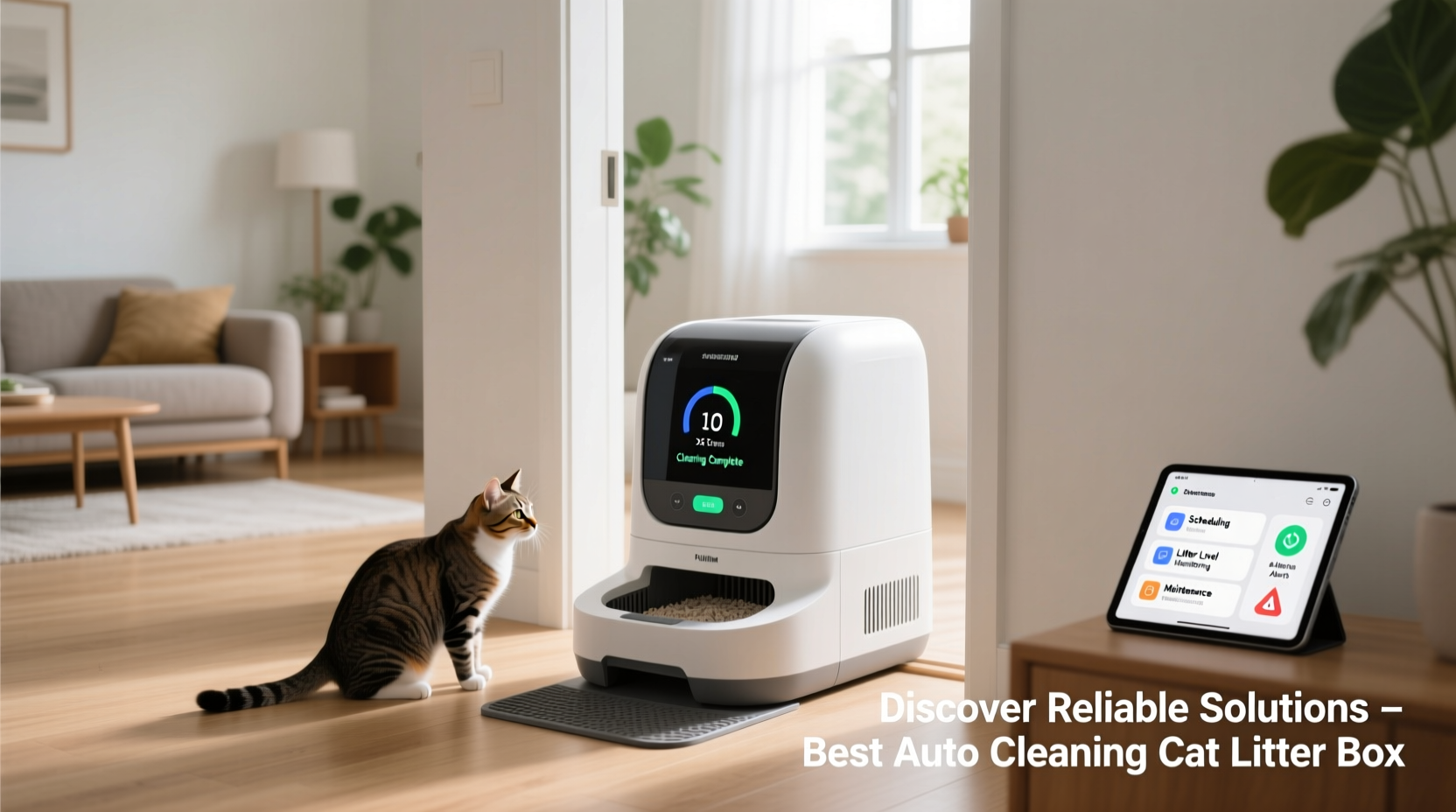
Auto cleaning cat litter boxes use sensors, rakes, or rotating mechanisms to detect when a cat has used the box. After the cat exits, the system activates—typically within 7 to 15 minutes—and separates waste from clean litter, depositing clumps into a sealed waste compartment. Some models even notify you via smartphone when the tray is full or maintenance is needed.
The core technology varies by brand:
- Rake systems drag through litter to sift out clumps.
- Rotating drums tumble litter to separate solids and drain urine into a lower tray.
- Sensor-triggered mechanisms rely on weight or motion detection to initiate cleaning cycles.
While convenience is a major selling point, reliability hinges on consistent performance across different litter types, cat sizes, and household environments.
Tip: Use clumping litter specifically recommended by your device’s manufacturer—non-clumping or crystal litters may interfere with sensor accuracy or rake function.Top Features to Look for in a Reliable Model
Not all automatic litter boxes deliver equal results. To avoid frustration and ensure long-term satisfaction, prioritize these critical features:
- Accurate Detection System: Advanced weight sensors distinguish between cats and objects (like toys), reducing false triggers.
- Litter Containment: High walls and covered designs minimize scatter during use and cleaning.
- Odor Control: Sealed waste drawers with carbon filters significantly reduce smell buildup.
- App Integration: Wi-Fi-enabled models send alerts about full bins, cleaning status, or unusual activity patterns.
- Capacity & Cat Compatibility: Larger units accommodate multiple cats or heavier breeds without overflow issues.
- Easy Maintenance: Removable trays and washable components simplify deep cleaning.
“Owners who invest in high-sensor-fidelity litter boxes report up to 80% less hands-on maintenance and fewer behavioral issues like inappropriate elimination.” — Dr. Lena Patel, Feline Behavior Specialist
Comparison of Leading Auto Cleaning Litter Boxes
| Model | Key Feature | Multi-Cat Support? | App Control | Avg. Price |
|---|---|---|---|---|
| Litter-Robot 4 | Whisper quiet operation, auto-reset after failed cycle | Yes (up to 3 cats) | Yes (iOS/Android) | $649 |
| PetKit PuraMax | Dual HEPA + carbon filtration, ultra-low noise | Yes | Yes | $399 |
| ScoopFree Ultra | Disposable trays—no litter refills needed | Limited (best for 1–2 cats) | No | $220 + ongoing tray cost |
| Tidy Cats TidyCombo | All-in-one food/water station + litter box | No | No | $349 |
| Omega Paw Roll’n | Manual roll mechanism (semi-auto), budget-friendly | Yes | No | $80 |
The Litter-Robot 4 stands out for its adaptive learning algorithm, which adjusts delay times based on your cat’s habits. Meanwhile, PetKit offers strong value with excellent odor management at a lower price point. ScoopFree appeals to those seeking minimal mess, though recurring tray expenses add up over time.
Step-by-Step Guide to Choosing and Setting Up Your Unit
Selecting and introducing an automatic litter box requires thoughtful planning. Follow this timeline for a smooth transition:
- Week 1: Research & Purchase
Select a model suited to your number of cats, space constraints, and budget. Read verified owner reviews focusing on long-term durability. - Day 1: Unbox & Assemble
Follow instructions precisely. Place the unit on a hard, level surface away from foot traffic. - Day 2: Introduce Gradually
Let your cat sniff and explore the powered-off unit. Offer treats nearby to build positive associations. - Day 3: Activate & Monitor
Turn on the device and fill with appropriate litter. Observe your cat’s first few uses. Adjust sensitivity settings if needed. - Week 2+: Refine & Maintain
Clean the waste drawer weekly, wipe sensors monthly, and replace filters as directed. Track usage via app data if available.
Real-World Example: A Multi-Cat Household Success Story
Sarah Thompson, a pet owner in Portland, Oregon, struggled with constant litter box conflicts among her three cats. One would guard the box, another avoided it due to lingering smells, and the third kicked litter across the room. After researching solutions, she invested in the Litter-Robot 4.
Within days, behavior improved. The sealed design contained odors, and the automatic reset ensured the box was always ready. With app notifications, Sarah could monitor usage patterns and noticed one cat wasn’t going as often—an early clue to a developing urinary issue. Her vet confirmed a minor infection, now resolved thanks to timely intervention.
“It’s not just about convenience,” Sarah says. “This device gave me insight into my cats’ health I never had before.”
Common Pitfalls and How to Avoid Them
Even the best devices fail if misused. Watch out for these common mistakes:
- Using incompatible litter: Gel crystals or low-dust non-clumping formulas can clog rakes or confuse sensors.
- Ignoring maintenance: Failing to clean sensors leads to missed cycles or false starts.
- Placing in high-traffic areas: Noise-sensitive cats may avoid the box if it’s near loud appliances or doorways.
- Overlooking size needs: Large breeds like Maine Coons need extra headroom—check interior dimensions carefully.
“The biggest myth is that automatic boxes are ‘set-and-forget.’ They require regular upkeep, just like any advanced pet tech.” — Mark Rivera, Smart Pet Appliance Technician
Frequently Asked Questions
Are automatic litter boxes safe for kittens?
Most models are safe for kittens over 5 lbs and older than 3 months, provided they can enter and exit freely. However, very young kittens should use traditional boxes until they’re large enough to avoid being trapped during a cycle.
How often do I need to empty the waste drawer?
For single-cat households, every 5–7 days is typical. In multi-cat homes, check every 2–3 days. Models with full-bin alerts make scheduling easier.
Can these boxes handle large cats?
Yes, but only if the internal chamber is sufficiently spacious. The Litter-Robot 4 and PetKit PuraMax XL support cats up to 15 lbs comfortably. Always verify clearance height and entry step depth.
Final Checklist Before Buying
- ✅ Confirm compatibility with your cat’s weight and breed
- ✅ Ensure access to compatible, clumping litter
- ✅ Measure available floor space including clearance for rotation or opening lids
- ✅ Check Wi-Fi signal strength where the unit will be placed (for app-connected models)
- ✅ Review return policy—some brands offer trial periods
- ✅ Budget for replacement parts (filters, liners, rake assemblies)
Conclusion: Make the Switch with Confidence
An automatic self-cleaning litter box isn’t just a luxury—it’s a practical upgrade that enhances hygiene, reduces daily chores, and can even provide valuable health insights. By focusing on reliability, proper setup, and ongoing care, you can find a solution that works seamlessly in your home. Whether you choose a premium model like the Litter-Robot or a mid-tier option like PetKit, the right choice depends on your lifestyle, number of cats, and long-term expectations.
💬 Have experience with auto cleaning litter boxes? Share your story or advice in the comments below—your insights could help another cat owner make a smarter decision today.








