
A dent or indentation in the head can be alarming, especially when it appears suddenly or worsens over time. While some skull irregularities are harmless and present from birth, others may signal underlying health conditions requiring medical evaluation. Understanding the possible causes, recognizing red flags, and knowing when to consult a healthcare provider is essential for peace of mind and timely intervention.
Common Causes of a Dent in the Head
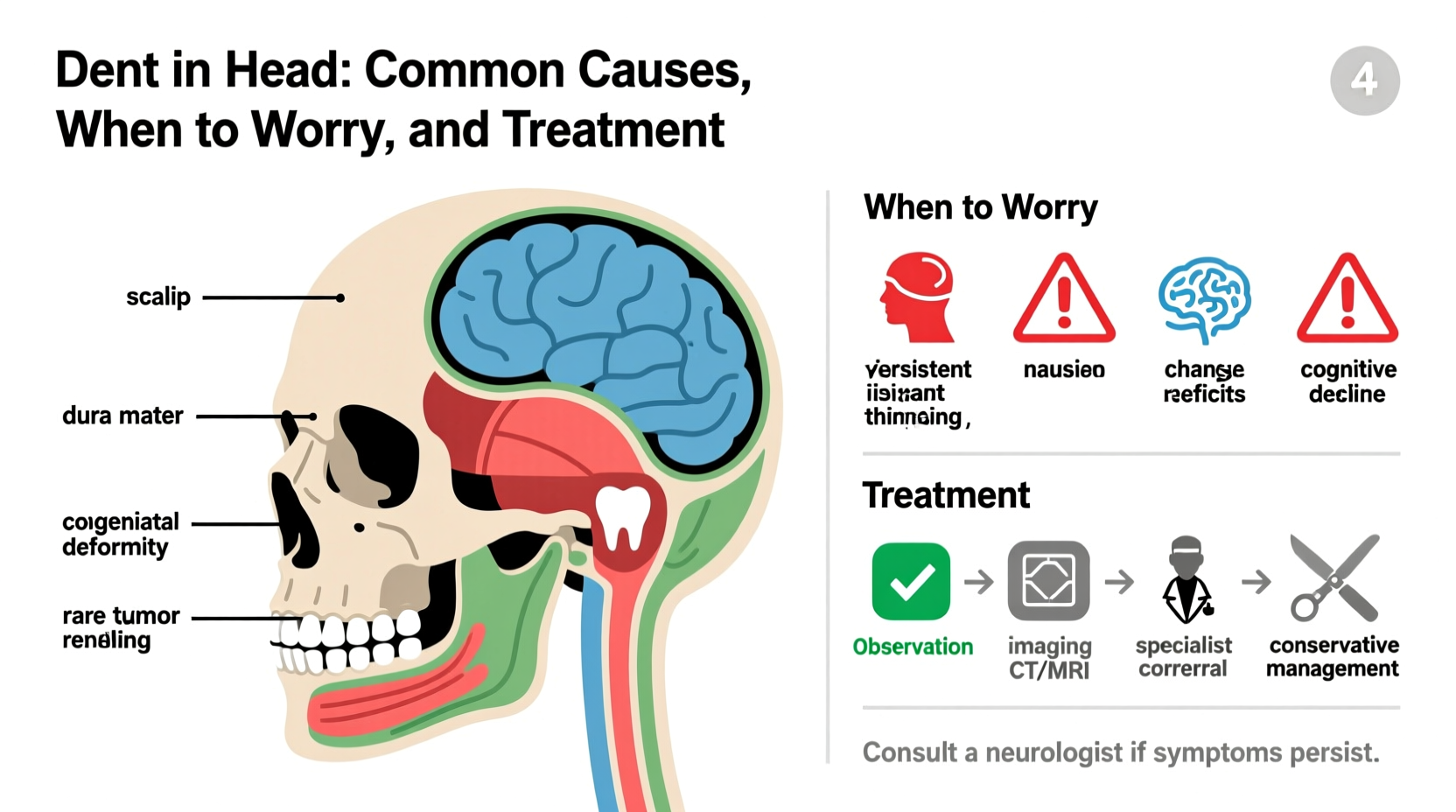
Skull indentations vary in origin, depth, and progression. Some are congenital, while others develop later due to trauma, disease, or aging. The most frequent causes include:
- Craniosynostosis: A birth defect where skull sutures close prematurely, leading to abnormal head shape. Often diagnosed in infancy.
- Head trauma: Fractures or depressed skull injuries from accidents can create noticeable dents.
- Osteoporosis or bone loss: In older adults, thinning of the skull bones may make natural contours more prominent or cause subtle depressions.
- Temporalis muscle atrophy: Weight loss or malnutrition can reduce muscle mass around the temples, creating a sunken appearance often mistaken for a skull dent.
- Paget’s disease of bone: A chronic disorder that disrupts bone regeneration, potentially leading to deformities in the skull.
- Fibrous dysplasia: Abnormal fibrous tissue replaces normal bone, sometimes resulting in localized skull deformities.
- Sinus-related changes: Chronic sinus issues may alter pressure dynamics in facial bones, contributing to perceived indentations.
“Not every dent in the skull is dangerous, but any new or progressive change deserves clinical assessment.” — Dr. Alan Reyes, Neurologist, Massachusetts General HospitalTip: If you're unsure whether a dent is new, take side-profile photos monthly to track changes over time.
When to Worry: Red Flags That Require Medical Attention
Most minor skull irregularities are benign, particularly if they’ve been present for years without change. However, certain symptoms indicate the need for prompt evaluation by a doctor:
- Newly developed dent, especially in adulthood
- Rapid progression or deepening of the indentation
- Associated headaches, dizziness, or vision changes
- Nausea or vomiting without clear cause
- Seizures or cognitive decline
- Recent history of head injury
- Swelling, redness, or tenderness over the area
These warning signs could point to serious conditions such as traumatic brain injury, tumors, infections like osteomyelitis, or metabolic bone diseases. Imaging studies—such as CT scans or MRIs—are typically required to assess bone integrity and rule out intracranial complications.
Distinguishing Between Cosmetic and Clinical Concerns
It’s important to differentiate between aesthetic concerns and medically significant findings. For example, a shallow dent along the temporal line due to genetics or weight loss usually poses no risk. In contrast, a sharply defined depression following a fall requires urgent neuroimaging.
Diagnostic Process and Medical Evaluation
If a skull dent raises concern, a physician will likely follow a structured diagnostic approach:
- Medical history review: Questions about onset, trauma, family history of bone disorders, and associated symptoms.
- Physical examination: Palpation of the skull to assess depth, mobility, symmetry, and surrounding tissue changes.
- Neurological screening: Testing reflexes, coordination, cranial nerve function, and mental status.
- Imaging studies: X-rays may detect fractures; CT scans provide detailed bone anatomy; MRI evaluates soft tissues and brain structures.
- Laboratory tests: Blood work to check calcium, vitamin D, alkaline phosphatase (for Paget’s), or markers of inflammation.
In cases involving suspected metabolic bone disease or tumor, a biopsy may be necessary after imaging.
Table: Common Causes vs. Key Indicators and Diagnostic Tools
| Cause | Typical Onset | Key Symptoms | Diagnostic Method |
|---|---|---|---|
| Congenital craniosynostosis | Infancy | Abnormal head shape, bulging sutures | Ultrasound, CT scan |
| Traumatic fracture | Sudden (post-injury) | Pain, swelling, neurological deficits | CT scan |
| Temporalis atrophy | Gradual (with weight loss) | Sunken temples, no pain | Clinical exam |
| Paget’s disease | Adults over 50 | Skull enlargement, hearing loss | X-ray, blood test |
| Fibrous dysplasia | Adolescence/early adulthood | Asymmetry, facial distortion | MRI or CT |
Treatment Options Based on Cause
Treatment depends entirely on the underlying diagnosis. There is no one-size-fits-all solution, and interventions range from observation to surgery.
- Observation: For stable, asymptomatic dents with no evidence of disease, regular monitoring may be sufficient.
- Nutritional support: In cases of muscle wasting due to malnutrition, dietary correction and supplementation can restore facial fullness.
- Surgical repair: Depressed skull fractures or cosmetic deformities may require cranioplasty—a procedure using implants or autologous bone grafts to reconstruct the skull.
- Medication: Paget’s disease is managed with bisphosphonates to regulate bone turnover.
- Tumor management: Benign or malignant growths may require resection, radiation, or chemotherapy depending on type and location.
Plastic surgeons and neurosurgeons often collaborate in complex cases to ensure both structural integrity and aesthetic outcomes.
Mini Case Study: Adult-Onset Skull Depression
Mark, a 48-year-old accountant, noticed a small dent above his right ear that hadn’t been there six months prior. He reported mild headaches but no trauma. His primary care doctor ordered a CT scan, which revealed early-stage fibrous dysplasia. Mark was referred to an endocrinologist and orthopedic specialist. After monitoring progression over a year, he underwent minimally invasive reconstruction surgery. Post-recovery, the indentation resolved, and his headaches disappeared. This case underscores the importance of investigating new-onset skull changes—even without severe symptoms.
Prevention and Monitoring Tips
While not all skull dents are preventable, certain lifestyle choices can support cranial and overall bone health:
Tip: Maintain adequate intake of calcium, vitamin D, and protein to support strong bones throughout life.- Wear helmets during high-risk activities (cycling, contact sports).
- Avoid rapid weight loss, which can lead to facial fat and muscle depletion.
- Get routine physical exams, especially if you have a family history of bone disorders.
- Monitor any bodily changes and document them with notes or photos.
Checklist: What to Do If You Notice a Dent in Your Head
- Assess whether the dent is new or has changed recently.
- Note any accompanying symptoms (headaches, dizziness, etc.).
- Recall any recent head injuries, even minor ones.
- Take clear photos from multiple angles for reference.
- Schedule an appointment with your primary care physician.
- Follow through with recommended imaging or specialist referrals.
Frequently Asked Questions
Can a dent in the head be caused by sleeping position?
No, normal sleeping positions do not cause permanent skull indentations in adults. Infants may develop temporary flattening (positional plagiocephaly), but this resolves with time and positioning changes. Persistent dents in adults are not due to sleep habits.
Is it normal to have an uneven skull?
Minor asymmetries are common and often congenital. Many people have slight differences in skull contour that are harmless. However, newly developed or worsening unevenness should be evaluated medically.
Can stress cause a dent in the head?
No, psychological stress does not physically alter skull structure. However, heightened anxiety may lead individuals to focus excessively on normal anatomical variations, mistaking them for abnormalities.
Conclusion: Take Action Without Panic
Finding a dent in your head can be unsettling, but most cases are either benign or treatable when addressed early. The key is not to ignore sudden or progressive changes. By understanding potential causes, recognizing warning signs, and seeking timely medical advice, you can ensure appropriate care and avoid unnecessary worry. Bone health matters at every age—stay informed, stay observant, and don’t hesitate to consult a professional when something feels off.
💬 Have you or someone you know experienced a skull dent? Share your story or questions below—your experience could help others recognize important signs and seek proper care.








