The union of ginger and peach in pastries and desserts is a match made in culinary heaven—bold spice meets juicy sweetness in a harmony that elevates both flavors. Whether you're baking for a summer brunch, crafting an elegant dessert course, or simply indulging in homemade comfort, ginger peach treats offer a dynamic flavor profile that balances warmth, tang, and floral fruitiness. This combination has long been cherished in American Southern baking, French patisserie, and modern fusion desserts alike. With peaches at their peak in midsummer and ginger available year-round in multiple forms, these ingredients are accessible to home cooks and professionals seeking to create memorable baked goods. Beyond taste, the contrast in textures—tender peach flesh against crisp, spiced pastry crusts or chewy ginger-laced doughs—adds another layer of sensory delight. From flaky galettes to spiced muffins and elegant tarts, this guide explores how to harness the full potential of ginger and peach in sweet preparations, offering practical techniques, storage advice, substitution options, and professional insights.
Definition & Overview
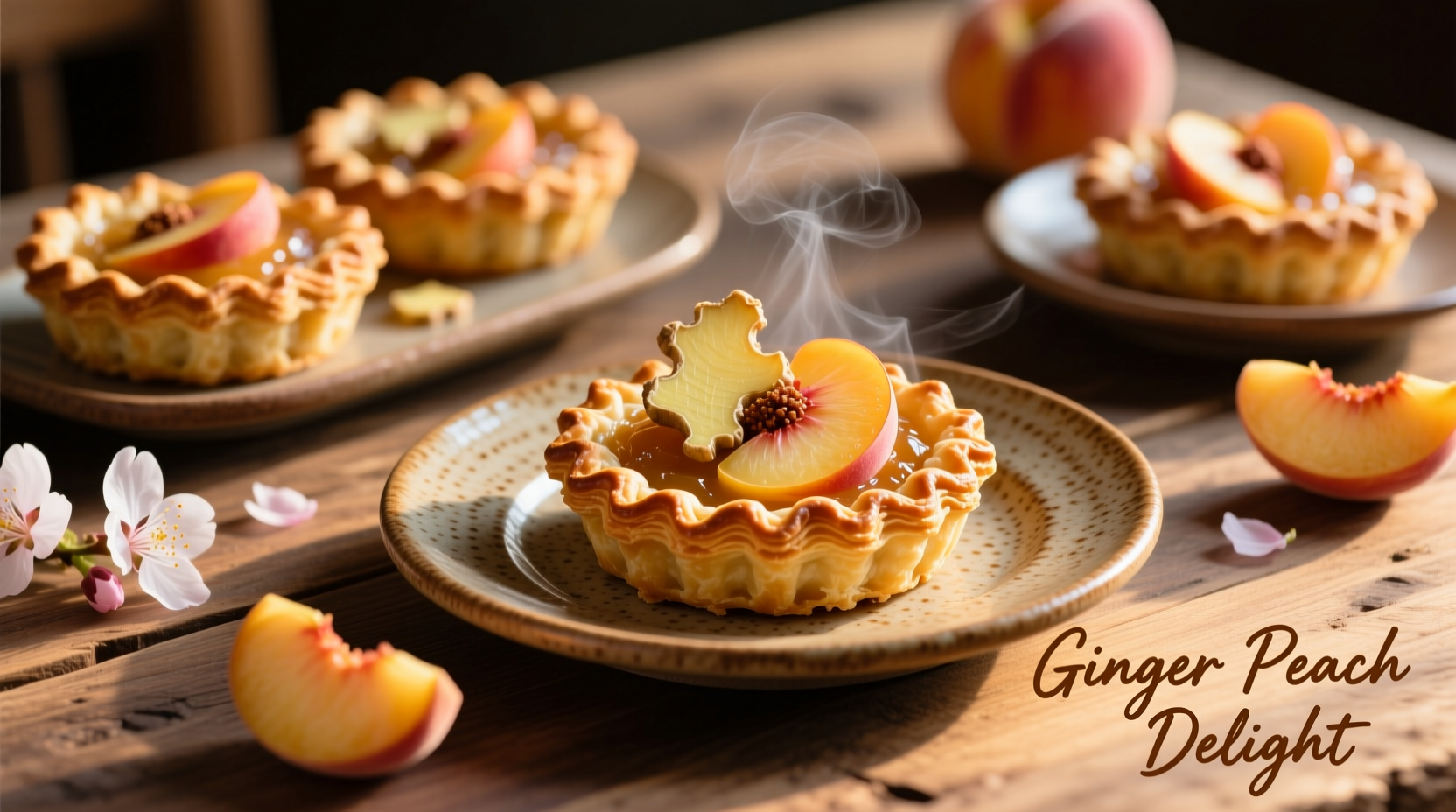
Ginger peach pastries and treats refer to a category of baked goods and confections that feature ripe peaches paired with fresh or dried ginger in some form. These desserts span a wide range: from rustic cobblers and hand pies to refined French-style clafoutis and ginger-infused peach turnovers. The core concept lies in balancing the bright acidity and floral sweetness of peaches with the pungent, warm bite of ginger. While peaches belong to the stone fruit family (*Prunus persica*) and are native to China before spreading globally, ginger (*Zingiber officinale*) is a tropical rhizome originating in Southeast Asia. Their convergence in Western baking emerged through colonial trade routes and evolved into signature dishes in regions like the American South, where peach orchards flourish and spice blends have long influenced local cuisine.
In modern applications, ginger can be incorporated as freshly grated root, ground spice, crystallized pieces, or infused syrups, each contributing different intensities and textures. Peaches may be used fresh, canned, poached, or roasted, depending on seasonality and desired moisture content. Together, they form a versatile foundation for both casual and gourmet desserts. The resulting treats often feature golden-brown crusts, bubbling fillings, and aromatic steam that carries notes of citrus, pine, and caramelized sugar—all hallmarks of skillful spicing and fruit handling.
Key Characteristics
The success of any ginger peach pastry hinges on understanding the intrinsic qualities of its two star ingredients. Below is a breakdown of their defining traits:
| Characteristic | Peach | Ginger |
|---|---|---|
| Flavor Profile | Floral, sweet-tart, mildly acidic with hints of apricot and honey | Spicy, warm, slightly citrusy with peppery heat and earthy depth |
| Aroma | Fragrant, fruity, reminiscent of ripe melon and rosewater | Pungent, zesty, with sharp top notes and woody base tones |
| Texture (when cooked) | Soft, juicy, breaks down easily; thickens when reduced | Fibrous when fresh; tender-chewy when candied; fine-grained when powdered |
| Color Contribution | Golden-yellow to deep orange flesh; blush skin adds visual appeal | Tan to light brown; darkens custards and doughs slightly |
| Heat Level | None | Moderate pungency (non-capsaicin based); builds slowly on palate |
| Culinary Function | Primary sweet component, natural thickener via pectin release | Flavor enhancer, counterbalance to sweetness, digestive aid |
| Shelf Life (raw) | 3–5 days at room temperature; up to 5 days refrigerated | Up to 3 weeks refrigerated (fresh); years (dried or powdered) |
Practical Usage: How to Use Ginger and Peach in Baking
To achieve optimal results in ginger peach pastries, careful preparation and proportioning are essential. Overpowering the delicate peach with too much ginger—or vice versa—can throw off the entire dish. The following guidelines apply across most recipes:
- Use **ripe but firm peaches** for baking; overly soft fruit turns mushy during cooking.
- Peel peaches if a smoother texture is desired, especially in custards or pureed fillings.
- Grate **fresh ginger finely** to distribute evenly without creating fibrous chunks.
- Start with **½ to 1 teaspoon of ground ginger per cup of sliced peaches**, adjusting to taste.
- Add ginger early in cooking to mellow its sharpness, allowing volatile compounds to dissipate.
- Balance sweetness with a splash of lemon juice to enhance both peach brightness and ginger complexity.
For example, in a classic **ginger peach galette**, toss 4 cups of sliced peaches with 1 tablespoon lemon juice, ¼ cup sugar, 1 teaspoon cornstarch, and 1 teaspoon freshly grated ginger. Let sit for 15 minutes to draw out juices, then drain excess liquid before placing on a rolled-out pie dough circle. Fold edges over, brush with egg wash, sprinkle turbinado sugar, and bake at 375°F (190°C) for 35–40 minutes until golden and bubbling.
Pro Tip: Pre-cook the filling slightly by simmering peaches and ginger for 5 minutes to reduce water content. This prevents soggy bottoms in tarts and pies—a common issue with high-moisture fruits.
In yeast-based pastries like **ginger peach Danish**, incorporate a spiced peach compote as filling. Simmer peeled and diced peaches with 1 tablespoon honey, ½ teaspoon ground ginger, and a pinch of cinnamon until thickened. Cool completely before spreading onto laminated dough squares. Top with a lattice strip or fold into envelopes, then bake and glaze with a simple icing of powdered sugar and milk.
For quick breads and muffins, substitute 1 cup of blueberries or bananas with diced peaches and add 1–2 teaspoons of ground ginger to the dry mix. Replace buttermilk with ginger-infused milk (steep 1 tablespoon grated ginger in warm milk for 10 minutes, then strain) for deeper flavor integration.
Variants & Types of Ginger Peach Treats
The versatility of this flavor duo allows for numerous interpretations across textures, structures, and cultural styles. Each variant leverages different forms of ginger and peach preparation to suit occasion, equipment, and skill level.
1. Freeform Galettes
Rustic, freehand fruit tarts made with folded pastry edges. Ideal for showcasing imperfectly sliced peaches and offering a casual elegance. Best with freshly grated ginger for aromatic punch.
2. Double-Crust Pies
Traditional American-style pies with bottom and top crusts. Require thickened fillings—use tapioca starch or flour instead of cornstarch when using fresh ginger, which can inhibit gelatinization.
3. Hand Pies & Turnovers
Portable, individually sized pastries filled with spiced peach compote. Often made with puff pastry or biscuit dough. Crystallized ginger pieces can be added for chewy bursts of spice.
4. Clafoutis & Custard Tarts
Baked French custards featuring whole or halved peaches suspended in a vanilla-ginger egg mixture. Ground ginger works best here for smooth texture.
5. Muffins & Scones
Breakfast-friendly items combining diced peaches with ground ginger in tender crumb cakes or flaky biscuits. Add lemon zest to lift the ginger’s intensity.
6. Cobblers & Crisps
Deep-dish desserts with biscuit or oat topping. Fresh or frozen peaches work well; use a blend of fresh and dried ginger for layered spice notes.
7. Preserves & Baking Fillings
Pre-made ginger peach jam can be swirled into cheesecakes, used as thumbprint cookie filling, or spread between cake layers. Cook peaches down with ginger, sugar, and pectin for shelf-stable preserves.
| Treat Type | Best Ginger Form | Peach Preparation | Baking Temp |
|---|---|---|---|
| Galette | Freshly grated | Sliced, lightly macerated | 375°F (190°C) |
| Pie | Ground + fresh (optional) | Diced, pre-thickened | 400°F (200°C) start, then 350°F (175°C) |
| Hand Pie | Candied or ground | Compote-style, cooled | 375°F (190°C) |
| Clafoutis | Ground | Halved, pitted | 325°F (160°C) |
| Muffin | Ground | Diced, floured lightly | 350°F (175°C) |
| Crisp | Ground + crystallized | Sliced, mixed with thickener | 375°F (190°C) |
Comparison with Similar Ingredients
Ginger is sometimes confused with other spicy or warming ingredients, but key differences affect how it interacts with peaches:
| Ingredient | Similarity to Ginger | Key Differences | Effect on Peach Pairing |
|---|---|---|---|
| Galangal | Botanical relative, same family | Sharper, more medicinal; less sweet, higher camphor notes | Overpowers peach; better suited for savory curries |
| Cinnamon | Commonly paired with ginger in spice blends | Sweeter, woodier, lacks pungency; no heat build-up | Complements but doesn’t replace ginger’s bite |
| Nutmeg | Warming, used in baked fruit dishes | Earthy, musky; potent in small doses; not spicy | Enhances depth but lacks ginger’s bright lift |
| Cardamom | Used in spiced fruit compotes | Floral, eucalyptus-like; more perfumed than heated | Creates a Middle Eastern twist, less traditional |
While cinnamon-peach combinations dominate fall baking, ginger offers a livelier, more complex interaction—especially in spring and summer desserts where freshness matters. Unlike nutmeg, which can mute fruit acidity, ginger amplifies it, making peaches taste brighter rather than heavier.
Practical Tips & FAQs
How do I prevent my ginger peach pie from being too runny?
Excess juice is the enemy of clean slices. Always macerate peaches with sugar and thickener (cornstarch, tapioca, or flour) for 15–20 minutes, then drain surplus liquid before filling the crust. For extra insurance, pre-cook the filling until syrupy, cool it, then assemble.
Can I use canned peaches?
Yes, but choose those packed in juice, not syrup, and drain thoroughly. Pat dry with paper towels to remove surface moisture. Reduce added sugar in the recipe accordingly.
What’s the best way to store ginger?
Store unpeeled fresh ginger in the refrigerator wrapped in a paper towel inside a sealed bag for up to three weeks. For longer storage, freeze whole or grated in an airtight container—it grates easily when frozen. Dried ginger should be kept in a cool, dark cupboard in a glass jar for up to one year.
Is there a non-spicy alternative to ginger?
Not truly—but if heat sensitivity is a concern, use only ¼ teaspoon of ground ginger or substitute with ginger extract (½ tsp = 1 tbsp fresh). Alternatively, steep ginger tea bags in warm cream used for custards, then discard.
Can I make these treats gluten-free?
Absolutely. Use certified gluten-free pie crust mixes or almond flour-based doughs. For crisps and cobblers, swap oats and flour with gluten-free alternatives like oat flour or rice flour. Ensure all thickeners (e.g., cornstarch) are labeled gluten-free.
How do I know when a peach is ripe enough for baking?
A ripe baking peach yields slightly to gentle pressure near the stem, emits a sweet fragrance, and separates easily from the pit. Avoid rock-hard or bruised fruit. If peaches are underripe, ripen them at room temperature in a paper bag with a banana for 1–2 days.
Expert Insight: \"Ginger doesn't just add spice—it acts as a flavor catalyst. In fruit desserts, it cuts through richness and highlights natural acids. Think of it as the 'salt' of sweet baking,\" says Chef Elena Torres, former pastry director at The Orchard House Bakery.
Summary & Key Takeaways
Ginger peach pastries and treats represent a masterclass in balancing bold and delicate flavors. By leveraging the floral sweetness of peaches and the warming pungency of ginger, bakers can create desserts that are both comforting and sophisticated. Success depends on selecting quality ingredients, controlling moisture, and respecting proportions. Fresh ginger provides the most vibrant flavor, while ground and crystallized forms offer convenience and textural interest. From freeform galettes to custard tarts and breakfast muffins, the applications are vast and adaptable to seasonal availability and dietary needs.
Remember: always adjust ginger levels gradually, pre-thicken juicy fruits, and pair with complementary elements like lemon, cinnamon, or vanilla to round out the flavor profile. Whether you're hosting a garden party or meal-prepping weekend breakfasts, these treats deliver consistent crowd appeal and culinary depth.
Ready to bake? Start with a simple ginger peach galette—minimal tools, maximum impact. Serve warm with vanilla ice cream or softly whipped cream for a timeless dessert that showcases the brilliance of this classic pairing.









