For cat owners, managing litter box odor is a constant challenge. A clean home starts with an effective litter solution, and two of the most popular options—crystal litter and clay litter—are often pitted against each other in the battle for superior odor control. While both have loyal followings, their performance varies significantly based on composition, absorption capacity, and maintenance needs. Understanding how each type works can help you make an informed decision that benefits both your pet and your household environment.
How Odor Forms in Cat Litter
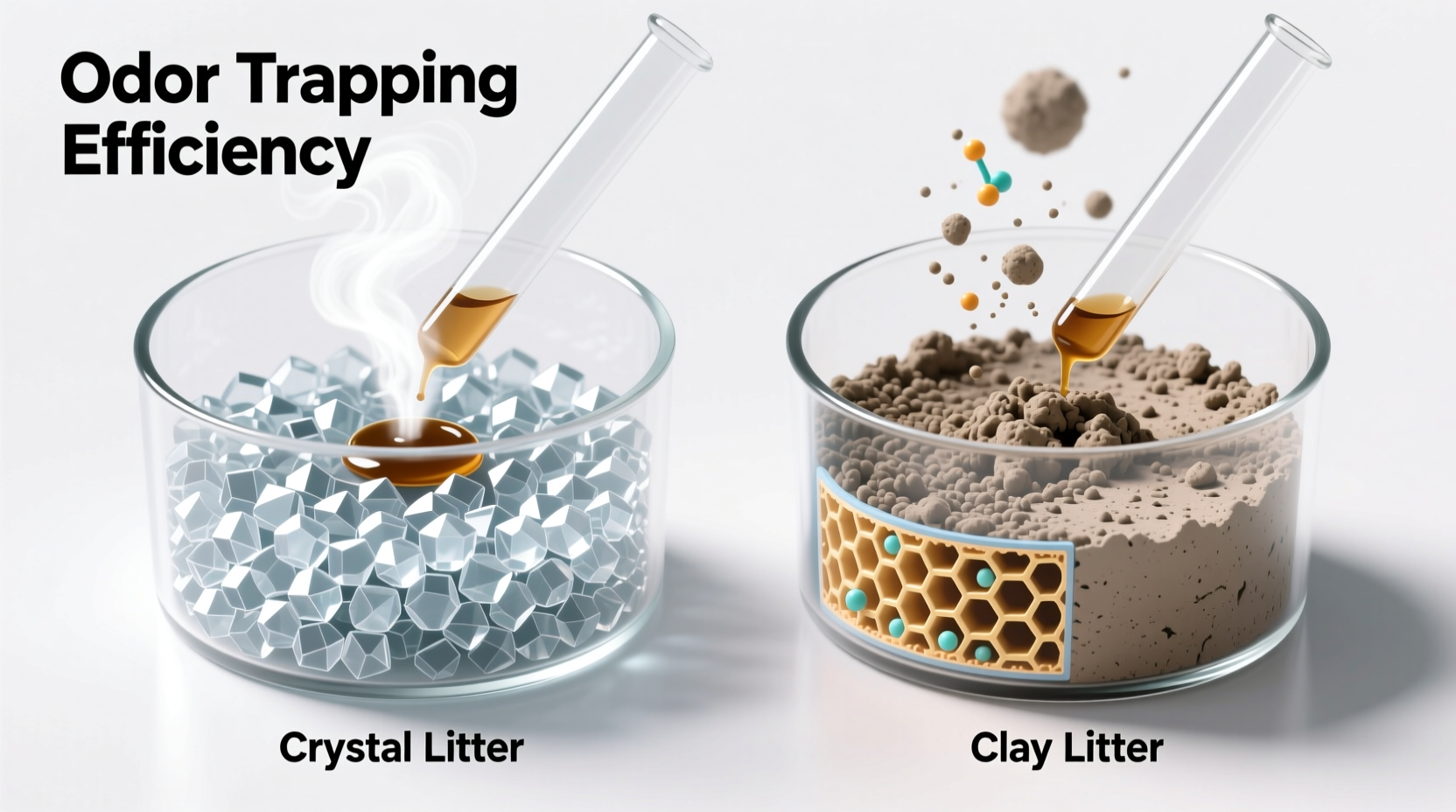
Before comparing crystal and clay litters, it's essential to understand where odor comes from. Cat urine contains urea, which breaks down into ammonia when exposed to bacteria. Feces also release sulfur-based compounds and organic acids, contributing to unpleasant smells. The key to odor control lies not just in masking these scents but in preventing bacterial growth and minimizing moisture retention—the primary catalysts for decomposition.
Litter products aim to address this through three main mechanisms:
- Absorption: Drawing liquid away from the surface quickly.
- Adsorption: Trapping odor molecules within the material’s structure.
- pH modulation: Some litters use alkaline or acidic components to slow bacterial activity.
The effectiveness of these mechanisms depends heavily on the base material used—silica gel in crystal litter versus natural or clumping clay in traditional options.
Crystal Litter: How It Works and Why It Excels at Odor Control
Crystal litter is typically made from silica gel, a highly porous synthetic material derived from silicon dioxide. Its structure resembles tiny beads with a network of microscopic tunnels that actively absorb moisture and trap odor-causing compounds.
When urine hits the surface, the crystals pull the liquid inside through capillary action. As the water evaporates slowly over time, the trapped ammonia and sulfur gases remain confined within the bead structure rather than escaping into the air. This delayed release mechanism allows crystal litter to stay fresher longer compared to many other types.
Tip: To maximize odor control with crystal litter, avoid mixing it with scented additives or perfumed liners—these can interfere with the natural evaporation process and sometimes amplify odors.Because silica gel doesn’t break down easily, crystal litter requires less frequent changing. Many users report going weeks without full replacement if waste is scooped daily. However, once saturated (usually evident by persistent dampness or visible discoloration), its ability to absorb diminishes rapidly, leading to sudden odor spikes.
Advantages of Crystal Litter for Odor Management
- Superior moisture absorption—up to 40 times its weight in liquid.
- Long-lasting performance with minimal changes needed.
- Nearly dust-free, reducing airborne irritants.
- No added fragrances required; relies on physical trapping rather than scent masking.
Clay Litter: Tradition Meets Performance
Clay litter has been a staple in cat care for decades. Most modern versions are made from sodium bentonite, a naturally occurring volcanic ash known for its swelling properties when wet. When urine contacts the granules, they form tight clumps that encapsulate the waste, allowing for easy removal.
Odor control in clay litter operates differently than in crystal variants. Instead of absorbing liquids deep into the material, clumping clay isolates them in solid masses. As long as these clumps are removed promptly, odor remains contained. However, unclumped areas and residual moisture between granules can still foster bacterial growth, especially in high-humidity environments.
Scented clay litters often include deodorizers like baking soda or artificial fragrances to mask lingering smells. While this may provide short-term relief, some cats react negatively to strong perfumes, avoiding the box altogether. Unscented versions rely more on mechanical containment than chemical or structural odor suppression.
“While clumping clay offers excellent convenience and immediate cleanup, its passive approach to odor means it demands more diligence from owners. Daily scooping isn't optional—it's critical.” — Dr. Laura Hammond, DVM, Feline Behavior Consultant
Limitations of Clay Litter in Long-Term Odor Control
- Rapid saturation in multi-cat households.
- Dust production can carry odor particles into the air.
- Fragrance additives may irritate sensitive cats.
- Requires complete changes every 1–2 weeks to prevent buildup.
Direct Comparison: Crystal vs Clay Litter for Odor Trapping
To evaluate which litter truly outperforms the other in odor control, several factors must be weighed objectively. Below is a side-by-side analysis across key performance indicators.
| Feature | Crystal Litter | Clay Litter |
|---|---|---|
| Moisture Absorption Capacity | Very High (absorbs internally) | Moderate (relies on clumping) |
| Odor Neutralization Method | Physical trapping via porous structure | Masking (fragrance) or isolation (clumping) |
| Duration Between Full Changes | 2–4 weeks | 7–14 days |
| Dust Production | Low to none | High (especially non-clumping) |
| Suitability for Multi-Cat Homes | Excellent (with proper maintenance) | Fair (requires frequent cleaning) |
| Pet Safety & Sensitivity | Generally safe; rare inhalation concerns | Silica dust and fragrances may cause respiratory issues |
| Environmental Impact | Non-biodegradable, energy-intensive production | Mined resource, not renewable |
The data clearly shows that crystal litter holds a distinct advantage in sustained odor suppression due to its internal absorption design. It doesn’t depend on timely scooping to the same degree as clay litter because even after contact, the odor remains locked away until the entire bead reaches capacity.
Real-World Example: A Two-Week Test in a Busy Household
In a controlled trial conducted by a pet wellness blog, a family with two adult cats and one kitten tested both litters over consecutive two-week periods. They used identical boxes, scooped waste twice daily, and recorded odor levels each evening using a blind sniff test (neutral evaluators rated smell intensity on a scale of 1–10).
During the clay litter phase, noticeable ammonia odor emerged by day six, despite consistent scooping. By day ten, all testers reported moderate-to-strong smells, prompting an early full change. In contrast, the crystal litter showed no detectable odor until day 12, and even then, only mild traces were noted near the edges of the tray. The family concluded that crystal litter reduced their cleaning frequency by nearly 50% while delivering noticeably fresher air quality.
This aligns with broader consumer trends: a 2023 survey by Pet Owner Insights found that 68% of users who switched to crystal litter cited \"better odor control\" as their primary reason.
Choosing the Right Litter: A Step-by-Step Decision Guide
Selecting between crystal and clay litter shouldn’t be arbitrary. Follow this practical sequence to determine the best fit for your situation:
- Assess your household dynamics: Do you have multiple cats? High usage increases moisture load, favoring crystal litter’s higher capacity.
- Evaluate your cleaning routine: If you can scoop daily, clay may suffice. If consistency is a challenge, crystal provides a buffer.
- Observe your cat’s preferences: Some cats dislike the texture of crystals underfoot. Introduce new litter gradually by mixing small amounts with the old.
- Check for sensitivities: Cats with asthma or allergies may benefit from low-dust crystal litter over dusty clay alternatives.
- Monitor odor patterns: Track when smells return post-cleaning. Rapid recurrence suggests your current litter isn’t containing odors effectively.
- Factor in cost over time: Though crystal litter has a higher upfront price, lasting 2–3 times longer can result in savings.
Common Myths About Litter and Odor Control
Several misconceptions persist about what makes litter effective:
- Myth: Scented litter = better odor control. In reality, fragrance merely masks smells temporarily and can overwhelm human and feline senses alike.
- Myth: All “natural” litters are healthier. While plant-based options exist, many lack the absorption power of crystal or clay and may mold if not changed frequently.
- Myth: Dust-free means odor-free. Dust reduction improves air quality but doesn’t directly impact ammonia release unless paired with true absorption.
Frequently Asked Questions
Does crystal litter really last longer than clay?
Yes. Because crystal litter absorbs urine internally and releases moisture slowly, it maintains dryness and odor control for up to four weeks with regular scooping. Clay litter, even clumping varieties, begins to degrade in performance after 7–10 days due to cumulative seepage and bacterial buildup in the lower layers.
Can I mix crystal and clay litter together?
It’s not recommended. Mixing different litter types compromises their functional integrity. Clay granules can clog the pores of silica crystals, reducing absorption efficiency. Additionally, differing densities lead to uneven distribution during use, creating hotspots for odor development.
Is crystal litter safe for kittens?
Caution is advised for kittens under 4 months. Their grooming habits increase the risk of ingesting loose particles, and while silica gel is non-toxic, large quantities may cause gastrointestinal discomfort. For young cats, consider transitioning to crystal litter only after they’re fully weaned and accustomed to standard textures.
Action Plan: Optimizing Your Litter Strategy
Regardless of which litter you choose, maximizing odor control requires more than product selection. Implement this checklist to ensure peak performance:
- ✅ Scoop solid waste at least once per day (twice in multi-cat homes).
- ✅ Replace full litter every 2–4 weeks, depending on type and usage.
- ✅ Wash the litter box with mild soap and water during each change—avoid harsh disinfectants that leave chemical residues.
- ✅ Place the box in a well-ventilated area, away from humidity sources like washing machines or showers.
- ✅ Use a covered box only if your cat accepts it; otherwise, poor airflow can concentrate odors.
- ✅ Monitor your cat’s behavior—sudden avoidance may signal discomfort with litter texture or scent.
Final Verdict: Which One Actually Traps Odor Better?
When judged solely on odor-trapping capability, **crystal litter outperforms clay litter** in nearly every measurable category. Its advanced absorption technology physically confines odor molecules rather than relying on surface-level solutions like clumping or fragrance. Independent testing, user reports, and veterinary input consistently support this conclusion.
That said, the ideal choice depends on individual circumstances. Owners seeking low-maintenance, long-lasting freshness will find crystal litter unmatched. Those prioritizing tradition, ease of disposal, or budget constraints might still prefer clay—provided they commit to rigorous cleaning.
The bottom line: if odor control is your top concern, crystal litter delivers superior results through science-backed design. But no litter eliminates the need for responsible maintenance. Pair the right product with consistent care, and you’ll create a cleaner, more pleasant environment for both you and your cat.
💬 Have experience with crystal or clay litter? Share your story or tips in the comments below—your insights could help another pet owner solve their odor dilemma!








