Millions of households around the world rely on cat litter to keep their homes clean and their pets comfortable. But once it's used, most of that material ends up in landfills—often non-biodegradable and chemically treated. With growing concerns about sustainability and waste reduction, many pet owners are asking: can used or unused cat litter be repurposed safely and effectively?
The answer is yes—but with important caveats. While not all types of cat litter are suitable for reuse, certain forms—especially clay-free, natural, or silica-based litters—can serve a second life in thoughtful, practical ways. This guide explores creative, safe, and eco-conscious applications for both used and unused cat litter, helping you minimize waste while solving everyday household challenges.
Understanding Cat Litter Types and Their Reuse Potential
Before reusing cat litter, it’s essential to know what kind you’re working with. Different formulations have vastly different properties, safety profiles, and environmental impacts.
| Type of Litter | Key Properties | Reuse Potential |
|---|---|---|
| Clay (Bentonite) | Highly absorbent, clumps well | Limited; avoid garden use due to sodium content |
| Silica Gel Crystals | Extremely absorbent, odor-neutralizing | High; excellent for moisture control |
| Paper-Based | Biodegradable, low dust | High; compostable and safe for soil |
| Wood Pellets | Natural, renewable, absorbs moisture | High; ideal for composting and mulch |
| Corn/Wheat | Biodegradable, clumping | Moderate; avoid if contaminated with feces |
Used litter contaminated with feces should never be used in food gardens or indoor spaces where hygiene is critical. However, even soiled litter from healthy cats can be repurposed in limited outdoor applications when managed responsibly.
Tip: Always label containers used for repurposed cat litter to prevent accidental misuse.Practical Reuses for Unused or Clean Cat Litter
Unused or lightly used cat litter—especially natural, biodegradable varieties—offers surprising utility beyond the litter box. Here are some of the most effective ways to give it a second purpose:
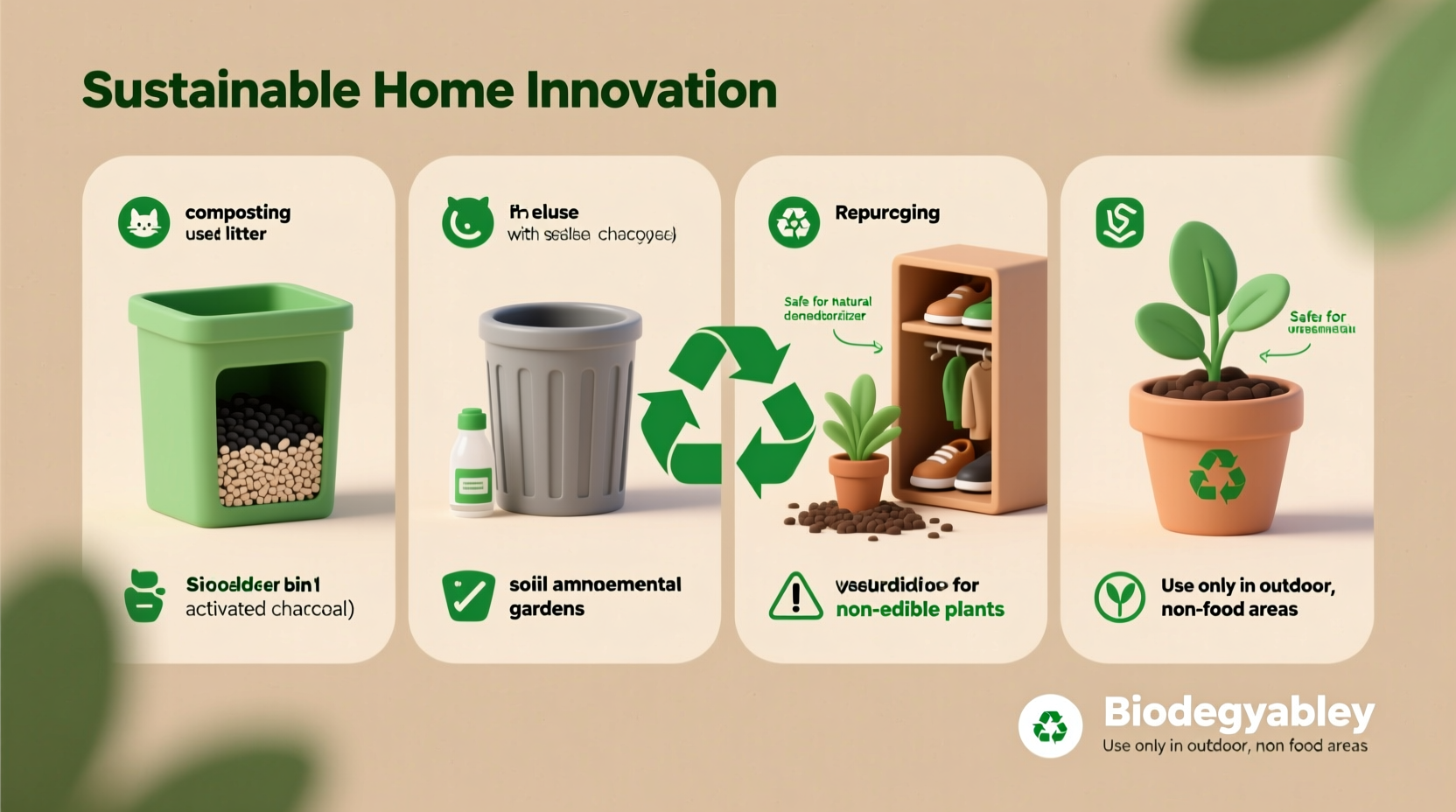
- Odor Absorber in Closets and Shoes: Place small breathable bags of baking soda-free, unscented silica or wood-based litter in shoes, gym bags, or closets to neutralize odors.
- Moisture Control in Storage Areas: Put open containers of silica gel litter in tool sheds, basements, or seasonal storage boxes to prevent dampness and mildew.
- Ice Traction Aid: In winter, spread unused clay or sand-based litter on icy sidewalks or driveways. It provides grip without harming plants like salt-based deicers.
- Paint Thinner Disposal: Pour used paint thinner into a container filled with clay litter. The litter absorbs the liquid, allowing safer disposal as solid waste.
- Compost Accelerator (for plant-based litters only): Paper, wood, or corn-based litters can be added to compost piles to improve carbon balance and absorb excess moisture.
“Natural litters made from renewable materials can play a role in circular home economies—if used mindfully.” — Dr. Lena Patel, Environmental Scientist & Sustainable Living Researcher
Safe Outdoor Uses for Used Cat Litter
While used cat litter should never enter municipal compost systems or food gardens, there are still responsible outdoor applications for waste reduction.
For instance, used wood or paper-based litter from cats that are free of parasites and disease can be buried deeply in non-edible landscaping areas to slowly decompose. Avoid using it near vegetable beds or water sources.
Step-by-Step: Repurposing Used Litter in the Garden (Non-Food Areas)
- Ensure your cat is healthy and regularly dewormed.
- Use only biodegradable litter (wood, paper, corn).
- Remove solid waste and dispose of it separately (e.g., sealed bag in trash).
- Spread soiled litter thinly over ornamental garden beds away from edible plants.
- Cover with at least 6 inches of soil or mulch to deter animals and speed decomposition.
- Avoid using more than once per season to prevent nitrogen imbalance.
DIY Projects and Household Hacks
Creative homeowners have found inventive ways to integrate cat litter into practical solutions. These projects work best with unused or lightly used product.
1. Homemade Dehumidifier
Fill a mesh bag or old sock with silica gel crystals and place it in a damp bathroom cabinet or laundry room. Replace every few weeks or when crystals stop absorbing moisture.
2. Oil Spill Absorption in the Garage
Spilled motor oil? Sprinkle unused clay or recycled paper litter over the spot. Let sit for 15–30 minutes, then sweep up. This method is cost-effective and prevents hazardous runoff.
3. Fire Starter Base
Compressed wood pellet litter lights easily and burns steadily. Layer it under kindling in fire pits or wood stoves for a reliable ignition base—especially useful in damp conditions.
4. Craft Texture Medium
Artists have used fine clay litter as a texturing additive in homemade plaster or modeling paste. Mix sparingly into craft projects for gritty, earthy finishes.
5. Pest Deterrent (Indirect Use)
Some gardeners report success scattering used litter (without feces) around garden borders to mimic predator scent and deter stray cats or small rodents. Results vary, but it’s a low-cost experiment.
Mini Case Study: The Zero-Waste Cat Owner
Sarah M., a sustainability consultant from Portland, Oregon, transitioned her two-cat household to a zero-waste model over 18 months. She switched to pine pellet litter, began composting soiled pellets in a dedicated bin for ornamental plants, and uses leftover litter in winter traction kits for her driveway.
“I used to go through four large bags a month,” she says. “Now I repurpose nearly everything. The pellets go into my raised flower beds after deep burial, and the unused ones help dry out my camping gear after rainy hikes.”
Her approach reduced her household’s cat-related waste by an estimated 75%, according to her annual waste audit. While not fully zero-waste, the changes significantly lowered her environmental paw print.
Checklist: Safe & Practical Cat Litter Reuse
- ☑ Identify your litter type before repurposing
- ☑ Only reuse biodegradable litters in soil or compost
- ☑ Avoid using feces-contaminated litter near food or water sources
- ☑ Store repurposed litter in clearly labeled containers
- ☑ Use clay or silica litter for moisture and odor control indoors
- ☑ Never flush clumping litter unless explicitly labeled as flushable
- ☑ Dispose of heavily soiled litter in sealed bags if reuse isn’t viable
Frequently Asked Questions
Can I compost cat litter?
Only certain types—like paper, wood, or corn-based litters—can be composted, and only if they’re not contaminated with feces from outdoor cats. Even then, compost should only be used on non-edible plants. Municipal compost programs typically reject all pet waste.
Is it safe to use cat litter in the garden?
With caution. Used litter from healthy indoor cats on parasite prevention can be buried deeply in non-food garden areas. Never use clay-based litter in soil, as it alters pH and structure. Stick to natural litters and avoid vegetable plots.
What should I do with expired or unused cat litter?
If unopened and stored properly, unused litter can last years. Consider donating unopened bags to shelters or repurposing for odor control, traction, or DIY projects. Avoid letting it go to waste.
Final Thoughts: Turning Waste into Resource
Every year, hundreds of thousands of tons of cat litter end up in landfills—much of it non-biodegradable and resource-intensive to produce. By rethinking how we handle this common household item, we can reduce our ecological footprint and discover unexpected utility in what was once considered waste.
The key lies in smart selection, informed reuse, and responsible disposal. Whether you're using silica crystals to dry out a damp basement or turning wood pellets into fire starters, small actions add up. Every scoop saved from the trash is a step toward a more sustainable home.
🚀 Start today: Audit your current cat litter use. Can one bag be repurposed this month? Share your creative reuse ideas in the comments and inspire others to think differently about pet waste.








