Cats are natural predators, and their instinct to bite, chew, and pounce doesn’t disappear just because they live indoors. Without proper outlets, these behaviors can shift toward destructive habits—like attacking furniture or nipping at fingers. One of the most effective ways to redirect this energy is through engaging, bite-friendly toys. While store-bought options exist, many contain questionable materials or lose novelty quickly. Creating your own DIY cat biting toys allows you to customize for safety, texture, and stimulation—all while saving money and reducing waste.
The best biting toys mimic prey-like movement, offer satisfying resistance, and appeal to a cat’s senses. This guide walks you through selecting safe materials, designing stimulating toys, and building them in minutes using household items. Whether your cat prefers soft chews or crinkly textures, these projects are designed to hold attention—and withstand enthusiastic attacks.
Why Cats Need Biting Toys
Biting isn’t just playful behavior—it serves several purposes in feline development and well-being. Kittens bite during play to practice hunting skills, while adult cats use biting to relieve stress, explore textures, or simply entertain themselves. Without appropriate outlets, cats may redirect this impulse toward inappropriate targets, including hands, feet, or electrical cords.
Providing designated biting toys helps satisfy this instinct in a healthy way. Chewing on soft, flexible materials can also support dental health by massaging gums and reducing plaque buildup. Most importantly, interactive biting toys stimulate mental engagement, which is crucial for indoor cats prone to boredom and anxiety.
“Cats need sensory-rich environments. A toy that encourages biting, batting, and chewing activates multiple neural pathways, contributing to emotional balance.” — Dr. Lena Torres, Feline Behavior Specialist
Choosing Safe Materials: What to Use and Avoid
Safety is non-negotiable when crafting toys for cats. Many common household items look harmless but pose serious risks if ingested or chewed apart. Always prioritize non-toxic, durable, and digestible-safe materials—even if accidental swallowing seems unlikely.
| Safe Materials | Unsafe Materials |
|---|---|
| Fleece fabric – Soft, fray-resistant, and easy to clean | Yarn or string – Can cause intestinal blockages if swallowed |
| Cotton rope (untreated) – Natural fiber, good for gentle chewing | Plastic bags – Choking hazard and toxic if ingested |
| Paper towel tubes – Biodegradable and crinkle nicely | Glitter, small beads, or buttons – Choking or internal injury risk |
| Organic catnip or silvervine – Natural stimulants, non-toxic | Adhesives or hot glue – Toxic if chewed; avoid unless fully sealed |
| Aluminum foil (crumpled) – Crinkly and intriguing, but supervise use | Latex or rubber bands – Can break into dangerous fragments |
Step-by-Step Guide: 3 Creative DIY Biting Toys
Below are three proven designs that combine safety, simplicity, and high engagement. Each takes less than 15 minutes to assemble and uses materials you likely already have at home.
1. Fleece Twist Chew Toy
- Cut three strips of fleece fabric, each 1 inch wide and 18 inches long.
- Lay the strips side by side and tie a knot at one end.
- Braid the strips tightly until you reach the end, then tie another knot.
- Optional: Add a pinch of organic catnip inside a small knot along the braid.
This toy provides resistance for chewing and is soft enough for sensitive gums. The braided texture encourages gripping and shaking—mimicking prey behavior.
2. Crinkle Tube Tunneler
- Take an empty paper towel roll and flatten one end slightly.
- Crumple a few sheets of aluminum foil and push them into the tube for crinkle sound.
- Seal the flattened end with non-toxic tape (or leave open for treat insertion).
- Wrap sections of the tube in colorful fleece strips tied with cotton string.
Cats love the unpredictable noise and texture. For extra engagement, hide a freeze-dried chicken treat inside.
3. Rope Chew Ring
- Use a 24-inch length of untreated cotton rope (¼ inch diameter).
- Form a loop and secure both ends with a tight double knot.
- Trim any loose fibers to prevent unraveling.
- Dip the knot lightly in water and sprinkle with silvervine powder (optional).
The circular shape fits perfectly in a cat’s mouth for chewing, and the natural rope fibers provide gentle abrasion for gum health.
Real Example: How Bella the Rescue Cat Responded
Bella, a 3-year-old domestic shorthair adopted from a shelter, had a habit of biting her owner’s ankles during evening hours. Her veterinarian ruled out pain or aggression, suggesting redirected hunting behavior due to understimulation. After introducing a fleece twist toy and rotating it every two days, Bella’s ankle attacks decreased by 80% within three weeks. Her owner reported that she now carries the toy around the house and “kills” it before napping. The key was consistency and variety—Bella never knew which toy would appear next.
Checklist: Building a Safe DIY Toy Routine
- ✅ Use only non-toxic, pet-safe materials
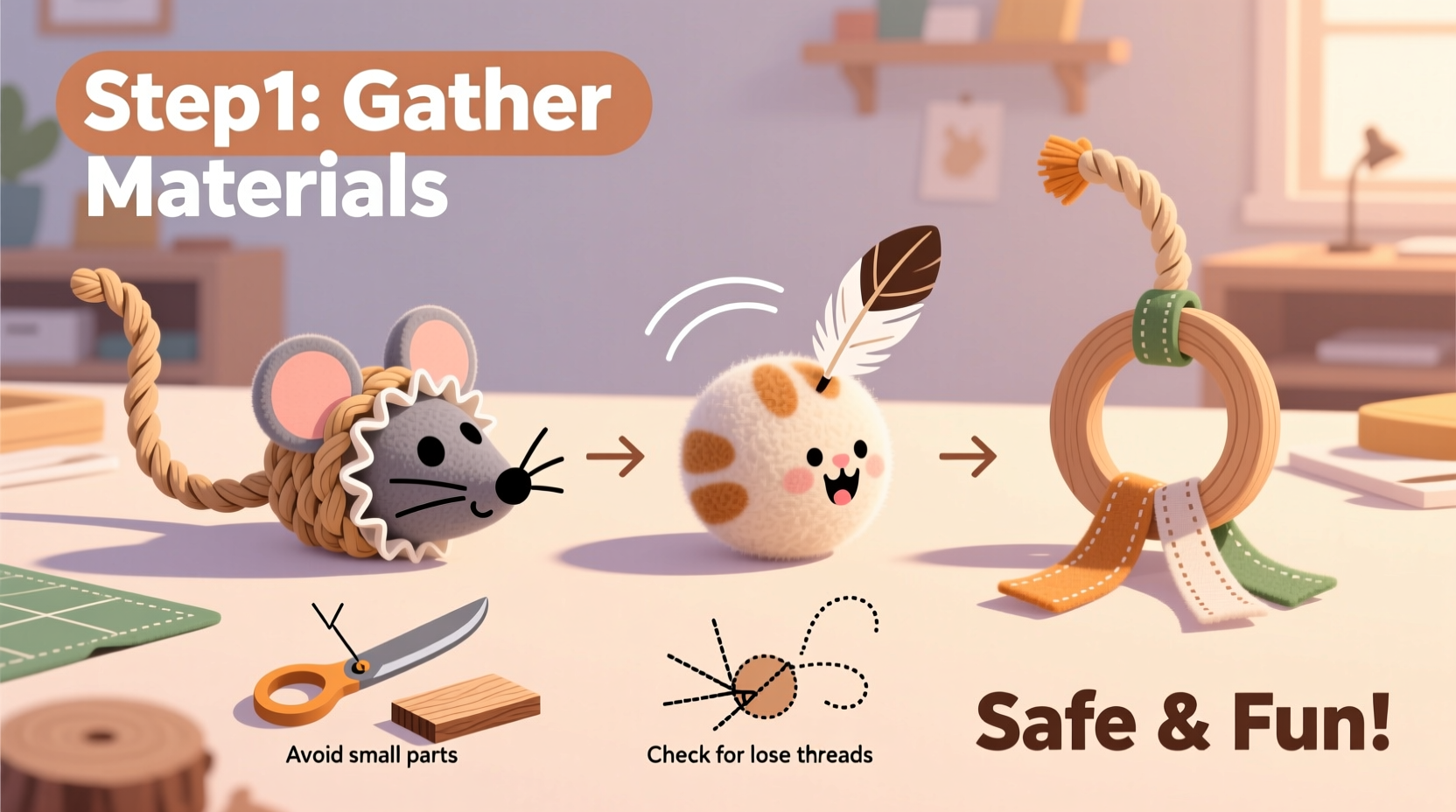
- ✅ Avoid small parts that can be swallowed
- ✅ Supervise first-time use of new toys
- ✅ Rotate toys weekly to maintain novelty
- ✅ Inspect for wear and replace damaged toys immediately
- ✅ Wash fabric toys monthly with mild, fragrance-free detergent
- ✅ Limit foil or plastic elements to supervised play only
Frequently Asked Questions
Can I use old socks to make cat toys?
While tempting, worn socks pose risks. Elastic bands can break off, and synthetic fibers may irritate the digestive tract if swallowed. If you choose to repurpose socks, remove all elastic, wash thoroughly, and fill only with cat-safe stuffing like polyfill (in moderation) or crumpled paper. Never include strings or ribbons.
How often should I replace DIY cat toys?
Inspect toys weekly. Replace any with frayed edges, loose threads, or broken components. Fabric toys should be replaced every 4–6 weeks with heavy use. Rope toys degrade faster if chewed daily—discard if strands begin to separate.
Are catnip toys safe for kittens?
Most kittens under 6 months do not respond to catnip. Sensitivity develops genetically and typically emerges between 3–6 months. Even after response begins, limit exposure to 10–15 minutes per session to prevent overstimulation. Silvervine or valerian root are safer alternatives for sensitive cats.
Final Thoughts: Keep Playtime Purposeful
DIY biting toys aren’t just about entertainment—they’re tools for behavioral health, physical exercise, and bonding. When made with care, these simple creations can outperform expensive commercial products in both durability and engagement. The real magic lies in rotation and interaction: hand-tossing a fleece braid or dragging a rope ring across the floor transforms a passive object into a dynamic hunt.
Start with one design, observe your cat’s reaction, and adapt based on their preferences. Some cats favor soft textures, others crave noise or movement. By understanding your cat’s instincts, you turn everyday materials into powerful enrichment tools.
💬 Try one of these toys today and watch your cat’s curiosity light up. Share your creation or ask questions in the comments—let’s build a smarter, safer world of play, one homemade toy at a time.








