Cats thrive on movement, texture, and tactile stimulation. Store-bought toys are convenient, but nothing captures a cat’s curiosity quite like a handmade creation infused with personal attention. Chenille pipe cleaners—also known as fuzzy sticks or craft stems—are ideal for DIY cat toys. They’re flexible, colorful, soft to the touch, and perfect for twisting into engaging shapes that mimic prey-like motion. Best of all, they require no sewing, glue, or special tools. With just a few minutes and minimal materials, you can create stimulating toys that keep your cat mentally sharp and physically active.
Why Pipe Cleaners Work So Well for Cat Toys
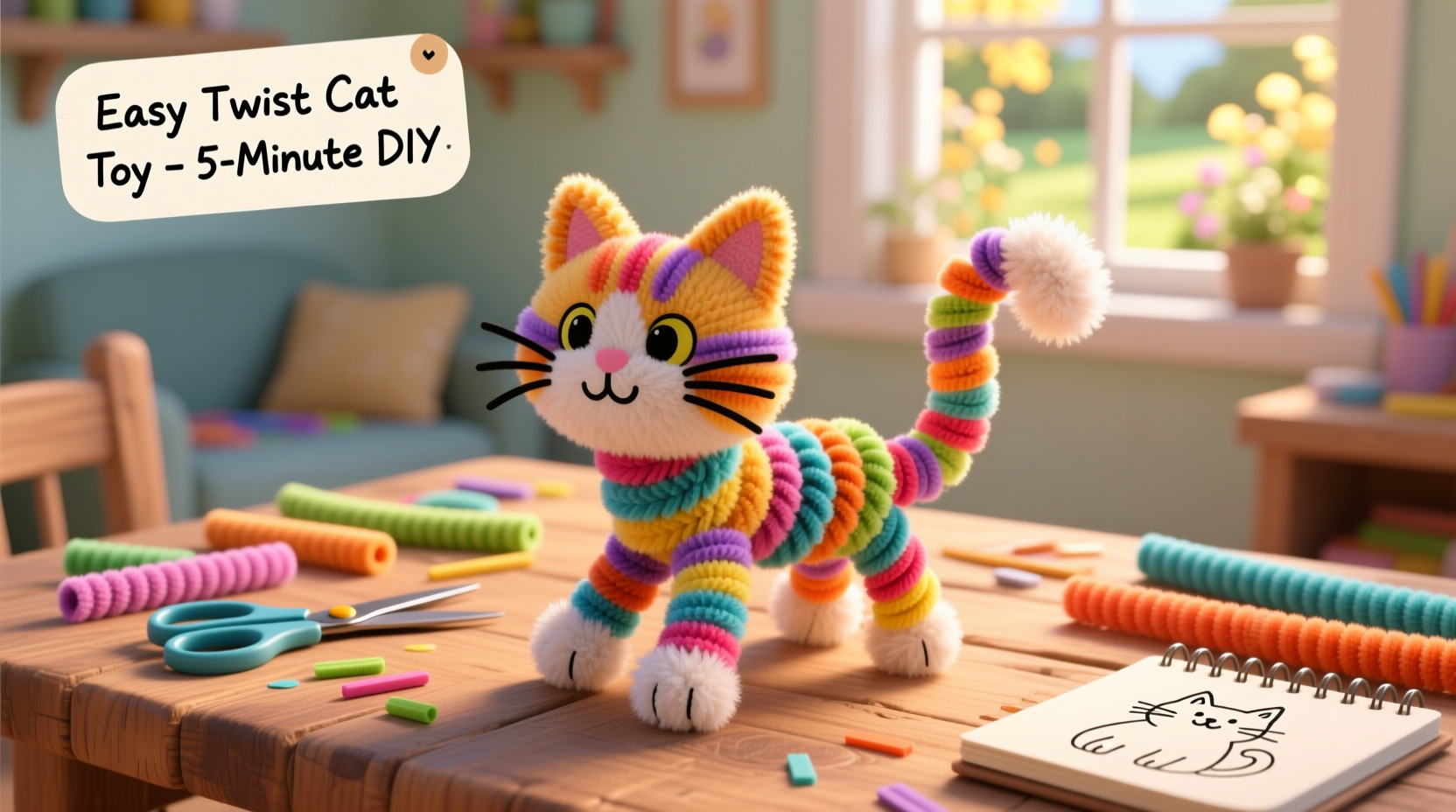
Pipe cleaners combine sensory appeal with structural versatility. Their chenille texture mimics fur or feathers, triggering a cat’s instinct to pounce, bite, and bat. The bendable wire core allows you to shape them into wiggling forms that move unpredictably when dragged across the floor or waved in the air—simulating the erratic behavior of real prey.
Unlike plastic or fabric toys that may fray or break apart, well-constructed pipe cleaner toys are durable and safe if designed with supervision in mind. They also offer an opportunity to customize size, color, and complexity based on your cat’s age, energy level, and preferences.
Tip: Always supervise playtime with pipe cleaner toys. While the materials are non-toxic, ingestion of small parts can be dangerous.Essential Materials and Safety Guidelines
Before diving into designs, gather the right supplies and understand safety basics. These toys should encourage interaction, not become hazards.
- Chenille pipe cleaners – Choose non-metallic, dye-free options if possible, especially for kittens or aggressive chewers.
- Scissors – For trimming excess wire ends.
- Beads (optional) – Wooden or large plastic beads add sound and visual interest but must be securely fastened.
- Tape or heat-shrink tubing (optional) – To cover sharp wire ends after cutting.
“Cats respond strongly to novelty and movement. Simple handmade toys often outperform expensive ones because they tap directly into predatory instincts.” — Dr. Lena Patel, Feline Behavior Specialist
Safety Checklist Before Use
Checklist:- Ensure all wire ends are bent inward or covered.
- Avoid small detachable parts that could be swallowed.
- Inspect toys weekly for wear or loosening components.
- Never leave unsupervised with kittens or aggressive chewers.
- Wash hands after handling to remove any residual metal dust.
5 Creative and Easy Pipe Cleaner Toy Designs
Each of these toys takes less than 10 minutes to assemble and uses only basic crafting skills. All rely on twisting techniques rather than adhesives, making them quick to repair or replace.
1. The Wiggle Worm
A classic favorite. This toy imitates a wriggling insect or worm, perfect for dragging along the floor.
- Select two pipe cleaners of contrasting colors.
- Twist them together at one end to form a short “handle.”
- Weave the remaining lengths in a loose spiral by alternating over-and-under motions.
- Bend the tip into a small hook or curl to enhance movement.
- Trim excess wire and fold sharp ends inward.
When pulled across the carpet, the uneven weight distribution causes lifelike jerking motions that cats find irresistible.
2. The Buzzer Moth
Add auditory stimulation by threading a wooden bead onto twisted stems to resemble wings.
- Take three pipe cleaners: two in dark colors (wings), one bright (body).
- Fold each wing piece in half and twist the center around the body stem.
- Slide a small wooden bead down the body to act as the head.
- Twist the body wire behind the bead to secure it.
- Bend wing tips outward for balance and flutter effect.
As it moves, the bead clicks softly against the wire—a subtle sound that heightens curiosity.
3. The Spring Mouse
This coiled design bounces and recoils like a tiny spring-loaded creature.
- Wrap one pipe cleaner tightly around a pencil to form a compact coil.
- Slide it off and pinch both ends toward the center to create a “body.”
- Use a second pipe cleaner to wrap around the middle, securing the shape and forming legs.
- Add small ear curls from leftover scraps.
When flicked gently, it hops erratically—ideal for encouraging chase games.
4. The Tangle Teaser
A knotted mass of intertwined pipe cleaners that invites batting and pawing.
- Cut four pipe cleaners into halves.
- Lay them in a star pattern and begin weaving over and under.
- Once interlaced, twist crossing points to lock the structure.
- Roll between palms to soften sharp edges.
The irregular shape resists predictable rolling, keeping cats engaged longer.
5. The Wand Wiggler (Interactive Toy)
Attach a pipe cleaner creation to a wand for interactive play.
- Make a small version of the Wiggle Worm or Buzzer Moth.
- Leave a straight 2-inch tail on one end.
- Thread this tail through a hole punched in a wooden dowel or old ruler.
- Bend the wire end underneath to prevent slipping.
Wave it above your cat’s head to simulate flying insects. This strengthens bonding and provides aerobic exercise.
Customization Tips Based on Cat Personality
Not all cats respond to the same stimuli. Tailoring toys to individual preferences increases engagement.
| Cat Type | Recommended Design | Color Suggestions | Play Tip |
|---|---|---|---|
| Kittens | Wiggle Worm | Bright red, yellow | Short sessions, frequent movement changes |
| Senior Cats | Tangle Teaser | Muted greens, blues | Place near resting spots for low-effort swatting |
| High-Energy Hunters | Wand Wiggler | Black, silver, white | Simulate bird flight patterns |
| Shy Observers | Spring Mouse | Natural browns, grays | Let it “appear” randomly to spark investigation |
Real Example: How Mia Revived Her Cat’s Play Routine
Mia, a pet owner from Portland, noticed her 7-year-old tabby, Jasper, had lost interest in his usual toys. He spent most days napping by the window. After reading about DIY enrichment, she made a Buzzer Moth with a wooden bead and introduced it during evening play.
At first, Jasper watched cautiously. But when Mia dragged it behind a curtain so only the bead peeked out, he pounced. Within days, their daily 10-minute wand sessions became a ritual. “He’s more alert, even when I’m not playing,” Mia said. “It’s like he remembers the fun and stays curious.”
She now keeps a rotating box of five pipe cleaner toys, switching one out weekly. Jasper hasn’t touched his old plush mice since.
Frequently Asked Questions
Are pipe cleaners safe if my cat chews them?
Occasional chewing is usually harmless, but prolonged gnawing can expose thin wire inside. Always inspect toys after play and discard if frayed. Supervise especially with kittens or teething cats.
Can I wash pipe cleaner toys?
They aren’t machine-washable, but you can wipe them with a damp cloth and mild soap. Let air dry completely before reuse. Avoid soaking, which can loosen fibers.
How long do homemade pipe cleaner toys last?
With regular use, expect 2–4 weeks of prime condition. Signs of wear include bent shapes, loose twists, or exposed wire. Keep a stash of extras ready to swap in.
Final Thoughts: Simplicity Sparks Joy
The best cat toys don’t need batteries, motors, or price tags. Often, it’s the simple, handmade items—crafted with understanding of feline instincts—that deliver the most joy. Pipe cleaners offer an accessible, affordable, and endlessly adaptable medium for creating toys that stimulate hunting behaviors, improve agility, and deepen the bond between cat and caregiver.
Start with one design. Watch how your cat reacts. Adjust size, color, or motion based on what holds their attention longest. Over time, you’ll develop a repertoire of favorites tailored precisely to your companion’s personality.
💬 Try making one of these toys today and share your cat’s reaction! Which design worked best? Do you have a unique twist to suggest? Join the conversation and inspire other creative pet owners.








