Cats are creatures of comfort and curiosity. They seek warmth, security, and elevated vantage points to observe their domain. A store-bought cat bed may suffice, but nothing compares to a handmade cat house tailored to your pet’s personality and your home’s aesthetic. Building a custom cat house isn’t just a fun weekend project—it deepens the bond between you and your feline while providing them with a personal retreat. This guide walks you through designing, constructing, and personalizing a cat house that balances creativity, coziness, and functionality.
Understanding Your Cat’s Needs
Before reaching for tools or fabric swatches, consider what makes a space appealing to cats. Veterinarians and animal behaviorists agree that cats prefer enclosed spaces that offer warmth, quiet, and a sense of safety. Dr. Lydia Lee, a feline behavior consultant, explains:
“Cats are both predators and prey in the wild. Even domesticated ones retain instincts to hide, climb, and survey. A well-designed cat house should mimic a den—snug, warm, and slightly elevated.” — Dr. Lydia Lee, Feline Behavior Consultant
Observe where your cat currently likes to rest. Do they curl up in cardboard boxes? Nap under furniture? Climb onto bookshelves? These habits reveal preferences for height, enclosure level, and texture. Use these insights to inform your design.
Tip: Place a soft blanket in your cat’s favorite hiding spot for a few days. If they use it consistently, replicate those dimensions and materials in your custom house.Design Planning: Sketch, Size, and Style
Start with a simple sketch. Decide whether you want a ground-level hideaway, a multi-level condo, or a wall-mounted nook. Consider traffic flow in your home—place the house in a quiet corner near natural light but away from loud appliances.
Standard interior dimensions for a single-cat house are:
- Width: 18–24 inches (allows room to stretch)
- Depth: 16–20 inches (enough for full-body curl)
- Height: 16–22 inches (high enough to feel secure)
If your cat enjoys climbing, integrate a small platform or ladder. For multi-cat households, design separate entrances or stacked units to avoid territorial disputes.
Material Selection Guide
| Material | Pros | Cons | Best For |
|---|---|---|---|
| Plywood (½ inch) | Durable, easy to cut, paintable | Heavy, edges need sanding | Framed houses, multi-level structures |
| Cardboard | Lightweight, insulating, inexpensive | Not long-lasting, not waterproof | Temporary or seasonal houses |
| Felted Wool | Natural, warm, odor-resistant | Expensive, requires sewing | Soft-sided igloo-style homes |
| Recycled Plastic Panels | Weather-resistant, eco-friendly | Harder to shape, limited availability | Outdoor or washable indoor units |
Step-by-Step Construction Process
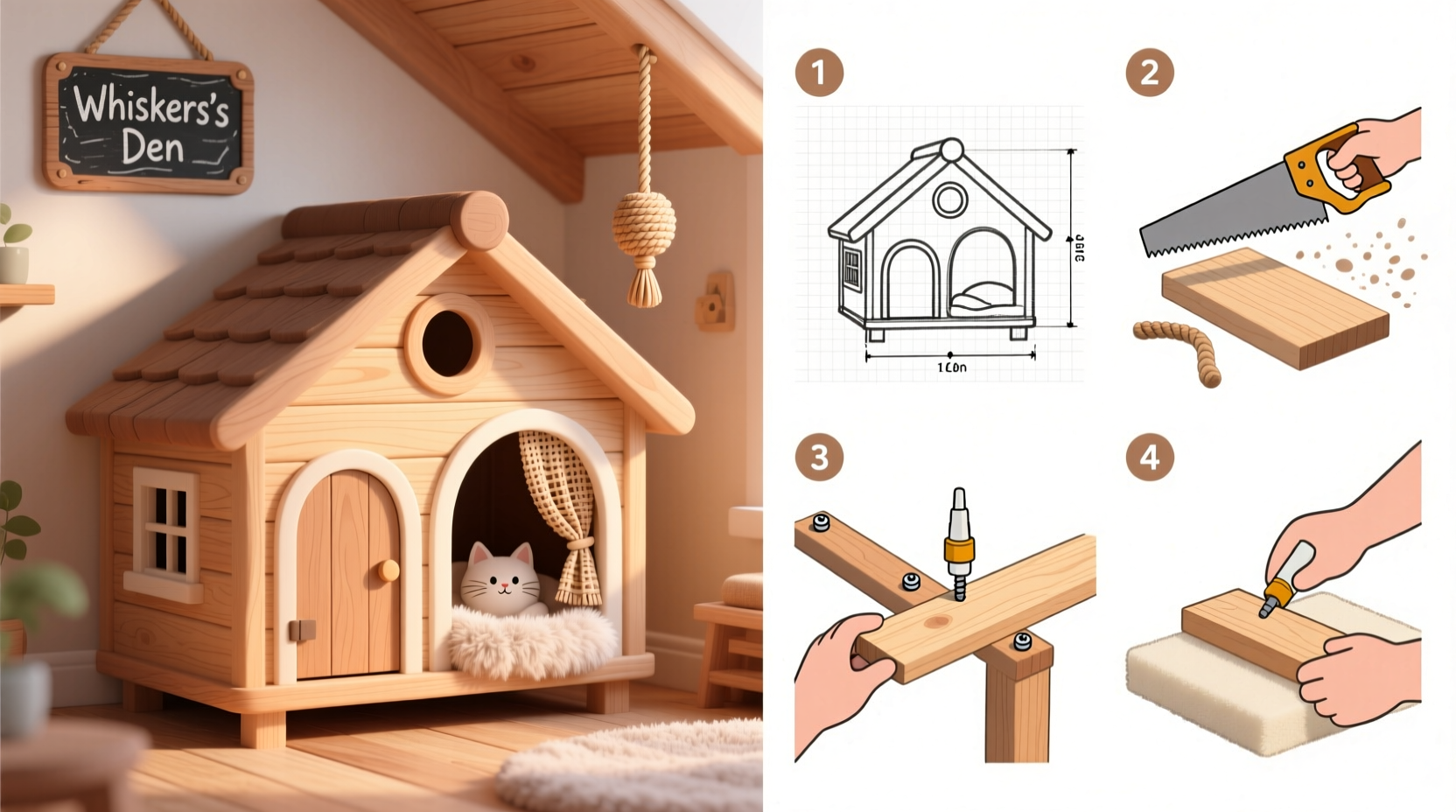
Follow this timeline to build a sturdy, attractive cat house from plywood—a versatile material ideal for beginners and experts alike.
- Day 1: Design & Cut (2–3 hours)
Create a blueprint with front, side, and top views. Label all pieces: base, two sides, front/back, roof. Use a jigsaw or circular saw to cut components from sanded plywood. - Day 2: Assemble Frame (3–4 hours)
Sand all edges smooth. Pre-drill holes, then screw pieces together using #6 wood screws. Reinforce corners with wood glue. Leave the front open for entry. Drill small ventilation holes near the top of side panels. - Day 3: Customize Entry & Interior (1–2 hours)
Shape the doorway as an arch or oval to prevent head bumps. Line the floor with a removable cedar or cork mat to wick moisture and add scent control. Glue soft fleece or faux sheepskin to walls and base for warmth. - Day 4: Exterior Finishing (2 hours)
Paint exterior with non-toxic, low-VOC paint. Choose muted earth tones or bold colors depending on your décor. Add a waterproof sealant if placing near windows. Attach rubber feet to prevent floor scratches. - Day 5: Personalize & Introduce (30 minutes)
Add a nameplate, tiny curtains, or a rooftop planter with cat-safe herbs like catnip or valerian. Place the house near your cat’s current favorite spot with a familiar blanket inside.
Real Example: Maya’s Window Perch House
Sophie, a graphic designer in Portland, noticed her 3-year-old tabby Maya spent hours pressed against a cold windowpane watching birds. Concerned about drafts, Sophie built a wedge-shaped cat house that fit snugly into a bay window nook. She used insulated foam board lined with thermal fleece, added a cushioned perch at eye level, and painted the outside sage green to match her kitchen.
“Maya walked in, circled three times, and fell asleep in five minutes,” Sophie said. “Now she naps there every afternoon. I even added a removable top for easy cleaning.”
The house doubled as storage—Sophie tucked toys in a hidden compartment beneath the perch. This blend of function and empathy turned a drafty corner into a cherished sanctuary.
Enhancing Comfort and Longevity
A well-built cat house should last years with proper care. Prioritize cleanability and adaptability.
- Use removable fabric liners secured with Velcro for machine washing.
- Avoid glued-on decorations—cats may chew and ingest them.
- Inspect monthly for loose screws, splinters, or wear.
- Rotate placement seasonally; move closer to heat sources in winter, shade in summer.
“Cats thrive on routine and territory. A permanent, predictable space reduces stress and supports emotional health.” — Dr. Raj Patel, Veterinary Ethologist
Frequently Asked Questions
Can I make a cat house without power tools?
Absolutely. Sturdy cardboard boxes, reinforced with duct tape and layered felt, can create excellent temporary houses. Cut entry holes with a utility knife, line with blankets, and decorate with non-toxic markers. Replace every 3–6 months.
How do I get my shy cat to use the new house?
Patience is key. Place treats, toys, or a piece of your worn clothing inside. Never force entry. Allow your cat to approach on their own terms. Some cats take days or even weeks to accept a new object.
Is it safe to place a cat house outdoors?
Only if fully weatherproofed. Use marine-grade plywood, sealed joints, and a sloped roof. Elevate off the ground and include insulation. Monitor for pests and extreme temperatures. Bring inside during storms or freezing weather.
Your Custom Cat House Checklist
Before declaring your project complete, verify the following:
- ✅ All materials are non-toxic and free of sharp edges
- ✅ Interior is lined with soft, washable fabric
- ✅ Ventilation holes are present but small enough to retain warmth
- ✅ House is stable and won’t tip if leaned on
- ✅ Entry is large enough (minimum 7” diameter) but not so big that it compromises security
- ✅ Personal touches added (name, color, scent) to invite curiosity
Conclusion: Build Love, One Paw at a Time
A custom cat house is more than a piece of furniture—it’s a gesture of understanding. By observing your cat’s habits, choosing thoughtful materials, and investing time in craftsmanship, you create a space that honors their instincts and enhances their well-being. Whether minimalist or elaborate, the best cat houses share one trait: they’re made with intention.
💬 Did you build a cat house your feline adores? Share your story, design tips, or photos in the comments—inspire fellow cat lovers to craft with care!