Bringing a new puppy into your home is an exciting journey filled with joy, challenges, and countless decisions. One of the earliest—and most debated—choices involves how to manage your puppy’s space during the critical first months. Should you use a crate or a playpen? And more importantly, is crating a puppy too confining?
The short answer: not if done correctly. When used appropriately, a crate is not inherently confining. In fact, it can provide structure, security, and support for healthy development. However, relying solely on a crate without balancing freedom and mental stimulation can lead to behavioral issues. The key lies in understanding the strengths and limitations of both crates and playpens—and using them together as complementary tools.
Understanding the Purpose of Crate Training
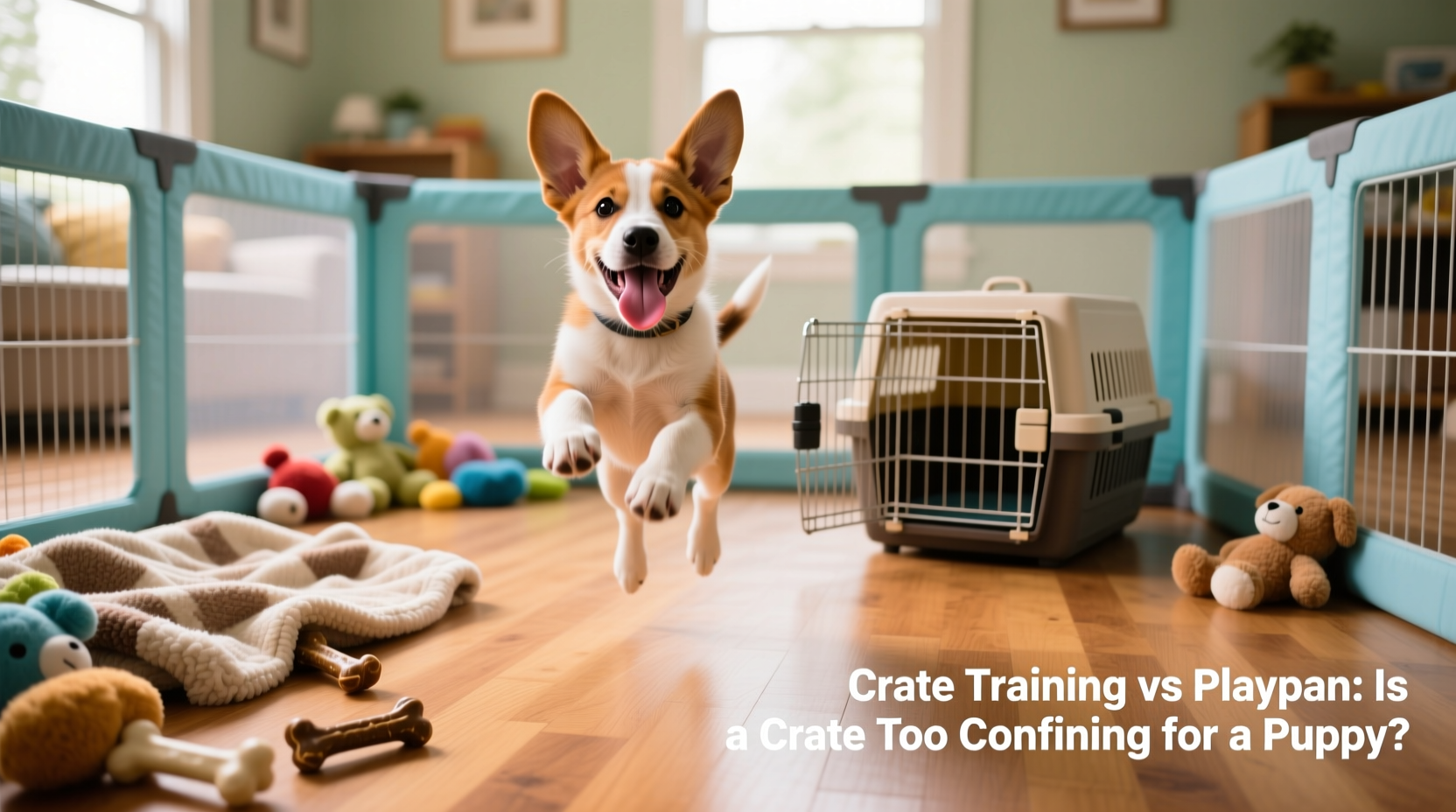
Crate training leverages a dog’s natural instinct to seek out den-like spaces. In the wild, canines often retreat to enclosed areas for rest, safety, and protection. A well-introduced crate mimics this environment, offering a predictable, quiet place where a puppy can feel secure.
Proper crate training supports housebreaking by encouraging bladder control—puppies are less likely to eliminate where they sleep. It also prevents destructive chewing when unsupervised and provides a safe travel solution. But like any tool, misuse can backfire. Confining a puppy for hours on end without breaks or enrichment turns a helpful aid into a source of stress.
“Dogs thrive on routine and boundaries. A crate, when introduced positively, becomes a sanctuary—not a prison.” — Dr. Karen Becker, Integrative Veterinarian
Playpens: Freedom Within Boundaries
A playpen offers a larger, open area where a puppy can move freely, play with toys, and stretch its legs. Unlike a crate, which restricts movement, a playpen allows room for exploration while still keeping the puppy contained and safe from household hazards like electrical cords or toxic plants.
Playpens are ideal for daytime use when you’re home but occupied. They allow for longer stretches of independent activity and are especially useful in homes with limited puppy-proofed space. However, they lack the focused containment that aids in housetraining and may encourage inappropriate elimination if not monitored closely.
Tip: Place a puppy pad on one side of the playpen and a bed on the opposite end to encourage separation between sleeping and bathroom areas.Crate Training vs Playpen: A Practical Comparison
To make an informed decision, consider the functional differences between crates and playpens across several key categories.
| Feature | Crate | Playpen |
|---|---|---|
| Space Size | Limited (just enough to stand, turn, lie down) | Expansive (several square feet) |
| Housetraining Support | High – encourages holding until release | Moderate – depends on setup and supervision |
| Safety | High – prevents access to hazards | Variable – requires thorough puppy-proofing |
| Mental Stimulation | Low to moderate (unless enriched) | High – room to explore and play |
| Best Use Case | Nighttime, naps, short absences, travel | Daytime supervision, active play, socialization |
| Risk of Confinement Stress | Possible if overused or improperly introduced | Low – promotes movement and choice |
The data shows that neither option is universally superior. Instead, each serves distinct purposes depending on time of day, developmental stage, and household routine.
Creating a Balanced Puppy Management Plan
The most effective approach combines crate training and playpen use within a structured daily schedule. Puppies need both quiet time and active engagement. Alternating between the two environments ensures they develop self-control while also building confidence through exploration.
Step-by-Step Daily Routine for Crate and Playpen Use
- Morning wake-up: Release from crate, immediate potty break.
- Post-potty: Move to playpen with water, chew toys, and soft bedding.
- Supervised play: Engage in training sessions or floor time every 1–2 hours.
- Nap time: Return to crate with a stuffed Kong or calming chew.
- Evening wind-down: Limit playpen access; transition to crate for bedtime.
- Overnight: Keep crate in bedroom for reassurance and easy potty trips.
This rhythm balances structure with freedom, teaching the puppy when it’s time to be calm and when it’s appropriate to be active. Over time, the puppy learns to self-soothe in the crate and to play independently in the playpen.
Duration Guidelines by Age
Never leave a puppy confined beyond their physical ability to hold their bladder. As a general rule:
- 8–10 weeks: Up to 30–60 minutes in crate or playpen with frequent potty breaks
- 11–14 weeks: 1–2 hours max, plus potty every 2 hours
- 15–16 weeks: 2–3 hours, depending on individual development
- 4+ months: Gradually extend based on consistency and training progress
Remember: These are maximums, not targets. Frequent interaction, exercise, and bonding are essential at every stage.
When Is a Crate Too Confining?
A crate becomes too confining when it's used as a default storage space rather than a supportive training tool. Signs that crating has crossed into overuse include:
- Excessive whining, barking, or pacing when placed inside
- Obsessive scratching at the crate bars
- Reluctance to enter even with treats or encouragement
- Destructive behavior immediately after release
- Eliminating in the crate despite prior success
If these behaviors appear, reevaluate your puppy’s schedule. Are they getting enough physical exercise? Are mental enrichment opportunities provided? Is the crate associated only with isolation, or does it also offer comfort and rewards?
Tip: Feed meals inside the crate with the door open so your puppy associates it with positive experiences, not confinement.Real-World Example: Max, the Overstimulated Labrador
Max, a 10-week-old yellow Lab, was adopted into a busy urban apartment. His owners worked from home but were frequently on calls. Initially, they kept him in a large playpen all day with toys and pads. While he had room to move, Max began eliminating wherever he pleased and developed a habit of chewing the mesh walls.
After consulting a trainer, they shifted to a hybrid model: Max spent nap times and overnight in a properly sized wire crate placed near their desk. During waking hours, he rotated between 30-minute supervised play sessions and 45-minute blocks in the playpen with interactive toys.
Within two weeks, Max stopped eliminating in his sleeping area and settled more quickly during quiet periods. The crate became his “safe zone,” while the playpen allowed him to burn energy constructively. By 16 weeks, he could stay quietly in the crate for up to two hours—preparing him for future independence.
Expert Recommendations for Healthy Development
Veterinary behaviorists emphasize that early environmental management shapes long-term temperament. According to the American Veterinary Society of Animal Behavior (AVSAB), puppies require consistent routines that promote learning without causing fear or frustration.
“Confinement isn’t cruel—but chronic restriction without enrichment is. Balance is everything in puppy development.” — Dr. Sophia Yin, Late Animal Behaviorist and Author
Experts recommend introducing the crate gradually, using high-value treats and praise. Never force entry, and avoid using the crate as punishment. Pair it with calming activities like chewing or resting after play.
Similarly, playpens should be designed for engagement. Rotate toys regularly, add puzzle feeders, and place the pen in a family area so the puppy feels included. Avoid leaving a puppy alone in a playpen for extended periods—social isolation can hinder emotional growth just as much as physical confinement.
Essential Checklist: Crate and Playpen Best Practices
Use this checklist to ensure you're supporting your puppy’s well-being regardless of the containment method:
- ✅ Choose the right size: Crate should allow standing, turning, lying down comfortably
- ✅ Place in a low-traffic but family-accessible area (e.g., living room or home office)
- ✅ Provide safe chew items (Kong, bully stick, rubber toy) in both crate and playpen
- ✅ Clean both spaces daily to maintain hygiene
- ✅ Monitor temperature—avoid placing near heaters or drafty windows
- ✅ Rotate between crate and playpen throughout the day
- ✅ Never use confinement longer than age-appropriate limits
- ✅ Supervise playpen time whenever possible
Frequently Asked Questions
Can I leave my puppy in a playpen instead of a crate?
Yes, especially during waking hours when you're home. A playpen gives more freedom and supports activity. However, for housetraining and rest, a crate is more effective. Using both interchangeably yields the best results.
Is it cruel to crate a puppy at night?
No—if done properly. Most puppies sleep 18–20 hours a day and benefit from a quiet, secure space. Keeping the crate in your bedroom helps ease separation anxiety. Offer a soft bed and a heartbeat-sounding plush toy if needed.
How do I stop my puppy from crying in the crate?
Crying is normal at first. Ensure basic needs are met (potty, water, comfort), then ignore attention-seeking cries. Respond only when quiet. Build positive associations with treats and feeding inside. If crying persists beyond a few days, reassess timing and environment.
Conclusion: Finding the Right Balance
The debate between crate training and playpens isn't about choosing one over the other—it's about integrating both to meet your puppy’s evolving needs. A crate is not too confining when used as a temporary, positive space for rest and safety. A playpen is not too permissive when managed with supervision and purpose.
What matters most is intentionality. Every decision you make in those formative weeks sets the foundation for your dog’s lifelong behavior. By combining structure with freedom, consistency with compassion, you create an environment where your puppy doesn’t just survive—but thrives.
💬 Have questions about your puppy’s setup? Share your experience or ask for advice in the comments—let’s build a smarter, kinder approach to raising happy dogs together.








