Leaving a dog alone at home is one of the most anxiety-inducing parts of pet ownership—both for the dog and the human. Whether you're heading to work, running errands, or stepping out for dinner, knowing whether your dog is safe and secure in your absence is essential. The debate between crate training and free roaming isn't just about convenience; it's about safety, behavior development, and long-term trust. Understanding the strengths and limitations of each method—and knowing when your dog is truly ready to be left unattended—is critical for responsible pet care.
The Purpose of Crate Training: Safety, Structure, and Security
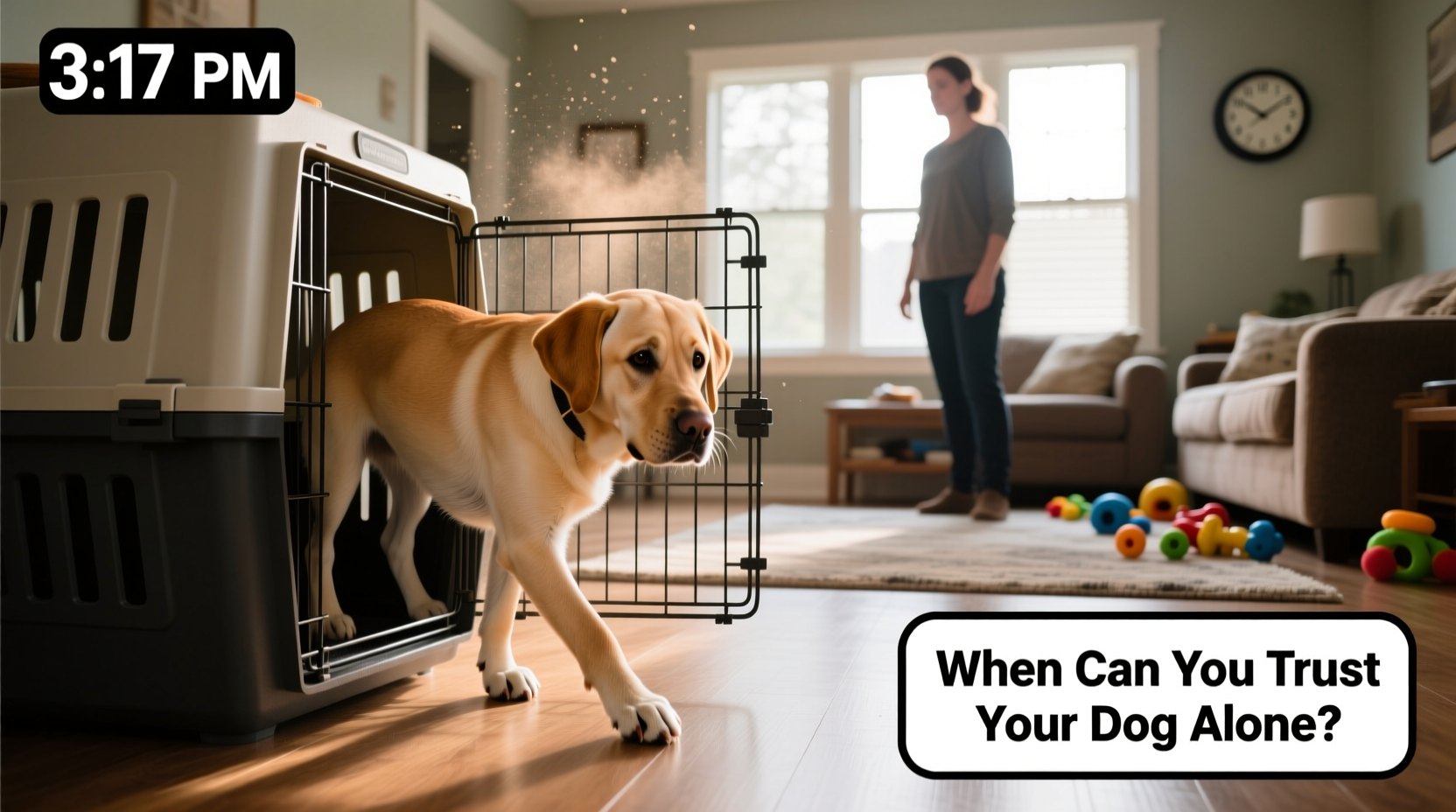
Crate training leverages a dog’s natural instinct to seek shelter in a den-like space. When introduced properly, a crate becomes a sanctuary—a place where the dog feels protected, relaxed, and undisturbed. This sense of security is especially valuable during the early stages of ownership, such as puppyhood or post-adoption adjustment.
A well-implemented crate routine helps with housebreaking by encouraging bladder and bowel control. Dogs naturally avoid soiling their sleeping areas, making the crate an effective tool for teaching appropriate elimination habits. It also prevents destructive chewing, accidental ingestion of household hazards (like electrical cords or toxic plants), and wandering into unsafe zones like stairwells or kitchens with open stoves.
Tip: Never use the crate as punishment. A dog should associate the crate with calmness and safety, not fear or isolation.However, crate training is not a one-size-fits-all solution. Some dogs, particularly those with past trauma or high anxiety, may resist confinement. Extended crating beyond a dog’s physical tolerance (typically 4–6 hours for adults) can lead to stress, behavioral regression, or even physical health issues like urinary tract infections.
Free Roaming: Freedom With Responsibility
Free roaming allows dogs to move freely throughout designated areas of the home while unsupervised. Proponents argue that this fosters confidence, mental stimulation, and a stronger sense of autonomy. For mature, well-trained dogs, free roaming can be a sign of earned trust and emotional maturity.
Yet freedom without preparation is risky. Unsupervised access to an entire home increases exposure to dangers: chewed furniture, spilled trash, broken windows from escape attempts, or ingestion of medications left on counters. Free roaming works best when combined with thorough environmental management—dog-proofing, clear boundaries, and consistent rules.
Some owners transition from crating to free roaming gradually. They begin by confining the dog to a single room with baby gates, then expand access as reliability improves. This phased approach balances safety with increasing independence.
“Freedom is a privilege, not a right, in dog training. Trust must be built through consistency, not assumed.” — Dr. Karen Becker, Veterinary Behaviorist
Comparing Crate Training and Free Roaming: Key Factors
| Factor | Crate Training | Free Roaming |
|---|---|---|
| Best For | Puppies, new rescues, dogs with separation anxiety | Mature, trained dogs with reliable behavior |
| Safety Level | High (controlled environment) | Variable (depends on dog-proofing) |
| Housebreaking Support | Strong (encourages holding) | Weaker (requires prior training) |
| Destructive Behavior Risk | Low (if properly crated) | Higher (without supervision) |
| Emotional Impact | Can be calming or stressful (individual-dependent) | Promotes confidence if dog is ready |
| Time Investment | Moderate (training required) | High (constant monitoring & correction) |
When Can You Actually Trust Your Dog Alone?
There is no universal timeline for when a dog can be trusted alone. It depends on age, temperament, training history, and individual progress. However, certain milestones indicate readiness:
- Consistent housebreaking for at least 4 weeks (no accidents indoors)
- No destructive chewing or scratching when left in a room for 30 minutes
- Ability to stay calm during short departures (5–10 minutes) without vocalizing or pacing
- Reliable recall and obedience commands in distracting environments
- No resource guarding or food-related aggression
Age plays a significant role. Most puppies aren’t emotionally or physically capable of being alone for more than 2–3 hours until they’re at least 6 months old. Adult dogs adopted from shelters may need additional time to acclimate to a new environment before being left unattended.
Step-by-Step: Building Independence Safely
- Start with short absences: Leave the room for 1–2 minutes, then return calmly. Gradually increase duration over days.
- Use positive reinforcement: Reward calm behavior upon return. Avoid over-the-top greetings.
- Introduce the crate or safe zone: Feed meals inside, toss treats, let the dog nap there voluntarily.
- Simulate departure cues: Pick up keys, put on shoes, then sit back down. Desensitize to triggers of separation anxiety.
- Test in phases: Begin with 15-minute solo periods, extend to 1 hour, then half-day stretches.
- Monitor remotely: Use a camera to observe behavior when first trying longer durations.
- Graduate carefully: Only expand freedom (e.g., from crate to room to whole house) after passing each phase successfully.
Real-Life Example: From Crate to Full Trust
Meet Luna, a 10-month-old Border Collie mix adopted from a rural shelter. Initially, she panicked when left alone, howling and clawing at the crate door. Her owner, Sarah, followed a structured plan. For the first two weeks, Luna stayed in her crate with a stuffed Kong while Sarah practiced brief exits. Over the next month, Sarah increased absences incrementally and began leaving the crate door open once Luna remained calm inside.
By 5 months post-adoption, Luna could stay alone in the living room (gated) for up to 3 hours. After six months of consistent training, including off-leash walks and advanced obedience drills, Sarah felt confident allowing Luna full access to the apartment during workdays. A pet camera confirmed Luna napped on the couch or chewed her favorite antler—no destruction, no distress.
Luna’s journey wasn’t fast, but it was steady. The key was respecting her pace and reinforcing calm behavior without rushing the process.
Checklist: Is Your Dog Ready to Be Left Alone?
Before leaving your dog unattended—whether crated or free-roaming—verify the following:
- ✅ House-trained with zero indoor accidents for at least 28 days
- ✅ Demonstrates calm behavior when owner leaves the room (no whining, pacing, or destruction)
- ✅ Passes a 1-hour supervised test with no problematic behaviors
- ✅ Has a safe, prepared space (crated area or dog-proofed room)
- ✅ Has access to water and an appropriate chew toy or enrichment item
- ✅ No history of escape attempts or self-injury when confined
- ✅ Responds reliably to basic commands like “stay,” “leave it,” and “come”
If any item is unchecked, continue training before attempting unsupervised time.
Common Misconceptions About Alone Time
Many owners believe that if a dog sleeps through the night, they should handle daytime alone time just as easily. But nighttime sleep is biologically different from daytime solitude. Dogs often sleep because it’s dark and quiet—not because they’re emotionally equipped to handle isolation.
Another myth: “My dog has been alone before with no issues, so it’s fine now.” Past success doesn’t guarantee future safety. Changes in routine, illness, or environmental shifts (like construction noise or new pets) can trigger regression.
Finally, some assume that large, active breeds need more freedom. In reality, high-energy dogs often require *more* structure, not less. Without proper outlets and boundaries, their energy can manifest as destructive or anxious behaviors when left alone.
Frequently Asked Questions
How long can I leave my dog alone in a crate?
Adult dogs should not be crated for more than 6–8 hours daily. Puppies under 6 months should not exceed 3–4 hours without a potty break. Extended crating leads to physical discomfort and emotional stress. If your schedule requires longer absences, consider hiring a dog walker or using doggy daycare.
Can I switch from crate training to free roaming?
Yes—but only after your dog demonstrates consistent reliability. Start by opening the crate door during short absences. If the dog chooses to stay or moves calmly to another safe area, you can gradually expand access. Monitor closely and revert to crating if problems arise.
What if my dog destroys things only when I’m gone?
This is often a sign of separation anxiety or insufficient mental stimulation. Crating may temporarily solve the issue, but the root cause needs addressing. Consult a certified trainer or veterinary behaviorist. Solutions may include medication, increased exercise, desensitization training, or environmental enrichment.
Conclusion: Trust Is Earned, Not Given
Deciding between crate training and free roaming isn’t about choosing the easier option—it’s about making the safest, most compassionate choice for your dog. Crate training provides structure and protection during vulnerable stages, while free roaming represents the culmination of trust, training, and mutual understanding.
There’s no magic age or milestone that guarantees a dog can be left alone. Instead, look for consistent behavioral evidence: calmness, reliability, and self-control. Rushing the process risks setbacks, property damage, or even injury. But with patience, observation, and incremental progress, most dogs can learn to enjoy alone time—whether in a cozy crate or exploring a secure home.
💬 Have experience transitioning your dog from crate to free roam? Share your story or tips in the comments—your insights could help another pet parent build confidence and trust.








