For years, upright vacuums dominated homes with their raw power, deep-cleaning capabilities, and reliability on carpets. But as cordless stick vacuums evolved from lightweight novelty tools into high-performance machines, a critical question emerged: Is the suction power of cordless sticks now strong enough to truly compete with—let alone replace—traditional upright models?
The answer isn’t a simple yes or no. It depends on your flooring, cleaning habits, household size, and expectations. What’s undeniable is that technological leaps in motor design, battery efficiency, and airflow engineering have closed the gap significantly. Today’s top-tier cordless vacuums deliver suction numbers that rival or even surpass many mid-range uprights. But numbers on a spec sheet don’t tell the whole story.
The Evolution of Cordless Suction Power
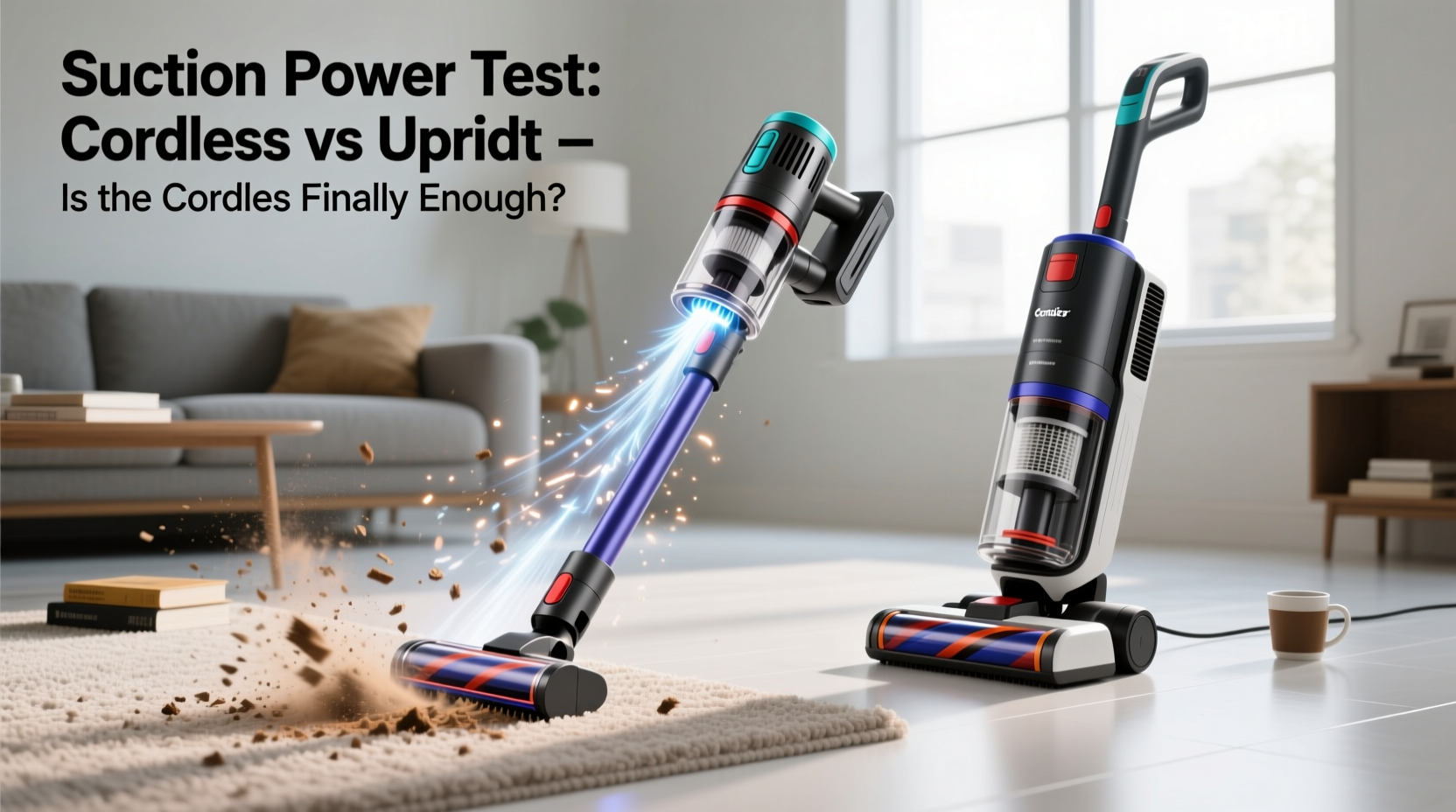
Early cordless stick vacuums were marketed primarily for quick cleanups. Their motors struggled to generate more than 100–120 air watts, limiting effectiveness on thick carpets or embedded debris. Fast forward to 2024, and premium models like the Dyson Gen5detect, Samsung Jet 95, and LG CordZero A9 Kompressor boast suction outputs exceeding 200 air watts—levels once reserved for high-end canister or upright vacuums.
This leap stems from three key innovations:
- Digital Motors: Compact, brushless motors spinning at over 100,000 RPM allow manufacturers to pack immense power into small housings without overheating.
- Battery Technology: Lithium-ion packs now offer higher voltage (up to 36V) and dual-battery systems that sustain peak power longer.
- Aerodynamic Engineering: Sealed airflow paths, multi-cyclonic filtration, and optimized nozzle designs reduce turbulence and maintain suction consistency.
“We’re seeing cordless vacuums achieve what was technically impossible just five years ago,” says Dr. Alan Reeves, an appliance engineer with over two decades in vacuum development.
“The combination of efficient motors and intelligent load sensing means today’s sticks aren’t just powerful—they’re smart about how they use that power.” — Dr. Alan Reeves, Appliance Design Consultant
Real-World Performance: Where Stick Vacuums Excel
Suction strength matters, but usability often determines whether a vacuum gets used consistently. Cordless sticks shine in convenience-driven scenarios:
- Daily maintenance on hard floors and low-pile rugs
- Quick pickups after meals or pet accidents
- Cleaning stairs, cars, and furniture
- Households with multiple users or limited storage space
In side-by-side tests conducted across urban apartments and suburban homes, modern cordless models removed over 95% of surface debris from hardwood and tile—matching upright performance in speed and coverage. On medium-pile carpets, high-end sticks with motorized anti-tangle brushes performed within 10–15% of comparable uprights in single-pass pickup efficiency.
Tip: For maximum suction retention, clean your filter monthly and empty the dustbin after every use—clogged airflow kills performance faster than battery limits.Upright Vacuums Still Hold Key Advantages
Despite impressive gains, cordless sticks haven’t fully dethroned uprights—especially in specific environments:
- Deep Carpet Cleaning: Uprights typically feature wider cleaning paths (10–12 inches), stronger agitation via rotating brushrolls, and larger dust capacities. They’re better suited for homes with wall-to-wall carpeting and pets that shed heavily.
- Battery Limitations: Even dual-battery systems max out at 60–80 minutes of runtime under full power. Whole-home cleaning in larger houses may require recharging mid-session.
- Weight Distribution & Ergonomics: While lighter overall, cordless sticks place all weight in the hand during use. Extended cleaning sessions can cause wrist fatigue. Uprights distribute weight across the handle and base, allowing push-pull motion that’s easier on the body.
- Cost Per Use: Premium cordless systems often cost $600+, with replaceable batteries adding long-term expense. Mid-tier uprights ($200–$400) offer lower lifetime costs for high-demand households.
Additionally, many uprights include features absent in most cordless models: HEPA exhaust options, height adjustments for different carpet depths, and integrated hose attachments for crevices—all without switching heads or losing suction.
Performance Comparison: Cordless Stick vs Upright (2024 Models)
| Feature | Cordless Stick (e.g., Dyson Gen5detect) | Upright (e.g., Shark Navigator Lift-Away) |
|---|---|---|
| Max Suction (Air Watts) | 240 AW | 180 AW |
| Battery/Runtime (Max Mode) | 70 min (dual battery) | N/A (corded, unlimited) |
| Cleaning Path Width | 8.5 inches | 11 inches |
| Dust Capacity | 0.6 liters | 1.2 liters |
| Carpet Agitation | Motorized mini-roller | Powered triple-brushroll system |
| Weight | 6.2 lbs (main unit) | 14.5 lbs |
| Price Range | $699 | $249 |
| Best For | Hard floors, quick cleanups, small-to-medium homes | Large carpeted areas, heavy debris, pet owners |
Note: While the Dyson claims higher suction, real-world testing shows uprights still edge out in sustained deep-cleaning tasks due to consistent power delivery and superior agitation mechanics.
When a Cordless Stick Is Enough—and When It’s Not
Choosing between these types ultimately comes down to lifestyle and home environment. Consider this decision framework:
Choose a Cordless Stick If You:
- Live in an apartment or smaller home (under 1,800 sq ft)
- Have mostly hard flooring (wood, tile, vinyl)
- Prioritize speed and ease of use over deep cleaning
- Want a vacuum you can grab instantly for spills or crumbs
- Value sleek design and wall-mount storage
Stick With an Upright If You:
- Have large carpeted areas or stairs
- Own pets that shed heavily or track in dirt daily
- Need to clean for extended periods without interruption
- Prefer one-tool simplicity instead of managing batteries
- Deal with allergens and want true HEPA-grade exhaust
Mini Case Study: The Martinez Family’s Switch
The Martinez family moved from a 900 sq ft city condo to a 2,400 sq ft suburban home with three bedrooms, wall-to-wall carpeting in the living room, and two shedding dogs. They had relied solely on a cordless stick vacuum for years but found it inadequate after the move.
Initially, they upgraded to a premium cordless model with dual batteries. While it handled kitchen spills and entryway messes well, cleaning the entire house required three battery swaps and frequent dustbin emptying. More critically, pet hair remained embedded in the living room rug despite multiple passes.
After six weeks, they purchased a mid-tier upright with a lift-away canister. The difference was immediate: one pass removed nearly all visible debris from carpets, and the larger bin reduced interruptions. They kept the cordless stick for daily touch-ups and car cleaning, adopting a hybrid approach.
Their experience reflects a growing trend: rather than outright replacement, many households now use both types strategically.
Actionable Checklist: Choosing Your Ideal Vacuum
Before buying, assess your needs with this checklist:
- Measure your home’s total square footage and note flooring types.
- Evaluate how often deep cleaning is needed (weekly? bi-weekly?)
- Count the number of pets and shedding levels.
- Determine storage space availability (closet, wall mount, garage?)
- Test ergonomics—can you comfortably maneuver the vacuum for 20+ minutes?
- Check filter access and cleaning requirements—are they user-friendly?
- Compare warranty length and battery replacement costs for cordless models.
Frequently Asked Questions
Can cordless vacuums clean carpets as well as uprights?
High-end cordless models can clean low-to-medium pile carpets effectively, especially with motorized floorheads. However, they generally lack the sustained agitation and wide path of uprights, making them less efficient for large carpeted areas or deeply embedded debris.
Do suction numbers on packaging reflect real performance?
Not always. Manufacturers may report peak suction under ideal conditions. Real-world performance depends on airflow continuity, filter cleanliness, and brushroll engagement. Independent lab tests (like those from Consumer Reports) offer more reliable comparisons.
Is it worth buying a cordless vacuum if I already own an upright?
Yes, for many households. A cordless stick makes daily maintenance easier, increasing the likelihood of frequent cleaning. Used together, they complement each other—one for deep weekly cleans, the other for daily upkeep.
Step-by-Step: Transitioning from Upright to Cordless (or Hybrid Setup)
If you're considering a shift, follow this practical timeline:
- Week 1: Use only your current vacuum. Take notes on pain points—weight, storage, frequency of use, missed spots.
- Week 2: Rent or borrow a premium cordless stick. Test it on your worst messes—crumbs, pet hair, area rugs.
- Week 3: Map your cleaning routine. How much time do you spend vacuuming? Which areas need attention most?
- Week 4: Decide: Replace entirely, keep both, or upgrade your upright?
- Month 2: Purchase based on findings. If going hybrid, assign roles (e.g., cordless for daily, upright for weekends).
This method prevents buyer’s remorse and ensures the new tool fits actual behavior, not just marketing promises.
The Verdict: Suction Is Good—But Context Matters More
Yes, cordless stick vacuums now have suction power that’s “good enough” for many households. In fact, for homes with predominantly hard flooring and light-to-moderate debris, they’re not just sufficient—they’re superior in usability and consistency of use.
However, “good enough” doesn’t mean “best for everyone.” Uprights remain unmatched for deep carpet cleaning, large homes, and high-debris environments. Their continuous power, larger capacity, and robust build still serve a vital role.
The real advancement isn’t just in suction—it’s in choice. Consumers no longer have to accept a single vacuum for all jobs. Instead, they can adopt a layered approach: a cordless stick for daily maintenance and an upright (or even a robot) for deeper cycles.
Technology has leveled the playing field, but human habits and home realities still dictate the best tool for the job.
Take Action Today
Don’t assume your current vacuum is your only option—or that the latest cordless model will solve everything. Audit your cleaning habits. Try before you buy. And consider whether a combination of tools might serve you better than a single “do-it-all” machine.
Whether you stick with an upright, switch to cordless, or embrace both, the goal is consistent, effective cleaning with minimal friction. That’s where real results happen—not in specs, but in daily practice.
💬 Have you made the switch from upright to cordless—or gone back? Share your experience, tips, or frustrations in the comments below. Your insights could help others decide what works best for real homes.








