For cat owners, choosing the right litter isn’t just about comfort for their pets—it directly affects daily routine, home cleanliness, and long-term expenses. Clumping litter has become a popular choice in recent years, but it often comes with a higher price tag than traditional non-clumping varieties. So, is the added cost justified? The answer depends on your lifestyle, your cat’s preferences, and how you value time, odor control, and ease of maintenance.
This guide dives deep into the differences between clumping and non-clumping litters, comparing performance, health considerations, environmental impact, and overall value. By the end, you’ll have a clear understanding of whether upgrading to clumping litter is a smart investment or an unnecessary expense.
How Clumping and Non-Clumping Litters Work
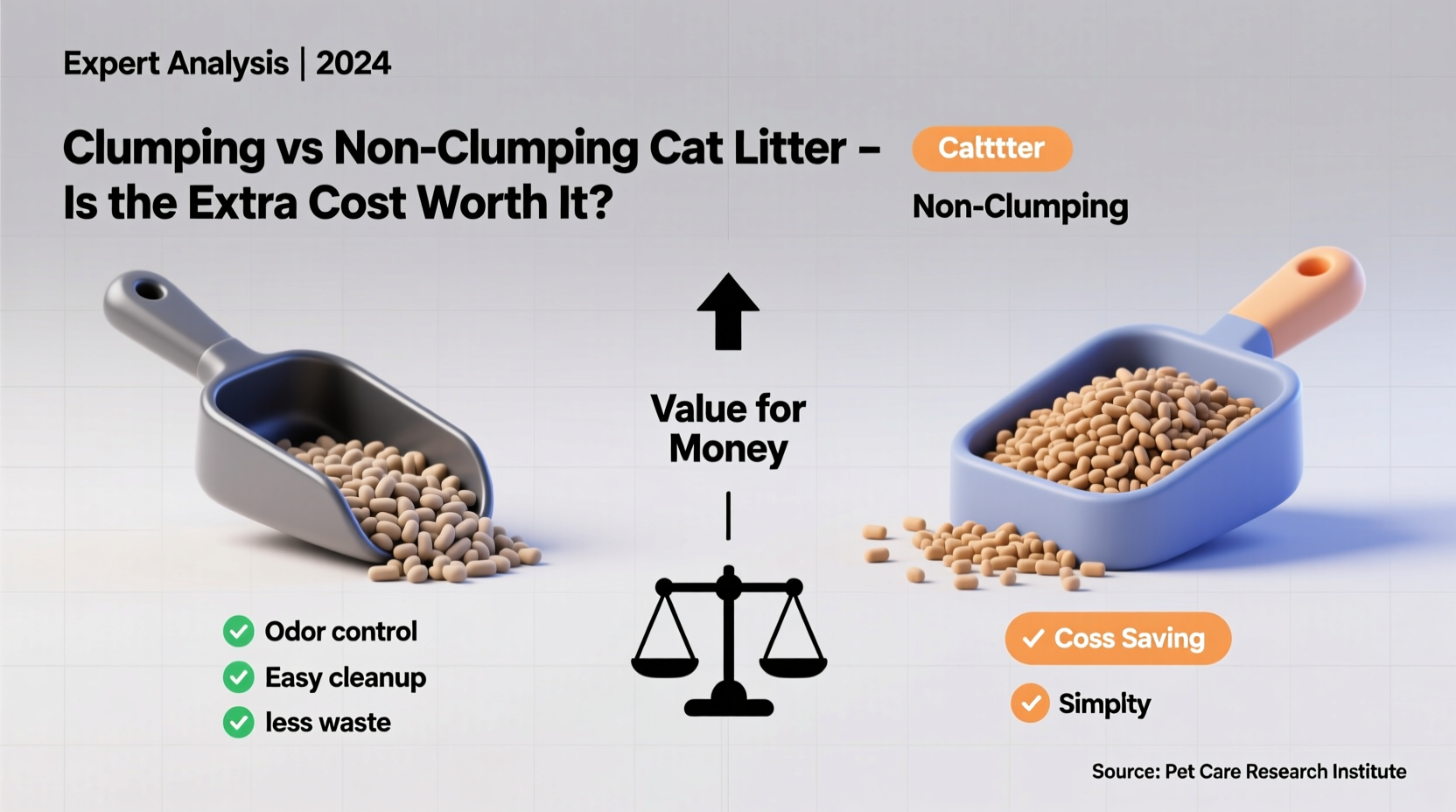
The fundamental difference lies in how each type handles moisture. Clumping litter is typically made from sodium bentonite clay or plant-based materials engineered to absorb urine and form solid clumps. This allows for targeted scooping—only the soiled portion needs removal, leaving the rest of the litter box usable.
Non-clumping litter, on the other hand, absorbs liquid but doesn’t bind into clumps. Instead, it becomes damp and must be fully replaced when saturated. This means entire litter boxes often need to be dumped and refilled every few days, depending on usage.
Because of this key functional distinction, clumping litter offers greater efficiency in waste management. It’s designed for spot-cleaning, reducing both labor and long-term consumption.
Tip: Always introduce new litter gradually—even if switching between clumping types—to avoid litter box aversion in sensitive cats.Performance Comparison: A Side-by-Side Analysis
| Feature | Clumping Litter | Non-Clumping Litter |
|---|---|---|
| Odor Control | Excellent (forms sealed clumps that trap odor) | Fair to poor (odor can linger in soaked litter) |
| Cleaning Frequency | Daily scooping; full change every 2–4 weeks | Full replacement every 3–5 days |
| Litter Usage Over Time | Lower (only replace soiled portions) | Higher (entire box replaced frequently) |
| Dust Level | Varies (some brands are low-dust) | Often higher, especially clay-based versions |
| Paw Comfort | Generally softer and more sand-like | Can be coarser or grainy |
| Cost per Pound | Higher upfront ($0.25–$0.50/lb) | Lower upfront ($0.10–$0.20/lb) |
Real-World Cost: Upfront vs Long-Term
While clumping litter costs more per bag, its longevity often makes it more economical over time. Consider this scenario: a household with one cat using non-clumping litter may go through a 20-pound bag every 10 days, totaling six bags per month. At $8 per bag, that’s $48 monthly.
In contrast, a high-quality clumping litter might cost $18 for a 20-pound bag but last four weeks with daily scooping and minimal top-offs. That’s just $18 per month—a savings of $30 compared to the non-clumping option.
“Many owners assume clumping litter is more expensive, but when you factor in usage rate and cleaning frequency, it often comes out ahead.” — Dr. Lena Patel, Feline Behavior Consultant
Additionally, the time saved from not having to dump and scrub the entire box multiple times a week adds intangible value. For busy households or those with mobility concerns, this convenience can be decisive.
Health and Safety Considerations
One concern occasionally raised about clumping litter involves ingestion risks. If a cat grooms its paws after using the box, small amounts of litter may be ingested. Sodium bentonite, the primary clumping agent, can expand when wet—which raises theoretical concerns about intestinal blockage.
However, veterinary consensus suggests that healthy adult cats are at very low risk. The bigger issue tends to be dust, which can irritate respiratory systems in both cats and humans. Low-dust or dust-free clumping litters made from corn, wheat, or recycled paper offer safer alternatives for sensitive individuals.
Non-clumping litters, particularly older clay varieties, often produce more dust and contain crystalline silica—linked to lung issues in chronic exposure cases. Silica gel crystals, while highly absorbent, fall under the non-clumping category and pose similar inhalation risks.
Tip: Opt for plant-based clumping litters if you have kittens, asthmatic family members, or respiratory-sensitive cats.Environmental Impact and Sustainability
Eco-conscious pet owners should consider biodegradability and sourcing. Traditional clay-based clumping litters are strip-mined, a process with significant environmental consequences. While they’re effective, they’re not renewable and take centuries to decompose.
Many modern clumping litters now use sustainable materials like walnut shells, pine, corn, or recycled paper. These are biodegradable and compostable (excluding feces), offering a greener alternative without sacrificing performance.
Non-clumping options include newspaper pellets and wood shavings, which are also eco-friendly. However, their lower absorption and weaker odor control often mean more frequent disposal, increasing waste volume despite being “natural.”
Checklist: Choosing the Right Litter for Your Home
- ✅ Assess your cat’s digging and grooming habits
- ✅ Prioritize low dust if anyone has allergies or asthma
- ✅ Calculate long-term cost, not just price per bag
- ✅ Consider ease of cleaning—do you prefer daily scooping or weekly full changes?
- ✅ Look for biodegradable options if sustainability matters to you
- ✅ Test small quantities before committing to bulk purchases
Mini Case Study: The Johnson Family’s Switch to Clumping
The Johnsons had used a basic non-clumping clay litter for their two cats for years. They changed the entire box every four days, storing heavy used litter in trash cans that often emitted strong odors between pickups.
After their daughter developed mild asthma symptoms, they consulted their vet, who suggested switching to a low-dust, plant-based clumping litter. They chose a corn-based brand priced at $22 for a 16-pound bag—significantly more than their old $7 clay option.
Within three weeks, they noticed fewer odors, less tracking, and no visible dust clouds when pouring litter. More importantly, their daughter’s nighttime coughing decreased. Though the litter cost more upfront, they were only replacing it entirely every five weeks and spending less time cleaning. After six months, their total expenditure was nearly identical—but their quality of life improved noticeably.
Frequently Asked Questions
Is clumping litter safe for kittens?
Some veterinarians advise caution with very young kittens (under 3 months) due to the risk of ingestion leading to digestive issues. For kittens, use a non-clumping, low-dust, natural litter until they mature, then transition carefully if desired.
Why does my clumping litter smell after a few days?
If odor builds up quickly, the litter may be oversaturated or low in odor-neutralizing agents. Try adding baking soda to the box or switching to a litter with activated charcoal. Also, ensure you're scooping waste at least once daily.
Can I mix clumping and non-clumping litter?
Mixing types is generally not recommended. It can interfere with clumping action and reduce effectiveness. If transitioning, do so gradually by blending increasing amounts of the new litter over 7–10 days.
Final Verdict: Is the Extra Cost Worth It?
For most cat owners, yes—the added cost of clumping litter is justified by superior performance, better odor control, reduced labor, and long-term savings. While budget constraints may make non-clumping options appealing initially, the cumulative cost of frequent replacements and potential health drawbacks often outweigh short-term savings.
The best choice ultimately balances your cat’s needs, your household’s health, and your personal priorities. But when evaluating true value—not just sticker price—clumping litter consistently delivers a better return on investment.
💬 Have you made the switch from non-clumping to clumping litter? Share your experience, tips, or favorite brands in the comments below!








