For cat owners living in compact urban spaces, managing litter box odor isn’t just a matter of comfort—it’s essential for maintaining a clean, livable environment. With limited ventilation and close proximity between living and sleeping areas, even minor smells can become overwhelming. Two of the most popular types of cat litter—clumping and crystal—both claim to control odor effectively, but they work in fundamentally different ways. Understanding how each performs in tight quarters is crucial for choosing the right solution.
This article dives deep into the science, user experience, and real-world performance of clumping and crystal litters, with a focus on odor control in small apartments. We’ll compare absorption methods, longevity, maintenance needs, and environmental impact, helping you make an informed decision that keeps your space fresh and your cat comfortable.
How Odor Forms in Cat Litter Boxes
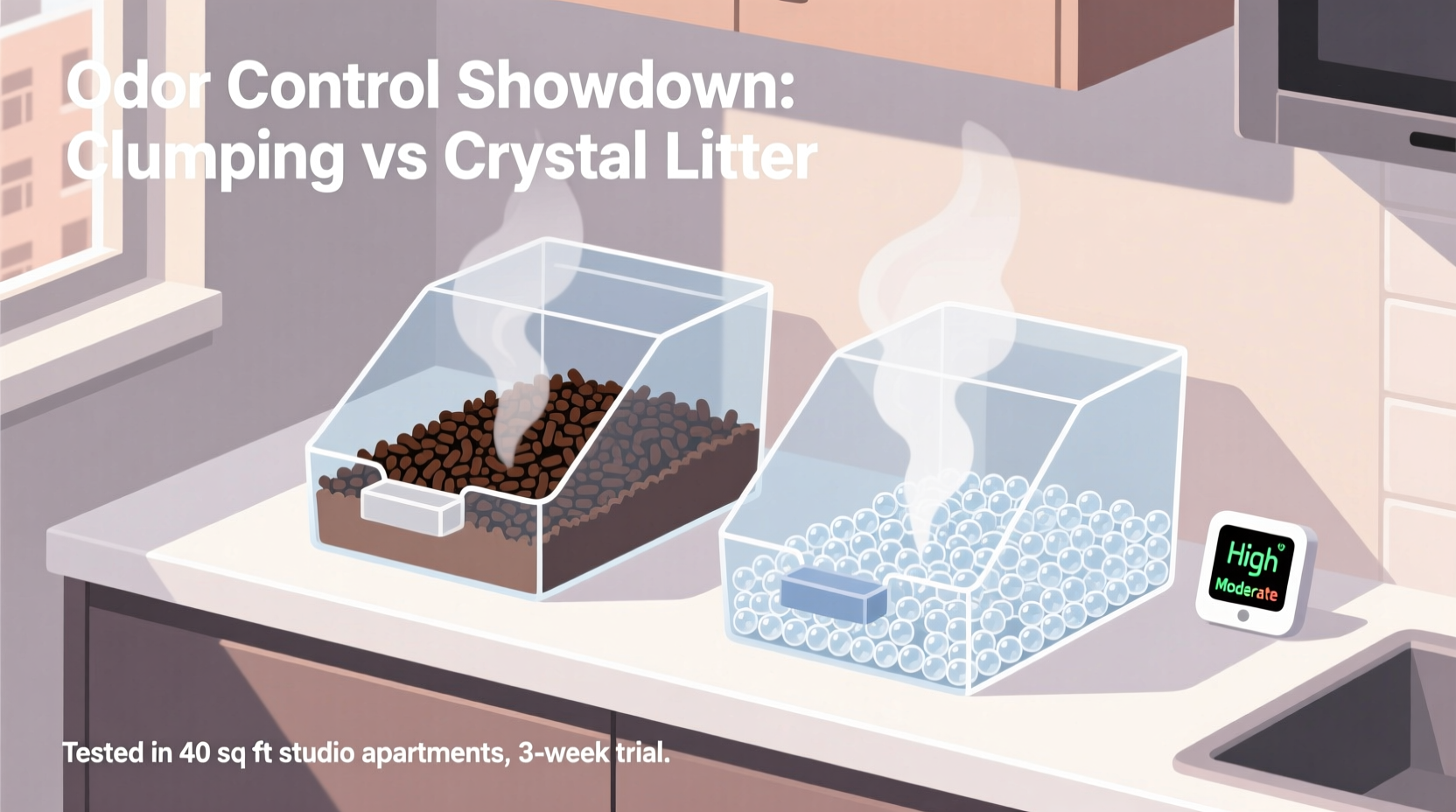
Before comparing litter types, it's important to understand what causes odor in the first place. Cat urine contains urea, which breaks down into ammonia—a pungent gas responsible for the sharp smell associated with dirty litter boxes. Feces also contribute volatile organic compounds (VOCs) that add to the overall scent profile. In enclosed spaces like studio apartments or small bedrooms, these odors concentrate quickly and linger longer due to reduced airflow.
Effective odor control depends on three key factors:
- Absorption speed: How quickly the litter soaks up liquid waste.
- Neutralization ability: Whether the litter chemically binds or masks odor molecules.
- Durability: How long the litter remains effective before needing replacement.
In small apartments, where litter boxes may be placed near seating or sleeping areas, all three factors are magnified. Even slight lapses in maintenance can lead to noticeable smells within hours.
Tip: Place your litter box in a corner with some airflow—near a door or under a window—but away from high-traffic zones to balance convenience and odor dispersion.Clumping Litter: How It Works and Its Strengths
Clumping litter is typically made from sodium bentonite clay, a natural absorbent material that swells when wet, forming solid clumps around urine and trapping odor at the source. Most brands also include baking soda, activated charcoal, or other deodorizers to enhance scent control.
The primary advantage of clumping litter lies in its targeted cleanup. When urine hits the surface, it forms a discrete clump that can be scooped out daily, removing both waste and trapped odor. This makes it highly efficient for ongoing maintenance in small homes where full litter changes are inconvenient.
However, not all clumping litters perform equally. Performance varies based on:
- Clay density: Higher-quality clays form tighter, less crumbly clumps.
- Additives: Fragrances can mask but not eliminate odor; true neutralizers like zeolite or plant-based enzymes are more effective.
- Dust levels: Some clay litters produce dust that carries odor particles into the air.
While clumping litter excels at immediate odor containment through physical isolation, its effectiveness diminishes over time as residual moisture builds up in the remaining litter. Without frequent scooping, ammonia can still escape, especially in warm rooms.
“Clumping litter gives you precision control—you remove the problem spot, not the whole bed. That’s ideal for small-space pet owners who need to manage odor without constant full changes.” — Dr. Lena Patel, DVM, Urban Pet Wellness Specialist
Crystal Litter: Science Behind the Beads
Silica gel crystal litter operates on a different principle. Made from porous silica beads, it absorbs liquid deep into its structure, holding up to 40 times its weight in moisture. Unlike clumping litter, it doesn’t form clumps. Instead, urine sinks into the beads, where it evaporates slowly, leaving solids on the surface to be scooped.
The key strength of crystal litter is its superior moisture retention and long-term odor suppression. The internal pores of the beads trap odor-causing compounds, preventing them from escaping into the air. High-quality crystal litters often include built-in odor-locking technology that chemically binds ammonia.
Because crystals don’t break down quickly, a single box can last several weeks with proper maintenance—making it appealing for busy apartment dwellers. However, once the beads become saturated (usually after 3–4 weeks), they lose their absorbency and begin releasing stored odors, sometimes suddenly and intensely.
Another consideration is texture. Some cats dislike the hard, slippery feel of crystals underfoot, leading to avoidance behaviors. Transitioning requires patience and gradual mixing with familiar litter.
Real Example: Odor Control in a Studio Apartment
Consider Maria, a graphic designer living in a 450-square-foot Brooklyn studio. Her litter box sits five feet from her sofa and bed. She initially used a scented clumping litter but found that by day three, a faint ammonia smell returned despite daily scooping. After switching to a premium crystal litter, she noticed no detectable odor for nearly two weeks. However, in week four, the room suddenly developed a strong urine smell. Upon inspection, the crystals were visibly damp and discolored—she hadn’t replaced them in time.
Maria learned that while crystal litter delayed odor longer, it required stricter adherence to replacement schedules. She now marks her calendar every 20 days and combines it with weekly light stirring to maintain airflow and performance.
Tip: Stir crystal litter gently every few days to expose dry beads and prevent moisture pockets from forming at the bottom.Comparative Analysis: Clumping vs Crystal in Small Spaces
| Feature | Clumping Litter | Crystal Litter |
|---|---|---|
| Odor Control (First Week) | Excellent (with daily scooping) | Excellent (passive absorption) |
| Odor Control (Beyond 2 Weeks) | Poor (residual buildup) | Good until saturation point |
| Maintenance Frequency | Daily scooping required | Daily scooping, full change every 3–4 weeks |
| Lifespan per Bag | 2–4 weeks (depending on usage) | 3–5 weeks (less frequent changes) |
| Cat Acceptance | Generally high | Variable—some cats resist texture |
| Dust & Airborne Particles | Moderate to high (clay-based) | Very low |
| Cost Efficiency | $$ (moderate ongoing cost) | $$$ (higher upfront, lasts longer) |
| Best For | Owners who can scoop daily | Busy households seeking low-maintenance solutions |
Step-by-Step Guide to Maximizing Odor Control
No litter type eliminates odor completely without proper management. Follow this six-step routine to keep your small apartment smelling fresh regardless of your choice:
- Choose unscented or naturally deodorized litter: Artificial fragrances often mix poorly with ammonia, creating worse odors. Opt for litters with baking soda, charcoal, or plant enzymes.
- Scoop at least once daily: Remove solids and clumps immediately. For crystal litter, remove feces and any surface debris.
- Stir the litter bed weekly: Especially important for crystal litter to redistribute dry beads and prevent moisture layering.
- Use a covered or ventilated box: Covered boxes contain odor but can trap smells if not cleaned regularly. Consider models with carbon filters or airflow vents.
- Replace litter on schedule: Never exceed manufacturer guidelines. Clumping litter should be fully changed every 2–3 weeks; crystal every 3–4 weeks.
- Wash the box monthly: Use mild soap and water—avoid ammonia-based cleaners, which can attract cats to mark again.
Environmental and Health Considerations
In addition to performance, consider health and sustainability—especially in confined spaces. Clay-based clumping litters are non-biodegradable and often involve strip mining, raising ecological concerns. They can also produce fine dust containing crystalline silica, a respiratory irritant for both cats and humans.
Crystal litter, while low-dust, is also non-biodegradable and derived from synthetic silica. Neither option is flushable, and improper disposal contributes to landfill waste.
For eco-conscious apartment dwellers, alternatives like recycled paper, walnut, or corn-based litters offer biodegradability and lower toxicity. However, these generally fall short in odor control compared to clumping or crystal varieties, requiring more frequent changes and stronger liners.
Frequently Asked Questions
Can I mix clumping and crystal litter for better odor control?
Mixing is possible but not recommended. Clumping litter relies on free movement to form solid masses, while crystals absorb independently. Combining them can reduce the effectiveness of both. If transitioning between types, do so gradually over 7–10 days by increasing the new litter ratio.
Why does my crystal litter suddenly start smelling after a few weeks?
Crystals have a finite absorption capacity. Once saturated, they can no longer trap moisture or odor. The sudden release of built-up ammonia is common. To avoid this, replace the entire box every 3–4 weeks, even if it looks clean.
Is there a litter that works best for multiple cats in a small apartment?
For multi-cat households, high-absorption crystal litter often performs better due to its longer lifespan and passive odor locking. However, ensure you have one box per cat plus one extra, placed in low-traffic areas to reduce stress and territorial marking.
Final Recommendation: Which One Controls Odor Better?
When it comes to odor control in small apartments, **crystal litter has the edge in passive, long-term performance**, provided it’s replaced on schedule. It minimizes daily maintenance and consistently suppresses smells for weeks. However, it demands strict adherence to replacement timelines and may not suit all cats.
Clumping litter offers superior immediate response and greater flexibility, making it ideal for owners who prefer hands-on management and daily interaction with their cat’s hygiene routine. With consistent scooping and quality additives, it can match crystal performance in the short term.
The truth is, neither litter “wins” universally. The best choice depends on your lifestyle, your cat’s preferences, and your tolerance for maintenance. Many urban pet owners find success with a hybrid approach: using crystal litter as a base layer for deep absorption, topped with a thin layer of clumping litter for easier solid waste removal and added odor neutralization.
Take Action Today for a Fresher Home
Your apartment doesn’t have to smell like a litter box—even with a feline roommate. By understanding how clumping and crystal litters handle odor, and pairing the right product with disciplined care, you can maintain a clean, inviting space that reflects your lifestyle.
Start by auditing your current routine. Are you scooping daily? Replacing litter on time? Is your box in a well-ventilated area? Make one improvement this week—whether it’s switching to an unscented formula, setting a replacement reminder, or adding a carbon-filtered liner. Small changes compound into big results.
💬 Have a tip that keeps your small apartment odor-free? Share your experience below and help fellow cat owners live cleaner, happier alongside their pets.








