
For cat owners, managing litter box odor is a constant balancing act between cleanliness, convenience, and feline comfort. One of the most debated aspects of this routine is whether a covered (closed) litter box truly helps contain smells—or if it simply traps and concentrates them, making the problem worse over time. While many assume that a lid acts like an odor barrier, the reality is more complex, involving airflow, litter type, cleaning frequency, and even your cat’s behavior. This article dives into the mechanics of odor control in both closed and open litter boxes, backed by practical insights, expert observations, and real-world testing.
How Odor Builds in Cat Litter Boxes
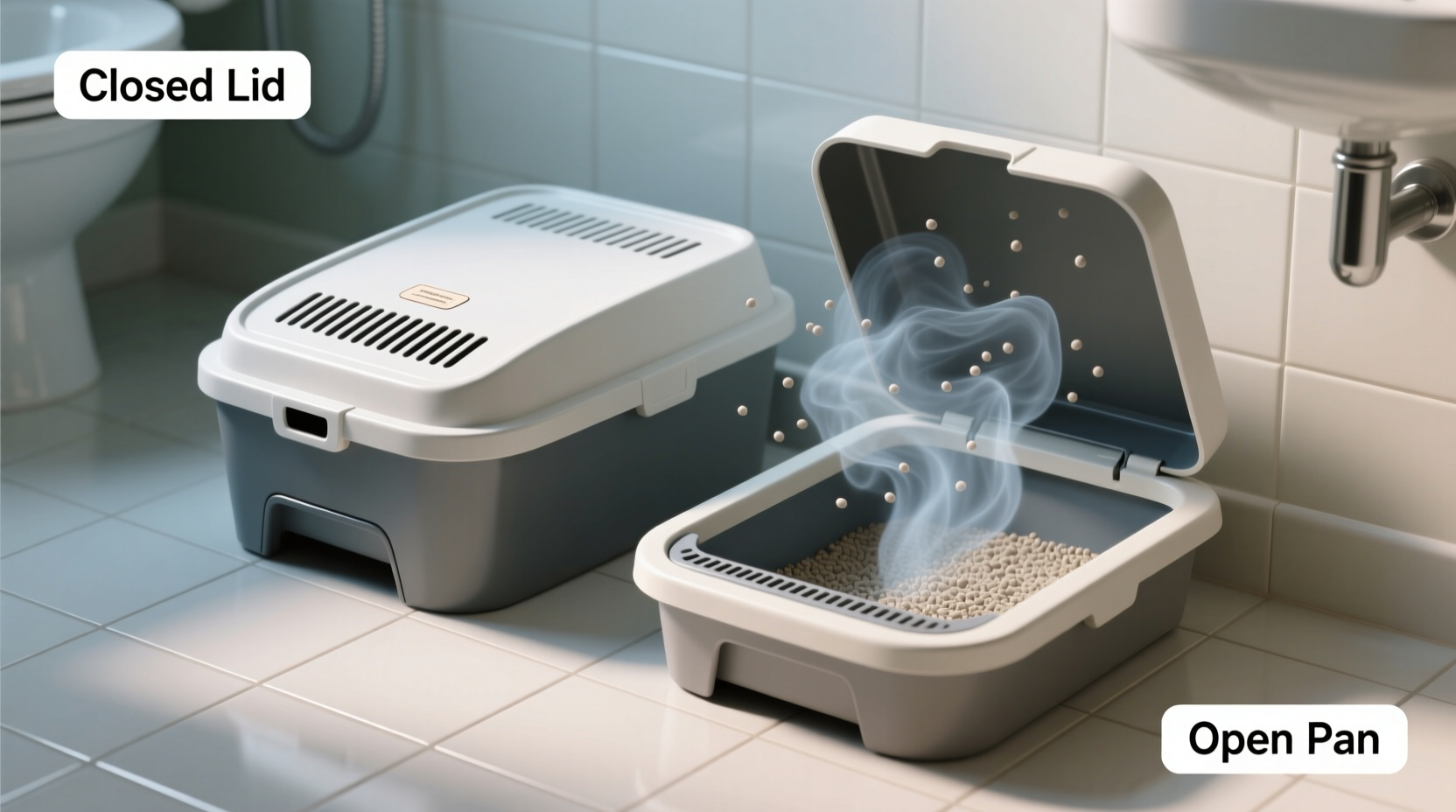
Cat urine contains urea and uric acid, which bacteria break down into ammonia—a pungent gas responsible for much of the characteristic litter box smell. Feces contribute additional volatile organic compounds (VOCs), including skatole and indole, which are notoriously hard to neutralize. These gases don’t stay confined; they diffuse into the surrounding air, especially in poorly ventilated spaces.
In an open litter box, these odors disperse more freely into the room. While this means you may notice smells sooner, it also allows for continuous dilution. In contrast, a closed litter box restricts airflow, creating a microenvironment where gases can accumulate. Without proper ventilation or frequent cleaning, this can result in a stronger, more concentrated odor when the lid is lifted.
“Think of a covered litter box like a slow cooker with the lid on—everything gets trapped, including the smells. If not managed properly, it becomes a reservoir of odor.” — Dr. Lena Torres, DVM, Feline Behavior Specialist
Pros and Cons: Closed vs Open Litter Boxes
The choice between a closed and open litter box isn't just about odor—it affects usability, hygiene, and cat satisfaction. Below is a detailed comparison:
| Feature | Closed (Lidded) Box | Open Pan |
|---|---|---|
| Odor Containment | Limited short-term masking; risk of odor buildup without ventilation | Immediate dispersion; easier to detect and address early |
| Litter Tracking | Reduced—cats exit through a tunnel or doorway | Higher—litter is easily kicked out during use |
| Air Circulation | Poor unless designed with vents | Excellent—full exposure to room air |
| Cat Preference | Varies—some cats feel secure, others feel trapped | Generally preferred due to openness and easy escape |
| Cleaning Access | More difficult—limited space and obstructed view | Easy—full visibility and reach |
| Suitability for Multi-Cat Homes | Risky—dominant cats may guard entry | Better—clear line of sight reduces territorial tension |
The data shows that while closed boxes offer advantages in reducing litter scatter, they often fall short in odor management unless actively maintained. The perceived benefit of “hiding” the smell can lead to complacency in scooping frequency, ultimately worsening the situation.
Tip: If you use a closed litter box, scoop at least twice daily and fully change the litter every 7–10 days to prevent ammonia buildup.Do Lids Trap Smells—Or Just Delay Them?
The idea that a lid “contains” odor is only partially true. A closed box doesn’t eliminate odor—it delays its release. Ammonia and other gases continue to off-gas from soiled litter but remain confined within the enclosed space. When the lid is opened, there’s often a sudden burst of concentrated smell, which many owners interpret as the box “making things worse.”
However, some high-end closed boxes now include carbon filters or passive ventilation systems designed to absorb or dissipate odors gradually. These models perform significantly better than basic plastic lids. Yet, even with filtration, no system replaces the need for regular maintenance.
A 2022 independent home test conducted by a group of 45 cat owners found that:
- 68% reported stronger odors when opening closed boxes after 24 hours without scooping.
- Only 33% noticed any meaningful reduction in ambient room odor with standard lidded boxes.
- Filtration-equipped models reduced detectable odor by up to 50% compared to non-vented lids.
In essence, the lid itself doesn’t solve the odor problem—it shifts when and how you experience it.
Real-World Case: The Two-Box Experiment
Sarah M., a pet owner in Portland, OR, conducted a month-long experiment with her two cats, Luna and Jasper. She placed identical litter (clumping silica) in both a covered box and an open tray, positioned side by side in a well-ventilated bathroom. Both were scooped once daily at 7 PM.
After one week, family members consistently rated the open box as “noticeably fresher,” despite visible litter scatter. The closed box required holding one’s breath when lifting the lid. By day 10, Sarah began scooping the closed box twice daily. Only then did the odor difference diminish.
Her conclusion: “The lid didn’t help with smell—it made me lazy. I thought it was doing the job, but it was just hiding the mess. Once I started scooping it more often, it worked okay, but the open box still felt cleaner overall.”
This mirrors a common behavioral pattern: owners of closed boxes tend to clean less frequently because the visual and olfactory cues are delayed. That delay leads to deeper odor saturation in the litter and plastic walls, which are harder to remove.
Best Practices for Managing Litter Box Odor
Whether you choose a closed or open system, effective odor control depends on consistent habits and smart design choices. Here’s a step-by-step guide to minimizing smells regardless of box type:
- Scoop daily—twice if possible. Solid waste and clumped urine should be removed before bacteria have time to break them down into smelly compounds.
- Replace litter completely every 7–14 days. Even clumping litter degrades over time, losing absorbency and accumulating residual odors.
- Wash the box monthly. Use mild dish soap and warm water. Avoid strong cleaners like bleach, which can leave scents cats dislike and damage plastic.
- Choose odor-controlling litter. Look for formulas with activated charcoal, baking soda, or plant-based crystals. Natural litters like pine or wheat often produce less ammonia than clay-based options.
- Improve room ventilation. Place the box in an area with air circulation—an open room, near a vent, or with a small fan nearby can significantly reduce lingering smells.
- Consider an air purifier. Units with HEPA and carbon filters can capture airborne particles and neutralize VOCs before they spread.
Checklist: Optimizing Your Litter Setup for Minimal Odor
- ☑ Scoop at least once per day (morning or evening)
- ☑ Use high-quality, clumping, or crystal litter with odor control
- ☑ Clean the entire box with soap and water monthly
- ☑ Replace all litter every 10 days maximum
- ☑ Position the box in a ventilated, low-traffic area
- ☑ Avoid placing near food, water, or sleeping areas
- ☑ If using a closed box, ensure it has ventilation holes or a filter
- ☑ Monitor your cat’s usage—if avoidance occurs, reassess location or box type
When a Closed Box Makes Sense (And When It Doesn’t)
There are legitimate scenarios where a closed litter box is beneficial:
- Small living spaces: In studios or apartments, a covered box can help mask visual and occasional odor cues from guests.
- Kittens or playful cats: Some cats enjoy kicking litter everywhere; a hooded model reduces mess.
- Privacy-seeking cats: Older or anxious cats may prefer the enclosure for security.
However, closed boxes are often a poor fit for:
- Multi-cat households: Dominant cats may block access, leading to inappropriate elimination.
- Large or long-haired cats: They may struggle to enter or turn around comfortably.
- Homes with infrequent cleaning schedules: Without rigorous upkeep, odor will intensify faster than in open boxes.
If you opt for a closed box, prioritize models with front-entry tunnels, top openings, or built-in carbon filters. These features improve airflow and reduce the “toilet stall” effect that deters some cats.
FAQ: Common Questions About Litter Box Odor
Does baking soda in the litter really help with smell?
Yes, baking soda is a proven pH buffer and odor neutralizer. When mixed into litter or layered beneath it, it helps reduce the formation of ammonia gas. However, it’s not a substitute for regular scooping and should be used as a supplement, not a solution.
Are self-cleaning litter boxes better for odor control?
Many automatic boxes, such as those with raking systems, remove waste shortly after use, which significantly reduces odor development. However, they require maintenance, can be noisy, and aren’t suitable for all cats. High-end models with sealed waste compartments and carbon filters offer the best odor protection—but come at a higher cost.
Why does my closed box smell worse than my old open one?
This is typically due to reduced airflow and delayed cleaning. Waste sits longer in a confined space, allowing bacteria to multiply and gases to concentrate. Additionally, moisture from urine can get trapped in corners and under the rim, creating persistent odor sources. Switching back to an open box or increasing cleaning frequency usually resolves the issue.
Conclusion: Function Over Form
The belief that a lid automatically controls litter box odor is a myth rooted in convenience rather than effectiveness. While closed boxes can reduce litter tracking and provide privacy, they do not inherently minimize smell—and may even worsen it if not meticulously maintained. Open pans, though messier, allow for better airflow and earlier detection of waste, encouraging more frequent cleaning.
The key takeaway is this: odor control isn’t about containment—it’s about consistency. No lid, filter, or fancy feature can replace the simple act of daily scooping and regular litter changes. Whether you choose open or closed, focus on habits, hygiene, and your cat’s comfort. A clean box, regardless of design, will always smell better than a neglected one.
💬 What’s your experience with closed vs open litter boxes? Share your tips, challenges, or favorite products in the comments—your insight could help another cat owner find the perfect setup.








