When diners finish a savory meal at Pizza Hut and the dessert menu appears, one item often stands out for its warm aroma and nostalgic appeal: the Cinnabon® Delights or Cinnamon Sticks. While many assume these are merely fried dough with sugar and spice, the truth is more nuanced—especially when it comes to the role of cinnamon sticks and ground cinnamon in both flavor development and branding. Despite the name, Pizza Hut’s “Cinnamon Sticks” do not contain whole cinnamon sticks as an ingredient. Instead, they rely on high-quality ground cinnamon to deliver their signature warmth and sweetness. Understanding this distinction—and the broader culinary science behind cinnamon use in commercial desserts—can elevate how home cooks approach spiced pastries, glazes, and baked goods.
The term “cinnamon sticks” in this context refers not to the physical inclusion of bark quills in the dish but to the dominant flavor profile and marketing identity tied to cinnamon. Pizza Hut leverages the sensory recognition of cinnamon—its sweet, woody, slightly peppery scent—to evoke comfort and indulgence. This article explores the reality behind the name, breaks down the types and uses of real cinnamon sticks, explains how Pizza Hut achieves its iconic taste, and provides practical guidance for using whole cinnamon effectively in homemade versions of similar treats.
Definition & Overview: What Are Cinnamon Sticks?
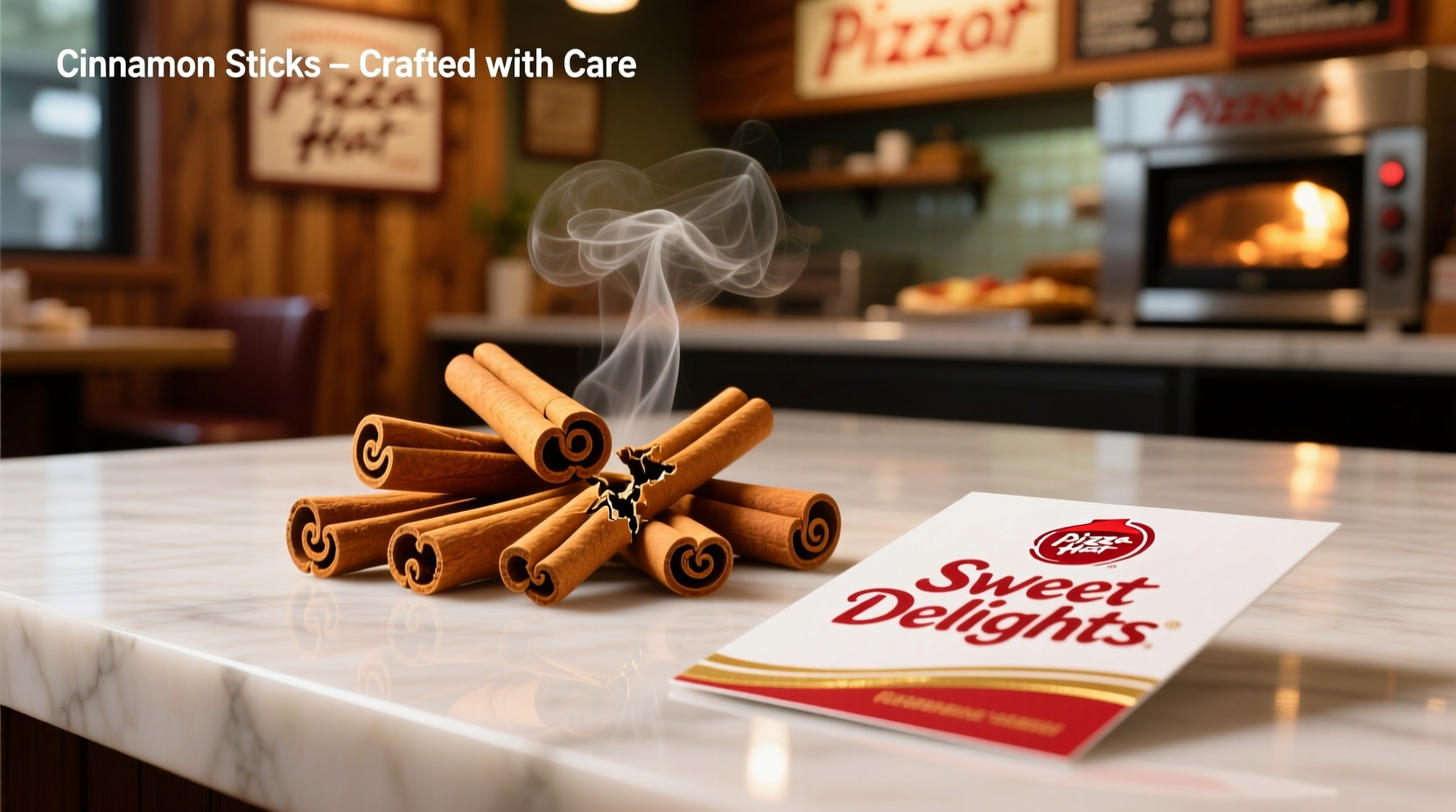
Cinnamon sticks, also known as cinnamon quills, are the dried inner bark of trees from the Cinnamomum genus. When harvested, the bark naturally curls into tight rolls as it dries, forming hollow tubes that range in color from light tan to deep reddish-brown. These sticks are prized in global cuisines not only for their intense fragrance but also for their ability to infuse liquids, syrups, and slow-cooked dishes with complex aromatic compounds without overwhelming them.
There are two primary species used commercially: Cinnamomum verum (true cinnamon or Ceylon cinnamon), native to Sri Lanka, and Cinnamomum cassia (commonly labeled simply as “cinnamon”), which originates in China and Southeast Asia. The latter is stronger, spicier, and more widely available in North American markets—including those supplying large restaurant chains like Pizza Hut.
In culinary terms, cinnamon sticks serve multiple functions: they act as a slow-release flavoring agent, a decorative element in beverages and desserts, and a natural preservative due to their antimicrobial properties. Their use spans cultures—from Indian chai and Middle Eastern rice pilafs to French mulled wine and Mexican hot chocolate.
Key Characteristics of Cinnamon Sticks
| Characteristic | Description |
|---|---|
| Flavor Profile | Sweet, warm, woody, with subtle notes of clove and pepper. Cassia cinnamon is bolder and slightly bitter; Ceylon is delicate, citrusy, and sweeter. |
| Aroma | Intensely fragrant, especially when broken or heated. Releases volatile oils like cinnamaldehyde, responsible for the characteristic scent. |
| Color & Form | Hollow, brittle tubes ranging from 2–6 inches long. Cassia sticks are thick, hard, and often sold in single-layer rolls. Ceylon sticks are thinner, multi-layered, and resemble cigar tubing. |
| Heat Level | Not spicy in the chili sense, but cassia has a warming, almost peppery bite when consumed in quantity. |
| Culinary Function | Used for infusion (in syrups, poaching liquids, stews), decoration, grinding fresh, and slow-release seasoning. |
| Shelf Life | Up to 3–4 years if stored properly in a cool, dark place. Loses potency over time but does not spoil. |
Practical Usage: How to Use Cinnamon Sticks in Cooking
While Pizza Hut’s version relies on pre-ground cinnamon mixed into the dough and sugar coating, professional kitchens and informed home bakers can replicate and even improve upon this concept by incorporating whole cinnamon sticks strategically during preparation.
Here’s how:
- Infusing Syrups and Glazes: Simmer one 3-inch cinnamon stick in 1 cup of water with ¾ cup sugar for 10–15 minutes to create a deeply aromatic syrup. Strain before use. This infused syrup can be brushed onto warm cinnamon sticks post-frying or drizzled over plated desserts for enhanced depth.
- Enhancing Dough Flavor: Lightly crush a cinnamon stick and steep it in warm milk or plant-based milk before adding to dough. Remove the pieces before kneading. This method subtly seasons the base without leaving gritty texture.
- Spicing Frying Oil (Advanced Technique): Some gourmet donut shops infuse frying oil with cinnamon sticks, vanilla beans, and star anise. After cooling and filtering, this adds background warmth to fried pastries. Not recommended for beginners due to risk of burning spices.
- Decorative Garnish: Serve mini portions of homemade cinnamon sticks with a real cinnamon stick propped beside them on the plate—evoking the restaurant experience while signaling authenticity.
Pro Tip: Always remove whole cinnamon sticks before serving unless intended as a garnish. They are too tough to chew and may pose a choking hazard or damage teeth.
For those recreating Pizza Hut-style cinnamon sticks at home, consider combining ground cassia cinnamon (for punch) with a hint of Ceylon (for balance). A typical ratio is 3 parts cassia to 1 part Ceylon. Mix with brown sugar, a touch of nutmeg, and melted butter for dipping after frying.
Variants & Types of Cinnamon Sticks
Understanding the differences between types of cinnamon sticks helps explain why certain flavors dominate in commercial products and how to choose the right one for your kitchen.
1. Cassia Cinnamon (Cinnamomum cassia)
- Origin: Southern China, Indonesia, Vietnam
- Appearance: Thick, rough bark; single curled layer; darker reddish-brown
- Flavor: Strong, pungent, slightly bitter with a medicinal edge in excess
- Use Case: Ideal for bold applications like cinnamon rolls, spiced cookies, and commercial dessert mixes where impact matters
- Note: Contains higher levels of coumarin, which can be harmful in very large quantities (>1 tsp ground daily over long periods)
2. Ceylon Cinnamon (True Cinnamon)
- Origin: Sri Lanka, Madagascar, Seychelles
- Appearance: Thin, papery layers stacked tightly; lighter tan color; softer texture
- Flavor: Delicate, sweet, citrusy, with floral undertones
- Use Case: Best for delicate desserts, custards, rice puddings, and infant foods where subtlety is key
- Note: Lower coumarin content, making it safer for regular consumption
3. Saigon Cinnamon (Cinnamomum loureiroi)
- Origin: Vietnam
- Flavor: Most intense of all—up to 1–2% essential oil content vs. 0.5–1% in cassia
- Use Case: Used by specialty bakers and pastry chefs seeking maximum cinnamon presence
- Note: Often labeled as “super-hot” cinnamon; use sparingly
4. Korintje Cinnamon (Indonesian Cassia)
- Origin: Indonesia
- Characteristics: Milder than other cassias, with a smooth texture and consistent grind
- Commercial Relevance: Frequently used in processed foods and restaurant supply chains due to cost-effectiveness and stable flavor
Industry Insight: Large foodservice operators like Pizza Hut most likely source Korintje or standard cassia cinnamon in powdered form for consistency, shelf stability, and ease of integration into mass-produced doughs and coatings.
Comparison with Similar Ingredients
Cinnamon is often confused with other spices, particularly in ground form. Knowing the distinctions ensures accurate usage and avoids flavor imbalances.
| Ingredient | Key Differences from Cinnamon Sticks | Common Misuse |
|---|---|---|
| Nutmeg | Warm and sweet but more earthy and musky; derived from seed, not bark; no woody structure | Overused in creamy desserts, leading to soapy off-notes |
| Allspice | Tastes like a blend of cinnamon, cloves, and nutmeg but comes from unripe berries; stronger clove character | Mistaken for cinnamon in Caribbean recipes unless specified |
| Cassia Bark (Whole) | Often sold as “cinnamon stick” but is thicker, harsher, and less refined | Labeled interchangeably with true cinnamon in supermarkets |
| Star Anise | Pronounced licorice flavor; belongs to same family (Laurel) but entirely different compound profile | Confused visually when used in mulling spices |
“The difference between cassia and Ceylon isn’t just botanical—it’s sensory. One shouts; the other sings.” — Chef Elena Torres, Pastry Instructor at International Culinary Center
Practical Tips & FAQs
Q1: Does Pizza Hut actually use cinnamon sticks in their Cinnamon Sticks?
No. The product contains ground cinnamon as part of the seasoning mix applied after frying. No whole cinnamon sticks are included in the recipe or served with the dish.
Q2: Can I substitute ground cinnamon for cinnamon sticks in recipes?
Yes, with adjustments. As a general rule: 1 cinnamon stick ≈ ½ teaspoon ground cinnamon. However, whole sticks provide slower, more balanced extraction, especially in liquids. For best results, use sticks when infusing and reserve ground cinnamon for baking or finishing.
Q3: How should I store cinnamon sticks?
In an airtight container away from heat, light, and moisture. A dark pantry or cupboard is ideal. Avoid storing near the stove or dishwasher. Properly stored, they retain flavor for up to four years.
Q4: Is there a health concern with eating too much cinnamon?
Cassia cinnamon contains coumarin, which in excessive amounts may affect liver function. The European Food Safety Authority recommends limiting intake to 0.1 mg per kg of body weight per day. For a 60 kg adult, that’s roughly ½ teaspoon of cassia powder daily. Ceylon cinnamon is safer for regular use.
Q5: Why do my homemade cinnamon rolls lack the “restaurant” flavor?
Chain restaurants often use enzyme-modified dough conditioners, fat emulsifiers, and standardized spice blends designed for consistency. To mimic this at home:
- Use a combination of cassia and Ceylon cinnamon
- Add a pinch of cardamom or allspice for complexity
- Infuse milk with a cinnamon stick before mixing into dough
- Apply a warm butter-sugar-cinnamon paste immediately after baking
Q6: Can I reuse cinnamon sticks?
Partially. After simmering in tea or syrup once, a stick retains some flavor. It can be dried and reused in another application, though potency diminishes significantly. Do not reuse in savory dishes after using in sweets (and vice versa) due to flavor carryover.
Q7: Are Pizza Hut Cinnamon Sticks vegan?
As of 2023, Pizza Hut’s Cinnamon Sticks contain dairy (milk ingredients) and are not considered fully vegan. Always check current allergen charts on the official website for regional variations.
Summary & Key Takeaways
The name “Cinnamon Sticks from Pizza Hut” evokes a beloved dessert experience—but it's a flavor concept rather than a literal ingredient listing. There are no whole cinnamon sticks inside the dish; instead, the taste comes from ground cassia or Korintje cinnamon blended into the sugar coating. This reflects a common practice in commercial food production: prioritizing efficient, scalable flavor delivery over artisan techniques.
However, understanding the true nature of cinnamon sticks—their varieties, uses, and limitations—empowers home cooks to go beyond imitation. By using whole sticks to infuse syrups, condition dough liquids, or garnish plates, you can create versions of cinnamon-based desserts that surpass fast-food renditions in depth and sophistication.
Key takeaways include:
- Pizza Hut Cinnamon Sticks do not contain actual cinnamon sticks.
- The dominant spice used is likely Indonesian cassia or Korintje cinnamon in powdered form.
- Cinnamon sticks excel in infusion applications and offer superior control over flavor intensity.
- Cassia and Ceylon cinnamon differ significantly in taste, safety, and culinary role.
- Homemade versions benefit from combining infusion techniques with strategic use of ground spice.
- Storage, substitution ratios, and health considerations matter when using cinnamon regularly.
Try This at Home: Make a batch of fry bread, roll in a mixture of 2 tsp cassia cinnamon, 1 tsp Ceylon cinnamon, ½ cup brown sugar, and a pinch of sea salt. Serve with a warm orange-zest-infused honey dip. Compare the layered spice profile to store-bought versions—you’ll taste the difference.









