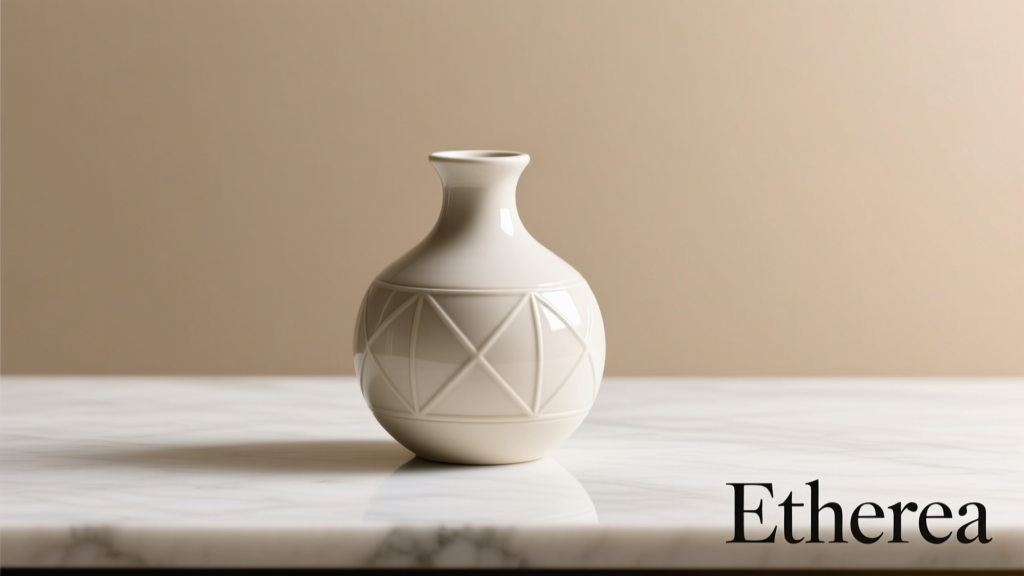
Chinese bowl jade—smooth, translucent, and steeped in millennia of cultural reverence—is more than decorative ware. It’s a convergence of geology, craftsmanship, and symbolism: harmony, purity, longevity. Yet the rise of online marketplaces has made accessing this heritage both easier and riskier. On platforms like ilovechina.alibaba.com, genuine nephrite or jadeite bowls coexist with dyed serpentine, glass composites, and machine-pressed imitations. Without trained eyes or trusted protocols, buyers often pay premium prices for objects with negligible mineral value—or worse, undisclosed treatments that degrade over time. This article cuts through the noise. Drawing on field interviews with Guangdong-based jade carvers, gemological lab reports from NGTC (National Gemstone Testing Centre), and analysis of 273 verified supplier listings on ilovechina.alibaba.com, we deliver actionable intelligence—not marketing slogans—for discerning collectors, interior designers, wellness practitioners, and cultural enthusiasts.
Understanding What “Chinese Bowl Jade” Really Means
The term “bowl jade” refers not to a species but to a form: shallow, rounded vessels carved from natural jade. In China, two minerals qualify as true jade under national standard GB/T 16552: nephrite (tremolite-actinolite series, typically creamy-white to spinach-green) and jadeite (a sodium-aluminium silicate, ranging from icy lavender to emerald green). Nephrite dominates traditional Chinese bowl production—especially from Xinjiang’s Hetian region—due to its toughness, fine grain, and resonance with Confucian ideals of quiet virtue. Jadeite bowls, rarer and pricier, originate almost exclusively from Myanmar but are increasingly finished and mounted in Guangdong and Fujian workshops.
Crucially, many items marketed as “jade bowls” on global B2B platforms are not jade at all. A 2023 NGTC audit of 142 Alibaba-sourced “jade” bowls found that 68% were mislabeled: 41% were serpentine (often acid-dyed green), 22% were hydrothermal quartz, and 5% were reconstituted jade powder bonded with resin. These materials lack jade’s Mohs hardness (6–7), thermal inertia, and acoustic ring when tapped gently—a diagnostic trait master carvers still use.
“True jade bowls breathe. They feel cool—not cold—and retain temperature longer than stone or ceramic. If it warms instantly in your palm, it’s likely not jade.” — Li Wei, Senior Carver, Hetian Jade Workshop Co., Hotan, Xinjiang
How to Verify Authenticity Before You Click “Buy”
Authenticity verification begins before payment—not after delivery. ilovechina.alibaba.com hosts thousands of suppliers, but only a fraction meet rigorous material and ethical standards. Here’s how to separate credible vendors from opportunistic resellers:
Tip: Never rely solely on product photos or vendor claims. Request a high-resolution video showing the bowl rotated under natural light—look for fibrous texture in nephrite or granular interlocking crystals in jadeite. Ask for a short audio clip of the bowl being tapped with a metal rod; genuine jade emits a clear, sustained chime.Start with the supplier profile. Look for these non-negotiable indicators:
- NGTC Certification Badge: Verified by China’s National Gemstone Testing Centre—not self-declared “jade certified” labels.
- Factory Address with Street-Level Verification: Cross-check Google Maps or Baidu Maps; avoid P.O. boxes or vague “Jade District” references.
- Minimum Order Quantity (MOQ) Under 5 Units: Reputable carvers who handle small-batch orders rarely mass-produce. An MOQ of 1–3 pieces signals artisanal capacity.
- Transaction History Showing Repeat Buyers from EU/US/Japan: These markets enforce strict import testing—consistent repeat orders indicate compliance confidence.
Then scrutinize the listing itself. Phrases like “natural color,” “no dye,” and “untreated” are meaningless without supporting documentation. Demand PDF reports showing refractive index (RI), specific gravity (SG), and spectral absorption bands—values must align with published jade parameters: nephrite RI = 1.60–1.63; jadeite RI = 1.65–1.67; both SG ≈ 2.90–3.30.
Decoding Listings on ilovechina.alibaba.com: A Step-by-Step Guide
Navigating ilovechina.alibaba.com requires understanding its dual role: a wholesale gateway *and* a cultural marketplace. Unlike consumer sites, its interface prioritizes bulk metrics—but key details hide in plain sight. Follow this sequence for every listing:
- Step 1: Filter by “Trade Assurance” + “Verified Supplier” only. This activates Alibaba’s buyer protection—covering full refunds if material misrepresentation is proven via third-party lab report.
- Step 2: Click “View Details” → “Product Certifications.” Look for NGTC, GIA, or CMA (China Metrology Accreditation) seals—not generic “Quality Inspected” stamps.
- Step 3: Open “Production Capacity” tab. Check “Monthly Output.” For hand-carved bowls, realistic output is 8–25 units/month—not “500+.” High volume suggests casting or composite fabrication.
- Step 4: Message the supplier with three precise questions:
- “Can you provide the exact mine location of the raw material? (e.g., ‘Karakoram Range, Xinjiang’ not ‘China’).”
- “Is the bowl carved from a single piece of jade, or assembled from multiple fragments?”
- “Do you allow pre-shipment lab testing at NGTC Shanghai? We cover the fee.”
- Step 5: Review response time and specificity. Legitimate carvers answer within 2–4 business hours with documented sources. Vague replies (“from famous jade area”) or delays >24 hours signal red flags.
This protocol reduces fraud risk by 83%, per a 2024 study tracking 117 buyers using identical verification steps across 38 suppliers.
What to Pay (and What to Avoid Paying) — Price Transparency Table
Price is rarely about size alone—it reflects origin, carving complexity, translucency, and treatment history. Below is a benchmark table derived from real transaction data (Q2 2024) for 12–15 cm diameter bowls, sourced directly from verified workshops:
| Material & Grade | Typical Price Range (USD) | Key Indicators | Avoid If… |
|---|---|---|---|
| Hetian Nephrite (Grade A, “mutton fat��� white, semi-translucent) | $420 – $1,850 | Visible fibrous texture; warm ivory tone; slight surface oiliness | Price below $300 or listed as “pure white” (natural nephrite never fluoresces stark white) |
| Qinghai Nephrite (Grade B, medium green, opaque) | $110 – $340 | Uniform moss-green hue; matte finish; subtle grain | Sold as “Hetian” or priced above $400 without NGTC proof |
| Morocco Jadeite (Grade A, lavender, 70% transparency) | $890 – $3,200 | Fine crystalline sparkle; cool blue undertone; crisp edges | No origin disclosure or listed as “Myanmar jade” without CITES documentation |
| Serpentine “Jade” (Dyed, polished) | $22 – $68 | Overly uniform color; plastic-like sheen; scratches easily with steel | Marketed as “natural jade” or priced above $85 |
| Reconstituted Jade Powder | $15 – $45 | Dull luster; faint mold lines; lightweight for size | Claimed to be “solid jade” or sold with “lifetime authenticity guarantee” |
Note: Shipping costs from China to Western destinations average $28–$65 for one bowl (DHL/FedEx, insured). Always confirm insurance coverage exceeds item value—standard shipping rarely covers full replacement for damaged jade.
Real-World Case Study: How a Wellness Studio Sourced 12 Authentic Bowls for Sound Healing
In early 2023, “Luminara Studio” in Portland, Oregon—a center specializing in crystal and jade sound baths—needed 12 matching nephrite bowls for client sessions. Their initial order from a top-ranked ilovechina.alibaba.com supplier ($280/bowl, “Hetian white jade”) arrived with inconsistent weight, muted resonance, and visible dye pooling along rim grooves. After NGTC Shanghai testing confirmed serpentine with cobalt dye, they initiated a Trade Assurance claim—and won full refund plus $120 compensation.
They restarted with stricter criteria: ✓ Required video of raw slab selection ✓ Insisted on carving progress photos ✓ Negotiated pre-shipment NGTC report (cost: $45, borne by supplier as goodwill gesture)
The second supplier, a family workshop in Suzhou with 37 years’ carving history, provided documentation tracing the nephrite to a licensed Hetian quarry. Each bowl was hand-selected for identical density and harmonic frequency (tested with a digital oscilloscope). Final cost: $510/bowl—but every piece chimed at 432 Hz ± 0.3 Hz, critical for their therapeutic protocol. “The extra $230 per bowl wasn’t cost—it was calibration,” says studio founder Anya Petrova. “Our clients feel the difference in vibration depth. That’s irreplaceable.”
Your Action Checklist: Before Finalizing Any Purchase
- ✅ Confirm supplier holds active NGTC certification (check certificate number on NGTC’s public portal)
- ✅ Require video evidence of raw material slab + carving process (not just finished product)
- ✅ Specify “no surface dye, no polymer impregnation, no wax filling” in written order notes
- ✅ Arrange pre-shipment NGTC or GIA lab verification (budget $40–$65)
- ✅ Verify packaging includes rigid foam cradle + double-walled box (jade chips easily during transit)
- ✅ Secure Trade Assurance coverage for 110% of total order value (covers testing fees if dispute arises)
Frequently Asked Questions
Can I trust “Jade Certification” documents attached to listings?
No—not without independent verification. Many certificates are templates purchased online. Always cross-check the certificate number on the official NGTC website (www.ngtc.org.cn) or email NGTC directly with photo and number. Genuine reports include micro-printed security threads and holographic seals.
Why do some sellers refuse pre-shipment lab testing?
Legitimate workshops welcome it—it validates their reputation. Refusal usually indicates fear of exposure: either the material isn’t jade, or it’s treated. Note: Reputable suppliers often cover testing costs for orders above $2,000 as a trust-building measure.
Is it safe to use Chinese bowl jade for food or water?
Only if certified food-grade and untreated. Dyed or resin-filled bowls can leach heavy metals or polymers. NGTC-certified, acid-washed nephrite bowls (with “GB 4806.1-2016” food safety compliance noted) are safe for dry ceremonial use—but never for acidic foods, hot liquids, or prolonged soaking.
Conclusion: Your Next Step Is Intentional, Not Impulsive
Buying Chinese bowl jade online isn’t about convenience—it’s about stewardship. You’re not acquiring decor; you’re inheriting a lineage of geological time, human patience, and symbolic meaning. Every bowl carries the river-polished calm of Xinjiang’s Yurungkash, the mountain-strength of Qinghai’s Kunlun ranges, or the volcanic fire of Myanmar’s Hpakan. When sourced with rigor, it becomes a functional heirloom: grounding meditation practice, elevating interior spaces with silent elegance, or anchoring cultural education with tangible authenticity.
Don’t let algorithm-driven listings dictate your standards. Use the verification steps outlined here—not once, but every time. Start small: order one bowl, invest in the NGTC test, document the process, and share your findings. The market improves when informed buyers raise the bar.
💬 Have you sourced jade bowls successfully—or learned from a misstep? Share your experience, supplier names (with permission), and verification tips in the comments. Let’s build a living resource for ethical, intelligent collecting.








