Cats are natural climbers, perchers, and observers. In the wild, they use elevation to survey their territory, escape threats, and rest in secure spots. When brought indoors, these instincts don’t disappear—they simply shift into home environments. This is why vertical space is essential for feline well-being. But how you provide that space—through a traditional cat tree or modern wall-mounted shelves—can significantly impact your cat’s long-term happiness, behavior, and physical health.
The choice between a cat tree and wall-mounted shelves isn’t just about aesthetics or floor space. It involves understanding your cat’s personality, your living environment, and how each option supports enrichment, safety, and adaptability over time. One may suit kittens and active cats better, while the other might be ideal for seniors or multi-cat households. Let’s break down the real differences and determine which setup truly fosters lasting feline contentment.
Understanding Feline Vertical Behavior
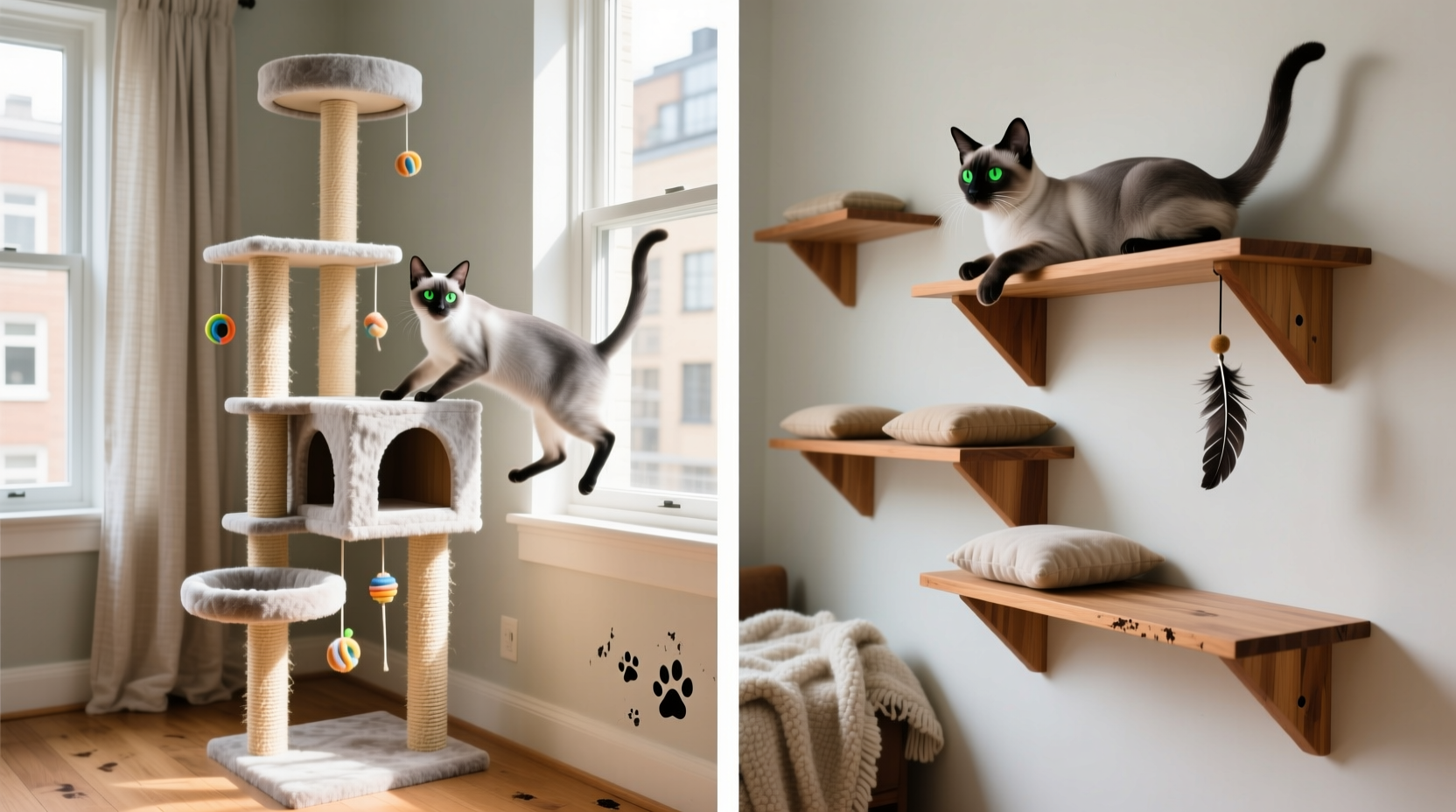
Cats don’t just climb for fun—they do it for survival, comfort, and confidence. Studies show that access to elevated spaces reduces stress in cats, especially in homes with multiple pets or frequent human activity. Elevated perches allow cats to:
- Monitor household movement without feeling vulnerable
- Avoid confrontations with other pets
- Find quiet zones away from noise and foot traffic
- Stretch muscles and maintain joint flexibility through climbing
Dr. Sarah Ellis, co-author of *The Trainable Cat*, emphasizes:
“Vertical space is not a luxury—it's a necessity for indoor cats. Without it, they’re more prone to anxiety, territorial marking, and even aggression.”
This behavioral need makes the decision between cat trees and wall-mounted shelves more than decorative. It’s about creating an environment where your cat feels safe, engaged, and in control.
Breaking Down the Options: Cat Trees vs Wall-Mounted Shelves
To make an informed decision, let’s compare both setups across key categories that influence long-term satisfaction.
| Feature | Cat Tree | Wall-Mounted Shelves |
|---|---|---|
| Installation | Plug-and-play; no tools needed | Requires drilling, stud-finding, and secure mounting |
| Space Efficiency | Takes up floor space; can dominate a corner | Uses unused wall space; frees up floor area |
| Durability | Wears out faster—scratching posts fray, platforms sag | Long-lasting if properly installed; minimal wear |
| Mobility | Easy to move or reposition | Permanent; difficult to relocate |
| Safety | Stable base but can tip if poorly designed | Very stable when anchored correctly; risk if under-installed |
| Enrichment Value | Integrated toys, tunnels, scratching surfaces | Primarily perching; requires added elements for stimulation |
| Aesthetics | Bulky; often looks like pet furniture | Minimalist; blends with home decor |
| Cost Over Time | Higher replacement frequency = ongoing cost | One-time investment with low maintenance |
The table reveals a clear trade-off: cat trees offer immediate, multifunctional enrichment with less effort, while wall-mounted shelves provide a sleek, permanent solution that maximizes space but demands more planning and installation skill.
When a Cat Tree Is the Better Long-Term Choice
Cat trees shine in specific scenarios where stability, variety, and accessibility matter most.
For households with kittens or older cats, a freestanding tree with low platforms, ramps, and enclosed condos offers safer, easier access. Many models include sisal-wrapped posts that satisfy scratching urges—redirecting them from your furniture. The integrated design means everything is within reach: nap spots, play areas, and claw maintenance all in one unit.
Additionally, cat trees are ideal for renters or those who frequently rearrange their space. You can move them seasonally to catch sunlight or place them near windows during bird-watching hours. Their portability also helps during deep cleaning or home repairs.
Tip: Choose a cat tree with a wide base and non-slip feet to prevent tipping, especially in homes with playful or large cats.However, long-term durability remains a concern. After 12–18 months, many cat trees begin to wobble, smell, or unravel. Replacing them every few years adds up financially and creates waste. If you opt for a cat tree, invest in one with replaceable parts—like refillable scratching pads or modular platforms—to extend its lifespan.
Why Wall-Mounted Shelves Often Win for Lasting Happiness
While cat trees serve well short-term, wall-mounted shelves tend to support greater long-term feline satisfaction—especially when thoughtfully designed.
These systems transform unused vertical walls into dynamic playgrounds. By arranging shelves at varying heights and distances, you encourage natural jumping, balancing, and exploration. Cats develop muscle tone and coordination, reducing the risk of obesity and joint issues. Unlike static cat trees, wall shelves can be customized to fit your cat’s age and mobility: lower steps for seniors, zigzag paths for agile adults, or circular routes for curious explorers.
Moreover, because they're fixed to wall studs, quality-mounted shelves are incredibly stable. A well-installed shelf won’t shake when jumped on, giving cats confidence in their perch. And since they don't touch the floor, they keep resting areas clean and insulated from drafts or cold tiles.
“Cats thrive on predictability and security. A securely mounted shelf becomes part of their mental map—a known, trusted zone they return to daily.” — Dr. Mikel Delgado, Certified Cat Behavior Consultant
From an environmental standpoint, wall shelves last for years with minimal upkeep. Made from wood, metal, or composite materials, they resist scratching damage (especially when paired with separate scratching posts). They also integrate seamlessly into modern interiors, making them more likely to stay in place rather than being hidden away due to aesthetic concerns.
Designing an Effective Shelf System
Success depends on layout, not just installation. Follow this step-by-step guide to build a system that supports lifelong use:
- Assess your cat’s mobility: Can they jump 24 inches? Do they prefer straight lines or curves?
- Map high-interest zones: Place shelves near windows, doorways, or above litter boxes (but not directly over).
- Start low and rise gradually: Install the first shelf 12–18 inches off the ground to allow easy access.
- Use consistent spacing: Keep jumps between 18–24 inches apart, adjusting based on your cat’s ability.
- Add variety: Include angled shelves, hammocks, or lookout points to prevent boredom.
- Secure every piece: Anchor each shelf directly into wall studs using appropriate hardware—never drywall anchors alone.
Real-Life Example: From Cluttered Corner to Feline Freeway
Samantha, a graphic designer in Portland, adopted two rescue cats—Miso and Juno—who initially clashed over territory. Her living room had a bulky cat tree, but only Miso used it, leading Juno to hide under the bed.
After consulting a behaviorist, Samantha removed the tree and installed a U-shaped track of wall-mounted shelves around the perimeter of the room, connecting near a sunlit window. She added a dangling feather toy on a swivel arm and placed a soft mat on the highest ledge.
Within three weeks, both cats were using the shelves. Juno claimed the upper route as her private highway, while Miso preferred the lower levels near the entryway. The conflict decreased dramatically. “It gave them both ownership of space,” Samantha said. “They don’t compete because they each have their own path.”
Two years later, the shelves remain intact, require no maintenance, and have become part of the home’s character. “I wouldn’t go back to a cat tree,” she added. “This is just smarter.”
Checklist: Choosing the Right Setup for Your Home
Before buying or installing, ask yourself these questions:
- Do I rent or own? (Renters may prefer removable solutions.)
- How many cats do I have? (More cats = need for multiple pathways.)
- What’s my cat’s age and mobility level? (Seniors need lower, wider platforms.)
- Do I have open wall space near natural light or interesting views?
- Am I willing to drill into walls and follow safety guidelines?
- Is scratching redirected elsewhere? (Never rely on shelves for claw maintenance.)
- Can I commit to long-term placement, or will I need flexibility?
Frequently Asked Questions
Can wall-mounted shelves support heavy cats?
Yes, if installed correctly. Use lag bolts anchored into wooden studs, not drywall. Most commercial cat shelves support 30+ pounds when properly mounted. Always check manufacturer specs and consider weight distribution.
Won’t cats scratch the walls around shelves?
Potentially, yes. To prevent damage, install protective panels (like felt or vinyl strips) behind shelves, or position them slightly away from edges. Provide dedicated scratching posts nearby to redirect behavior.
Are cat trees obsolete?
No—but they’re better suited for temporary use, supplemental enrichment, or homes where wall modification isn’t possible. They still serve a valuable role, especially for kittens learning to climb or cats recovering from injury.
Conclusion: Building for the Long Haul
In the debate between cat trees and wall-mounted shelves, the latter emerges as the superior choice for sustained feline happiness—provided you have the space and willingness to install them safely. They promote healthier movement, reduce territorial stress, blend into your home, and last for years without degradation.
That said, the best solution might not be one or the other, but a strategic combination: use a durable cat tree near a resting area or bedroom for scratching and lounging, and complement it with a wall shelf circuit in high-traffic zones for observation and exercise.
Ultimately, your cat’s long-term joy comes not from the product itself, but from consistency, safety, and thoughtful integration into their daily life. Whether you choose shelves, trees, or both, prioritize structure, security, and stimulation. A cat who feels elevated—in every sense—is a cat who thrives.
🚀 Ready to transform your walls into a feline paradise? Start by sketching a simple shelf route tonight—your cat will thank you for years to come.








