In compact urban apartments or small homes, every square foot counts. For cat owners, providing enriching vertical space for their pets often competes with the need to preserve floor area for living, storage, or movement. Two popular solutions—cat tree towers and wall-mounted cat shelves—are frequently debated in pet lifestyle circles. While both offer climbing, lounging, and observation opportunities, they differ significantly in spatial impact, installation, and adaptability. Choosing between them isn’t just about aesthetics; it’s a strategic decision that affects both feline well-being and human livability.
This article compares cat tree towers and wall-mounted shelves across key dimensions: footprint, flexibility, safety, cost, and cat behavior support. By examining real-world trade-offs and practical considerations, you’ll be equipped to choose the best solution—or combination—for your unique space and cat.
Spatial Efficiency: Floor Space vs Wall Utilization
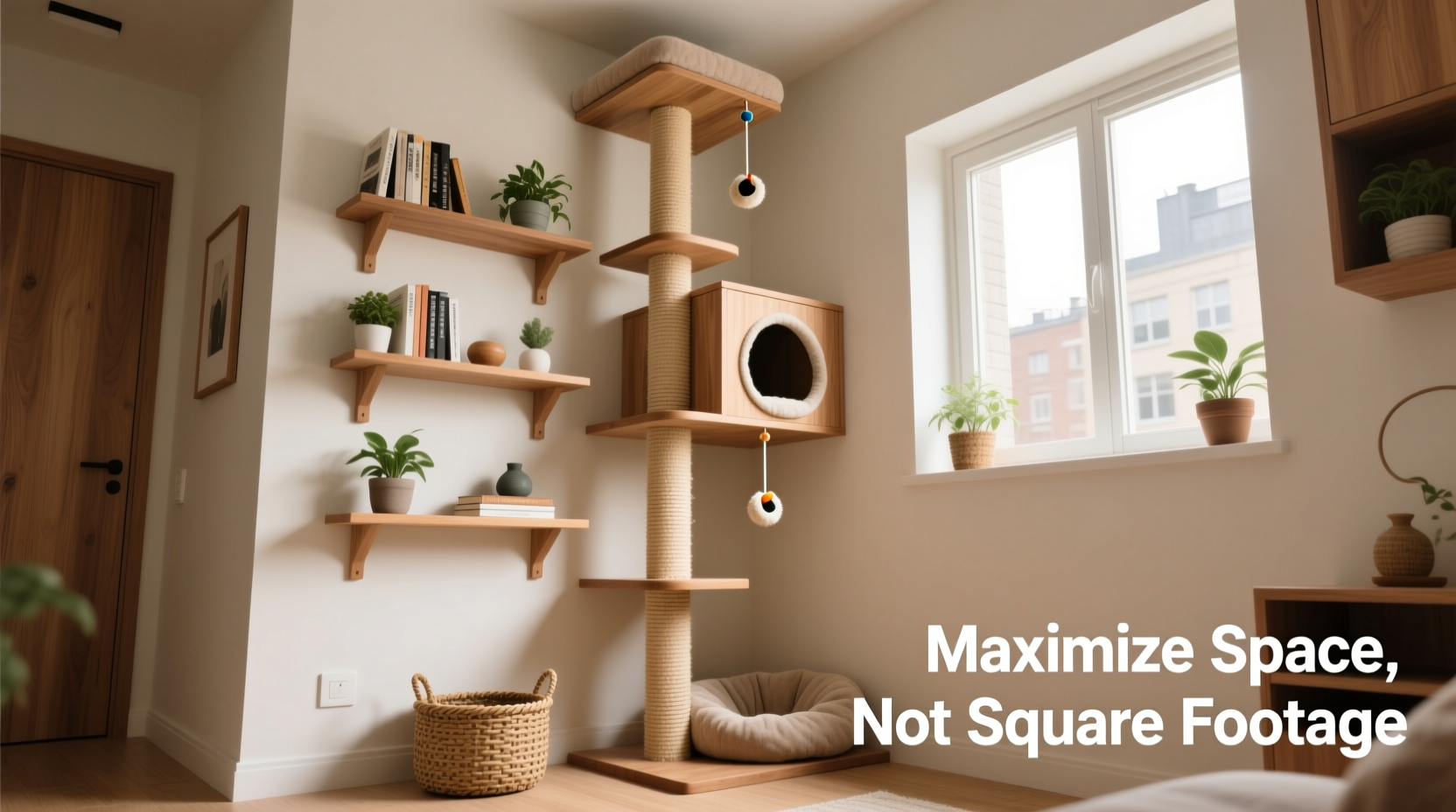
The most immediate difference between cat trees and wall shelves lies in how they use space. Cat tree towers are freestanding structures that occupy floor area, typically ranging from 2 to 4 square feet depending on size and complexity. Even compact models require a stable base to prevent tipping, meaning they can't fully eliminate ground presence.
In contrast, wall-mounted shelves attach directly to walls, transferring weight and activity upward. This eliminates floor footprint almost entirely, freeing up valuable surface area for furniture, walking paths, or storage. A full circuit of cat shelves might span 6–8 feet along two or three walls but take up zero floor space when properly installed.
Tip: Measure your room’s perimeter wall length before designing a shelf layout—this determines how much continuous climbing space you can create.For studios under 500 sq ft, wall shelves often provide superior space optimization. They turn unused vertical zones into functional cat territory without sacrificing open floor plans. However, this advantage depends on having structurally sound walls (preferably over studs) and sufficient height clearance—typically at least 7 feet.
Structural & Installation Considerations
Installation complexity is a major factor in choosing between these systems. Cat tree towers are plug-and-play: unpack, assemble, place, and your cat can use it immediately. Most require no tools or wall modifications, making them ideal for renters or those avoiding permanent changes.
Wall-mounted shelves, however, demand more effort. Proper installation requires locating wall studs, using appropriate anchors or screws, and ensuring each shelf supports 15–20 pounds or more. Incorrect mounting risks collapse, especially if cats jump or land with force. Floating-style shelves may look sleek but require precise leveling and reinforcement.
That said, modern modular systems like Kittywalk or Catsby offer pre-designed kits with detailed instructions and hardware, reducing guesswork. Some even allow staggered heights and corner units for maximum coverage. But unlike cat trees, wall shelves are not easily moved or reconfigured without leaving holes.
“Wall-mounted systems distribute activity vertically, which is essential in small homes where horizontal space is limited. When installed correctly, they’re as safe as freestanding units.” — Dr. Lena Reyes, Feline Behavior Specialist
Comparison Table: Key Features at a Glance
| Feature | Cat Tree Tower | Wall-Mounted Shelves |
|---|---|---|
| Floor Space Used | Yes (2–4 sq ft average) | No (only wall footprint) |
| Installation Effort | Low (tool-free assembly) | High (drilling, stud-finding) |
| Portability | High (easy to move) | Low (permanent fixtures) |
| Customization | Limited (fixed design) | High (modular, scalable) |
| Cost (Average) | $80–$200 | $100–$300 (full set) |
| Safety Risk | Tipping if unsecured | Collapse if poorly mounted |
Behavioral Support and Cat Preferences
Cats are natural climbers and observers. They seek high vantage points to monitor their environment, rest safely, and escape perceived threats. Both cat trees and wall shelves fulfill this instinct, but in different ways.
Cat tree towers often include enclosed cubbies, scratching posts, and dangling toys—features that encourage play, claw maintenance, and hiding. These multi-functional designs cater to a range of behaviors in one unit. The central post also provides an excellent surface for scratching, which many cats prefer over flat cardboard alternatives.
Wall shelves, while less feature-rich per unit, allow for greater route variety. Cats can leap from shelf to shelf, creating a “cat superhighway” around the room. This promotes exercise, mental stimulation, and territorial ownership. Strategic placement near windows turns shelves into premium bird-watching decks, enhancing enrichment.
However, not all cats adapt easily to wall systems. Older, arthritic, or nervous cats may find jumping between elevated platforms intimidating. In such cases, a cat tree with gradual ramps or lower platforms offers safer access. Kittens, on the other hand, often thrive on the challenge and freedom of wall routes.
Mini Case Study: Small Studio Apartment in Seattle
Maria, a graphic designer living in a 420 sq ft Seattle studio, struggled to balance her work setup with her rescue cat Milo’s needs. Her original cat tree occupied a corner she needed for a desk extension. After researching options, she installed a U-shaped shelf system along three walls, starting at 18 inches above the floor and ascending in 12-inch increments.
The change freed up 3.5 sq ft of floor space—enough to add a pull-out guest bed underneath her desk. Milo adapted within a week, using the highest shelf by the window as his daytime lookout. Maria added a hammock shelf near the top for extra comfort. She noted improved sleep patterns in Milo, likely due to increased security and stimulation.
“I was skeptical about drilling into the walls,” Maria said, “but the shelves blend with my decor, and Milo acts like he owns the apartment—which, honestly, he does.”
Step-by-Step Guide: Choosing and Installing the Right System
Follow this sequence to make an informed decision tailored to your space and cat:
- Assess Your Room Layout: Sketch your room and mark doors, furniture, and windows. Identify wall segments suitable for mounting (avoid shared or hollow walls).
- Evaluate Cat Mobility: Consider age, agility, and confidence. Senior cats may need lower starting points or backup ramps.
- Determine Budget and Commitment: Decide whether you want a temporary or long-term solution. Renters may prefer cat trees unless landlord approval is possible.
- Choose Configuration: For wall shelves, plan a loop or zigzag pattern. Start low (12–18”) and increase height gradually. Include at least one wide shelf for lounging.
- Install Safely: Use a stud finder and heavy-duty screws. Anchor every shelf into at least two studs. Test stability with firm pressure before allowing cat access.
- Introduce Gradually: Lure your cat with treats or catnip. Place familiar bedding on the lowest shelf to build confidence.
- Monitor and Adjust: Watch how your cat uses the space. Add steps or reduce gaps if jumps seem risky.
Hybrid Approach: Best of Both Worlds?
Some owners successfully combine both systems. A compact cat tree can anchor one corner, offering scratching and enclosed rest areas, while wall shelves extend the climbing network toward windows or bedrooms. This hybrid model maximizes behavioral variety while minimizing floor impact.
For example, a low-profile cat tree (under 4 ft tall) paired with three floating shelves creates a connected pathway. The tree serves as a launch point, reducing the need for high initial shelf placement. This is particularly effective in homes with young, energetic cats who enjoy complex routes.
The downside is cost and visual clutter. Too many elements can make a small space feel busy. Stick to cohesive materials—natural wood, neutral tones—and avoid overcrowding walls.
Frequently Asked Questions
Can wall-mounted shelves support large or heavy cats?
Yes, provided they are anchored into wall studs with appropriate hardware. Most quality shelves support 20+ lbs. For heavier cats (over 15 lbs), opt for wider platforms (at least 12 inches deep) and shorter distances between shelves to minimize jump strain.
Are cat trees obsolete in small spaces?
No. Modern compact cat trees are designed specifically for small homes, some as narrow as 18 inches wide. If wall mounting isn’t feasible due to rental restrictions or wall type, a slim tower remains a viable, self-contained option.
How do I clean wall-mounted shelves?
Most shelves can be wiped with a damp cloth and mild detergent. Removable cushion covers (if included) should be machine-washed monthly. Unlike cat trees with fabric-covered posts that trap odors, smooth-surface shelves are easier to sanitize regularly.
Final Checklist Before You Buy
- ✅ Measure available floor and wall space
- ✅ Confirm wall type (drywall, plaster, stud access)
- ✅ Assess your cat’s age, weight, and mobility
- ✅ Check rental agreement for drilling permissions
- ✅ Set a realistic budget (include tools if DIY)
- ✅ Choose materials that match your home aesthetic
- ✅ Plan a safe, logical climbing path
- ✅ Verify product weight limits and customer reviews
Conclusion: Elevate Smartly, Live Fully
When maximizing small spaces, wall-mounted cat shelves generally outperform traditional cat tree towers in terms of floor space preservation and design flexibility. They transform underused vertical areas into dynamic cat environments, supporting natural behaviors without compromising human functionality. However, cat trees remain valuable—especially for renters, multi-cat households needing multiple stations, or cats requiring integrated scratching and shelter.
The smart choice isn’t always one or the other. By evaluating your space, your cat’s needs, and your willingness to install permanent fixtures, you can select a solution that enhances both feline happiness and human comfort. In small homes, thoughtful design doesn’t mean sacrifice—it means elevating life, literally and figuratively.
🚀 Ready to reclaim your floor space? Start by measuring your walls and observing your cat’s favorite perching spots. Share your setup ideas or ask questions in the comments—let’s build smarter homes for cats and humans alike.








