For indoor cats, environmental enrichment is not a luxury—it’s a necessity. Without access to the natural stimuli of the outdoors, felines can become bored, stressed, or even develop behavioral issues. Two popular tools for enhancing indoor cat well-being are cat grass and catnip. Both are widely available, easy to grow, and frequently marketed as essential for feline happiness. But which one actually keeps cats more engaged and supports their long-term health? The answer isn’t always straightforward, as it depends on individual cat preferences, biological responses, and specific wellness goals.
This comprehensive comparison dives into the science, behavior, and practical use of both cat grass and catnip. Whether you're a new cat owner or a seasoned pet parent, understanding the differences—and how to use them effectively—can make a meaningful difference in your cat’s daily life.
Understanding Cat Grass: What It Is and Why Cats Love It
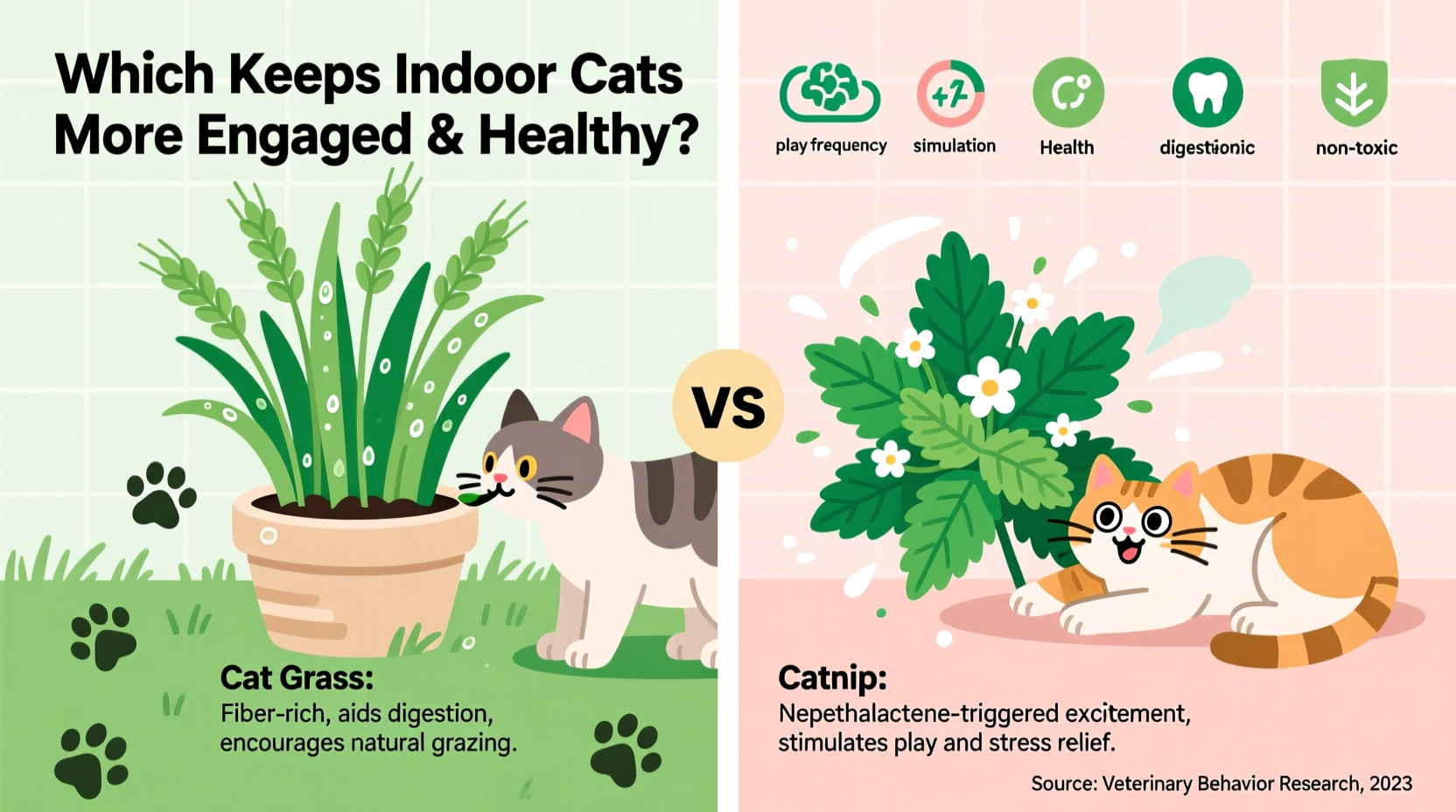
Cat grass typically refers to young cereal grasses such as wheatgrass, oat grass, barley, or rye. These are non-toxic, edible greens grown specifically for cats. Unlike outdoor lawn grass, which may be contaminated with pesticides or fertilizers, cat grass is cultivated in clean, controlled conditions.
Cats don’t have a digestive system designed to process plant matter efficiently, yet many still consume grass regularly. Research suggests several reasons for this instinctive behavior:
- Digestive aid: Grass acts as a mild emetic, helping cats expel indigestible materials like fur or feathers through vomiting. It can also promote bowel movement by adding fiber.
- Natural instinct: In the wild, small prey often has plant material in its stomach. Consuming grass may mimic this ancestral dietary exposure.
- Folic acid boost: Chlorophyll in fresh grass contains folic acid (vitamin B9), which supports oxygen transport in the blood and overall cellular function.
Unlike catnip, cat grass does not produce a psychoactive effect. Instead, its appeal lies in physical sensation and subtle nutritional benefits. Most cats chew it gently, showing calm, focused behavior rather than hyperactivity.
Tip: Rotate batches of cat grass every 7–10 days to ensure freshness and prevent mold growth.The Science Behind Catnip: How It Affects Feline Behavior
Catnip (Nepeta cataria) is a member of the mint family and contains a volatile oil called nepetalactone. When inhaled, this compound binds to receptors in the cat’s nasal tissue, stimulating sensory neurons that influence the amygdala and hypothalamus—brain regions involved in emotion and behavior.
The result is a temporary, euphoric reaction seen in about 50–70% of cats. Common behaviors include:
- Rubbing, rolling, and chin-marking the source
- Hyperactive running or “zoomies”
- Vocalizing or meowing excitedly
- Temporary zoning out or appearing dazed
Reactions usually last 5 to 15 minutes, after which cats become temporarily immune to catnip’s effects for roughly 30 minutes. Kittens under 6 months and senior cats are less likely to respond, suggesting a developmental and genetic component.
“Catnip doesn’t work for all cats, but when it does, it provides a safe, natural way to stimulate play and reduce stress.” — Dr. Lydia Lee, Veterinary Ethologist
Importantly, catnip is not addictive or harmful in moderation. However, overuse can lead to diminished response or mild gastrointestinal upset if ingested in large amounts.
Direct Comparison: Cat Grass vs Catnip
To determine which option better supports engagement and health, it’s essential to evaluate both based on key criteria. The table below summarizes critical differences:
| Feature | Cat Grass | Catnip |
|---|---|---|
| Primary Benefit | Digestive support, fiber intake, folic acid | Behavioral stimulation, stress relief, play encouragement |
| Effect on Cats | Calm, chewing-focused, occasional vomiting | Excited, playful, sometimes aggressive or hyperactive |
| Response Rate | ~80–90% of cats show interest | ~50–70% of cats are affected |
| Safety Profile | Very high; non-toxic, edible | High; safe in moderation, avoid daily overuse |
| Lifespan of Use | Reusable for 7–14 days (regrows slightly) | Single-use burst; loses potency quickly |
| Growth & Maintenance | Requires soil, light, regular watering | Typically used dried; no maintenance needed |
| Better For | Daily health, digestion, routine enrichment | Play sessions, mental stimulation, bonding time |
While catnip excels at triggering immediate, observable excitement, cat grass offers consistent, low-level engagement that supports physiological health. Neither replaces toys, scratching posts, or human interaction—but both enhance an enriched environment.
Real-World Example: How One Household Balanced Both
In Portland, Oregon, Sarah Thompson adopted two indoor rescue cats: Luna, a shy 3-year-old tabby, and Milo, an energetic 1-year-old tuxedo. Initially, both showed little interest in toys or climbing structures. After consulting her veterinarian, Sarah introduced catnip and cat grass separately to observe reactions.
Milo responded strongly to catnip—rolling, kicking, and chasing imaginary prey for ten minutes after sniffing a stuffed toy sprayed with nepetalactone. Luna, however, ignored it completely. But both cats began nibbling on a small pot of wheatgrass Sarah placed near the sunlit window.
Over four weeks, Sarah noticed improvements: Luna started grooming more regularly and had fewer hairball episodes. Milo became more attentive during play sessions when catnip was used strategically before interactive games. By rotating cat grass weekly and using catnip only twice a week, she created a balanced enrichment routine tailored to each cat’s temperament.
This case illustrates a crucial point: combining both options often yields better results than relying on either alone.
Step-by-Step Guide to Using Cat Grass and Catnip Effectively
Maximizing the benefits of cat grass and catnip requires more than just offering them randomly. Follow this timeline to integrate them into your cat’s routine responsibly:
- Week 1: Introduce cat grass first. Grow a small batch indoors using a kit or seeds. Place it in a quiet, accessible spot. Observe whether your cat shows interest in chewing it.
- Week 2: Monitor digestion and behavior. Note any changes in vomiting frequency, stool consistency, or signs of enjoyment (e.g., gentle chewing, relaxed posture).
- Week 3: Introduce catnip cautiously. Use a small amount of dried catnip or a catnip-infused toy. Limit exposure to 10–15 minutes. Watch for positive (playfulness) or negative (overstimulation, aggression) reactions.
- Week 4: Assess individual response. Determine if your cat is a responder to catnip. If not, don’t force it. Continue providing cat grass as a daily option.
- Ongoing: Rotate and refresh. Replace cat grass every 7–10 days. Offer catnip no more than 2–3 times per week to maintain sensitivity.
Expert Recommendations and Best Practices
Veterinarians and animal behaviorists emphasize that enrichment should be varied and tailored. Dr. Karen Fujimoto, a feline behavior consultant, advises: “Think of catnip as a ‘treat’ for the mind and cat grass as a ‘snack’ for the gut. Both have roles, but they shouldn’t dominate the enrichment plan.”
She recommends pairing catnip with playtime to channel excitement productively. For example, sprinkle a pinch on a feather wand before initiating a chase game. This strengthens the bond between cat and owner while burning off excess energy.
With cat grass, placement matters. Position pots near windowsills where cats already spend time lounging. Natural light encourages growth and increases the likelihood of interaction. Avoid placing grass in high-traffic areas where it might get trampled.
“Enrichment isn’t one-size-fits-all. Some cats need stimulation; others need calm. Match the tool to the temperament.” — Dr. Karen Fujimoto, Feline Behavior Consultant
Common Mistakes to Avoid
- Using old or stale catnip: Nepetalactone degrades over time. Store in an airtight container in the freezer to preserve potency.
- Overfeeding cat grass: While safe, excessive consumption can lead to vomiting or diarrhea. Moderate access if your cat tends to overindulge.
- Expecting all cats to react the same: Genetics determine catnip sensitivity. Don’t assume lack of response means disinterest or poor quality.
- Placing grass in dirty or humid areas: Mold can grow quickly on damp soil. Ensure good airflow and clean containers between plantings.
Frequently Asked Questions
Can I give my cat both cat grass and catnip at the same time?
Yes, but monitor your cat’s reaction. Some cats enjoy alternating between chewing grass and playing with catnip, while others may become overstimulated. It’s best to offer them separately at first to assess individual preferences.
Is cat grass the same as catnip?
No. Cat grass refers to edible cereal grasses like wheatgrass or oat grass, consumed for digestive and nutritional benefits. Catnip is a mint-family herb that triggers a temporary behavioral response due to nepetalactone. They serve different purposes and are not interchangeable.
What if my cat doesn’t like either?
Not all cats are interested in these plants—and that’s normal. Try alternatives like silver vine, valerian root, or interactive puzzle feeders. Enrichment comes in many forms, and some cats prefer tactile or auditory stimuli over botanical ones.
Final Thoughts: Choosing Based on Health and Engagement
When comparing cat grass and catnip, the choice isn’t about declaring one superior overall—but rather determining which serves your cat’s unique needs more effectively. Cat grass promotes consistent, gentle engagement and supports digestive health, making it ideal for daily inclusion. Catnip delivers intense, short-term stimulation that boosts play and reduces anxiety, but only works for a portion of cats and shouldn’t be overused.
The most effective approach combines both, using cat grass as a baseline wellness tool and catnip as a targeted enrichment booster. Together, they contribute to a more dynamic, satisfying indoor environment—one that respects feline instincts while supporting long-term physical and mental health.
💬 Have you tried cat grass or catnip with your indoor cat? Share your experience, tips, or questions in the comments to help fellow cat owners create happier, healthier homes!








