When it comes to taking your cat outside—whether for supervised walks, patio lounging, or training adventures—the debate between using a cat bib collar versus a full harness often surfaces. Both have their advocates, but which one truly offers better safety, control, and peace of mind? While some argue that a simple bib-style collar is sufficient, others swear by the security of a well-fitted harness. The truth lies in understanding how each option performs under real-world conditions, from escape risk to injury prevention.
This article breaks down the practical differences between bib collars and harnesses, evaluates their safety records, and presents expert insights so you can make an informed decision based on your cat’s behavior and lifestyle—not marketing claims.
Understanding the Basics: What Are Bib Collars and Harnesses?
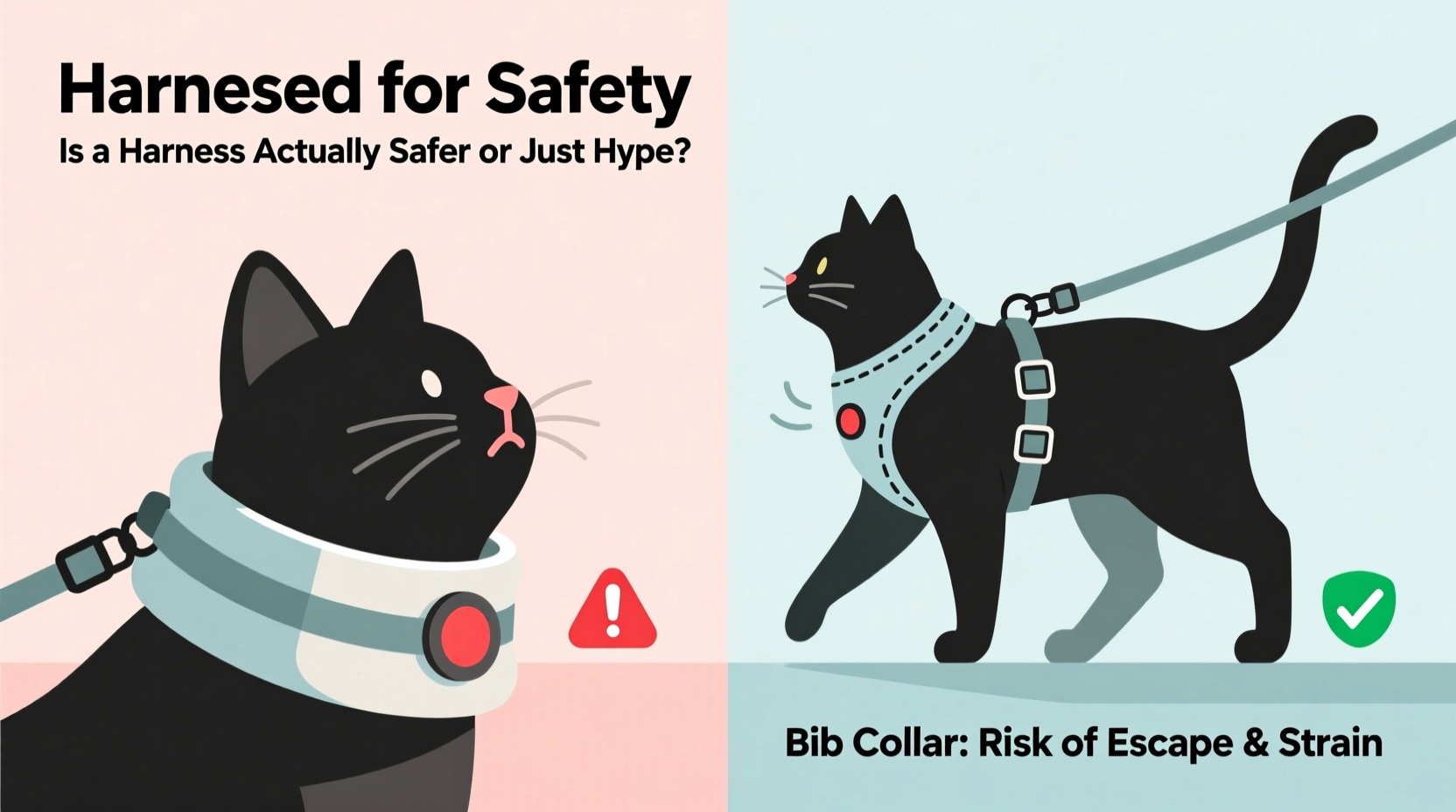
A **bib collar** (also known as a breakaway cat bib) is typically a lightweight accessory that attaches like a regular collar but features a small fabric panel extending down over the chest. Designed primarily to prevent cats from reaching their shoulders with their teeth or claws, these were originally created to stop self-grooming after surgery. However, some pet owners now use them during outdoor time under the assumption they reduce the chance of escape.
In contrast, a **cat harness** wraps around both the neck and torso, distributing pressure across multiple points. Most modern designs are H-style or figure-eight, securing over the shoulders and behind the front legs. When paired with a leash, harnesses allow controlled outdoor movement while minimizing the risk of slipping out.
The key difference isn’t just design—it's function. A bib collar doesn't restrict forward motion or offer attachment points for leashes. It may visually resemble part of a harness system, but structurally, it lacks the containment needed for safe outdoor excursions.
Safety Comparison: Escape Risk, Injury, and Real-World Performance
One of the most critical factors in choosing between a bib collar and a harness is whether your cat can escape from it. Cats are masters of contortion, and even a slight gap can mean the difference between a safe stroll and a lost pet.
Bib collars rely solely on a breakaway clasp at the neck. If a cat panics or gets snagged, the collar releases—a safety feature meant to prevent strangulation. But this same mechanism means there’s no reliable way to attach a leash. Without tethering, any outdoor use becomes uncontrolled, making the bib collar unsuitable for walks.
Harnesses, when properly fitted, significantly reduce escape chances. They distribute tension across the body rather than concentrating it on the throat. According to Dr. Sarah Wooten, DVM, and veterinary contributor to *PetMD*, “A well-designed harness reduces tracheal stress and gives owners much greater control, especially in high-anxiety situations.”
“A cat’s windpipe is delicate. Even brief pressure from pulling on a neck-only device can cause long-term damage. Harnesses spread force safely across the chest.” — Dr. Lindsey Bullen, Board-Certified Veterinary Behaviorist
Common Scenarios Where Safety Matters
- Sudden frights: A loud noise or approaching dog can trigger flight instincts. Harnesses resist slippage; collars—even breakaways—can come off mid-flight.
- Climbing attempts: Cats may try to scale fences or trees. A harness provides leverage for redirection; a bib collar offers no grip or restraint.
- Water exposure: Wet fur shrinks, increasing the chance a collar slips off. Harnesses maintain fit more reliably when damp.
Comparative Analysis: Bib Collar vs Cat Harness
| Feature | Bib Collar | Cat Harness |
|---|---|---|
| Leash Attachment | No | Yes (standard) |
| Escape Risk | High (neck-only hold) | Low (multi-point support) |
| Pressure Distribution | Poor (localized to neck) | Excellent (across chest and shoulders) |
| Suitable for Walks? | No | Yes |
| Breakaway Safety | Yes | Sometimes (model-dependent) |
| Comfort for Extended Wear | Moderate | High (if well-fitted) |
| Best Use Case | Indoor post-surgery protection | Supervised outdoor activity |
Real Example: Bella the Escape Artist
Take the case of Bella, a 3-year-old tabby from Portland, Oregon. Her owner, Mark, believed a bib collar was enough for short backyard visits. One afternoon, a squirrel darted past, startling Bella. She bolted toward a chain-link fence, wriggled through a gap, and vanished within seconds. The bib collar remained intact—but offered zero resistance.
After recovering Bella three days later (thanks to a microchip), Mark invested in a Raptor-style harness and began leash training. Six months later, Bella walks confidently around the neighborhood. “I thought I was being cautious,” Mark said. “But the bib gave me false confidence. The harness changed everything.”
This story reflects a common pattern: well-intentioned owners underestimate feline agility and overestimate minimal restraints.
Step-by-Step: How to Choose and Fit a Safe Outdoor System
- Assess your cat’s temperament: Is she curious, skittish, or bold? Nervous cats need slower acclimation to any gear.
- Select a harness type: Opt for an H-style or figure-eight model made from breathable mesh. Avoid vests that restrict shoulder movement.
- Measure accurately: Use a soft tape measure around the neck and girth (behind front legs). Refer to manufacturer sizing charts.
- Try it on indoors: Let your cat wear the harness for short periods with treats and praise. Watch for signs of distress or chafing.
- Check fit daily: Ensure straps don’t dig into armpits or rub the neck. Adjust as needed.
- Introduce the leash gradually: Start in a quiet room, then move to a secure patio before attempting walks.
- Never leave unattended: No harness is 100% escape-proof. Supervision is non-negotiable outdoors.
FAQ: Common Questions About Cat Collars and Harnesses
Can I use a bib collar instead of a harness for walking my cat?
No. Bib collars lack leash attachments and do not provide adequate control. Attempting to walk a cat with only a bib collar is unsafe and likely to result in escape.
Are breakaway collars still necessary if my cat wears a harness?
Yes—if your cat wears a collar at all times. Vets recommend breakaway collars with ID tags for everyday indoor wear, even if you use a separate harness for outings. This ensures identification remains accessible without compromising safety.
Do all cats learn to walk on a harness?
Not all, but most can adapt with patience. Some cats never enjoy walking, and that’s okay. The goal is enrichment, not forcing compliance. Try stroller rides or enclosed catio spaces as alternatives.
Final Verdict: Is the Harness Safer—or Just Hype?
The evidence is clear: when used correctly, a cat harness is objectively safer than a bib collar for outdoor activities. It reduces escape risk, prevents neck strain, allows for controlled movement, and supports responsible supervision. While bib collars serve a purpose in medical recovery settings, they are not designed for, nor capable of, managing outdoor hazards.
The idea that a bib collar offers meaningful protection during outdoor access is more myth than reality. Marketing images showing cats wearing decorative bibs in gardens may look charming, but they often misrepresent actual safety standards.
If you're serious about giving your cat outdoor experiences, invest time in proper harness training. Your cat’s life could depend on it.
💬 Your cat’s safety matters. Share this guide with fellow cat owners who might be relying on outdated or misleading advice. Have you made the switch from collar to harness? Tell us your story in the comments.








