
For most cats, a trip to the veterinarian begins with anxiety long before the car even starts. The carrier is often the first trigger—its sudden appearance can send a cat bolting under the bed. But what if the type of carrier used could actually reduce that stress? As more pet owners seek low-stress travel solutions, the debate between cat backpack carriers and traditional hard-shell carriers has gained traction. While both have their place, understanding how each affects your cat’s emotional state during vet visits is essential for making an informed decision.
The goal isn’t just to transport your cat—it’s to do so in a way that minimizes fear, preserves trust, and supports long-term cooperation with veterinary care. This article compares backpack and traditional carriers across key factors like design, mobility, sensory exposure, and behavioral response, helping you choose the option that best supports your cat’s mental well-being.
Design and Structure: How Form Affects Function
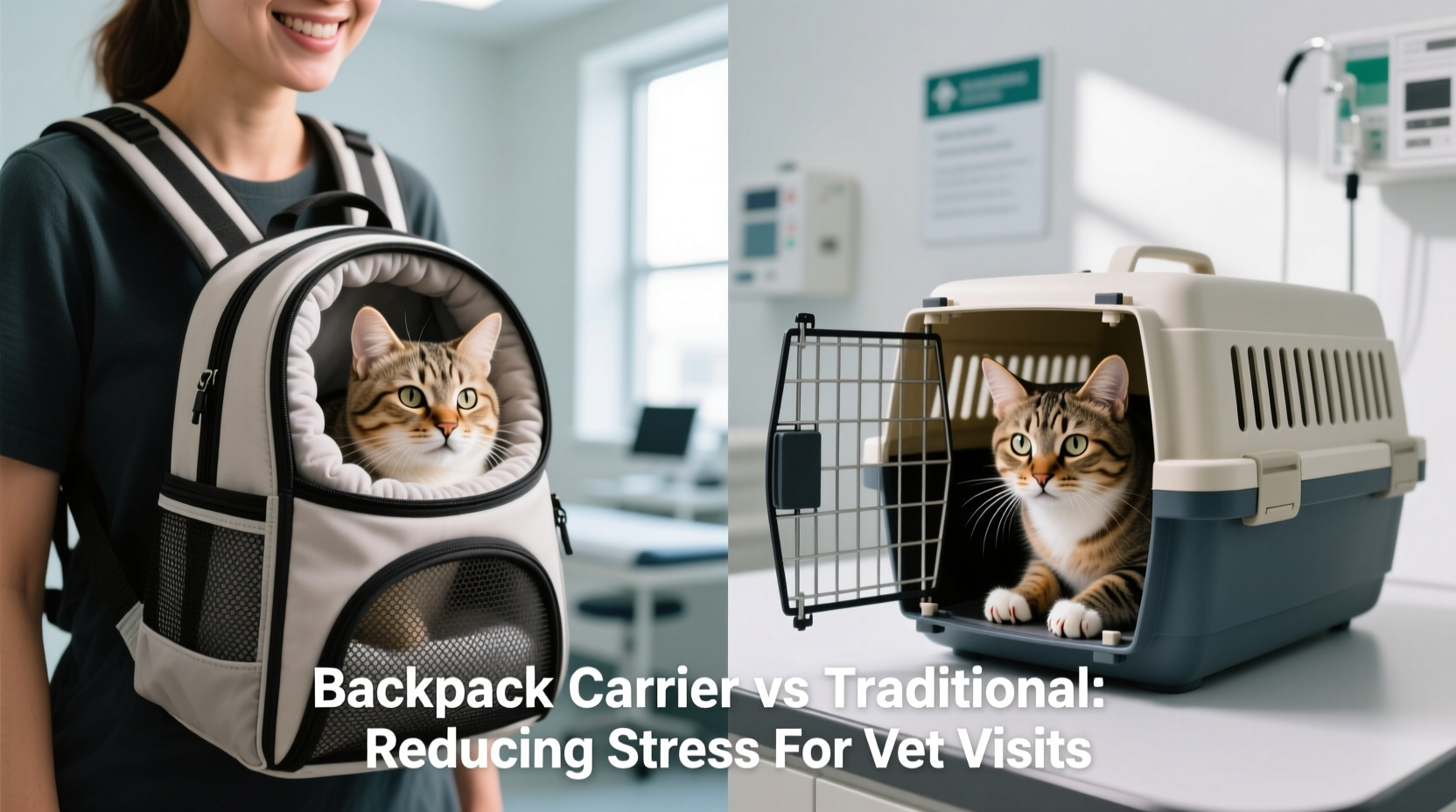
The physical construction of a carrier plays a major role in how secure and calm a cat feels inside. Traditional carriers are typically made from rigid plastic with a front or top door, while backpack carriers resemble hiking packs with padded straps, ventilation panels, and multiple access points.
Traditional carriers offer durability and easy cleaning. Their solid walls block visual stimuli, which can be beneficial for easily overstimulated cats. However, many models lack adequate airflow, and the single-door design often forces owners to reach in from the front, potentially increasing resistance during loading.
Backpack carriers, by contrast, are designed with ergonomics and cat comfort in mind. Most feature mesh windows on multiple sides, allowing airflow and controlled visibility. Many open from the top and back, enabling easier placement of the cat without forcing them head-first into confinement. Some high-end models even include removable inner hammocks or padding for added comfort.
Tip: Always introduce any new carrier gradually—leave it out with treats inside so your cat associates it with positive experiences.Sensory Experience: What Your Cat Sees, Hears, and Feels
Cats are highly sensitive to changes in their environment. During transport, sounds, motion, and visual input can significantly influence stress levels. The difference in sensory exposure between backpack and traditional carriers is one of the most critical distinctions.
Traditional carriers usually limit visibility. While this might seem calming, complete sensory deprivation can increase uncertainty. A cat unable to see where they’re going may feel more vulnerable, especially when jostled or placed in unfamiliar settings like a clinic waiting room.
Backpack carriers often provide panoramic views through breathable mesh. This allows cats to observe their surroundings at eye level, reducing disorientation. Being elevated in a backpack also mimics a natural vantage point—cats instinctively prefer higher ground for security. When worn close to the body, the rhythmic motion of walking can simulate soothing movement, similar to being carried by a mother cat.
“Cats rely heavily on environmental cues to assess safety. Controlled visual access during transit can reduce perceived threat and lower cortisol levels.” — Dr. Lena Torres, Feline Behavior Specialist
However, too much exposure can backfire. Overstimulation from loud environments or direct eye contact with strangers may heighten anxiety. For such cases, some backpacks come with privacy flaps or coverable mesh panels, offering flexibility to adjust visibility as needed.
Mobility and Handling: Impact on Stress During Transit
How the carrier is moved—from home to car to clinic—directly influences your cat’s experience. Traditional carriers are often bulky and awkward to carry, especially with one hand while managing leashes, bags, or doors. This can lead to jerky movements or unsteady handling, which cats detect immediately.
Backpack carriers distribute weight evenly across the shoulders and back, allowing hands-free mobility. This stability reduces sudden shifts and vibrations during walking. Owners can move smoothly through parking lots or clinic hallways without struggling to balance the carrier.
In vehicles, traditional carriers are typically placed on seats or floors, where they can slide during turns. Backpacks, when removed, should still be secured in a stable location—but their compact size makes them easier to position safely. Some backpack models include seatbelt loops for added security.
Another advantage of backpacks is proximity to the owner’s scent and heartbeat. Worn against the torso, the carrier becomes an extension of familiar territory. Studies suggest that olfactory and auditory familiarity can significantly reduce acute stress in confined animals.
Comparison Table: Backpack vs Traditional Carrier Features
| Feature | Backpack Carrier | Traditional Carrier |
|---|---|---|
| Weight Distribution | Evenly distributed (shoulder straps) | Top-heavy, carried by handle |
| Visibility | High (mesh panels, 360° view) | Low (solid walls, limited window) |
| Ventilation | Excellent (multiple mesh zones) | Fair to poor (small vents) |
| Loading Ease | Top and rear access options | Front or top only; often restrictive |
| Security | Zippered closures, anti-escape designs | Latch-based; prone to accidental opening |
| Suitability for Car Travel | Good (if secured properly) | Better (easier to anchor) |
| Stress Reduction Potential | High (proximity, visibility, motion) | Moderate (if acclimated early) |
Real-World Example: Managing a Fearful Cat’s Vet Visit
Sophie, a 4-year-old domestic shorthair, had a history of aggressive resistance at vet appointments. Her owner, Mark, used a standard plastic carrier that he would chase her down to load. Each visit ended with scratched hands and a traumatized cat.
After consulting a veterinary behaviorist, Mark switched to a top-loading backpack carrier. He left it open in the living room for two weeks, placing Sophie’s favorite blanket and treats inside daily. When it was time for her next check-up, he gently guided her in from above using a treat trail—no force required.
During the walk to the clinic, Sophie remained quiet, peering through the mesh but not vocalizing. Once inside, the carrier stayed on Mark’s lap, giving her a sense of continuity. The vet noted that Sophie was significantly calmer than in previous visits, requiring no sedation for routine procedures.
This case illustrates how carrier design, combined with proper acclimation, can transform a high-stress event into a manageable experience.
Step-by-Step Guide: Transitioning to a Low-Stress Carrier System
Switching carriers won’t help if your cat still fears the object itself. Use this timeline to build positive associations regardless of carrier type:
- Week 1: Place the carrier in a quiet area with the door off or fully open. Add soft bedding and treats inside daily.
- Week 2: Toss high-value treats (like freeze-dried chicken) into the carrier throughout the day. Reward any approach or sniffing.
- Week 3: Feed meals near the entrance, then gradually move the bowl deeper inside.
- Week 4: Close the door briefly while your cat is inside eating, then reopen after 10 seconds. Gradually increase duration.
- Day of Transport: Carry the closed carrier smoothly. Avoid sudden movements. Cover mesh panels if the environment is chaotic.
Expert Recommendations and Safety Considerations
Veterinary professionals increasingly advocate for carrier choices that prioritize psychological comfort. According to the American Association of Feline Practitioners (AAFP), minimizing stress during veterinary visits improves diagnostic accuracy and strengthens the human-animal bond.
Dr. Alicia Nguyen, DVM, explains: “A stressed cat releases adrenaline and cortisol, which can elevate heart rate and mask symptoms. If we can reduce transport stress, we get truer baselines and more cooperative patients.”
Safety remains paramount. While backpacks offer comfort benefits, they must meet escape-proof standards. Look for double zippers, reinforced stitching, and secure closures. Never use a backpack while driving—always transfer the cat to a securely fastened traditional-style carrier or place the backpack in a protected area.
Checklist: Choosing the Right Carrier for Low-Stress Vet Visits
- ✅ Allows gradual acclimation at home
- ✅ Provides adequate ventilation
- ✅ Enables top or rear entry to avoid forcing the cat forward
- ✅ Offers partial visibility without overexposure
- ✅ Is escape-resistant with secure fastenings
- ✅ Can be stabilized in a vehicle
- ✅ Fits within airline or clinic size requirements (if applicable)
- ✅ Includes washable, odor-resistant lining
Frequently Asked Questions
Can I use a backpack carrier for air travel?
Some backpack carriers meet IATA regulations for cabin pet travel, but not all. Check airline policies and ensure the carrier fits under the seat. Hard-sided traditional carriers are more commonly approved, though hybrid models now exist that combine backpack functionality with airline compliance.
Are backpack carriers safe if I fall or trip?
Well-designed backpacks have strong zippers and internal safety tethers. However, like any carrier, they depend on proper use. Avoid crowded areas when possible, and never leave the cat unattended in the pack. If balance is a concern, practice wearing the empty carrier first to adjust to the weight distribution.
My cat hates all carriers. Will switching types help?
Changing the carrier alone won’t solve deep-seated fear if the cat hasn’t been properly introduced to it. The key is desensitization—using positive reinforcement over time. A backpack may offer advantages, but success depends on consistent, patient training regardless of style.
Final Thoughts: Prioritizing Emotional Well-Being in Veterinary Care
The choice between a cat backpack carrier and a traditional carrier isn’t about convenience alone—it’s about empathy. Every aspect of a vet visit, starting with how the cat is transported, shapes their perception of safety. While traditional carriers have long been the norm, evolving designs reflect a growing understanding of feline psychology.
Backpack carriers, with their emphasis on visibility, stability, and closeness to the owner, often provide a gentler experience—especially for cats who respond well to environmental control and motion. Yet, the best carrier is ultimately the one your cat accepts, whether it’s soft or hard, worn or carried.
What matters most is consistency, preparation, and respect for your cat’s instincts. By choosing equipment that aligns with their natural behaviors and investing time in positive conditioning, you’re not just reducing stress for one trip—you’re building a foundation for lifelong cooperation with healthcare.
🚀 Ready to transform your cat’s next vet visit? Start today by rethinking the carrier—not as a cage, but as a sanctuary. Share your experience or tips in the comments to help other cat owners create calmer journeys.








