
Allergies to pets are a widespread issue, affecting millions of people worldwide. While many assume dogs are the top culprits due to their shedding and outdoor habits, the reality might surprise you: cat allergies are actually more common than dog allergies. According to the Asthma and Allergy Foundation of America, nearly 10% of the global population is allergic to cats, compared to about 5–8% for dogs. This disparity isn’t just anecdotal—it’s backed by biology, immunology, and environmental science. Understanding why cat allergies prevail can help individuals make informed decisions about pet ownership, indoor air quality, and allergy management.
The Science Behind Cat Allergens
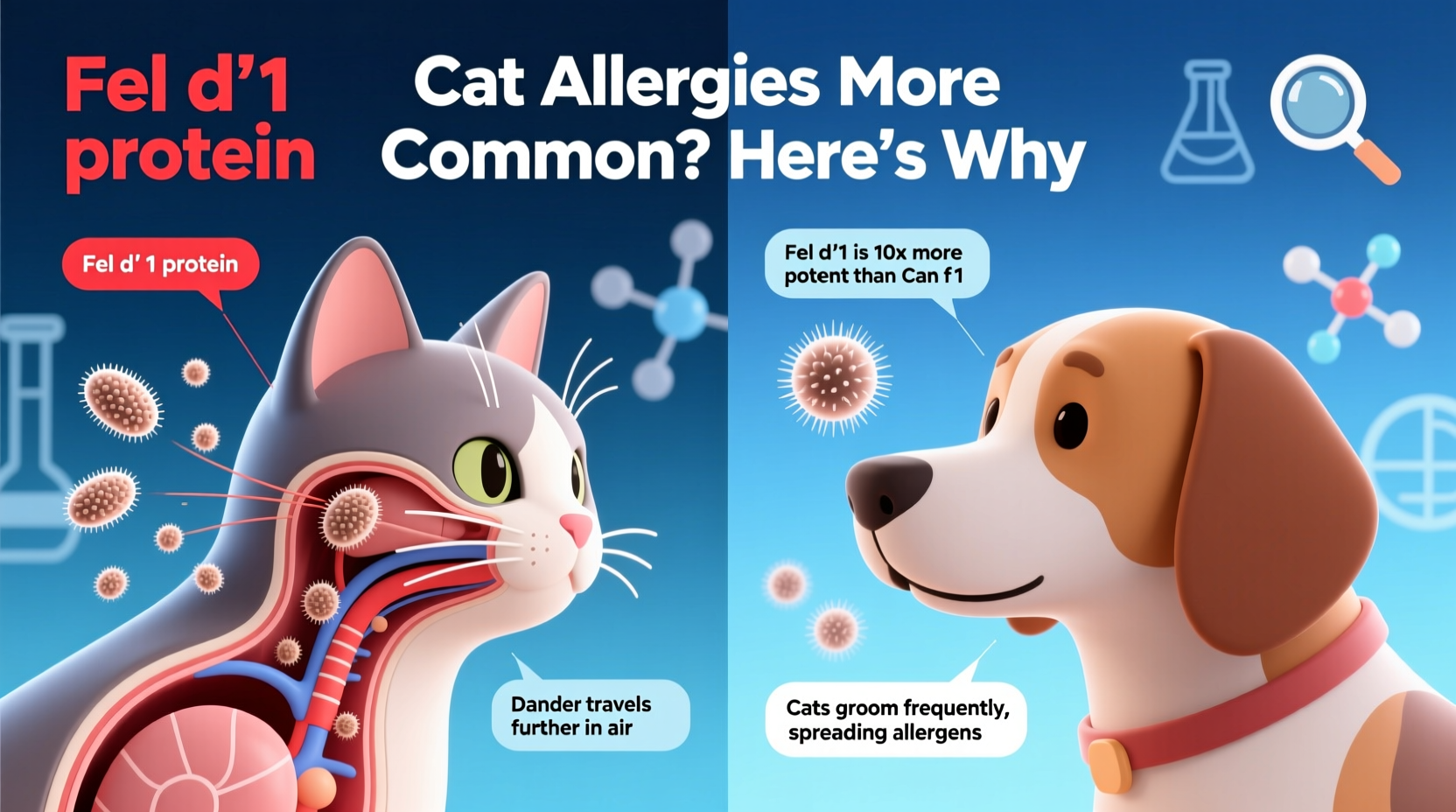
The primary cause of cat allergies lies in a specific protein called Fel d 1. This glycoprotein is produced mainly in a cat’s salivary and sebaceous glands. When cats groom themselves, they spread saliva across their fur, which then dries and flakes off into the environment as dander. Unlike larger particles, Fel d 1 is extremely lightweight and sticky, allowing it to remain airborne for hours and cling to clothing, furniture, and walls.
What makes Fel d 1 particularly potent is its stability. It resists breakdown from heat, humidity, and common cleaning agents. Studies have found traces of Fel d 1 in public buildings, schools, and even homes where no cats have ever lived—proof of how easily it spreads through human contact and ventilation systems.
“Fel d 1 is one of the most efficient allergens known to medicine. Its small size and resilience make it far more pervasive than dog allergens.” — Dr. Linda Cox, Board-Certified Allergist and Past President of the American College of Allergy, Asthma & Immunology
Why Cats Trigger More Reactions Than Dogs
Dog allergies are typically caused by proteins found in dander, saliva, and urine, such as Can f 1 and Can f 2. However, these proteins are generally heavier and less volatile than Fel d 1. They tend to settle faster and don’t travel as far through the air. In contrast, cat allergens can stay suspended in the air up to 30 times longer than dog allergens, increasing exposure risk even in spaces cats haven't directly entered.
Additionally, cats are more fastidious groomers than dogs. The average cat spends 30–50% of its waking hours grooming, constantly depositing allergen-rich saliva onto its coat. Dogs, while they do lick themselves, do so less frequently and often outdoors, reducing indoor allergen concentration.
Tip: Even short-haired or “hypoallergenic” cat breeds produce Fel d 1. No cat is truly non-allergenic.Comparing Cat and Dog Allergen Behavior
| Allergen Factor | Cat (Fel d 1) | Dog (Can f 1/2) |
|---|---|---|
| Size of Particles | Very small (micron-sized), stays airborne | Larger, settles quickly |
| Airborne Duration | Hours to days | Minutes to hours |
| Stability | High—resists cleaning and degradation | Moderate—breaks down more easily |
| Primary Source | Saliva and skin glands | Dander, saliva, urine |
| Transmission via Humans | Very high—sticks to clothes and hair | Moderate—less adhesive |
Real-World Exposure: A Mini Case Study
In a 2018 study conducted in suburban Chicago, researchers tested allergen levels in 120 homes—half with cats, half without. They found detectable Fel d 1 in 100% of homes with cats and, surprisingly, in 78% of homes without cats. One apartment unit, located above a neighbor’s cat-owning household, had Fel d 1 levels nearly matching those in homes with resident cats. Airflow through shared vents and tracking on shoes and clothing were identified as key transmission routes.
In contrast, Can f 1 was detected in only 42% of homes without dogs, suggesting that dog allergens are less likely to migrate between spaces. This case illustrates how deeply embedded cat allergens can become in urban and multi-unit living environments—even for those who avoid owning cats altogether.
Who’s Most at Risk?
Children and individuals with pre-existing respiratory conditions like asthma are especially vulnerable to cat allergens. Early-life exposure can influence allergy development, though research shows mixed outcomes: some studies suggest early exposure may build tolerance, while others link it to increased sensitization.
Genetics also play a role. People with a family history of atopy (a tendency to develop allergic diseases) are more likely to react to Fel d 1. Interestingly, women appear to report cat allergies more frequently than men, possibly due to closer physical interaction with pets or hormonal influences on immune response.
Practical Tips for Managing Cat Allergies
For those who love cats but suffer from allergies, complete avoidance isn’t always desirable—or necessary. With strategic interventions, many people successfully coexist with feline companions. Consider the following actionable steps:
Tip: Bathe your cat every 2–4 weeks using a veterinarian-approved hypoallergenic shampoo to reduce surface allergens.- Use HEPA air purifiers in bedrooms and main living areas to capture airborne allergens.
- Replace carpeting with hard flooring, which traps fewer allergens.
- Wash hands immediately after petting a cat and avoid touching your face.
- Keep cats out of bedrooms to create an allergen-reduced sleep zone.
- Wash bedding, curtains, and upholstery weekly in hot water (at least 130°F).
Step-by-Step Guide to Reducing Indoor Cat Allergens
- Assess Exposure: Identify high-contact areas (sofas, beds, carpets) where allergens accumulate.
- Upgrade Filtration: Install MERV 11–13 filters in HVAC systems and run fans continuously.
- Limit Access: Designate cat-free zones, especially sleeping areas.
- Clean Strategically: Vacuum with a HEPA-filter vacuum twice weekly; damp-mop hard surfaces.
- Consider Grooming: Wipe cats weekly with allergen-reducing wipes or have them professionally groomed.
- Consult an Allergist: Discuss immunotherapy (allergy shots) for long-term desensitization.
FAQ
Are there truly hypoallergenic cat breeds?
No cat breed is completely hypoallergenic. However, some breeds like the Siberian, Balinese, and Russian Blue produce lower levels of Fel d 1. Individual variation exists, so spending time with a specific cat before adoption is crucial.
Can air purifiers eliminate cat allergens completely?
Air purifiers with true HEPA filters can remove up to 99.97% of airborne particles, including Fel d 1, but they don’t eliminate settled dander. They should be used alongside regular cleaning and source control.
Do dog allergies ever go away?
While rare, some children may outgrow pet allergies. Adults typically see gradual improvement through immunotherapy, but spontaneous resolution is uncommon.
Conclusion
The prevalence of cat allergies over dog allergies isn’t a myth—it’s a reflection of biological and environmental realities. Fel d 1’s unique properties make it a formidable allergen, capable of spreading far beyond the pet’s immediate space. Yet, with proper knowledge and proactive measures, allergy sufferers don’t need to give up on feline companionship. From air filtration to smart home design, effective strategies exist to reduce exposure and improve quality of life.
💬 Have experience managing cat allergies at home? Share your tips in the comments and help others live better with their beloved pets.








