For decades, home cooks have debated the merits of cast iron skillets versus non-stick pans. One promises unmatched heat retention and searing power; the other offers effortless food release and quick cleanup. But beneath the surface lies a deeper question: is cast iron maintenance as daunting as its reputation suggests? And is non-stick truly as low-maintenance as advertised? The answer isn’t black and white—it depends on how you cook, how much time you’re willing to invest, and what kind of results you expect from your kitchen tools.
This article breaks down the real-world differences between cast iron and non-stick cookware, focusing on maintenance, longevity, cooking performance, and health considerations. By the end, you’ll understand not just which pan is easier to clean—but which one earns its place in your kitchen over time.
The Myth of High-Maintenance Cast Iron
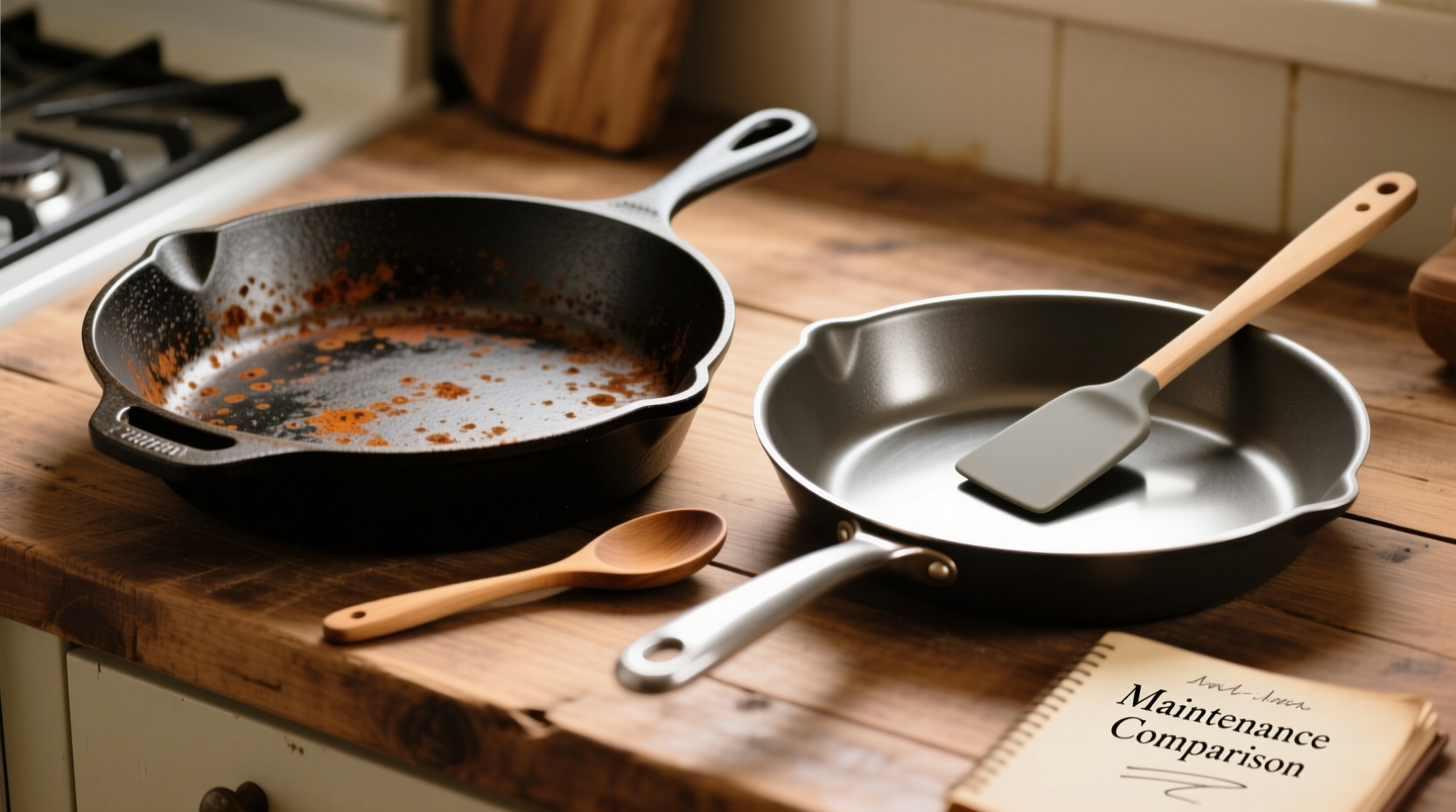
Many people avoid cast iron because they’ve heard it’s high maintenance—delicate to clean, prone to rust, and difficult to season. But this perception often comes from outdated advice or misuse. In reality, a well-cared-for cast iron skillet becomes easier to maintain over time, thanks to its self-reinforcing seasoning layer.
Seasoning is the polymerized oil layer that forms a natural non-stick surface through repeated heating and oiling. Unlike synthetic non-stick coatings, this layer improves with use. Once established, it resists sticking and protects the metal from moisture and corrosion. The key is consistency—not complexity.
“Properly seasoned cast iron is more durable and non-stick than most people realize. It’s not about avoiding water—it’s about drying thoroughly and storing correctly.” — Chef Marcus Bell, Culinary Instructor at New England Culinary InstituteTip: After cooking, clean while the pan is warm (not scorching hot) for easier residue removal.
Maintenance Comparison: What You Actually Need to Do
To fairly compare maintenance, we need to look beyond the single act of cleaning. True maintenance includes daily care, long-term upkeep, reconditioning, and replacement frequency.
| Maintenance Factor | Cast Iron Skillet | Non-Stick Pan |
|---|---|---|
| Daily Cleaning | Warm water, soft brush, minimal soap (optional), dry immediately | Soapy water, sponge, air dry |
| Drying Requirements | Must be fully dried on stovetop or in oven to prevent rust | Can air dry safely |
| Oiling After Use | Recommended (thin coat after drying) | Never required |
| Re-seasoning/Replacement | Occasional re-seasoning; lasts decades | No reconditioning; typically replaced every 2–5 years |
| Storage Sensitivity | Avoid humid areas; store dry, preferably with paper towel inside | Low sensitivity; can be stacked with protectors |
While cast iron demands slightly more attention post-cooking, it rewards that effort with increasing performance. Non-stick pans may seem easier day-to-day, but their lifespan is limited. Once the coating degrades—often due to overheating, metal utensils, or dishwasher use—they must be discarded, regardless of how carefully they were cleaned.
Step-by-Step: Caring for Your Cast Iron Skillet
The idea that cast iron is difficult to maintain usually stems from misunderstanding the process. Here’s a realistic, practical routine that works for busy home cooks:
- Cool Slightly: Let the pan cool enough to handle but still warm (1–2 minutes after removing from heat).
- Scrape Residue: Use a flat-edge spatula or chainmail scrubber to remove stuck-on bits.
- Rinse or Wipe: Rinse under warm water or wipe with a damp cloth. A small amount of mild soap is acceptable if needed.
- Scrub Gently: Use a nylon brush or sponge for stubborn spots. Avoid steel wool unless re-seasoning is planned.
- Dry Immediately: Place on stove over low heat for 3–5 minutes until all moisture evaporates.
- Oil Lightly: Apply a few drops of vegetable oil or flaxseed oil, then wipe evenly with a paper towel.
- Store Properly: Keep in a dry cabinet. If stacking, place a paper towel between pans to absorb moisture.
This entire process takes less than 10 minutes and becomes second nature with repetition. Over time, the seasoning builds up, reducing the need for aggressive scrubbing and making cleanup even faster.
When Non-Stick Falls Short
Non-stick pans excel in specific scenarios: delicate foods like eggs, fish, or pancakes. Their slick surface minimizes added fats and simplifies cleanup. However, their advantages come with significant trade-offs.
- Limited Heat Tolerance: Most non-stick coatings degrade above 500°F (260°C), ruling out high-heat searing or broiling.
- Vulnerability to Damage: Metal utensils, abrasive cleaners, and dishwashers can scratch or wear down the coating.
- Health Concerns: Older PTFE-based coatings (e.g., Teflon) can emit toxic fumes when overheated. While modern versions are safer, caution is still advised.
- Short Lifespan: Even with perfect care, non-stick pans lose effectiveness within 2–5 years.
Consider this real example: Sarah, a home cook in Portland, used her non-stick pan daily for scrambled eggs and grilled cheese. Within 18 months, she noticed food sticking more, despite gentle washing. She switched to a pre-seasoned cast iron skillet. After a few weeks of adjusting her cleaning routine, she found that eggs released easily—especially once she learned to preheat properly. Five years later, her cast iron is still going strong, while she’s gone through three non-stick replacements.
Tip: Preheating your cast iron properly prevents food from sticking—just like a non-stick pan.Performance and Versatility: Beyond Maintenance
Maintenance is only one part of the equation. How a pan performs across different cooking tasks matters just as much.
Cast iron excels in versatility. It transitions seamlessly from stovetop to oven, holds heat evenly, and browns food beautifully. Whether you're searing a steak, baking cornbread, or stir-frying vegetables, cast iron delivers consistent results. Its thermal mass allows for deep Maillard reactions—the chemical process behind rich, savory flavors.
Non-stick pans, by contrast, are specialists. They work best at low to medium heat and shine with sticky or fragile foods. But they falter when you want to build fond (the browned bits essential for deglazing and sauces). Because they can’t withstand high heat, they limit your technique options.
Moreover, cast iron contributes trace amounts of dietary iron—a benefit for those with deficiencies. A study published in the *Journal of the American Dietetic Association* found that cooking acidic foods like tomato sauce in cast iron increased iron content significantly, offering a natural way to boost intake.
Checklist: Choosing the Right Pan for Your Kitchen
Use this checklist to decide whether cast iron or non-stick better fits your lifestyle:
- ✅ Do you cook at high heat frequently? → Cast iron
- ✅ Do you bake or roast in skillets? → Cast iron
- ✅ Do you prioritize long-term value over upfront convenience? → Cast iron
- ✅ Do you mainly cook eggs, fish, or delicate dishes? → Non-stick
- ✅ Are you willing to spend 5 extra minutes on cleanup for a lifetime pan? → Cast iron
- ✅ Do you avoid metal utensils and never use the dishwasher on cookware? → Non-stick possible
- ✅ Do you live in a humid environment or lack dry storage? → Consider non-stick or enameled cast iron
If you check more “cast iron” boxes, the slight increase in maintenance is likely worth the payoff. If you lean toward non-stick, consider keeping one for specific uses while adding a cast iron skillet for heavier tasks.
Frequently Asked Questions
Can I use soap on cast iron?
Yes, modern mild dish soap won’t harm a well-seasoned skillet. While traditional advice forbade soap, today’s detergents are gentler. The key is not the soap itself, but ensuring the pan is dried thoroughly afterward.
Why does my cast iron skillet make food taste metallic?
This usually happens when the seasoning is thin or damaged, allowing food to react with bare iron. It can also occur when cooking highly acidic foods (like tomatoes) in a poorly seasoned pan. Re-season the skillet and avoid prolonged cooking of acidic ingredients until the layer strengthens.
How often should I re-season my cast iron?
There’s no fixed schedule. Signs you need to re-season include dull appearance, sticky or gummy texture, or food sticking more than usual. For regular users, an annual deep seasoning is sufficient. Occasional bakers might do it every few years.
The Real Cost of Convenience
When evaluating maintenance, it’s crucial to consider total cost of ownership. A quality cast iron skillet costs $30–$50 and lasts a lifetime. A good non-stick pan ranges from $40–$100 but may need replacing every few years. Over a decade, that’s 3–5 non-stick pans versus one cast iron.
Beyond money, there’s environmental impact. Discarded non-stick pans contribute to landfill waste and can release microplastics. Cast iron is recyclable, repairable, and biodegradable in the long run. Many vintage skillets from the early 1900s are still in use today—something no non-stick pan can claim.
“Cookware should be an investment, not a consumable. Cast iron teaches us to care for our tools—and in return, they serve us faithfully.” — Dr. Lena Torres, Sustainable Kitchen Advocate
Conclusion: Maintenance Isn’t Hard—It’s Meaningful
The notion that cast iron maintenance is “hard” overlooks the context. Yes, it requires more immediate attention than tossing a non-stick pan in the sink. But that small effort pays compound interest in performance, durability, and flavor. It’s not maintenance as a burden—it’s maintenance as ritual, part of a mindful approach to cooking.
Non-stick has its place, especially for specialized tasks. But for foundational cookware, cast iron stands unmatched. Its so-called “high maintenance” is actually low effort spread over decades, compared to the recurring demands of replacing worn-out alternatives.
🚀 Ready to simplify your kitchen and cook better meals? Try a cast iron skillet for one month. Follow the basic care steps, and see how it transforms your cooking. Share your experience, tips, or questions in the comments—let’s build a community of cooks who value lasting tools over disposable trends.








