Dogs bark for many reasons—territorial instinct, excitement, fear, or alerting their owners to perceived threats. For many pet owners, one of the most persistent triggers is the arrival of delivery drivers. Whether it’s a UPS truck pulling up to the curb or a postal worker walking down the driveway, these brief but frequent encounters can turn into daily noise battles. The good news? You absolutely can train your dog to stop barking at delivery drivers without resorting to shock collars or other aversive tools. In fact, modern canine behavior science strongly supports positive reinforcement and desensitization techniques as not only more ethical but also more effective in the long term.
Using punishment-based tools like shock collars may suppress barking temporarily, but they often increase anxiety, damage the human-animal bond, and fail to address the root cause of the behavior. Instead, training that focuses on changing your dog’s emotional response to stimuli leads to lasting results. This article outlines practical, proven strategies to help your dog remain calm when visitors arrive—without ever needing to use force or fear.
Understanding Why Dogs Bark at Delivery Drivers
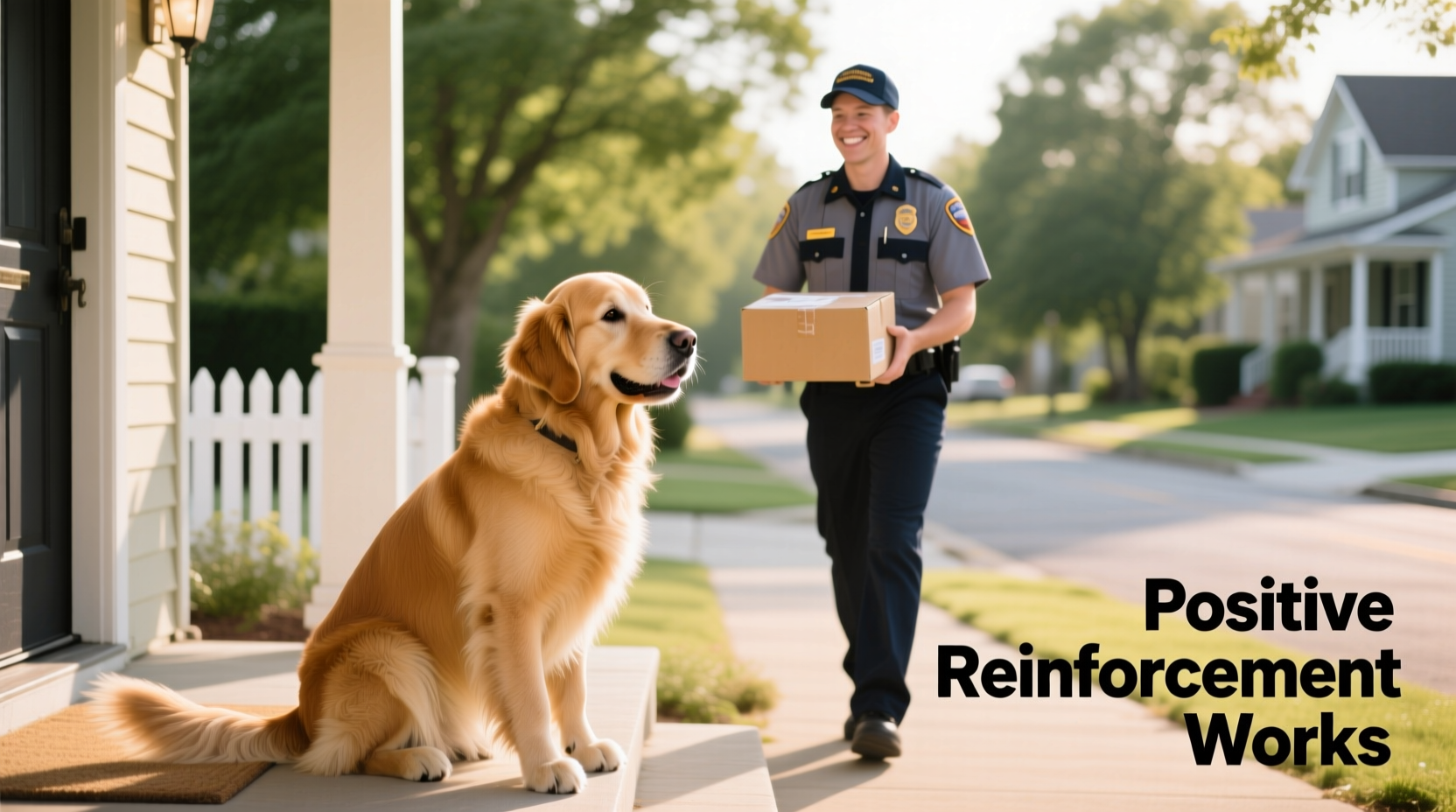
To effectively modify behavior, it’s essential to understand what drives it. Most dogs view delivery personnel as intruders entering their territory. Even if the person never enters the home, the sight or sound of someone approaching the door activates a dog’s natural guarding instincts. This reaction isn’t malicious—it’s rooted in survival. Dogs are descendants of pack animals with strong territorial awareness, and barking serves as both a warning and a means of communication.
Over time, this behavior can become self-reinforcing. Each time the driver leaves after the dog barks, the dog interprets the departure as a result of its own actions: “I barked, and the threat went away.��� This reinforces the belief that barking is an effective defense strategy.
Additionally, many dogs experience mild stress or overstimulation from the unpredictability of deliveries. The sudden knock, unfamiliar scent, or movement outside the window can trigger a heightened state of arousal. Without proper training, this escalates into persistent barking.
Tip: Observe your dog’s body language before barking begins. Signs like stiff posture, focused staring, or raised hackles indicate rising arousal—early intervention is key.Positive Reinforcement Training: The Foundation of Calm Behavior
Positive reinforcement works by rewarding desired behaviors, making them more likely to occur again. When applied consistently, it reshapes how your dog responds to stimuli. Instead of reacting with alarm to a delivery driver, your dog learns to associate their presence with something positive—like treats, praise, or play.
The goal isn’t just to stop barking, but to change your dog’s emotional state from reactive to relaxed. This shift is called conditioned emotional response (CER), and it’s the cornerstone of humane, sustainable training.
Step-by-Step Guide: Teaching the \"Look at That\" Game
This widely used protocol, developed by trainer Leslie McDevitt, helps dogs notice a trigger (like a delivery person) and look back at you for a reward—instead of barking.
- Start indoors or in a low-distraction area where you can simulate the trigger (e.g., have a family member walk past the window).
- When your dog notices the movement, say “Look at that!” in a cheerful tone.
- Immediately mark the moment with a clicker or verbal cue (“Yes!”) and give a high-value treat.
- Repeat several times, ensuring your dog stays below the threshold of reactivity.
- Gradually increase difficulty by moving closer to windows, using real-life scenarios, or introducing actual delivery activity.
Over time, your dog will begin to automatically glance at you when spotting a trigger, anticipating a reward. This interrupts the barking cycle before it starts.
“Dogs don’t misbehave out of defiance—they react based on how they feel. Our job is to help them feel safe, not silenced.” — Dr. Karen Overall, Veterinary Behavioral Medicine Specialist
Desensitization and Counterconditioning: Rewriting the Emotional Script
Desensitization involves gradually exposing your dog to a stimulus at a level low enough not to provoke a reaction. Counterconditioning pairs that stimulus with something pleasurable, such as food or toys. Together, these methods help your dog form new, positive associations.
For delivery drivers, this process might look like:
- Using videos or recordings of doorbells and knocks at low volume.
- Hiring a friend to simulate a delivery from a distance, gradually decreasing proximity over weeks.
- Pairing each exposure with chicken, cheese, or another high-value treat.
The key is progressing slowly. If your dog barks, freezes, or stares intensely, you’ve moved too fast. Step back and reduce the intensity of the stimulus.
Tip: Use a logbook to track sessions. Note distance, duration, dog’s reaction, and rewards used. Progress is often subtle but cumulative.Real-Life Example: Training Max, a Reactive Border Collie
Max, a 3-year-old Border Collie, would bark nonstop whenever anyone approached his owner’s front porch. His guardian, Sarah, avoided opening the blinds and dreaded Amazon deliveries. After consulting a certified dog trainer, she began a structured counterconditioning program.
Phase 1: She played recorded sounds of doorbells at a barely audible level while feeding Max boiled chicken. Over five days, she increased the volume slightly, always keeping Max calm.
Phase 2: A neighbor agreed to walk slowly past the house at 50 feet while Max watched from behind a closed window. Each time, Sarah gave Max a treat. They repeated this three times per week.
Phase 3: After two weeks, the neighbor knocked lightly on the door while Sarah held Max on a leash. Max looked at her, received a treat, and remained quiet. Within six weeks, Max no longer barked at real deliveries—he now looks to Sarah for a treat instead.
This case illustrates that even highly intelligent, alert breeds can learn calm responses with patience and consistency.
Environmental Management and Practical Adjustments
Training doesn’t happen in a vacuum. While you’re working on behavioral modification, managing your dog’s environment reduces rehearsal of unwanted behavior. Every time your dog barks at a delivery person unchecked, the habit strengthens.
Consider these adjustments:
- Block visual access: Close curtains, apply frosted window film, or use baby gates to restrict access to entryways.
- Use white noise: Play calming music or a fan near windows to muffle sounds of knocking or engines.
- Create a safe space: Designate a quiet room with a cozy bed, chew toys, and background noise where your dog can retreat during deliveries.
- Schedule walks: Take your dog out during typical delivery hours to avoid confrontations altogether.
| Do | Don’t |
|---|---|
| Reinforce calm behavior with treats or praise | Yell at your dog to “shut up”—this increases arousal |
| Practice training when no deliveries are expected | Rely solely on commands during high-distraction moments |
| Use high-value rewards (e.g., roast beef, peanut butter) | Use low-interest kibble as a reward during intense triggers |
| Work with a certified positive reinforcement trainer | Use shock, citronella, or prong collars to suppress barking |
Alternative Tools and Techniques That Support Training
While no tool replaces consistent training, some aids can support the process when used appropriately.
Doorstep Decoders and Smart Alerts
Devices like Ring doorbells or package detection apps notify you of arrivals in advance. This allows you to proactively engage your dog with a stuffed Kong or training session before the trigger appears.
Calming Aids
For dogs with high baseline anxiety, vet-approved options may help lower reactivity:
- Adaptil diffusers (synthetic calming pheromones)
- Thundershirts (pressure wraps that may reduce stress)
- Prescription medications (in severe cases, under veterinary supervision)
These should complement—not replace—behavioral training.
Avoid Shock Collars: The Risks Are Real
Despite claims by some manufacturers, shock collars do not teach dogs what to do; they only punish what not to do. Research shows they can lead to:
- Increased fear and aggression
- Learned helplessness
- Generalized anxiety around people or outdoor environments
A 2017 study published in *Applied Animal Behaviour Science* found that dogs trained with shock collars exhibited more stress-related behaviors and had elevated cortisol levels compared to those trained positively.
“We have decades of evidence showing that positive reinforcement builds confidence and trust. Punishment-based tools may stop a behavior, but often at the cost of the dog’s well-being.” — Dr. Sophia Yin, DVM, Applied Ethologist
Checklist: How to Train Your Dog to Stay Calm Around Delivery Drivers
Follow this step-by-step checklist to implement a humane, effective training plan:
- ✅ Assess your dog’s current reactivity level and identify triggers (visual, auditory, etc.).
- ✅ Block or limit access to windows and doors where deliveries occur.
- ✅ Begin “Look at That” training in a controlled, low-distraction setting.
- ✅ Use high-value treats exclusively during training sessions.
- ✅ Simulate delivery scenarios gradually (recordings, friends, distance work).
- ✅ Pair each sighting or sound with immediate rewards—before barking starts.
- ✅ Keep sessions short (5–10 minutes) and end on a positive note.
- ✅ Track progress weekly and adjust difficulty accordingly.
- ✅ Consult a certified professional trainer if progress stalls or aggression occurs.
- ✅ Maintain consistency—even one untrained exposure can set back progress.
Frequently Asked Questions
How long does it take to stop a dog from barking at delivery drivers?
Results vary by dog, breed, temperament, and consistency of training. Some dogs show improvement within two to three weeks; others may take several months. Patience and daily practice are crucial. The more frequently the trigger occurs without intervention, the longer it takes to change the behavior.
Can older dogs learn to stop barking at strangers?
Absolutely. Age does not prevent learning. Older dogs may take longer due to established habits, but with consistent positive reinforcement, they can develop new responses at any stage of life. Mental stimulation through training also supports cognitive health in senior dogs.
What if my dog barks even when I’m not home?
Remote management is challenging but possible. Use automatic treat dispensers triggered by motion (like the Petcube) to reward calm behavior. Alternatively, confine your dog to a windowless room with engaging toys. Consider installing smart cameras to monitor behavior and adjust your strategy accordingly.
Conclusion: Build a Calmer, Happier Home—Without Compromise
Training your dog to stop barking at delivery drivers is not just about peace and quiet—it’s about fostering a healthier, more trusting relationship. By choosing humane, science-backed methods over punitive tools, you help your dog feel secure rather than fearful. The techniques outlined here—positive reinforcement, desensitization, environmental management, and professional support—offer a sustainable path forward.
Every dog deserves to live without fear, and every household deserves harmony. With commitment and compassion, you can transform a chaotic daily routine into a calm, predictable experience for both you and your pet. Start today: pick one strategy, practice it consistently, and watch the change unfold.
💬 Have success training your dog to stay calm during deliveries? Share your story in the comments and inspire others to choose kindness over correction.








