Walking a cat on a leash may seem like an unlikely feat, but thousands of cat owners around the world do it successfully every day. Unlike dogs, cats aren’t naturally inclined to follow commands or walk in a straight line—but that doesn’t mean they can’t learn. With patience, consistency, and the right approach, you can train your cat to walk on a leash without constant pulling. The key lies not in forcing compliance, but in building trust, encouraging curiosity, and shaping behavior through positive reinforcement.
This guide breaks down the practical steps, common pitfalls, and science-backed strategies to help you teach your cat to enjoy leash walks calmly and confidently—without being dragged across the lawn by a determined explorer.
Understanding Feline Behavior: Why Cats Pull
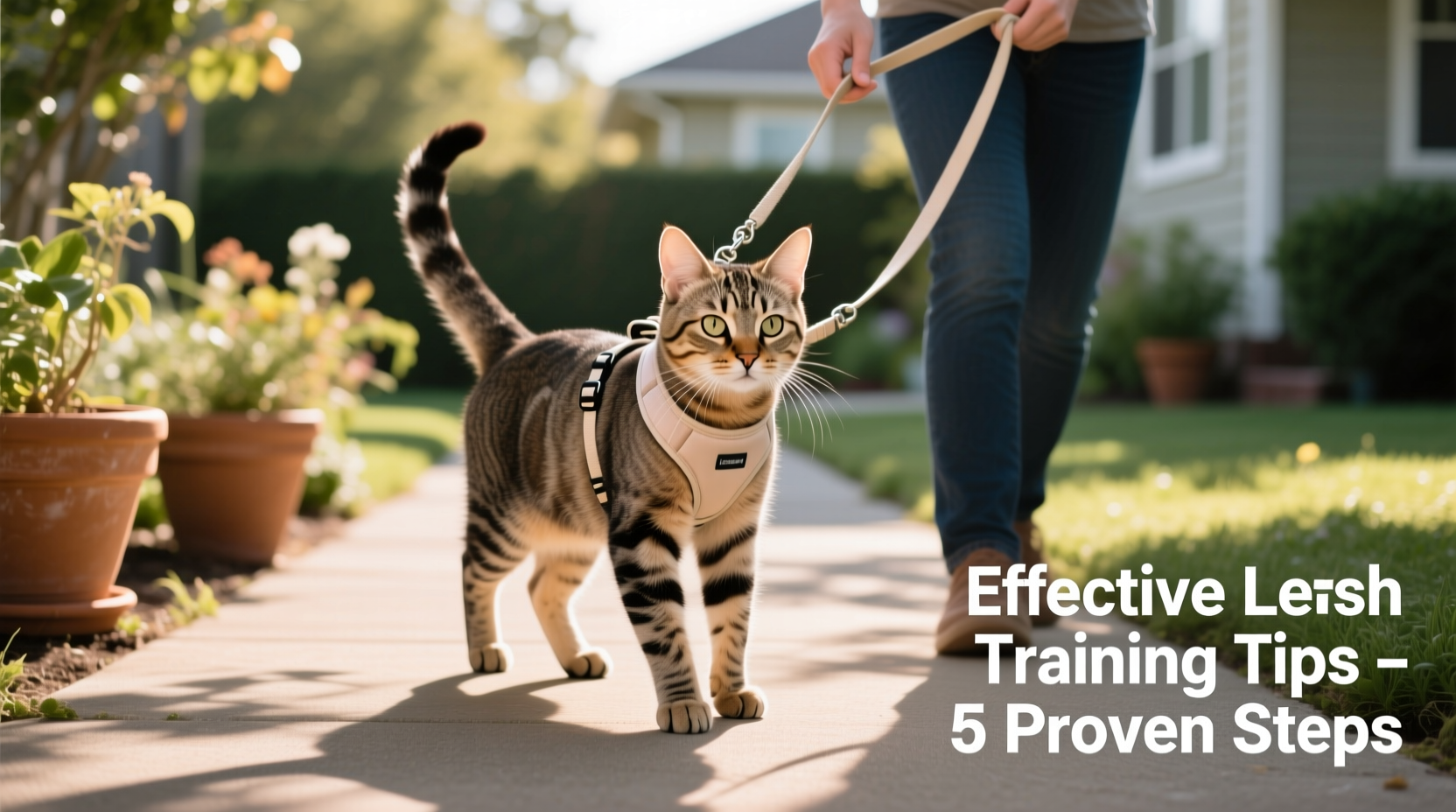
Cats are instinct-driven animals. Their natural behaviors—such as hunting, exploring, and scent marking—are deeply tied to movement and independence. When placed on a leash, many cats react with either fear or overexcitement. Pulling often results from one of two reactions:
- Fear or anxiety: The harness and leash feel restrictive, triggering a flight response.
- Overstimulation: Outdoor scents, sounds, and sights excite the cat, leading them to charge toward stimuli.
Pulling is not defiance—it’s communication. Your cat isn’t trying to ruin your walk; they’re responding to their environment based on instinct and comfort level. Recognizing this shifts your training approach from correction to guidance.
“Cats don’t pull because they’re stubborn—they pull because they haven’t yet learned that walking beside you leads to better outcomes than charging ahead.” — Dr. Sarah Thompson, Feline Behavior Specialist
Step-by-Step Guide to Leash Training Without Pulling
Successful leash training happens in stages. Rushing the process leads to resistance and setbacks. Follow this timeline to build confidence gradually and minimize pulling behavior.
Week 1: Introduce the Harness Indoors
- Choose a well-fitted, escape-proof harness (avoid collars for leash walking).
- Let your cat sniff and investigate the harness. Place treats nearby to create positive associations.
- Lay the harness near your cat during meals or playtime for several days.
- Fasten the harness loosely for short periods while offering high-value treats or favorite toys.
- Gradually increase wear time from 5 minutes to 30 minutes, always rewarding calm behavior.
Week 2: Attach the Leash Inside
- Clip the leash to the harness while indoors, allowing your cat to drag it under supervision.
- Stay nearby to prevent entanglement and intervene calmly if panic occurs.
- Follow your cat around the house on the leash, letting them lead while you remain passive.
- Begin calling your cat’s name and rewarding them when they glance at you or pause.
- Practice gentle redirection using treats held near your leg to encourage side walking.
Week 3: Controlled Outdoor Exposure
- Select a quiet, enclosed area—like a fenced backyard or quiet sidewalk early in the morning.
- Carry your cat outside and set them down only when calm.
- Allow exploration but gently block forward surges by stepping slightly into their path.
- Reward pauses, eye contact, and relaxed walking with immediate treats.
- Keep sessions short—5 to 10 minutes max—to avoid overstimulation.
Week 4 and Beyond: Building Focus and Reducing Pulling
- Incorporate “stop and treat” drills: whenever your cat pulls, stop moving. Wait for slack in the leash, then mark and reward.
- Use directional cues like “this way” or a clicker to signal turns before they happen.
- Introduce distractions gradually—first birds, then bicycles, then other animals at a distance.
- End every walk on a positive note, preferably with a treat or return to a favorite indoor spot.
- Track progress weekly: note duration, pulling frequency, and responsiveness.
Consistency over three to six weeks typically results in a cat who walks with minimal pulling and shows clear signs of enjoyment—pricked ears, slow blinks, and relaxed tail posture.
Essential Equipment: Choosing the Right Gear
The wrong equipment can sabotage even the best training efforts. A poorly fitted harness is the most common cause of discomfort and resistance.
| Gear Type | Recommended Features | Avoid |
|---|---|---|
| Harness | Adjustable chest and belly straps, secure double-loop design, soft neoprene lining | Loose-fit vests, single-clip designs, elastic materials |
| Leash | 4–6 feet long, lightweight nylon, comfortable grip handle | Retractable leashes, heavy chains, rope-style leads |
| Treat Pouch | Worn on belt or wrist, easy-access opening, odor-resistant lining | Bulky pockets, zippers that snag |
| Training Clicker (Optional) | Soft sound, consistent tone, small size | Loud or erratic noise makers |
Popular brands like Figaro Cat Company and Petzl offer harnesses specifically designed to prevent escape. Always measure your cat’s girth behind the front legs and adjust snugly—two fingers should fit beneath each strap.
Common Mistakes That Encourage Pulling
Even well-intentioned owners unknowingly reinforce unwanted behaviors. Avoid these common errors:
- Allowing pulling to be rewarded: If your cat pulls toward a bird and gets to move closer, they learn that pulling works.
- Using force or jerking the leash: This increases fear and damages trust.
- Skipping foundational steps: Taking a cat outdoors before harness acclimation causes trauma.
- Long, exhausting walks: Cats have short attention spans. Overextending sessions leads to stress.
- Ignoring body language: Flattened ears, tail flicking, or crouching mean it’s time to retreat indoors.
Real Example: How Luna Learned to Walk Calmly
Luna, a 2-year-old tabby from Portland, Oregon, initially fought her harness and lunged at every leaf that moved. Her owner, Mark, followed the step-by-step method outlined above but struggled with persistent pulling during early outdoor attempts.
He noticed that Luna pulled hardest when she saw squirrels. Instead of blocking her view, he began carrying roasted chicken cubes in a treat pouch. Whenever Luna spotted a squirrel, he made a soft kissing sound and offered a treat only when she looked at him. Within two weeks, Luna started checking in automatically upon seeing wildlife.
Mark also shortened walks to seven minutes and ended each one by walking backward slowly—Luna naturally followed. After six weeks, Luna walks for 15 minutes daily with only occasional tugs, mostly when a rabbit appears. “She still explores,” Mark says, “but now she checks in with me like we’re a team.”
Checklist: Key Actions for Pull-Free Leash Training
Use this checklist to stay on track throughout the training process:
- ✅ Choose a secure, properly fitted harness
- ✅ Let your cat wear the harness indoors for at least five days
- ✅ Practice dragging the leash inside under supervision
- ✅ Reward calm behavior with high-value treats
- ✅ Begin outdoor walks in low-distraction areas
- ✅ Stop walking whenever the leash tightens; resume only when slack returns
- ✅ Keep initial outings under 10 minutes
- ✅ End each session positively, ideally with a treat or return inside
- ✅ Monitor body language closely and retreat if stressed
- ✅ Train consistently 4–5 times per week
Frequently Asked Questions
Can all cats be trained to walk on a leash?
Most cats can learn to tolerate or even enjoy leash walking, though success depends on temperament, age, and prior experiences. Kittens generally adapt more easily than older cats, but even seniors can learn with patience. Cats with extreme anxiety or aggression may not be good candidates.
Why does my cat sit down and refuse to move?
This is a common protest behavior, especially in the early stages. It usually means your cat feels unsafe or overwhelmed. Don’t force them forward. Instead, wait calmly, speak softly, and offer a treat when they show interest. If they don’t move after a few minutes, end the session and try again another day.
Is retractable leash use safe for cats?
No. Retractable leashes pose serious risks for cats. They can extend too far too quickly, allowing your cat to dart into traffic or get tangled. The thin cord can also burn your hands or injure your cat. Always use a fixed-length leash between 4 and 6 feet.
Expert Insight: The Psychology Behind Success
Dr. Elena Rodriguez, a veterinary behaviorist at the American Association of Feline Practitioners, emphasizes that successful leash training hinges on understanding motivation.
“Cats aren’t pack animals. They won’t follow you out of loyalty alone. You have to make walking beside you more rewarding than charging ahead. That means impeccable timing with treats, reading subtle body cues, and never pushing past their threshold.” — Dr. Elena Rodriguez, DVM, Behavioral Science Lead
She recommends using a marker word like “yes” or a clicker to precisely signal desired behavior. “The instant your cat glances at you or walks calmly beside you, mark it. Then reward. This clarity speeds up learning dramatically.”
Conclusion: Turning Pulling Into Partnership
Training a cat to walk on a leash without constant pulling is absolutely possible—but it requires rethinking traditional obedience models. Cats thrive on autonomy, so the goal isn’t control, but collaboration. By respecting their instincts, using positive reinforcement, and progressing at their pace, you transform what could be a battle into a shared adventure.
Every cat is different. Some will stroll serenely past flower beds; others may prefer sniffing one blade of grass for ten minutes. Both are victories. The real success isn’t a perfectly behaved pet, but a stronger bond built through mutual trust and understanding.
💬 Have you trained your cat to walk on a leash? Share your story, challenges, or questions in the comments—your experience could inspire another cat owner to try!








