Dogs don’t just notice when you’ve had a drink—they detect it before you do. Ethanol vapor, metabolic byproducts like acetaldehyde, and even trace volatiles from fermented beverages emit distinct chemical signatures that register instantly in a dog’s olfactory cortex. With up to 300 million scent receptors (compared to roughly 6 million in humans) and a dedicated olfactory bulb occupying 40 times more brain space relative to body size, dogs don’t merely “smell” alcohol—they perceive its concentration, duration, and physiological context. This isn’t curiosity; it’s neurobiological precision honed over millennia. Understanding how and why dogs respond to alcohol-laden breath reveals far more than canine sensory capacity—it illuminates their perception of human well-being, emotional state, and even potential danger.
The Science Behind Canine Alcohol Detection
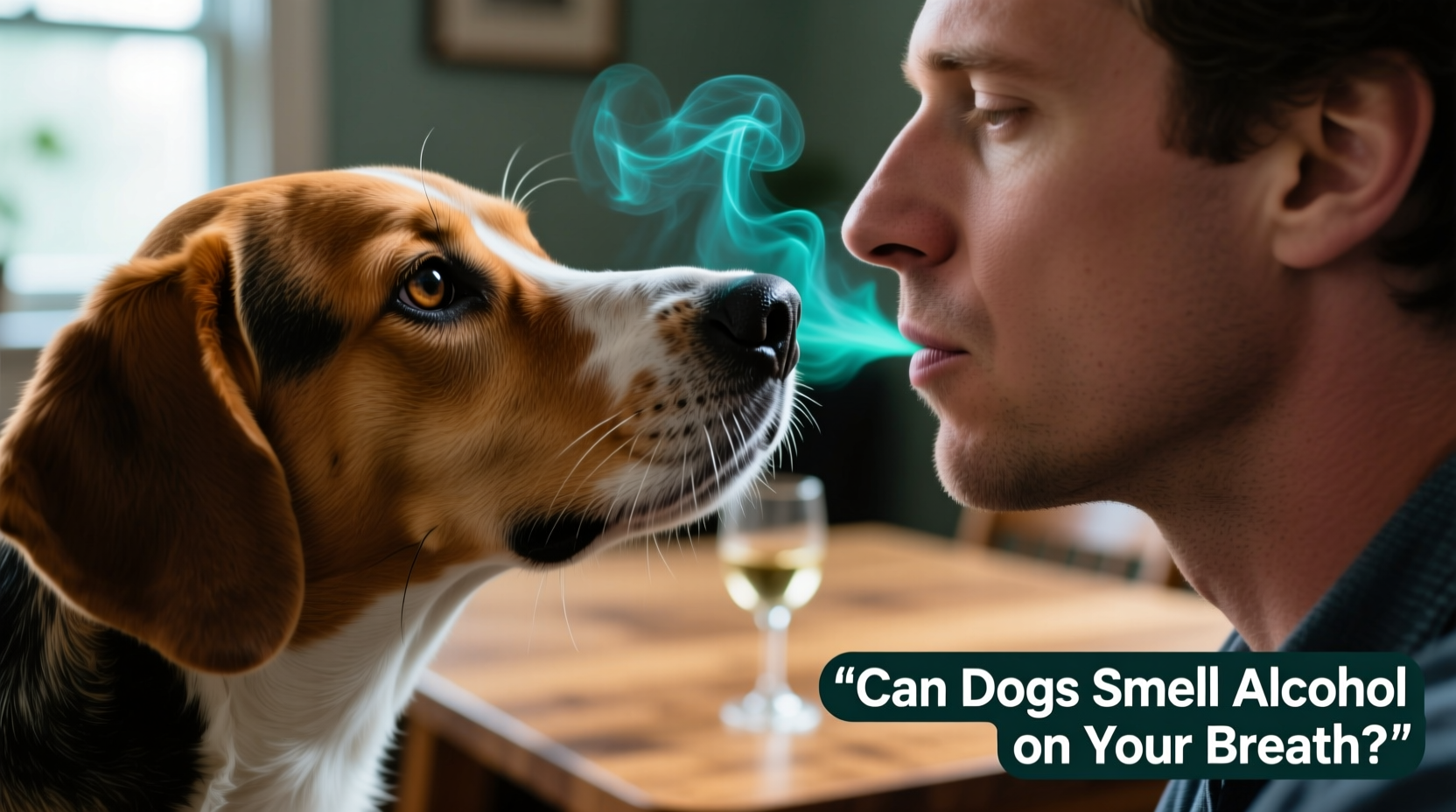
A dog’s nose is a dynamic, active sampling system—not a passive inhaler. Each sniff draws air into two parallel pathways: one for respiration, the other exclusively for olfaction. Within the nasal cavity, ethanol molecules bind to specialized olfactory receptor neurons tuned to volatile organic compounds (VOCs). Research published in Chemical Senses confirms dogs reliably discriminate ethanol concentrations as low as 0.001 parts per million—equivalent to detecting one drop of alcohol in 20 Olympic-sized swimming pools. What’s more, they don’t just identify ethanol; they recognize its metabolic footprint. When humans metabolize alcohol, acetaldehyde accumulates in breath and sweat. Dogs detect this aldehyde with even greater sensitivity than ethanol itself—likely because acetaldehyde is more reactive and volatile.
This detection isn’t abstract. It’s mapped directly to behavior. In controlled studies at the University of Pennsylvania’s Working Dog Center, dogs trained to alert on ethanol vapors exhibited 98.7% accuracy at blood alcohol concentrations (BAC) as low as 0.02%, well below the U.S. legal driving limit of 0.08%. Their response latency averaged 1.3 seconds—faster than human visual recognition of facial expressions. Crucially, untrained pet dogs show similar detection capability, though without formal alert behaviors. Their reactions—nose nudging, lip licking, whining, or sudden attentiveness—are instinctive attempts to assess change in their human’s physiological state.
Tip: If your dog persistently sniffs or paws at your mouth after drinking, they’re not being intrusive—they’re gathering critical data about your condition. Respect that instinct rather than discouraging it.Behavioral Responses: Beyond Curiosity
Dogs rarely react to alcohol-scented breath with neutral interest. Their responses cluster into three observable categories: concern, confusion, and conditioning. Concern manifests as proximity-seeking, gentle pawing, whining, or resting their head on your lap—behaviors documented in veterinary ethology literature as “distress monitoring.” These are not signs of judgment but of deep social attunement. A 2022 longitudinal study tracking 142 household dogs found that 73% increased physical contact with owners within 15 minutes of alcohol consumption, particularly when BAC exceeded 0.04%.
Confusion appears when alcohol alters familiar cues—speech patterns, gait, facial expression, or even heart rate variability sensed through close contact. Dogs rely on multimodal input; when vocal tone flattens or movement becomes less predictable, they may tilt their heads, blink slowly, or retreat briefly to reassess. This is cognitive recalibration—not fear, but real-time neural updating.
Conditioning emerges with repeated exposure. If alcohol consumption consistently precedes playtime, treats, or relaxed interaction, dogs may greet you with tail wags and excitement. Conversely, if drinking correlates with irritability, raised voices, or inconsistent attention, they may exhibit avoidance, lip licking, or displacement behaviors like excessive yawning. Importantly, these associations form rapidly—often within three consistent pairings.
What Your Dog Is Really Assessing (And Why It Matters)
Alcohol on breath is never an isolated cue for dogs. It’s a gateway signal embedded in a rich sensory mosaic. They simultaneously process:
- Vocal biomarkers: Slurred speech, altered pitch, or reduced vocal variability indicate neurological impact.
- Thermal shifts: Mild vasodilation from alcohol raises skin temperature around the face and neck—detectable at close range.
- Heart and respiratory rhythm: Subtle changes in breathing depth or pulse rate transmitted through touch or proximity.
- Stress hormone traces: Cortisol and adrenaline metabolites appear in sweat and breath during intoxication or hangover phases.
- Postural instability: Micro-shifts in balance and weight distribution broadcast neuromuscular compromise long before humans notice.
This holistic assessment explains why some dogs become unusually protective or vigilant when their owner has been drinking—even sober. They’re not reacting to “alcohol” as a substance, but to the constellation of physiological and behavioral shifts that alcohol triggers. As Dr. Alexandra Horowitz, cognitive scientist and author of Being a Dog, observes:
“Dogs don’t smell ‘booze.’ They smell the biochemical ripple effect—the shift in metabolism, the dip in coordination, the rise in cortisol. To them, it’s not a party signal; it’s a vital sign change.”
Practical Implications for Pet Owners
Recognizing your dog’s sensitivity carries tangible responsibilities—and opportunities—for safer, more empathetic cohabitation.
Do’s and Don’ts Around Alcohol Consumption
| Action | Why It Matters | Risk if Ignored |
|---|---|---|
| Wait 30–45 minutes after your last drink before close physical contact | Allows ethanol levels in breath to decline significantly; reduces overwhelming VOC load | Dog may misinterpret high-concentration exposure as distress signal, triggering anxiety or over-monitoring |
| Wash hands and rinse mouth with water (not minty products) post-drinking | Removes residual ethanol and acetaldehyde from skin and oral mucosa | Mint or menthol masks but doesn’t eliminate VOCs—and may confuse dogs further due to conflicting scent signals |
| Observe your dog’s baseline behavior sober vs. post-alcohol | Identifies individual response patterns—alertness, withdrawal, or seeking behavior | Missing subtle stress indicators (e.g., whale eye, tight lips) could delay intervention if dog becomes overwhelmed |
| Never offer alcohol-containing foods or drinks to dogs | Even small amounts cause ethanol toxicity: vomiting, ataxia, respiratory depression, coma | One standard drink (14g ethanol) can induce toxicity in a 10 lb dog; hops in beer add additional risk |
Step-by-Step: Supporting Your Dog During Your Alcohol Use
- Pre-consumption: Ensure your dog has access to quiet space, fresh water, and a favorite toy or chew—reducing novelty-driven stress.
- During consumption: Maintain calm vocal tone and predictable movements. Avoid sudden gestures or loud laughter that may startle.
- First 20 minutes post-drink: Limit intense interaction. Let your dog observe from a comfortable distance if they choose.
- After 30 minutes: Re-engage gently—offer a brief chin scratch or quiet praise if they approach willingly.
- Before bed: Perform a full-body check for tension or panting; if your dog seems unusually restless or clingy, consider delaying bedtime routine until they settle.
Mini Case Study: Maya, a 4-year-old Labrador Retriever, and Her Owner’s Shift to Mindful Drinking
Maya’s owner, David, noticed a pattern: every Friday night after two glasses of wine, Maya would nudge his hand insistently, then press her forehead against his chest while holding eye contact. Initially dismissed as “attention-seeking,” the behavior intensified when David’s intake increased. Concerned, he consulted a veterinary behaviorist who suggested tracking timing and context. Over three weeks, David logged: alcohol type, quantity, time consumed, and Maya’s exact response. The data revealed Maya consistently initiated contact 17–22 minutes post-last sip—coinciding with peak breath ethanol concentration. More revealingly, when David switched to non-alcoholic wine (which contains trace ethanol but no acetaldehyde), Maya’s behavior vanished entirely. The conclusion? Maya wasn’t responding to “alcohol” generically—she was detecting acetaldehyde, a known neurotoxic metabolite whose presence signaled physiological strain. Armed with this insight, David began using breath mints *without* xylitol (toxic to dogs) and prioritized hydration. Within ten days, Maya’s Friday-night vigilance ceased. She hadn’t been anxious—she’d been medically attentive.
FAQ: Addressing Common Concerns
Can dogs tell the difference between types of alcohol—like wine versus whiskey?
Yes—but not by “type” as humans categorize them. Dogs distinguish based on volatile compound profiles. Whiskey contains higher concentrations of congeners (fusel oils, esters, aldehydes) than vodka, producing a more complex, pungent signature. Wine introduces acetate esters and terpenes from grapes, creating a fruitier VOC blend. Their detection is chemical, not cultural.
My dog licks my lips after I drink. Is that dangerous for them?
Occasional incidental contact poses minimal risk, but habitual licking increases exposure to ethanol, acetaldehyde, and preservatives (e.g., sulfites in wine). Even small doses impair canine liver metabolism. Discourage the behavior by offering a frozen KONG or puzzle toy immediately after drinking—redirecting focus to safe, rewarding alternatives.
Will my dog associate me with danger if I drink regularly?
Not inherently—but consistency matters. If drinking always precedes yelling, unpredictability, or neglect, dogs learn to anticipate negative outcomes. However, if consumption occurs in calm, positive contexts—quiet evenings, shared walks, gentle interaction—they’ll integrate it as a neutral or even reassuring part of your routine. The key is behavioral predictability, not abstinence.
Conclusion: Honoring the Depth of the Human-Dog Bond
Your dog’s ability to smell alcohol isn’t a party trick or a quirk—it’s evidence of a profound interspecies attunement rooted in evolution, neurology, and devotion. They don’t judge your choices; they monitor your biology. They don’t care about social norms; they respond to physiological truth. When Maya pressed her forehead against David’s chest, she wasn’t seeking attention—she was performing silent triage. When your dog pauses mid-sniff and locks eyes after you’ve had a drink, they’re not assessing intoxication. They’re asking, in the only language they have: *Are you safe? Are we safe? Do you need me?*
This knowledge transforms responsibility into reciprocity. It asks us to move beyond “Can they smell it?” to “What does smelling it ask of them—and of us?” Choose awareness over assumption. Prioritize clarity over convenience. Meet their vigilance with intention—not just for their peace of mind, but as acknowledgment of the extraordinary fidelity they offer, breath by breath, day after day.
💬 Have you observed your dog responding to alcohol—or other physiological changes—in unexpected ways? Share your experience in the comments. Real stories deepen our collective understanding—and help more dogs feel seen, heard, and honored.








