Dogs don’t understand the concept of alcohol consumption—but they detect its physiological and behavioral consequences with startling precision. From altered gait and slurred speech to shifts in scent chemistry and emotional volatility, intoxication creates a cascade of sensory signals that dogs register long before humans consciously notice them. This isn’t anecdotal intuition; it’s rooted in neurobiology, evolutionary adaptation, and decades of observational and experimental research. Understanding how and why dogs respond to intoxication isn’t just fascinating—it’s essential for responsible pet ownership, safety planning, and deepening the human-canine bond.
How Dogs Detect Intoxication: The Science Behind the Scent
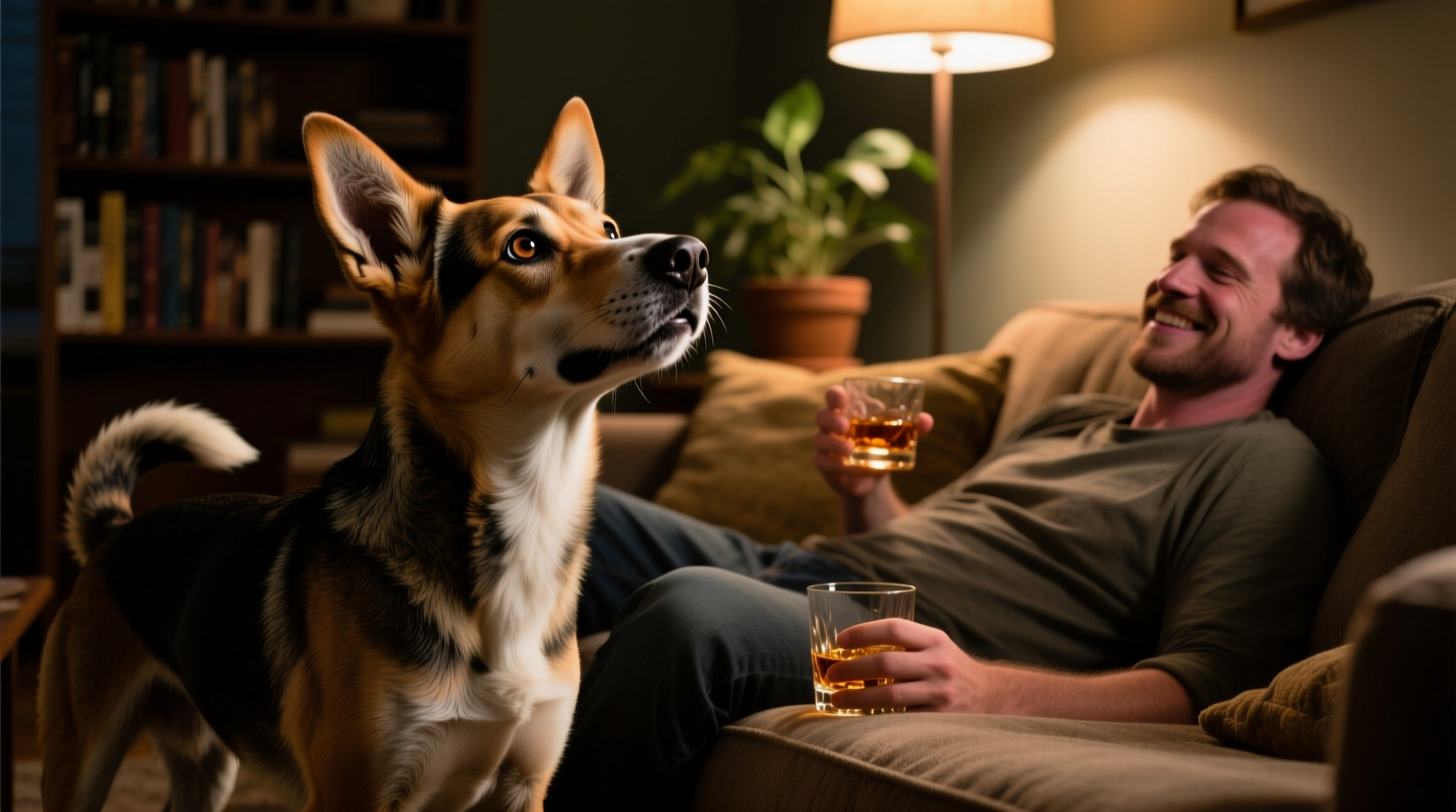
A dog’s olfactory system is 10,000 to 100,000 times more sensitive than a human’s. They possess up to 300 million olfactory receptors (compared to our 6 million) and dedicate about 40 times more brain tissue to scent analysis. When alcohol enters the bloodstream, it metabolizes into acetaldehyde and other volatile organic compounds (VOCs) excreted through breath, sweat, and even skin pores. These VOCs—especially ethanol, acetone, and isopropanol—carry distinct molecular signatures dogs can isolate amid complex odor backgrounds.
Research published in Frontiers in Veterinary Science (2022) confirmed that dogs trained to detect ethanol vapor in controlled settings achieved 94% accuracy at concentrations as low as 0.02% BAC—well below the U.S. legal driving limit of 0.08%. Untrained pet dogs aren’t performing forensic analysis, but their innate ability to recognize deviations in their owner’s “baseline scent profile” makes them highly attuned to metabolic changes. This includes not only ethanol byproducts but also cortisol spikes (stress), elevated body temperature, and shifts in pheromonal output associated with impaired self-regulation.
Equally important is the auditory and visual input dogs process simultaneously. Slowed reaction time, irregular breathing patterns, unsteady posture, and vocal tonal fluctuations all contribute to what researchers term a “multimodal intoxication signature”—a constellation of cues that dogs integrate holistically, much like humans recognize fatigue or anxiety in a friend’s voice and posture.
Common Behavioral Reactions: What Your Dog Might Do
Dogs rarely display a single, uniform response to intoxication. Their behavior depends on temperament, training history, prior exposure, and the intensity and context of the owner’s impairment. However, five recurring patterns emerge across veterinary case reports and ethological field studies:
- Vigilance and proximity-seeking: Many dogs increase physical closeness—pressing against legs, resting heads on laps, or following closely—likely interpreting instability as a vulnerability requiring reassurance or monitoring.
- Heightened alertness or anxiety: Whining, pacing, lip-licking, yawning, or flattened ears may signal discomfort with unpredictable movement, raised voices, or sudden gestures. This is especially pronounced in sensitive or rescue dogs with trauma histories.
- Withdrawal or avoidance: Some dogs retreat to a safe space—under furniture, in crates, or another room—particularly if past experiences involved shouting, clumsiness, or inconsistent handling while intoxicated.
- Increased guarding behaviors: In households with children or other pets, dogs may position themselves between the impaired person and others, or bark more readily at external stimuli, perceiving reduced environmental control.
- Confusion or appeasement signals: Tail tucking, submissive urination, excessive licking, or “whale eye” (showing the whites of the eyes) suggest the dog feels uncertain about interpreting social cues and attempts to de-escalate perceived tension.
Importantly, none of these reactions indicate judgment or moral assessment. They reflect adaptive responses shaped by thousands of years of co-evolution: dogs survive by reading human intention and emotional state accurately. When those signals become erratic or contradictory—such as a smiling face paired with uncoordinated limbs—their nervous systems activate appropriate coping strategies.
Tip: If your dog consistently hides or appears stressed when you drink, avoid punishing the behavior. Instead, create a calm, predictable environment—dim lights, soft music, and access to their safe space—to reduce their anxiety without reinforcing avoidance.Safety Implications: Why Awareness Matters
Recognizing your dog’s reactions isn’t merely about understanding canine psychology—it has tangible safety consequences for both species. Intoxicated individuals are statistically more likely to misinterpret canine communication, overlook stress signals, or inadvertently provoke defensive behavior. According to the American Veterinary Medical Association (AVMA), nearly 17% of dog bite incidents involving owners occur during or shortly after alcohol consumption, often linked to misreading body language or attempting forceful handling while impaired.
Conversely, dogs may act protectively in ways that escalate risk. A dog barking persistently at a delivery person while their owner is disoriented may trigger neighbor complaints—or worse, cause the owner to yell or shove the dog in frustration, damaging trust. Similarly, a dog nudging an unconscious or semi-conscious person may be attempting to rouse them, but could unintentionally interfere with emergency response if the situation worsens.
There’s also a physiological risk: dogs may ingest spilled alcohol, alcoholic beverages left within reach (especially sweet cocktails or fermented fruit), or even absorb ethanol through skin contact with wet clothing. Even small amounts can cause vomiting, ataxia, hypothermia, respiratory depression, and coma in canines due to their lower body mass and different metabolic pathways.
“Dogs don’t assess sobriety—they assess safety. When your coordination falters or your emotional regulation slips, your dog doesn’t see ‘drunk.’ They see ‘less reliable protector.’ That shift triggers ancient survival instincts we must honor—not dismiss as ‘just being dramatic.’” — Dr. Lena Torres, DVM, DACVB, Board-Certified Veterinary Behaviorist
What to Do: A Practical Response Framework
When you know you’ll be consuming alcohol—or have already done so—proactive steps ensure your dog remains physically safe and emotionally secure. This isn’t about restriction; it’s about stewardship.
Before Drinking
- Secure hazardous items: Store alcohol, glasses, bottles, and open containers well out of reach—even juice boxes or kombucha can pose risks.
- Prep their sanctuary: Ensure their bed, crate, or quiet area is accessible, comfortable, and free from foot traffic.
- Meet baseline needs: Walk, feed, and provide water *before* drinking begins. A tired, full, and exercised dog is less likely to become overstimulated.
- Inform household members: If others will be present, brief them on your dog’s likely responses and agreed-upon protocols (e.g., who handles feeding, who monitors for distress).
During Intoxication
- Minimize loud noises, sudden movements, or attempts to play rough.
- If your dog seeks closeness, offer gentle, slow petting—not vigorous interaction.
- Never force physical contact (e.g., hugging, lifting) if they’re hesitant or stiff.
- Keep children supervised and instructed not to chase or startle the dog.
Afterward (Especially if You Feel Impaired)
- Hydrate and rest safely: Keep water nearby and avoid sleeping face-down near your dog—especially small breeds vulnerable to accidental smothering.
- Check in quietly: Observe your dog’s posture and breathing. If they’re trembling, panting excessively, or refusing food/water the next morning, consult your veterinarian.
- Reflect nonjudgmentally: Note what triggered stress (e.g., stumbling near them, raising your voice) to inform future choices.
Do’s and Don’ts When You’ve Been Drinking Around Your Dog
| Action | Do | Don’t |
|---|---|---|
| Physical Interaction | Use slow, predictable movements; offer chin scratches if they lean in willingly | Pick them up unexpectedly, hug tightly, or try to “play wrestle” |
| Environment | Keep floors clear of glass, spills, or clutter; use nightlights for safe navigation | Leave open bottles, spilled drinks, or discarded cocktail garnishes (grapes, raisins, hops) within reach |
| Communication | Use calm, low-pitched tones; pause frequently to read their body language | Shout, slur commands, or repeat cues aggressively when they don’t respond instantly |
| Emergency Prep | Keep your vet’s number and nearest 24-hour clinic info visible; know signs of ethanol toxicity | Assume “they’ll be fine” if they ingest even a small amount of alcohol or fermenting food |
Real-World Insight: A Case Study from a Canine Behavior Clinic
In early 2023, a 5-year-old rescue terrier mix named Mochi was brought to the Pacific Coast Canine Behavior Clinic after his owner reported escalating “anxiety attacks” every Friday evening. Initial assessment ruled out medical causes. Video review revealed a consistent pattern: Mochi would begin panting and circling 15 minutes before his owner opened her first glass of wine, then retreat under the couch once she began drinking. When asked about her routine, the owner shared she’d recently started working remotely and used Friday evenings to unwind with wine—and often paced while on work calls, spoke louder, and occasionally dropped her phone or keys.
Behaviorist Dr. Aris Thorne observed that Mochi wasn’t reacting to alcohol itself, but to the *predictable cluster* of antecedents: the sound of the wine fridge opening, the clink of the glass, and the owner’s pre-drinking ritual of stretching and sighing. Over four weeks, they implemented a “neutralization protocol”: the owner began opening sparkling water in the same glass at the same time each Friday, maintained steady vocal tone, and practiced seated relaxation instead of pacing. Within ten days, Mochi’s anticipatory stress vanished. The takeaway? Dogs often respond to the *rituals surrounding intoxication* as much as to the physiological changes—and consistency, predictability, and calmness are powerful antidotes.
FAQ: Addressing Common Concerns
Can dogs tell the difference between being drunk and being tired or sick?
Yes—though not with clinical precision. Dogs distinguish patterns. Fatigue typically brings slower movement, softer voice, and relaxed posture. Illness often involves lethargy, hiding, and altered scent (e.g., gastrointestinal odors). Intoxication combines erratic motion, slurred or loud speech, flushed skin, and a sharp, chemical scent profile. Dogs learn these distinctions through repeated exposure and contextual cues (e.g., wine bottle vs. medicine cabinet).
Will my dog hold a grudge if I’m drunk around them?
No—dogs don’t hold grudges in the human sense. However, repeated exposure to stressful or frightening experiences while intoxicated can erode trust and reinforce negative associations. If your dog consistently avoids you after drinking, it’s not resentment—it’s learned caution based on unreliable cues.
Should I train my dog to detect intoxication?
Not unless you’re pursuing certified service work under professional guidance. Purposefully conditioning a dog to alert to alcohol can create unintended behavioral issues (e.g., obsessively sniffing mouths, interrupting social interactions) and blur healthy boundaries. Focus instead on mutual understanding and environmental management.
Conclusion: Building Trust Through Consistency and Care
Your dog doesn’t need to understand why you drink—or whether it’s socially acceptable. What they need is reliability: the confidence that your presence means safety, even when your balance wavers or your voice cracks. Recognizing their acute sensitivity to intoxication isn’t about guilt or restriction; it’s about honoring a partnership forged over millennia. Every time you choose to hydrate before pouring a drink, clear the floor of hazards, or simply sit quietly beside your dog instead of stumbling past them—you reinforce that you see them, hear them, and prioritize their well-being as deeply as your own.
This awareness transforms routine moments into opportunities for deeper connection. It turns Friday night into a chance to practice patience, not just indulgence. And it reminds us that empathy isn’t reserved for people—it flows naturally toward the beings who watch us most closely, remember us most faithfully, and love us most unconditionally—even when we forget how to love ourselves well.
💬 Have you noticed your dog responding uniquely when you or someone else is intoxicated? Share your respectful, non-judgmental observations in the comments—we learn best from real experiences. Your story might help another pet parent navigate this quietly profound aspect of companionship.








