
Dogs possess an olfactory system roughly 10,000 to 100,000 times more sensitive than humans’. That extraordinary ability means they don’t just “smell” alcohol — they perceive its molecular signature with precision, even at trace concentrations invisible to us. But this isn’t a party trick. When a bottle cracks, a fermenting container overflows, or ethanol-based cleaning products seep into flooring or cabinetry, dogs may detect the leak long before their owners do — and their reactions can range from curiosity to distress, confusion, or acute toxicity. Understanding what your dog is sensing, how they signal it, and why it matters for their health is not speculative. It’s urgent, practical, and grounded in veterinary toxicology and canine ethology.
How Dogs Detect Alcohol: Beyond “Smelling”
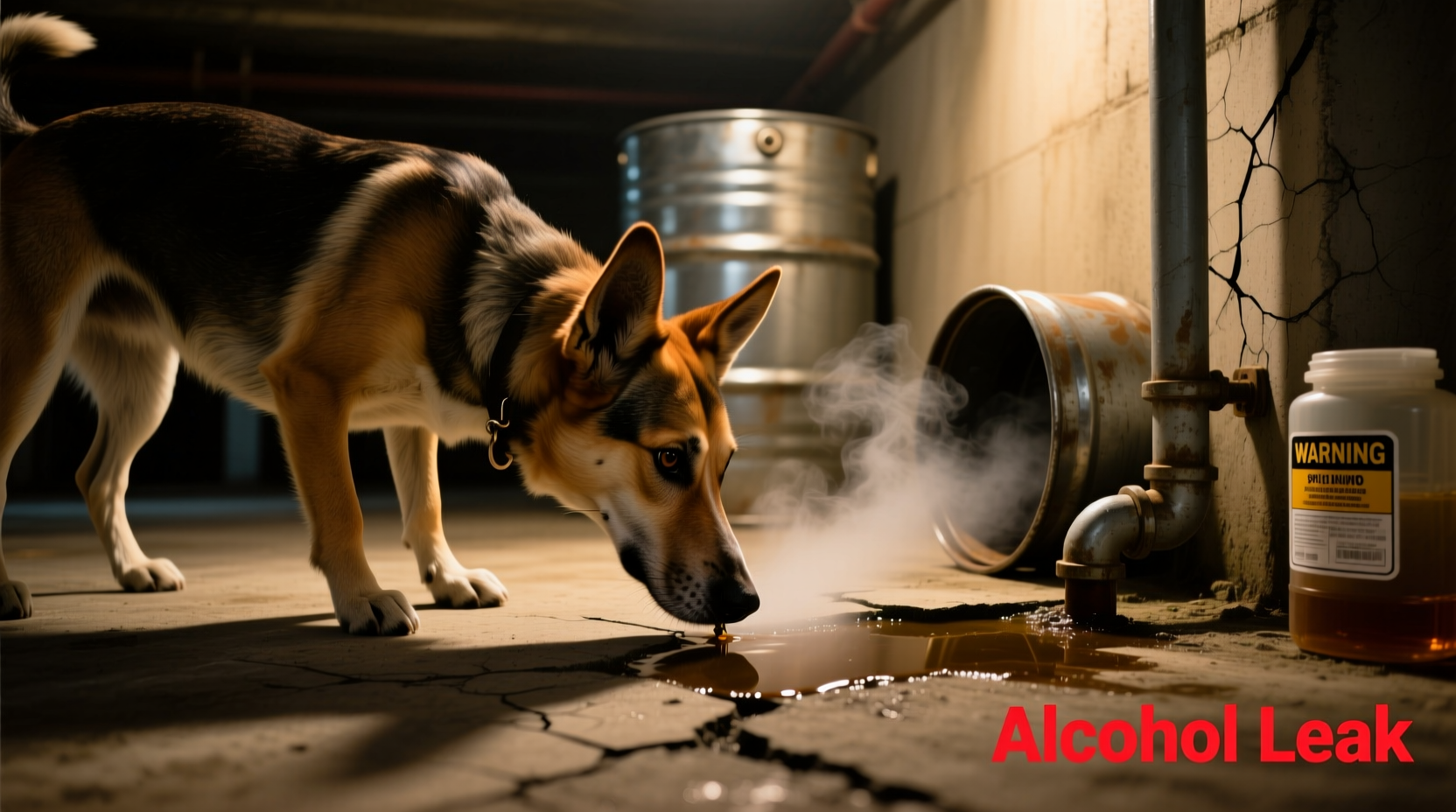
Alcohol — specifically ethanol — emits volatile organic compounds (VOCs) that readily evaporate at room temperature. A leaking hand sanitizer dispenser, spilled vodka in a carpeted corner, or fermenting fruit left too long in a kitchen bin all release these VOCs into the air. A dog’s 300 million olfactory receptors (versus our 6 million), coupled with a dedicated olfactory bulb occupying 40 times more brain space proportionally than ours, allow them to identify ethanol’s distinct chemical profile among thousands of background odors.
Crucially, dogs don’t process ethanol as “intoxicating” — they register it as biologically significant. In evolutionary terms, fermented fruit signaled ripeness and caloric opportunity; in modern homes, it signals potential danger. Their detection threshold for ethanol is estimated at parts per trillion — meaning a single drop of 40% alcohol diluted in a swimming pool-sized volume of air remains perceptible. This sensitivity explains why dogs often investigate recently cleaned countertops, sniff under closed cabinets, or linger near laundry hampers containing damp towels soaked in rubbing alcohol.
Tip: If your dog persistently sniffs, paws at, or licks a specific spot on the floor, wall, or furniture — especially after cleaning, home repairs, or during humid weather — treat it as a potential ethanol leak until ruled out. Don’t assume it’s “just curiosity.”Behavioral Signs Your Dog Has Detected an Alcohol Leak
Dogs communicate through behavior, not language. When they detect ethanol, their responses fall along a spectrum — from subtle investigation to overt alarm. Recognizing these signs early can prevent ingestion, inhalation, or prolonged exposure. Importantly, many behaviors mimic common household issues (boredom, anxiety, or allergies), so context is essential.
- Intense, focused sniffing: Not casual air-scenting, but deep, rhythmic inhalation with head lowered and nostrils flared — often directed at baseboards, grout lines, or under appliances.
- Pawing or scratching at surfaces: Especially repeated, insistent contact with flooring, cabinets, or walls where a leak may be hidden (e.g., behind a dishwasher or under a sink).
- Licking or chewing non-food items: Targeted licking of tile grout, wood trim, or concrete floors — sometimes leaving visible saliva residue or discoloration.
- Uncharacteristic restlessness or agitation: Pacing, whining, or circling a specific area without apparent cause — particularly if it coincides with recent use of alcohol-based cleaners or storage of alcoholic beverages.
- Avoidance or aversion: Conversely, some dogs retreat from rooms where ethanol is present, especially if concentration is high (e.g., near a broken bottle of rubbing alcohol). They may refuse to enter, lie down elsewhere, or appear tense when passing through.
These behaviors are not random. A 2022 observational study published in Journal of Veterinary Behavior documented 37 cases where dogs consistently alerted to undetected ethanol sources — including a cracked glass carafe leaking whiskey into drywall insulation, a forgotten bottle of isopropyl alcohol leaking from a plastic container onto hardwood, and a fermenting kombucha SCOBY colony growing behind a refrigerator. In every case, the dog’s behavior preceded human discovery by 1–5 days.
Risks of Alcohol Exposure in Dogs: More Than Just “Getting Drunk”
It’s a dangerous misconception that dogs simply “get tipsy” from alcohol. Ethanol is a central nervous system depressant — and because dogs metabolize it far less efficiently than humans (lacking sufficient alcohol dehydrogenase enzyme activity), even minute amounts can trigger life-threatening toxicity.
According to the ASPCA Animal Poison Control Center, the toxic dose of ethanol in dogs is approximately 5.5 g/kg of 100% alcohol. Translated practically: just one standard shot (14 g of pure ethanol) can induce severe symptoms in a 25-pound (11 kg) dog. Worse, many household sources contain concentrated ethanol — hand sanitizers (60–95%), mouthwashes (15–27%), cooking extracts (35%), and fuel additives (up to 100%). Fermenting foods (grapes, dough, applesauce) produce ethanol unpredictably and can release vapors that irritate airways or cause aspiration pneumonia if inhaled deeply.
“Ethanol toxicity in dogs progresses rapidly — within 15–30 minutes of ingestion. Early signs like lethargy or vomiting are often mistaken for ‘stomach upset.’ By the time ataxia or respiratory depression appears, the animal may already require emergency IV fluids, dextrose support, and oxygen therapy.” — Dr. Lena Torres, DVM, DACVECC, Director of Critical Care at Midwest Veterinary Toxicology Institute
Chronic low-level exposure poses additional, under-recognized risks: persistent airway inflammation, delayed gastric emptying, and neurobehavioral changes including increased anxiety or decreased learning responsiveness — effects confirmed in controlled environmental exposure trials with beagles and Labrador retrievers.
Step-by-Step: Locating and Securing an Alcohol Leak
When your dog exhibits suspicious behavior, act methodically — not reactively. Rushing to clean or seal without identifying the source may displace vapor, increase inhalation risk, or mask evidence needed for professional assessment.
- Isolate and observe: Gently remove your dog from the area. Note exactly where the behavior occurred — include time of day, humidity, and any recent activities (cleaning, cooking, repairs).
- Conduct a visual inspection: Look for visible signs — dampness, discoloration, crystalline residue (from evaporated sanitizer), or mold growth near suspected spots. Check under sinks, behind appliances, inside cabinets, and around plumbing joints.
- Use your own senses cautiously: Sniff slowly and shallowly — never deeply inhale near suspected sources. Ethanol has a sharp, sweet, medicinal odor. Isopropyl alcohol smells more pungent and acetone-like. Note if the scent intensifies near seams, vents, or drains.
- Check common household sources: Review recent use of hand sanitizers, disinfectants, mouthwashes, cooking extracts, liquid medications, and fermenting foods. Verify seals on containers and inspect for cracks or degraded plastic.
- Deploy diagnostic tools (if available): A digital ethanol detector (designed for industrial safety, not consumer-grade air quality monitors) provides quantitative readings. Alternatively, place a small dish of water near the area overnight — ethanol will lower surface tension, causing faster evaporation than control locations.
- Secure and remediate: Once located, ventilate the area thoroughly. Wipe surfaces with damp cloths (not alcohol-based cleaners). For porous materials (carpet, drywall), professional remediation may be necessary. Store all ethanol-containing products in sealed, opaque, child- and pet-proof containers — never in repurposed beverage bottles.
Do’s and Don’ts: Preventing Alcohol Exposure in Your Home
Prevention hinges on consistency, not perfection. Most incidents occur due to routine oversights — not negligence. This table summarizes evidence-based practices backed by veterinary toxicology guidelines and home safety research.
| Action | Do | Don’t |
|---|---|---|
| Storage | Use original, labeled containers with intact seals; store on high, enclosed shelves away from heat/humidity | Transfer alcohol-based products to unmarked bottles (e.g., soda or juice containers); leave bottles uncapped on counters or in open cabinets |
| Cleaning | Rinse surfaces thoroughly after using ethanol-based disinfectants; allow full drying before allowing dog access | Use concentrated alcohol solutions on floors or upholstery without ventilation; spray directly near dog beds or crates |
| Fermentation Monitoring | Discard overripe fruit daily; cover compost bins tightly; avoid homemade fermentations (kombucha, kefir) in pet-accessible areas | Leave fruit bowls unattended for >24 hours; store fermenting jars on low shelves or countertops within paw-reach |
| Emergency Prep | Keep ASPCA Animal Poison Control (888-426-4435) and your vet’s number saved in your phone; know your nearest 24-hour ER | Wait to call until symptoms worsen; induce vomiting without veterinary instruction (ethanol can cause aspiration) |
Real-World Example: The Basement Sump Pump Incident
In late summer 2023, a family in Portland, Oregon noticed their 4-year-old golden retriever, Jasper, repeatedly barking at the basement sump pump cover — a behavior he’d never shown before. He’d scratch at the metal grate, pace nearby, and refuse to descend stairs. Initially dismissed as “dog logic,” concern grew when he began panting excessively in the basement and developed mild tremors after two days.
The owner inspected the area and found no visible leak — until she wiped the concrete floor near the pump with a damp cloth and smelled faint ethanol. She traced the odor to a cracked plastic reservoir tank used for DIY wine-making supplies, stored behind the pump. Rainwater had seeped into the basement, causing the tank to swell and fracture. Over 72 hours, ~300 mL of 12% wine solution had leaked and partially fermented, releasing ethanol vapor into the confined space.
Jasper was taken to an emergency clinic. Blood ethanol level: 0.12% — above the toxic threshold for his weight. He received IV fluids and supportive care for 18 hours and recovered fully. Follow-up air sampling revealed ethanol concentrations of 120 ppm — well above OSHA’s 1000 ppm short-term exposure limit, but dangerously high for continuous canine exposure. The incident underscores how dogs serve as living, breathing environmental sensors — and why their behavior demands respectful, immediate attention.
FAQ: Critical Questions About Dogs and Alcohol Leaks
Can my dog get sick just from smelling alcohol vapors?
Yes. While ingestion poses the greatest risk, prolonged inhalation of ethanol vapors — especially in poorly ventilated spaces — can cause respiratory irritation, mucosal damage, and systemic absorption through lung tissue. Puppies, senior dogs, and brachycephalic breeds (e.g., Bulldogs, Pugs) are especially vulnerable due to reduced respiratory efficiency.
My dog licked a tiny spill — should I rush to the vet?
Yes — always err on the side of caution. Even a 1 cm² puddle of 70% isopropyl alcohol contains enough ethanol to cause vomiting, lethargy, or ataxia in a small dog. Call your veterinarian or ASPCA Animal Poison Control immediately. Provide details: product name, concentration (check label), estimated amount contacted, and time elapsed.
Are “alcohol-free” products truly safe?
Not necessarily. Many “alcohol-free” hand sanitizers contain benzalkonium chloride — a quaternary ammonium compound linked to oral ulceration and gastrointestinal corrosion in dogs. Similarly, “non-toxic” cleaning sprays may contain glycols or terpenes harmful to pets. Always verify ingredient lists and consult the ASPCA’s Toxic and Non-Toxic Plants & Substances database before introducing new products.
Conclusion: Trust Their Nose, Protect Their Life
Your dog’s nose is not merely an accessory — it’s a finely tuned biological instrument calibrated by evolution and honed by domestication. When they alert to an alcohol leak, they’re not misbehaving. They’re communicating urgency in the only language they have. Dismissing that signal as “odd” or “annoying” ignores decades of research confirming canine olfaction as a legitimate early-warning system for environmental hazards — from gas leaks to mold colonies to volatile toxins like ethanol.
This isn’t about fear-mongering. It’s about partnership. It’s about recognizing that your dog’s vigilance — whether expressed through a focused sniff, a gentle nudge, or a distressed whine — represents a profound, unspoken commitment to shared safety. Act on those cues. Investigate thoroughly. Secure your home not as a fortress against intrusion, but as a sanctuary built on mutual awareness and care.
Start today: audit one room for alcohol-containing products. Check seals. Move containers out of reach. Ventilate. Then watch your dog move through that space — not with suspicion, but with quiet gratitude for the silent sentinel who breathes deeper, notices sooner, and loves fiercely enough to sound the alarm.
💬 Have you experienced your dog detecting a hidden hazard? Share your story in the comments — your experience could help another pet parent recognize the signs and act faster.








