
A brown toenail can be unsettling, especially when it appears without an obvious injury. While it’s often harmless, discoloration may signal an underlying condition that requires attention. From fungal infections to trauma and systemic health issues, several factors contribute to brown toenail development. Understanding the root cause is essential for proper treatment and long-term nail health. This guide explores the most common reasons behind brown toenails, outlines proven treatment methods, and provides practical prevention strategies backed by dermatological insight.
Common Causes of Brown Toenails
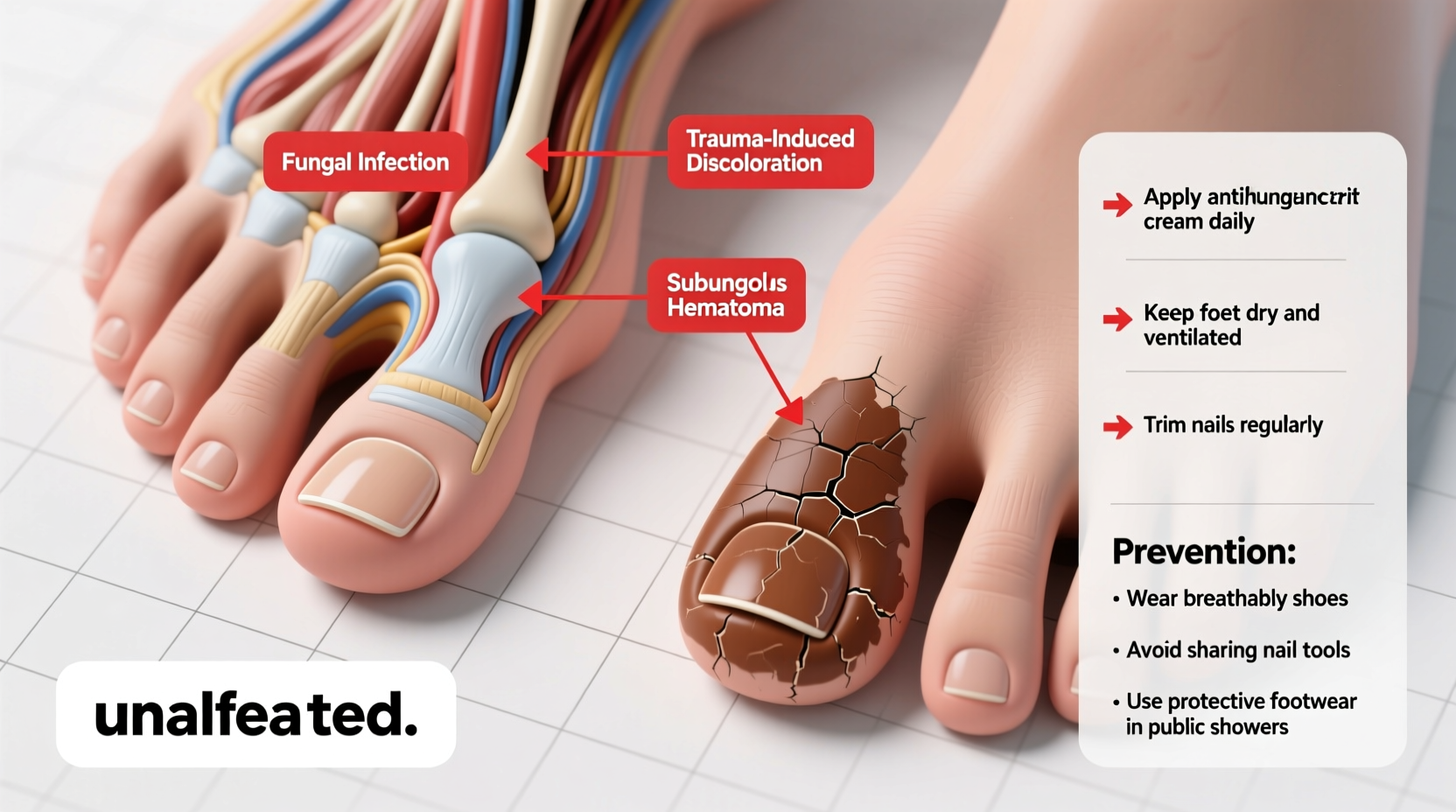
Brown toenails are not always a cosmetic concern—they can reflect deeper health issues. Identifying the cause determines whether home care suffices or medical intervention is necessary.
- Fungal Infections (Onychomycosis): One of the leading causes, fungal infections thrive in warm, moist environments like shoes. They often begin as yellow or white spots but can darken to brown or black over time, especially when debris accumulates under the nail.
- Trauma or Injury: Repeated pressure from tight footwear or a single impact (like dropping something on your toe) can cause blood to pool under the nail (subungual hematoma). Initially red or purple, the blood breaks down and turns brown as it heals.
- Melanonychia: This refers to brown or black pigmentation in the nail. It can be benign (due to genetics or skin tone), but in rare cases, it may indicate subungual melanoma—a serious form of skin cancer.
- Medication Side Effects: Certain drugs, including chemotherapy agents, antimalarials, and some antibiotics, can alter nail pigmentation.
- Nutritional Deficiencies: Lack of vitamin B12, iron, or protein may lead to changes in nail texture and color, sometimes contributing to discoloration.
- Systemic Diseases: Conditions such as diabetes, liver disease, or heart problems can manifest through nail changes, including darkening.
Effective Treatment Options
Treatment depends entirely on the underlying cause. Self-diagnosis can be risky, so professional evaluation is recommended for persistent or worsening discoloration.
Fungal Infections
Topical antifungals may work for mild cases, but oral medications like terbinafine or itraconazole are more effective for severe infections. These require a prescription and regular monitoring due to potential liver side effects.
Trauma-Related Discoloration
In most cases, no treatment is needed. The body reabsorbs the blood over weeks or months. However, if pain and swelling persist, a doctor may drill a small hole to relieve pressure. Once healed, the discolored portion grows out with the nail.
Melanonychia and Suspicious Lesions
If melanonychia is suspected to be pathological, a biopsy is essential. Subungual melanoma requires surgical removal and possibly further oncology care. Early detection dramatically improves outcomes.
Nutritional and Systemic Causes
Correcting deficiencies through diet or supplements can gradually improve nail appearance. For example, iron supplementation helps in cases of iron-deficiency anemia. Managing chronic conditions like diabetes also supports overall nail health.
“Not all brown nails are fungal. A thorough clinical exam, including dermoscopy, is crucial before starting any treatment.” — Dr. Lena Patel, Board-Certified Dermatologist
Step-by-Step Guide to Nail Recovery
Whether treating an infection or recovering from trauma, follow this timeline for optimal healing:
- Week 1–2: Diagnosis
See a healthcare provider to determine the cause. Avoid self-treating with over-the-counter antifungals unless confirmed by a professional. - Week 3–6: Begin Treatment
Start prescribed medication. For fungal cases, consistency is key—even if improvement isn’t visible yet. - Month 2–4: Monitor Progress
New, healthy nail should grow from the cuticle. Note any changes in color, thickness, or texture. - Month 5–12: Full Regrowth
Toenails grow slowly—about 1 mm per month. Complete replacement may take up to a year. Continue treatment as directed. - Ongoing: Prevent Recurrence
Adopt hygiene practices to prevent reinfection or future damage.
Prevention Tips for Healthy Toenails
Preventing brown toenails is often easier than treating them. Simple daily habits significantly reduce risk.
Tip: Wear moisture-wicking socks and rotate shoes daily to let them dry fully between uses.- Keep feet clean and dry, especially between toes.
- Cut toenails straight across to avoid ingrown nails and trauma.
- Wear properly fitted shoes with enough toe room to prevent repeated micro-injuries.
- Use antifungal sprays or powders in shoes if prone to athlete’s foot.
- Never share nail clippers, files, or footwear.
- Protect feet in public showers, pools, and gyms by wearing flip-flops.
Do’s and Don’ts for Toenail Health
| Do’s | Don’ts |
|---|---|
| Inspect your feet weekly for changes in color or texture | Ignore a new or changing brown streak in the nail |
| Use breathable footwear during exercise | Wear tight or non-ventilated shoes for long periods |
| Treat athlete’s foot promptly | Scratch or pick at infected or discolored nails |
| Seek medical advice early | Rely solely on home remedies for persistent discoloration |
Real-Life Example: Recognizing a Warning Sign
Sarah, a 48-year-old runner, noticed a narrow brown line in her big toenail after increasing her training mileage. Assuming it was bruising from tight running shoes, she ignored it for months. When the streak widened and began reaching the cuticle, she consulted a dermatologist. After dermoscopy and biopsy, she was diagnosed with early-stage subungual melanoma. Prompt surgery removed the lesion before it spread. Sarah credits her recovery to paying attention to what initially seemed like a minor issue.
This case highlights why vigilance matters. Not every brown toenail is dangerous—but when pigment appears without trauma and evolves over time, it demands professional evaluation.
FAQ Section
Can a brown toenail go away on its own?
Yes, if caused by minor trauma, the discoloration will fade as the nail grows out. Fungal infections and melanonychia typically do not resolve without treatment.
Is a brown toenail contagious?
If caused by a fungal infection, yes—it can spread to other nails or people through shared surfaces or tools. Pigment changes from trauma or melanoma are not contagious.
How long does it take for a brown toenail to heal?
For trauma-related cases, full resolution may take 6–12 months as the nail regrows. Fungal treatments usually require 3–6 months of continuous medication for visible improvement.
Conclusion: Take Charge of Your Foot Health
A brown toenail might seem like a minor issue, but it can be a window into your overall health. Whether it's a simple bruise or a sign of something more serious, timely action makes all the difference. Don't dismiss persistent discoloration—seek expert evaluation, follow through with treatment, and adopt preventive habits. Healthy toenails are not just about appearance; they're a reflection of smart self-care and proactive health decisions.
💬 Have you experienced a brown toenail? What helped you resolve it? Share your story in the comments to help others recognize symptoms and find effective solutions.








