Every cat owner wants the best for their feline companion—especially when it comes to safety. One of the most overlooked yet critical accessories is the humble cat collar. While many choose collars for identification or style, the real priority should be safety. Two common types dominate the market: breakaway and elastic (or stretchable) collars. But which one truly protects your cat in an emergency? The answer isn’t always straightforward, and choosing the wrong type could have serious consequences.
Cats are naturally curious and agile, often squeezing into tight spaces or climbing where humans wouldn’t dare. This behavior increases the risk of entanglement—on fences, furniture, tree branches, or even door handles. A poorly designed collar can turn a minor adventure into a life-threatening situation. Understanding the mechanics, materials, and safety features of both breakaway and elastic collars is essential for responsible pet ownership.
How Breakaway Collars Work: Designed to Save Lives
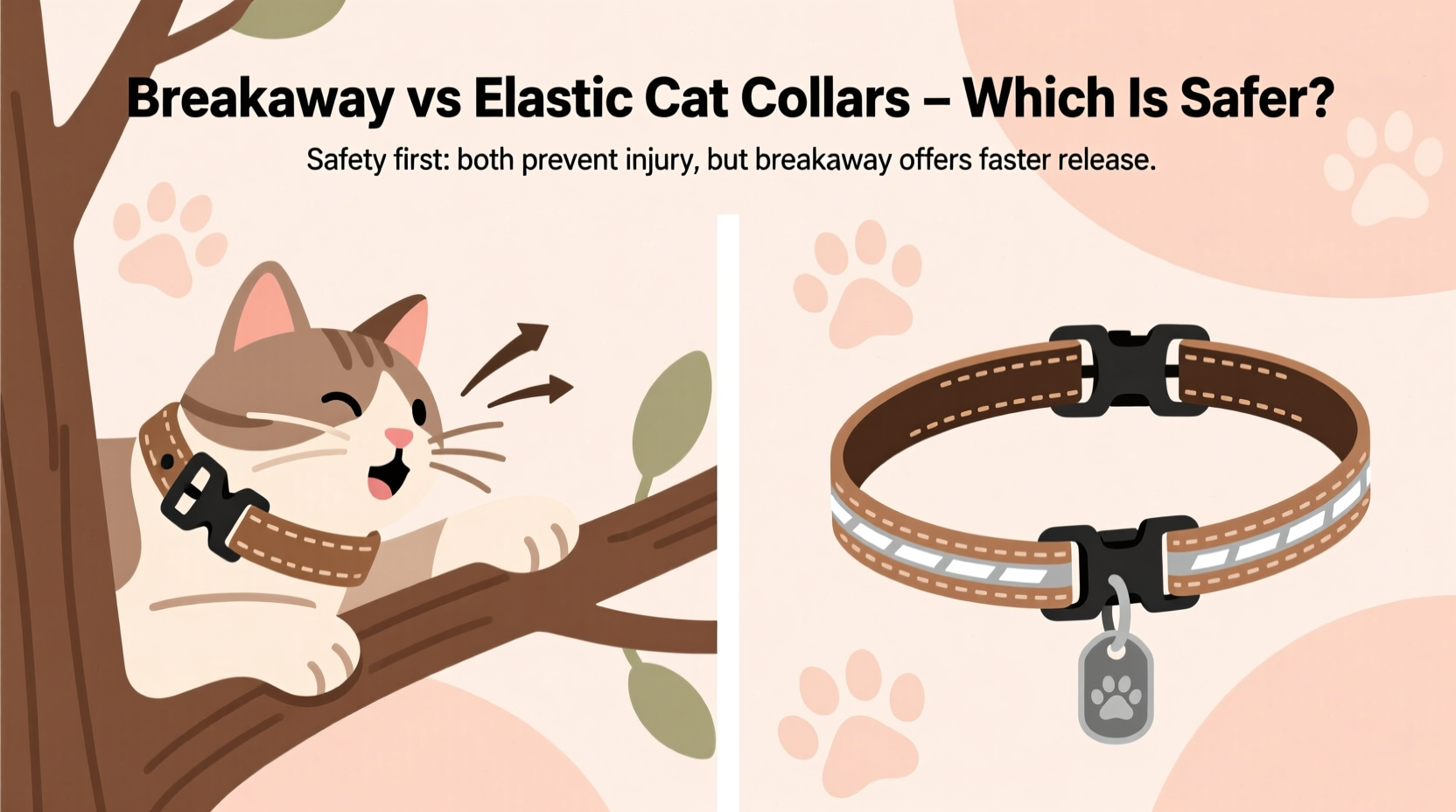
Breakaway collars are engineered with a specialized clasp that releases under pressure. When the collar snags on an object and the cat pulls away, the buckle is designed to snap open, allowing the cat to escape unharmed. This mechanism mimics a “safety release” system found in other pet products and has been endorsed by veterinarians and animal welfare organizations.
The key feature of a breakaway collar is its tension-sensitive closure. Unlike traditional buckles that require manual opening, breakaway clasps respond to sudden force. Testing standards suggest they should release at approximately 5–8 pounds of pressure—enough to hold during normal activity but weak enough to prevent strangulation.
Tip: Always test your breakaway collar’s release mechanism gently before putting it on your cat. Ensure it opens under moderate pressure but stays secure during regular movement.These collars are especially recommended for indoor cats, who may not face predators but are more likely to get caught in household hazards like blinds cords, chair legs, or laundry baskets. According to the American Veterinary Medical Association (AVMA), breakaway collars significantly reduce the risk of injury from entanglement.
Elastic Collars: Flexibility Without the Safety Guarantee
Elastic collars, sometimes called “stretch” or “expandable” collars, are made with a flexible band that stretches when pulled. They’re often marketed as comfortable and adaptable, ideal for active cats who might find rigid collars restrictive. However, their elasticity does not equate to safety in entanglement scenarios.
The fundamental flaw with elastic collars is that they stretch rather than release. If a cat becomes snagged, the collar may elongate but won’t detach. This means the cat remains trapped, potentially leading to panic, injury, or worse. Even if the material eventually tears, there’s no guarantee it will happen quickly enough to prevent harm.
Additionally, over time, elastic bands degrade. Exposure to sunlight, moisture, and repeated stretching weakens the material, making it less reliable. Once compromised, the collar may either fail too easily (falling off when it shouldn’t) or not at all (trapping the cat when it should give way).
“Elastic collars may seem forgiving, but they don’t offer a reliable escape route. In emergency situations, seconds matter—and breakaway mechanisms are proven to save lives.” — Dr. Laura Bennett, Feline Veterinarian & Animal Safety Advocate
Direct Comparison: Breakaway vs Elastic Collars
| Feature | Breakaway Collar | Elastic Collar |
|---|---|---|
| Release Mechanism | Snaps open under pressure | Stretches but does not detach |
| Safety in Entanglement | High – allows escape | Low – risk of prolonged trapping |
| Durability Over Time | Consistent (buckle tested for reliability) | Decreases (elastic degrades with use) |
| Comfort & Fit | Secure fit, minimal stretch | Flexible, conforms to neck |
| Best For | All cats, especially indoors | Limited use; not recommended for daily wear |
Real-Life Scenario: A Close Call That Changed Everything
Sarah, a cat owner from Portland, shared how her decision to switch collars saved her cat, Milo. Milo, an adventurous 3-year-old tabby, loved exploring behind the washing machine. One afternoon, he slipped his head through a loose cable tie while investigating the area. His elastic collar stretched but didn’t release. By the time Sarah found him—nearly ten minutes later—he was exhausted and gasping.
“He was dangling slightly, just enough to restrict airflow,” she recalled. “I cut the tie immediately, but it was terrifying. He could’ve died.” After consulting her vet, Sarah switched to a breakaway collar with a reflective strip and ID tag. “Now, if he gets caught, the collar lets go. It gives me peace of mind knowing he has a chance to free himself.”
This case illustrates a common misconception: that flexibility equals safety. In reality, controlled detachment is far more effective in preventing injury.
Choosing the Right Collar: A Step-by-Step Guide
- Assess your cat’s lifestyle: Indoor cats face different risks than outdoor ones. Even indoor-only cats need breakaway collars due to household hazards.
- Select a certified breakaway collar: Look for products labeled “safety breakaway” with independent testing or veterinary approval.
- Fit properly: You should be able to fit two fingers comfortably between the collar and your cat’s neck. Too loose, and it’s a snag hazard; too tight, and it restricts breathing.
- Add identification: Attach a lightweight tag with your phone number. Consider microchipping as a backup, but never rely on it alone.
- Inspect monthly: Check for fraying, buckle integrity, and tag legibility. Replace every 6–12 months or sooner if damaged.
Frequently Asked Questions
Can I use an elastic collar if my cat hates breakaways?
If your cat resists wearing any collar, start with short acclimation sessions using a breakaway model. Never substitute safety for convenience. Elastic collars do not provide adequate protection and should not be used as a long-term solution.
Do breakaway collars fall off too easily?
Quality breakaway collars are designed to stay secure during normal activity. They only release under significant, sustained pressure—like snagging on a branch. Poorly made versions may fail prematurely, so choose reputable brands with positive reviews and safety certifications.
Should outdoor cats wear collars at all?
Yes—but only breakaway types. Outdoor cats benefit from ID tags in case they’re found, and the breakaway feature protects them from entanglement in vegetation or fencing. Pair the collar with a microchip for maximum recoverability.
Final Thoughts: Safety Should Never Be Optional
When it comes to your cat’s collar, comfort and style should never override safety. While elastic collars may feel softer or more flexible, they lack the critical fail-safe mechanism that defines a true safety collar. Breakaway collars, backed by veterinary experts and real-world evidence, are the only type that actively reduces the risk of injury or death from entanglement.
Your cat trusts you to protect them—even when they’re out of sight. A simple accessory like a collar can mean the difference between a narrow escape and a tragedy. Make the informed choice today. Choose a breakaway collar, ensure it fits well, and check it regularly. Your kitty’s life could depend on it.
💬 Have a story about your cat’s collar saving them—or almost failing? Share your experience below to help other pet owners make safer choices.








