Birdsong is typically associated with dawn—a familiar soundtrack to sunrise known as the dawn chorus. But if you've ever been jolted awake by birds chirping at 1 a.m., you're not alone. Increasingly common in both suburban and urban areas, nighttime birdsong challenges our assumptions about avian behavior. While it may seem eerie or disruptive, there’s usually a logical explanation rooted in biology, environment, and human influence.
This phenomenon isn’t necessarily a sign of distress or abnormality. Instead, it reflects how adaptable birds are—and how deeply modern life has altered natural rhythms. From artificial light pollution to breeding urgency and territorial defense, several factors can trigger birds to sing well past sunset.
Why Birds Sing: A Quick Overview
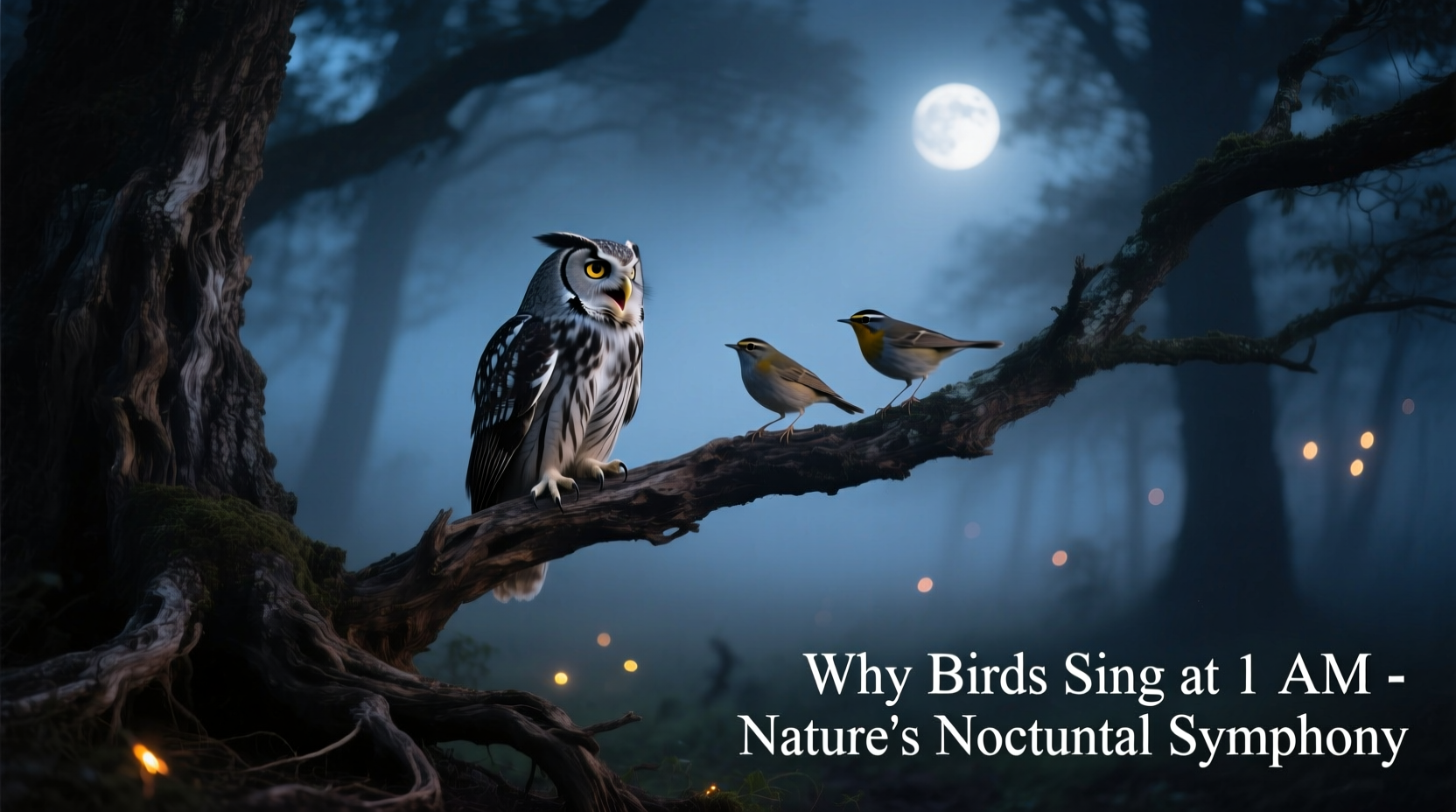
Birdsong serves multiple essential functions in avian life:
- Mating attraction: Male birds use complex songs to attract females during breeding season.
- Territory defense: Songs warn rival males to stay away from established feeding or nesting zones.
- Communication: Some vocalizations help maintain contact within flocks or between mates.
The timing of these songs is usually tied to circadian rhythms—biological clocks regulated by light and darkness. Most songbirds are diurnal, meaning they’re active during daylight hours. Their peak singing periods occur around dawn and dusk when ambient noise is low and sound carries farther.
So why would a bird break this pattern and start singing in the middle of the night?
Common Reasons for Nighttime Birdsong at 1 a.m.
1. Light Pollution Disrupts Natural Cycles
Artificial lighting is one of the leading causes of nocturnal birdsong. Streetlights, porch lights, illuminated signs, and even indoor light leaking through windows can trick birds into thinking it's earlier in the day than it actually is.
A study published in the journal *Proceedings of the Royal Society B* found that urban birds exposed to artificial light began singing up to 48 minutes earlier than their rural counterparts. In some cases, this shift extends into full-night activity.
Tip: If outdoor lighting near your home seems to attract or stimulate birds at night, consider switching to motion-sensor lights or warmer-colored bulbs (below 3000K), which are less disruptive to wildlife.2. Breeding Season Intensity
During spring and early summer, male birds become highly motivated to secure mates and defend territories. The pressure intensifies competition, pushing some individuals to expand their singing hours beyond daylight.
Night singing may offer strategic advantages: fewer competing sounds, cooler temperatures for sustained vocal effort, and increased audibility over long distances. Species like the Northern Mockingbird and American Robin are particularly known for extended singing schedules during mating season.
3. Urban Noise Forces Time Shifts
In cities, daytime noise from traffic, construction, and human activity drowns out bird calls. To be heard, many birds adapt by shifting their vocal activity to quieter nighttime hours.
This behavioral flexibility demonstrates remarkable cognitive adaptation. Research from the University of California, Berkeley showed that urban birds not only sing louder but also alter the pitch and timing of their songs to overcome acoustic interference.
4. Unmated Males Sing Later Into the Night
Studies have shown that unmated male birds—especially mockingbirds—are significantly more likely to sing at night than paired males. This prolonged singing increases their chances of attracting a mate who might still be searching.
“Nighttime singing in unmated males is essentially an energetic courtship strategy. It comes at a cost, but the reproductive payoff can be worth it.” — Dr. John Wingfield, Avian Behavioral Ecologist, UC Davis
5. Juvenile Birds Practicing Songs
Young birds spend weeks learning and refining their species-specific songs through imitation and repetition. This practice, called “subsong,” often occurs at irregular hours, including late at night.
If you hear inconsistent, fragmented chirps around 1 a.m., it could simply be a juvenile robin or sparrow rehearsing its repertoire before perfecting it for next season’s mating efforts.
Species Most Likely to Chirp at Night
Not all birds engage in nocturnal singing. However, certain species are more prone to it due to biology or habitat preferences:
| Species | Typical Reason for Night Singing | Common Habitat |
|---|---|---|
| Northern Mockingbird | Mate attraction, territory defense | Urban/suburban yards, parks |
| American Robin | Extended breeding effort, light sensitivity | Lawns, gardens, city green spaces |
| Common Nightingale | Courtship display (natural nocturnal singer) | Woodlands, thickets (Europe/Asia) |
| House Finch | Lights-induced confusion, social signaling | Backyards, feeders, urban areas |
| Blue Jay | Rare, but possible under stress or artificial light | Forests, residential neighborhoods |
Mini Case Study: The Midnight Mockingbird of Austin, Texas
In 2021, residents of a quiet neighborhood in Austin reported persistent birdsong starting as early as 10 p.m. and lasting until 3 a.m. The culprit was identified as a lone Northern Mockingbird perched in a live oak tree outside an apartment complex.
Investigation revealed two key triggers: a bright security light directly illuminating the tree and the bird being unpaired. With no mate to tend to, the male invested extra energy in singing to attract attention. Neighbors initially considered humane removal, but local wildlife experts advised patience—by late summer, once breeding opportunities diminished and foliage blocked the light, the nighttime singing ceased naturally.
This case highlights how environmental cues and individual status combine to produce unexpected behaviors—even in common backyard birds.
When Is Nighttime Singing a Sign of Distress?
While most nighttime birdsong is normal seasonal or adaptive behavior, there are rare instances where it may indicate problems:
- Sudden onset outside breeding season – Could signal disorientation from illness or injury.
- Repetitive, frantic calls – May suggest a trapped or threatened bird.
- Vocalization during storms or extreme weather – Often a response to disrupted roosting patterns.
In general, isolated chirping without visible distress does not require intervention. However, if a bird appears injured, grounded, or overly agitated, contacting a local wildlife rehabilitator is recommended.
What You Can Do: Managing Nighttime Birdsong
If nighttime birdsong is disrupting your sleep, here are practical steps to reduce its impact—without harming the birds:
- Minimize outdoor lighting: Turn off unnecessary porch or garden lights after bedtime.
- Use warm-toned LED bulbs: These are less likely to interfere with avian circadian rhythms.
- Close curtains or blinds: Prevent indoor light from spilling outside, which can draw birds closer.
- Install white noise machines: Help mask intermittent chirping indoors.
- Avoid feeding birds late at night: Nocturnal feeding can encourage lingering activity.
Frequently Asked Questions
Is it normal for robins to sing at 1 a.m.?
Yes, especially during breeding season. Robins are sensitive to light and often begin singing very early—or continue late—when exposed to artificial illumination. They are among the first birds to start the dawn chorus and sometimes blur the line between night and morning.
Can birds see well enough to be active at night?
Most songbirds don’t have excellent night vision compared to owls or nightjars, but they can navigate in low light. Their singing at night doesn’t usually involve flight or foraging—just vocalizing from a safe perch. Light pollution gives them enough visual reference to remain alert.
Should I try to stop a bird from singing at night?
No direct action should be taken against the bird. Instead, address environmental factors like excessive lighting or food sources that may encourage prolonged activity. Remember, this behavior is temporary and part of natural avian adaptation.
Final Thoughts: Living Harmoniously with Nocturnal Songsters
Birds chirping at 1 a.m. might interrupt your sleep, but it also offers a rare glimpse into the resilience and adaptability of wildlife in human-dominated landscapes. Rather than viewing it as a nuisance, consider it a testament to nature’s persistence—even in the heart of the city.
By making small adjustments to outdoor lighting and understanding the biological drivers behind nighttime birdsong, we can coexist more peacefully with our feathered neighbors. And who knows—you might grow to appreciate the occasional midnight melody as a quirky reminder of the wild world just beyond your window.
💬 Have you experienced nighttime birdsong? Share your story or solution in the comments below—your insight could help others understand and adapt too.








