For years, travelers have clung to the belief that Tuesday is the golden hour for scoring cheap flights. The idea has been repeated across blogs, forums, and even mainstream media: “Book on Tuesday afternoon, and you’ll save hundreds.” But does this advice still hold up in today’s dynamic airfare market? With airlines using sophisticated pricing algorithms, fluctuating demand, and global disruptions shaping ticket costs, it's time to separate fact from fiction. This article dives deep into the origins of the \"Tuesday myth,\" examines real-world data, and provides actionable strategies to help you book smarter—regardless of the day.
The Origins of the Tuesday Myth
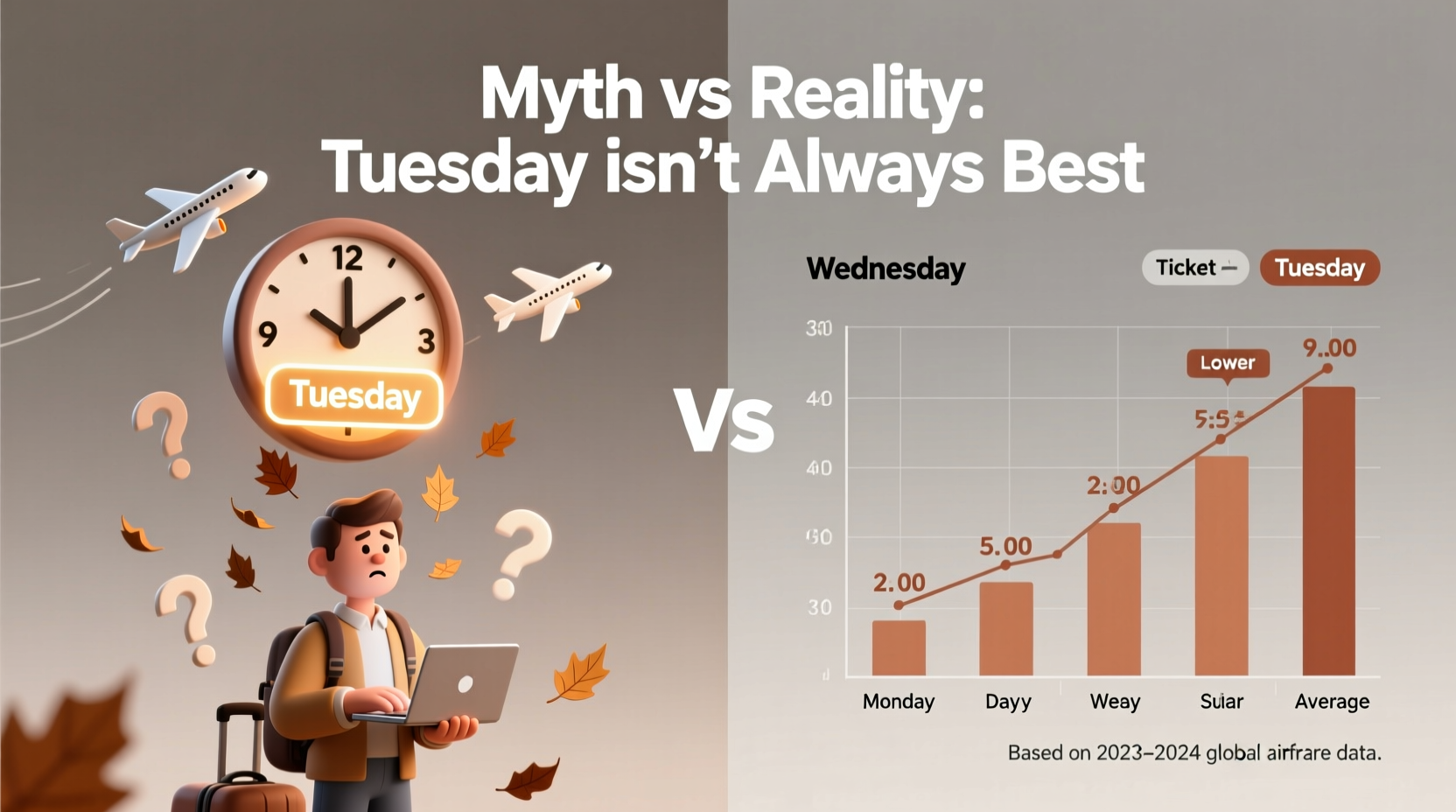
The belief that Tuesday is the optimal day to purchase plane tickets emerged in the early 2010s. At the time, travel analysts noticed a pattern: airlines typically released discounted fares on Monday evenings, and competing carriers would respond with matching deals by Tuesday morning. As a result, travelers who monitored prices closely could find lower fares during that window.
Back then, airline pricing was less automated. Revenue managers manually adjusted fares based on competitor moves, leading to predictable weekly cycles. A 2011 study by Expedia suggested that Tuesday, Wednesday, and Saturday were consistently the cheapest days to book domestic U.S. flights. This finding solidified the Tuesday rule in public consciousness.
However, the landscape has changed dramatically. Airlines now use dynamic pricing models powered by artificial intelligence, which adjust fares in real time based on demand, route popularity, booking pace, and even user behavior. As a result, the old weekly rhythm has largely disappeared.
“While Tuesday may have had an edge a decade ago, today’s pricing is too fluid to rely on any single day of the week.” — Dr. Seth Kaplan, Aviation Economist and Senior Analyst at Routehappy
What Data Says About Booking Day Trends
Recent studies paint a more nuanced picture. A comprehensive 2023 analysis by Hopper analyzed over 15 billion flight price points and found no statistically significant advantage to booking on Tuesday compared to other weekdays. Instead, the timing of your trip—how far in advance you book—proved far more influential than the day of the week.
In fact, the same report revealed that Wednesday and Thursday often saw slightly better average prices for international routes, while Sunday emerged as unexpectedly competitive for last-minute domestic bookings.
The key takeaway? While minor fluctuations exist, there is no consistent “best day” across all routes and regions. Airfare is influenced by a complex web of factors, including:
- Seasonal demand (summer holidays, winter breaks)
- Day of travel (flights on Tuesdays and Wednesdays are often cheaper to fly *on*, not to book)
- Route competitiveness (more airlines = more price wars)
- Global events (fuel prices, geopolitical tensions)
- User tracking (some evidence suggests logged-in users see higher prices due to retargeting)
Optimal Booking Windows: When Timing Actually Matters
If the day of the week isn’t the key, what is? Research consistently shows that how many weeks or months before departure you book has a much greater impact on price.
Hopper’s annual flight forecast recommends the following windows for the best deals:
| Route Type | Best Booking Window | Average Savings vs. Last-Minute |
|---|---|---|
| Domestic (U.S.) | 5–7 weeks in advance | $50–$120 |
| Short-Haul International (e.g., U.S. to Mexico/Caribbean) | 2–3 months in advance | $80–$160 |
| Long-Haul International (e.g., U.S. to Europe/Asia) | 3–5 months in advance | $200–$400 |
| Last-Minute (within 21 days) | N/A – high risk of price spikes | Premium of 20–50% |
Booking too early can also backfire. Airlines often release their lowest fare buckets 6–11 months out, but if you book beyond that window, you might miss early promotions or face limited availability in cheaper classes.
Real Example: Sarah’s Transatlantic Trip
Sarah planned a July trip from Chicago to Paris. She first checked prices in January—nearly six months out—and saw round-trip fares around $1,100. She waited, monitoring weekly. By March (about 4 months before departure), she spotted a flash sale from Air France: $749, including baggage and seat selection. She booked immediately. Had she followed the “Tuesday rule” blindly, she might have delayed unnecessarily. Instead, her strategy of tracking over time—not fixating on days of the week—saved her nearly $350.
Smart Strategies That Outperform the Tuesday Rule
Forget rigid rules. Modern flight shopping requires flexibility, awareness, and tools. Here are proven tactics that deliver better results than waiting for a mythical discount day.
1. Use Fare Prediction Tools
Platforms like Google Flights, Hopper, and Skyscanner use machine learning to predict whether prices are likely to rise or fall. Google Flights’ price graph shows historical trends and labels current fares as “Good,” “Average,” or “High,” helping you decide whether to book now or wait.
2. Set Up Price Alerts
Instead of checking manually, let technology work for you. Create alerts for your desired route on multiple platforms. You’ll receive notifications when prices drop—regardless of the day.
3. Be Flexible with Dates and Airports
Even shifting your departure by one day can save hundreds. Google Flights’ date grid and map search features make it easy to compare options. Flying into secondary airports (e.g., Oakland instead of SFO, or Berlin Schönefeld instead of Tegel) can also yield major savings.
4. Book During Off-Peak Hours (Sometimes)
While not a guarantee, some analysts suggest that airlines refresh inventory and run system updates late Tuesday or early Wednesday morning (Eastern Time). If new sales are loaded overnight, they may appear around 1–3 AM Wednesday. However, this is inconsistent and shouldn’t be relied upon exclusively.
Tip: Combine off-peak booking times with price alerts for maximum efficiency—don’t rely on either alone.5. Clear Cookies or Use Incognito Mode
There’s ongoing debate about whether airlines raise prices based on browsing history. While direct price discrimination is rare, retargeting ads and personalized offers can create the illusion of rising fares. To stay objective, always check prices in an incognito browser or after clearing cookies.
Checklist: How to Book Flights Like a Pro
Follow this step-by-step guide to maximize savings and minimize stress:
- Define your travel window: Know your ideal dates and how flexible you are.
- Identify alternative airports: Check nearby cities or hubs.
- Set up price alerts on Google Flights, Hopper, or Skyscanner.
- Monitor trends for 2–3 weeks: Look for patterns, not single-day dips.
- Use incognito mode when comparing final prices.
- Check nearby dates using calendar views to find the cheapest departure and return.
- Book within the optimal window based on your route type.
- Review baggage fees and change policies: The cheapest fare isn’t always the best value.
Frequently Asked Questions
Does booking at midnight on Tuesday really help?
No conclusive evidence supports this. While some sales may go live early Wednesday morning (after a Tuesday night update), there’s no guarantee. More important than the exact hour is being ready to act when a fare drops, which can happen any time.
Are flights cheaper when booked on mobile apps?
Not necessarily. Some airlines have offered app-exclusive discounts in the past, but these are promotional and temporary. In most cases, prices are synchronized across platforms. Always cross-check.
Is it better to book directly with the airline or through a third party?
Booking directly with the airline offers better customer service if changes or cancellations arise. Third-party sites like Expedia or Kayak may offer bundled deals, but resolving issues can be harder. For peace of mind, especially on international trips, direct booking is usually safer.
Conclusion: Rethink the Myth, Master the Method
The idea that Tuesday is the best day to buy plane tickets is a relic of a simpler era in air travel pricing. Today’s market is too fast-moving and algorithm-driven to follow outdated heuristics. Instead of waiting for a magic day, focus on strategies grounded in data: booking within optimal timeframes, using price prediction tools, staying flexible, and setting alerts.
Smart travel isn’t about luck or folklore—it’s about preparation and informed decisions. Whether you’re planning a weekend getaway or a once-in-a-lifetime journey, the real secret to saving money lies not in the calendar, but in your approach.
🚀 Ready to book smarter? Pick one route you’ve been eyeing, set up a price alert today, and start tracking trends. The best deal isn’t tied to a day—it’s tied to your vigilance.








